



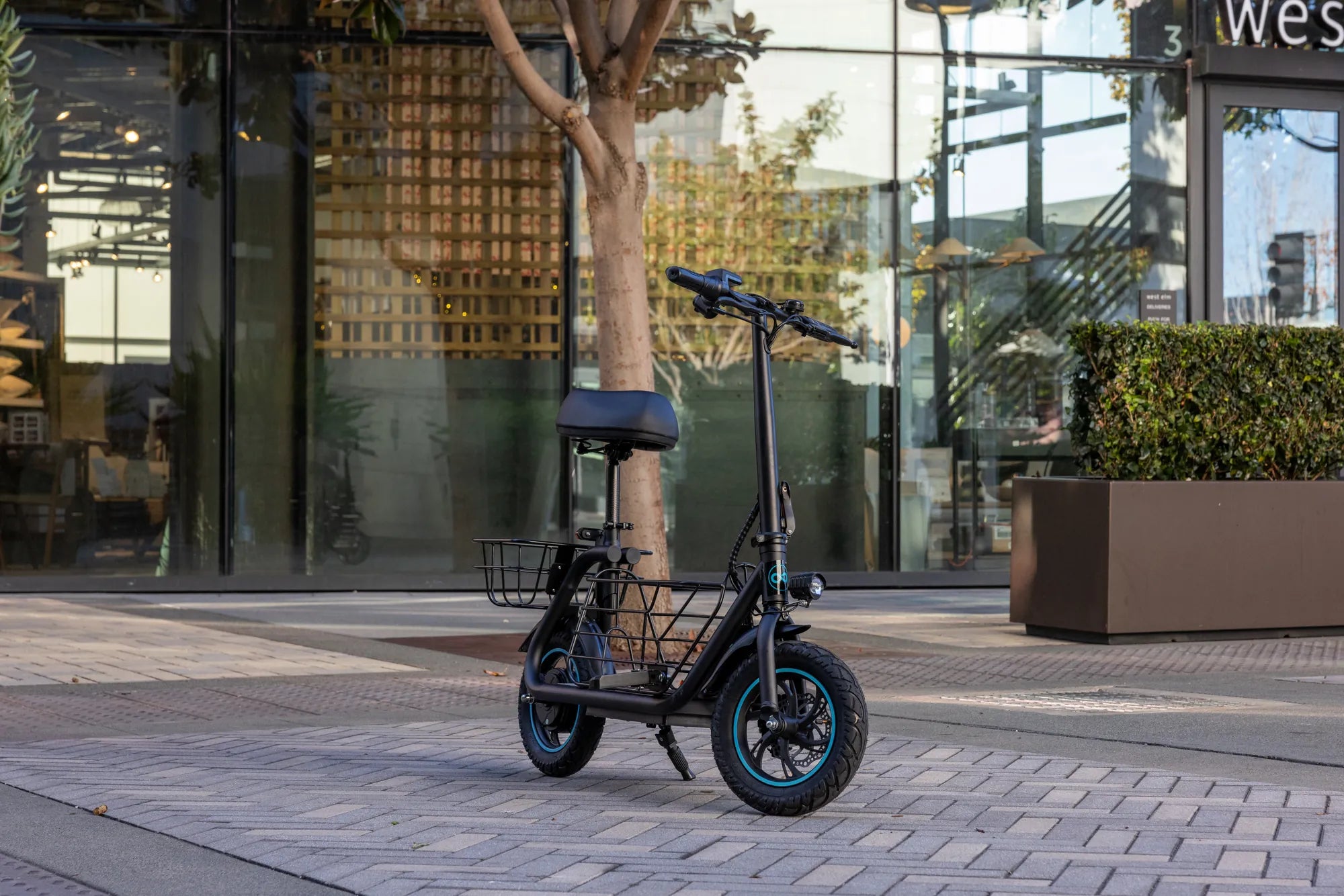
Introduction: The Heart of Your E-Bike – Understanding the 48V 10.4Ah Battery
Your e-bike's performance, range, and reliability are directly powered by its battery. The 48v 10.4ah ebike battery has emerged as one of the most popular and practical power sources for modern electric bicycles. This configuration strikes a powerful balance, offering commuters and enthusiasts a blend of spirited acceleration, respectable range, and manageable weight.
Understanding this key component is essential for anyone looking to buy a new e-bike, upgrade an existing one, or simply get the most out of their rides. This guide will dissect the specifications, explain the real-world implications, and highlight the critical safety and quality features that separate a trustworthy battery from a potential hazard. As a leader in personal electric mobility, Gyroor designs its UL-certified battery packs, like those in its e-bike and scooter lineup, with this precise balance of performance and paramount safety in mind.
Decoding the Specs: What 48V and 10.4Ah Really Mean for Your Ride
At first glance, "48V 10.4Ah" might seem like technical jargon. In practice, these two numbers tell you almost everything about how your e-bike will behave. Think of voltage (V) as the engine's horsepower—it determines the power and speed potential. Amp-hours (Ah) is the size of the fuel tank—it dictates how far you can go on a single charge.
Together, they define the total energy capacity of the pack. For a 48v 10.4ah ebike battery, you multiply voltage by amp-hours to get watt-hours (Wh): 48V x 10.4Ah = approximately 500 Watt-hours. This 500Wh figure is the universal metric for energy storage, allowing for direct comparisons between different battery configurations.
Voltage (48V): Your E-Bike's Power and Speed Potential
A 48V system provides a significant step up from the more common 36V standard. The higher voltage allows the motor to draw power more efficiently, resulting in stronger torque. This translates to better hill-climbing ability and more responsive acceleration from a stop.
You'll also experience a higher potential top speed under the same motor power rating compared to a 36V battery. For urban riders navigating traffic, hills, and bridges, the 48V platform delivers the confident power needed for a smooth and controlled commute. It's the sweet spot that moves beyond basic assistance into a genuinely powerful riding experience.
Capacity (10.4Ah): Estimating Your Real-World Riding Range
The 10.4Ah capacity is the key to your riding distance. While the theoretical energy is 500Wh, real-world range is influenced by numerous variables. A reasonable estimate for a 48v 10.4ah ebike battery is between 20 and 40 miles per charge.
This wide variance depends entirely on how you ride. Using the highest pedal-assist level, riding at full throttle, carrying heavy loads, and tackling constant hills will drain the battery faster, leaning toward the lower end of that range. Conversely, using lower assist levels, pedaling actively, and riding on flat terrain can maximize your distance, potentially reaching or exceeding 40 miles.
Why the 48V 10.4Ah Configuration is a Sweet Spot for Urban Riders
This specific configuration isn't popular by accident; it's the result of an optimal engineering compromise. For the vast majority of urban and suburban commuters, the 48v 10.4ah ebike battery hits the perfect notes of performance, weight, and cost.
Compared to a 36V 10.4Ah battery (~375Wh), the 48V version offers about 33% more potential power and performance without a weight penalty, as the number of cells may be similar. Compared to a much larger 48V 15Ah or 20Ah battery, the 10.4Ah pack is significantly lighter and less expensive, making the e-bike easier to handle and more affordable.
For daily commutes under 20 miles round trip, this capacity provides a comfortable buffer. It delivers the power needed for confident city riding without the bulk and cost of an oversized pack. This balance is why many manufacturers, including Gyroor, select this configuration for their mid-to-high-performance commuter models.
Beyond the Numbers: Critical Features for Battery Safety and Longevity
The specifications tell only half the story. The build quality, safety systems, and protective features of a 48v 10.4ah ebike battery are what determine its safety, reliability, and lifespan. These are the non-negotiable elements that distinguish a premium, trustworthy battery.
The Non-Negotiable: UL Certification and Battery Management Systems (BMS)
UL 2271 certification is the paramount safety standard for lithium-ion batteries in personal electric mobility devices. A UL-certified battery, like those used by Gyroor, has undergone rigorous independent testing for electrical, mechanical, and environmental safety, drastically reducing fire risk.
Inside every quality pack is a Battery Management System (BMS). This smart circuit board is the brain of the battery. It actively monitors each cell group, preventing overcharging, over-discharging, short circuits, and overheating. A robust BMS is essential for balancing cells, maximizing cycle life, and ensuring safe operation every time you plug in or ride.
Durability for the Real World: IPX5 Water Resistance and Build Quality
Commuting means facing the elements. An IPX5 water-resistance rating means the battery casing can withstand sustained low-pressure water jets from any direction. This protects the internal cells and BMS from rain, road spray, and puddles, making your e-bike a truly all-weather vehicle.
Beyond water resistance, overall build quality is crucial. The battery should feature a robust, impact-resistant casing, high-quality lithium-ion cells from reputable manufacturers, and secure, vibration-resistant internal packing. This ensures the pack can withstand the bumps and vibrations of daily road use for years.
Protecting Your Investment: The Value of a Comprehensive Warranty
A strong warranty is a direct reflection of the manufacturer's confidence in their product. A clear, 1-year warranty on the battery, like the one offered by Gyroor, provides essential peace of mind. It protects you against defects in materials or workmanship, safeguarding what is often the single most expensive component of your e-bike.
When evaluating options, prioritize brands that stand behind their batteries with a transparent and responsive warranty policy. It's a critical aspect of the total value proposition and long-term ownership cost.
Making the Right Choice: Compatibility and Smart Purchasing Tips
Selecting the right 48v 10.4ah ebike battery requires more than just matching the numbers. Follow this practical guide to ensure a compatible, safe, and satisfactory purchase.
Step 1: Ensuring Voltage and Connector Compatibility
First, confirm your e-bike's controller is designed for a 48V system. Using a 48V battery on a 36V system can damage the electronics. Second, physically match the discharge connector type (e.g., XT60, Anderson, proprietary blade connectors). An adapter can sometimes be used, but a direct match is always preferable for safety and reliability.
Also, check the physical dimensions and mounting system (rack mount, downtube integration) to ensure the new battery will fit securely on your bike's frame.
Step 2: Prioritizing Certified Safety and Reputable Brands
Never compromise on safety certifications. Always choose a battery that is explicitly UL 2271 certified. Be wary of generic, unbranded packs that lack this certification, as they pose a significant safety risk.
Opt for reputable brands known for quality and customer support. Brands like Gyroor invest in rigorous testing, quality cells, and robust BMS technology, ensuring you get a reliable product backed by a real warranty.
Step 3: Maximizing Your Battery's Lifespan Through Proper Care
Your charging and storage habits directly impact longevity. Avoid regularly draining the battery to 0% or charging to 100% for daily use; keeping it between 20% and 80% is ideal for cell health. Store the battery in a cool, dry place, away from direct sunlight or freezing temperatures.
Always use the manufacturer-provided charger. Unplug the charger once the battery is full, and avoid leaving it at 100% charge for extended periods (like weeks of storage). For long-term storage, maintain a charge level around 50-60%.
Comparative Analysis: 48V 10.4Ah vs. Other Common Configurations
To understand where the 48v 10.4ah ebike battery fits in the market, it's helpful to compare it to other standard options. The following table breaks down the key differences.
| Battery Configuration | Approx. Watt-Hours (Wh) | Best Use Case | Key Pros | Key Cons |
|---|---|---|---|---|
| 36V 10.4Ah | ~375 Wh | Lightweight, casual riding on flat terrain | Lower cost, lighter weight | Less power for hills, lower top speed |
| 48V 10.4Ah | ~500 Wh | Urban commuting, moderate hills, balanced performance | Excellent power-to-weight ratio, great for most riders | Slightly higher cost than 36V |
| 48V 14Ah | ~672 Wh | Long-distance commuting, heavy cargo hauling | Extended range, less range anxiety | Heavier, more expensive, potential overkill for short trips |
| 52V 10.4Ah | ~540 Wh | Performance enthusiasts seeking max power/speed | Higher voltage for more peak power | Compatibility issues with many stock 48V systems, niche appeal |
Frequently Asked Questions (FAQ): 48V 10.4Ah E-Bike Batteries
Q1: How far can I really go on a single charge?
A1: As noted, a realistic range is 20 to 40 miles. Your specific distance depends on rider weight, cargo, terrain (hills vs. flat), wind, tire pressure, the level of pedal assist or throttle use, and ambient temperature. Plan for the lower end of the range if your commute is hilly or you use high assist levels.
Q2: Is a 48V battery more powerful than a 36V?
A2: Yes, significantly. A 48V system provides approximately 33% more potential power (voltage) than a 36V system. This results in better acceleration, stronger hill-climbing torque, and a higher potential top speed, assuming the motor and controller are designed for the higher voltage.
Q3: Can I upgrade my e-bike from 36V to 48V?
A3: It's not a simple battery swap. The motor, controller, and often the display must be compatible with 48V input. Using a 48V battery on a system designed only for 36V can permanently damage the electronics. Always consult your e-bike's manufacturer or a qualified technician before attempting a voltage upgrade.
Q4: How long will this battery last before needing replacement?
A4: A quality 48v 10.4ah ebike battery with a proper BMS is typically rated for 500 to 800 full charge cycles before its capacity degrades to about 80% of its original state. With proper care (partial charging, cool storage), you can expect several years of reliable service from regular use.
Q5: What does the 'Ah' rating mean, and is a higher Ah always better?
A5: 'Ah' stands for Amp-hour, a unit of electrical charge. A higher Ah rating at the same voltage means a larger energy capacity (more Wh) and thus a longer potential range. However, "better" is subjective: a higher Ah battery is also heavier, more expensive, and may be physically larger. The 10.4Ah rating offers an excellent balance of range and practicality for most users.
Conclusion: Powering Informed and Confident Rides
The 48v 10.4ah ebike battery represents an ideal fusion of power, range, and practicality for the modern rider. Its 500Wh capacity delivers the performance needed for spirited urban commutes and weekend adventures, all in a relatively lightweight and cost-effective package. However, the specifications are only the starting point.
The true mark of a superior battery lies in the unseen details: the UL certification that ensures safety, the intelligent BMS that guards against failures, the IPX5 rating that laughs at rain, and the warranty that backs it all up. Making an informed choice means prioritizing these features as much as the voltage and capacity numbers. By selecting a battery from a trusted brand that embodies these principles, you invest in countless miles of reliable, safe, and enjoyable riding.
Ready to experience the perfect balance of power and range? Explore Gyroor's collection of electric scooters and e-bikes, engineered with high-performance, UL-certified battery systems designed for real-world reliability. Browse the full Gyroor collection at gyroorboard.com.
How Much Does a Dirt Bike Cost? A Complete Price & Ownership Guide
Most Powerful Dirt Bike Ever: Engineering, Legends & Raw Power