



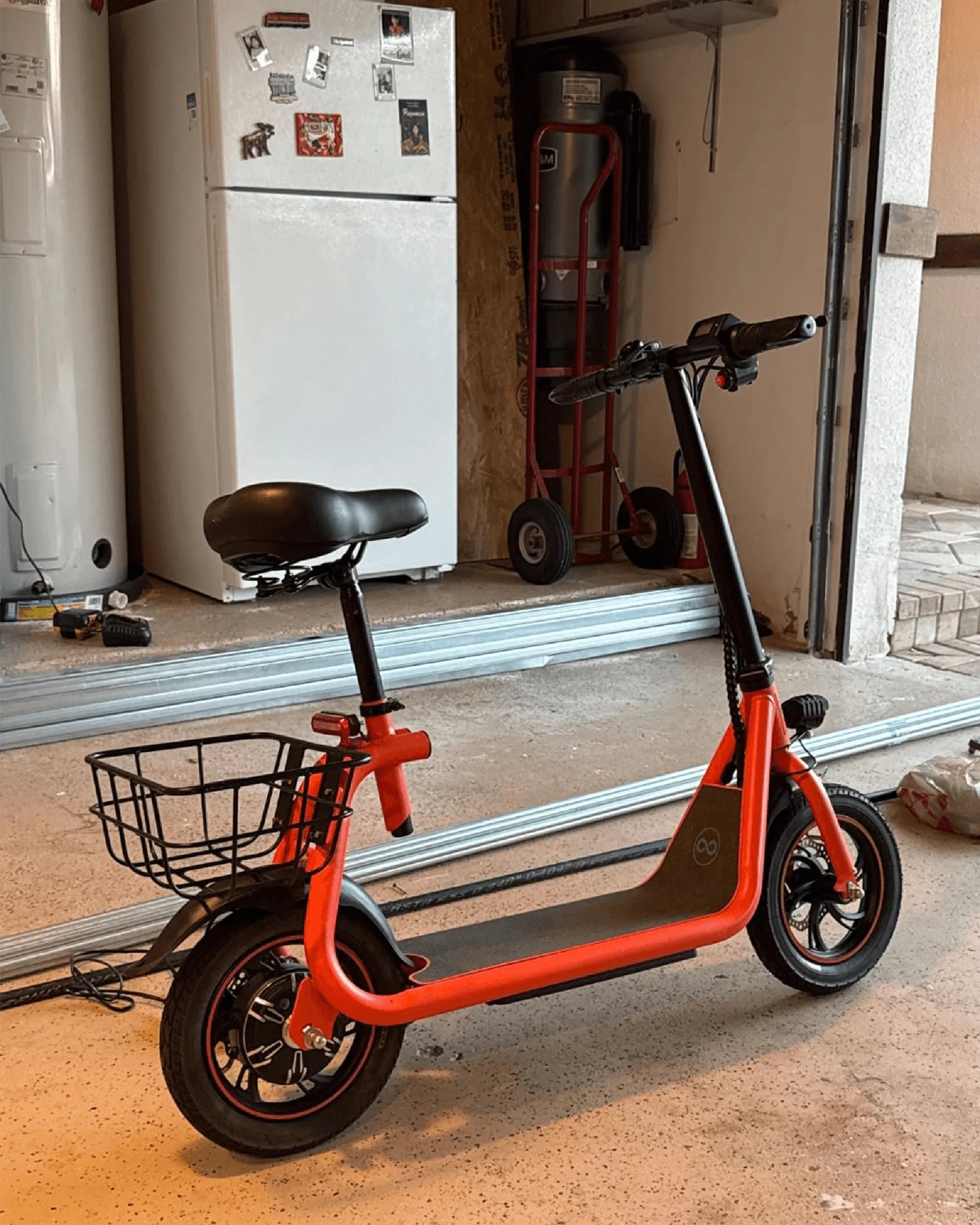
Introduction to 48V Scooter Braking Systems
A 48v scooter brake system is not an accessory; it is the most critical safety component on your high-performance electric ride. The transition from common 36V to potent 48V systems delivers exhilarating acceleration and higher top speeds, often reaching 25-35 mph. This increased kinetic energy must be managed and dissipated safely, making the braking system the primary guardian against collisions. You will learn how different 48v scooter brake technologies function, how to evaluate their performance, and essential maintenance practices to ensure your safety mile after mile.
Brands that prioritize rider safety, like Gyroor, engineer their 48V models with integrated braking systems designed to match the scooter's power output. A reliable 48v scooter brake provides not just stopping force, but also modulation, consistency, and durability. Understanding this component is fundamental for any rider looking to harness the full potential of a 48V electric scooter responsibly and safely.
How 48V Power Impacts Braking Requirements
The core relationship is simple: more voltage typically means more power, which translates to higher speeds and greater mass. A standard 48V electric scooter motor can produce 500-1000 watts of continuous power, enabling rapid acceleration from a standstill. This performance creates a significant amount of kinetic energy that must be safely arrested during braking. The braking system on a 48v scooter must handle this energy conversion efficiently to prevent brake fade or failure.
Kinetic energy increases with the square of velocity. This means a scooter traveling at 30 mph has over 2.2 times the kinetic energy of one traveling at 20 mph. Therefore, a 48v scooter brake must dissipate substantially more heat than brakes on lower-voltage models. Factors like rider weight, cargo, and riding terrain (hills) further increase the demand on the braking system, necessitating robust components and thoughtful design.
Inadequate braking for a 48V platform isn't just a performance issue; it's a severe safety hazard. A system designed for a 250W scooter will quickly overheat and fail on a 48V, 800W machine. This is why leading manufacturers spec their 48V models with advanced braking technologies from the outset, ensuring the stopping power is commensurate with the go-power.
Types of Brakes for 48V Electric Scooters
There are three primary braking technologies employed on modern 48V electric scooters, often used in combination. Each has distinct mechanics, advantages, and ideal use cases. Understanding these differences is key to selecting a scooter that matches your riding style and safety expectations.
Disc Brakes (Mechanical & Hydraulic)
Disc brakes are the performance standard for 48v scooter brake systems. They consist of a metal rotor attached to the wheel hub and a caliper that houses brake pads. When the lever is engaged, the caliper squeezes the pads against the rotor, creating friction to slow the wheel. Their open design allows for excellent heat dissipation, which is crucial for maintaining consistent performance during repeated high-speed stops.
Mechanical disc brakes use a steel cable to actuate the caliper. They offer a good balance of power, modulation, and maintainability. They are less susceptible to weather than rim brakes and provide strong stopping force. Many reliable 48V commuter scooters feature mechanical disc brakes.
Hydraulic disc brakes represent the pinnacle of 48v scooter brake technology. They use a sealed fluid system to transfer force from the lever to the caliper. This provides superior modulation (the feel and control of braking power), requires less hand effort, and is largely self-adjusting as pads wear. For high-performance 48V scooters built for speed or challenging terrain, hydraulic systems offer the highest safety margin and consistent feel.
Drum Brakes
Drum brakes are a fully enclosed system where brake shoes press outward against the inner surface of a drum built into the wheel hub. This design makes them highly resistant to environmental contaminants like water, dust, and grime. For a 48v scooter brake used primarily in urban commuting, this can mean exceptionally low maintenance and reliable all-weather performance.
The enclosed nature, however, is also a drawback: heat dissipation is poorer than with disc brakes. This can lead to brake fade during sustained heavy use, like descending long hills. They are also generally less powerful than equivalently sized disc brakes. For moderate-speed 48V commuter models where absolute maximum stopping power is secondary to reliability and low upkeep, drum brakes are a proven and effective choice.
Regenerative (E-ABS) Braking
Regenerative braking is an electronic system unique to electric vehicles. When you engage the brake lever or a dedicated regen mode, the controller reverses the motor's function, turning it into a generator. This creates resistance that slows the scooter down, while simultaneously converting some of the kinetic energy back into electrical energy to recharge the battery slightly.
It's critical to understand that a regenerative 48v scooter brake is almost always a supplementary system. It should not be relied upon as the primary stopping method. Its benefits are twofold: it extends overall range by recapturing energy, and it reduces wear and heat load on the physical (disc or drum) brakes, making them last longer and perform more consistently when needed for emergency stops.
Key Braking Performance Metrics to Consider
Evaluating a 48v scooter brake goes beyond just knowing its type. Several quantitative and qualitative metrics determine real-world safety and performance.
Stopping Distance: This is the ultimate measure. It's the distance required to come to a complete halt from a specific speed (e.g., 15 mph or 20 mph). Shorter distances are always better. A high-quality 48V scooter with dual hydraulic discs can achieve stopping distances under 10 feet from 15 mph, while a single mechanical brake may require 15 feet or more.
Brake Fade Resistance: This measures how well the brakes maintain their power as they heat up. Repeated hard stops or long descents generate immense heat. Fade-resistant materials and designs (like ventilated disc rotors) are essential for a reliable 48v scooter brake used in demanding conditions.
Modulation: This is the feel and controllability. Can you apply a small amount of braking force smoothly, or is it an "on/off" switch? Good modulation prevents wheel lock-up and skidding, allowing for controlled, stable stops. Hydraulic systems typically offer the best modulation.
Maintenance Interval: How often do brakes need adjustment, pad replacement, or fluid changes? Drum and regenerative brakes have long intervals. Mechanical disc brakes require periodic cable tension and pad checks. Hydraulic systems need occasional fluid bleeds but less frequent pad adjustments.
Maintenance and Safety Best Practices
Proper care of your 48v scooter brake is non-negotiable for safety. A simple, regular maintenance routine can prevent failures and ensure optimal performance.
Routine Visual and Functional Checks: Before each ride, quickly squeeze your brake levers. They should feel firm and engage smoothly without touching the handlebar. Visually inspect brake pads for wear (most have wear indicators). For disc brakes, check that the rotor is not excessively warped or gouged. Listen for any new grinding or scraping noises during braking.
Cleaning is Crucial: Especially for disc brakes, keep rotors and calipers clean from oil, grease, and built-up brake dust. Use isopropyl alcohol on the rotors. Avoid spraying high-pressure water directly at brake components, even on water-resistant models like Gyroor's IPX5-rated scooters, to prevent forcing contaminants into seals.
Proper Braking Technique: Always use both brakes simultaneously for balanced, stable stopping. Apply pressure progressively rather than slamming the levers. When riding in wet conditions, start braking earlier and more gently, as traction is reduced. Practice emergency stops in a safe, empty area to understand your scooter's limits.
Professional Servicing: For tasks like replacing hydraulic fluid, truing rotors, or replacing internal drum shoes, consult the Gyroor user manual or a qualified technician. Attempting complex repairs without knowledge can compromise your 48v scooter brake system's integrity.
Brake System Comparison for 48V Scooters
| Brake Type | Stopping Power | Modulation & Feel | Maintenance Level | Weather Resistance | Best For |
|---|---|---|---|---|---|
| Hydraulic Disc | Excellent | Excellent (smooth, progressive) | Medium (occasional fluid bleed) | Very Good | High-performance, high-speed, hilly terrain |
| Mechanical Disc | Very Good | Good | Medium-High (cable adjustment, pad changes) | Very Good | General commuting, versatile performance |
| Drum Brake | Good | Fair (can feel grabby) | Low (long service intervals) | Excellent (fully enclosed) | Urban commuting, all-weather reliability |
| Regenerative (E-ABS) | Fair (supplementary only) | Varies (often engine-braking feel) | Very Low (electronic system) | Excellent | Range extension, reducing physical brake wear |
Frequently Asked Questions (FAQ)
Are disc brakes necessary for a 48V scooter?
While not absolutely mandatory, disc brakes are highly recommended and have become the expected standard for 48V platforms. The increased speed and weight capabilities of a 48V scooter demand a brake system with superior heat dissipation and consistent power. Drum brakes can suffice for moderate, flat-terrain commuting, but disc brakes (especially hydraulic) provide the critical safety margin needed for the full performance envelope of a 48V scooter, including handling emergencies and downhill sections confidently.
How often should I maintain my 48V scooter's brakes?
Maintenance frequency depends on usage. For typical urban commuting, perform a visual check and lever feel test before each ride. A more thorough inspection of pad thickness, rotor condition, and cable tension should be done every 1-2 months or every 300-500 miles. Brake pads may need replacement every 500-1500 miles. Always refer to the specific maintenance schedule in your Gyroor user manual for model-specific guidance, as intervals can vary based on the brake type and design.
Can I upgrade the brakes on my 48V scooter?
Upgrading is sometimes possible but comes with significant caveats. Swapping mechanical disc brakes for a hydraulic system may require new levers, calipers, rotors, and custom mounting solutions, which can be complex and costly. More importantly, such modifications often void the manufacturer's warranty and can affect the scooter's structural integrity and electronic systems if not done perfectly. It is generally safer and more reliable to choose a 48V scooter, like those from Gyroor, that comes equipped from the factory with the brake system appropriate for its intended performance level.
What is the difference between ABS and E-ABS on a scooter?
Traditional ABS (Anti-lock Braking System) uses wheel speed sensors and a hydraulic pump to rapidly pulse the physical brakes, preventing wheel lock-up and skidding during panic stops. E-ABS (Electronic Anti-lock Braking System) on many electric scooters is typically a marketing term for regenerative braking with some smoothing algorithm. It may help prevent the motor from locking, but it does not actively modulate the physical disc or drum brakes. For true anti-lock performance that prevents tire skid, a scooter needs a dedicated hydraulic ABS system, which is rare on scooters.
What does the 1-year warranty cover for Gyroor scooter brakes?
Gyroor's comprehensive 1-year warranty covers defects in materials and workmanship under normal use. For the 48v scooter brake system, this typically includes components like the brake calipers, levers, master cylinders (for hydraulic systems), and drums. Wear items such as brake pads, shoes, and rotors are generally considered consumables and are not covered unless failure is due to a manufacturing defect. The warranty underscores Gyroor's commitment to building reliable, safe scooters with durable components you can trust.
Conclusion: Your Safety is Defined by Your Stopping Power
The thrill of a 48V electric scooter comes from its acceleration and speed, but its true sophistication is measured by its ability to stop safely and predictably. Investing in a scooter with a robust, well-matched 48v scooter brake system is an investment in your personal safety. From daily commutes to weekend adventures, confidence on the road stems from knowing your brakes will respond effectively when needed.
Choosing a brand that engineers this balance from the ground up is essential. Gyroor designs its 48V scooters with integrated safety systems, pairing powerful motors with reliable disc brakes, UL-certified batteries for electrical safety, and IPX5 water-resistant construction. This holistic approach, backed by a strong warranty and trusted by over 100,000 riders, ensures that performance never comes at the expense of security. Explore scooters built with this philosophy—where every component, especially the brakes, is designed for the demands of 48V power. Browse the full Gyroor collection at gyroorboard.com to find a 48V scooter that delivers exhilarating rides and uncompromising safety.
E Bike Riding: The Complete Guide to Modern Electric Cycling
Ebike Motor Replacement: The Complete Guide to Diagnosing, Costing, and Installing