



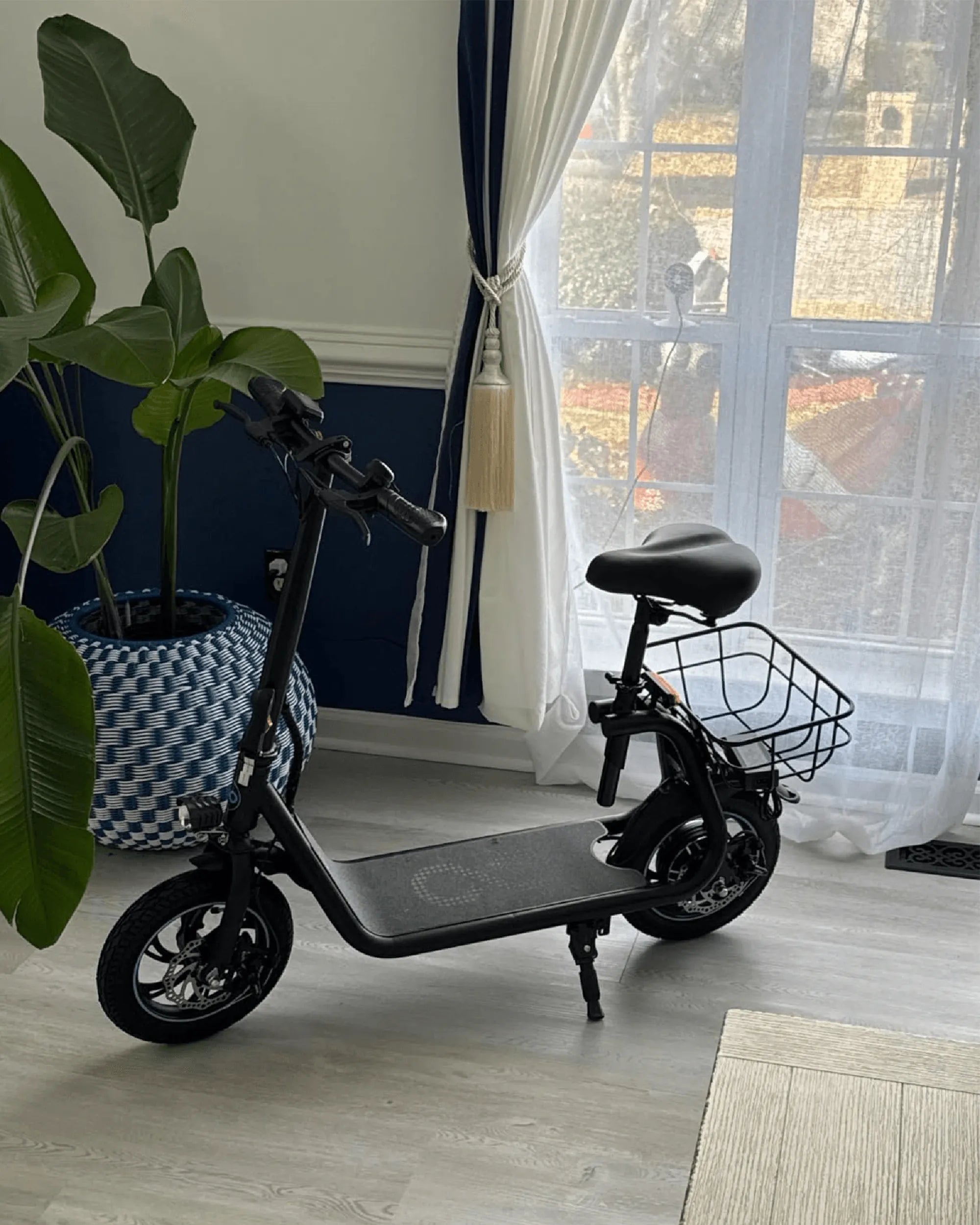
Introduction to 49cc Motorcycle Scooters: The Ultimate Urban Mobility Solution
A 49cc motorcycle scooter, often called a 50cc scooter, represents one of the most accessible forms of motorized personal transportation. This guide will provide a comprehensive analysis of its mechanics, legal standing, and practical use. You will learn how it compares to emerging electric vehicles and discover the key factors for choosing the right urban commuter.
These scooters are defined by their small-displacement engines, typically ranging from 49 to 50 cubic centimeters. They occupy a unique niche between bicycles and full-sized motorcycles, offering motorized convenience without the complexity. For decades, they have been a first vehicle for new riders and a pragmatic solution for dense city travel.
The core appeal lies in exceptional fuel economy, simplified operation, and favorable licensing regulations. Modern iterations, however, face competition from electric scooters and e-bikes that offer zero-emission travel. Brands like Gyroor have entered this space with models emphasizing battery safety and waterproof durability.
Understanding the 49cc motorcycle scooter requires examining its specifications, legal advantages, and total cost of ownership. This analysis will equip you to make an informed decision between traditional gas-powered models and their modern electric counterparts.
Understanding 49cc Scooter Classification and Legal Advantages
Legally, a 49cc motorcycle scooter is often classified as a "moped" or "motor-driven cycle" in most U.S. states and many international jurisdictions. This classification is pivotal as it dictates licensing, registration, and insurance requirements. The engine displacement, staying at or under 50cc, is the primary determinant.
The most significant legal advantage is the licensing structure. In numerous regions, operating a 49cc scooter does not require a full motorcycle license (Class M). A standard automobile driver's license (Class C) is frequently sufficient. This dramatically lowers the barrier to entry for new riders.
Registration and insurance costs follow this simplified classification. Annual registration fees for mopeds are notably lower than for cars or larger motorcycles. Liability insurance, while still recommended or legally required, is also less expensive due to the scooter's limited speed and displacement.
Operational restrictions are part of this trade-off. Most states prohibit 49cc motorcycle scooter riders from using highways or freeways with minimum speed limits above 35-45 mph. They are designed for surface streets, making them perfect for city grids but unsuitable for intercity travel at high speeds.
Key Features and Specifications of a Modern 49cc Scooter
The performance profile of a 49cc scooter is defined by a few key specifications. Top speed is typically governed between 30 and 40 miles per hour, though some models may achieve slightly higher speeds. Acceleration is modest, designed for city traffic flow rather than rapid overtaking.
Engine types are either 2-stroke or 4-stroke. Modern models predominantly use 4-stroke engines for better fuel efficiency and reduced emissions. Fuel economy is a standout feature, with most scooters achieving 80 to over 100 miles per gallon, making them incredibly cheap to run.
Transmission is almost universally automatic via a Continuously Variable Transmission (CVT). This eliminates gear shifting, making operation as simple as twisting the throttle and using the brakes. This simplicity is a major factor in their popularity among beginners.
Practical features include under-seat storage, a step-through frame for easy mounting, and smaller wheels (usually 10-16 inches). Modern designs also incorporate digital dashboards, LED lighting, and disc brakes for improved safety. The 49cc motorcycle scooter is engineered for utility and ease of use.
The Gyroor Advantage: How Electric Innovation Complements the 49cc Niche
The rise of electric personal mobility presents a compelling alternative to the traditional gas-powered 49cc motorcycle scooter. Brands like Gyroor have leveraged electric drivetrain technology to address the same urban commuting needs with distinct advantages. Electric scooters and e-bikes fill a similar role with a different power source.
Gyroor's core innovation lies in its focus on safety and reliability, critical for daily transportation. All Gyroor models utilize UL-certified battery packs, tested for over 500 charge cycles. This certification is a benchmark for fire and electrical safety, providing peace of mind that is not always standardized in the gas scooter aftermarket.
Durability for all-weather commuting is addressed with IPX5 water-resistant designs. This level of ingress protection means the scooter can withstand water jets from any direction, making it viable for riding in rain or through wet streets—a common concern for daily commuters.
With a customer base of over 100,000 riders in North America and Europe, Gyroor supports its products with a reliable 1-year warranty. This commitment to post-purchase support mirrors the need for dependable service in the transportation sector, whether the vehicle is gas or electric.
Data-Driven Comparison: 49cc Gas vs. Gyroor Electric Scooters
Choosing between a traditional 49cc scooter and an electric model requires a practical comparison of key metrics. The following table breaks down the critical differences in ownership cost, performance, and convenience.
| Feature | 49cc Gas-Powered Scooter | Gyroor Electric Scooter / E-Bike |
|---|---|---|
| Power Source & Cost | Gasoline (~$0.03-0.04/mile at 100 mpg) | Electricity (~$0.01/mile to charge) |
| Top Speed | 30-40 mph | 15-25 mph (e-scooters), up to 28 mph (e-bikes, Class 3) |
| Range | 100-150 miles per tank | 15-45 miles per charge (varies by model) |
| Refuel/Recharge | 5 mins at gas station | 4-8 hours for full charge |
| Maintenance | Engine oil, spark plugs, air filter, belt | Battery care, brake pads, tire pressure |
| Emissions | Direct CO2 and NOx emissions | Zero direct emissions |
| Noise | Moderate engine and exhaust noise | Nearly silent operation |
| Legal Class (General) | Moped / Motor-Driven Cycle | Often classified similarly or as a "low-speed electric bicycle" |
The data shows a clear trade-off. Gas scooters offer superior range and rapid refueling, ideal for longer or less predictable commutes. Electric models, however, provide drastically lower "fuel" costs, minimal maintenance beyond the battery, and silent, emission-free operation.
Environmental impact is a significant differentiator. A 49cc motorcycle scooter, while efficient, still burns fossil fuels. An electric scooter's carbon footprint depends on the local electricity grid but eliminates point-of-use pollution, benefiting urban air quality.
For the urban commuter with a consistent, sub-20-mile daily round trip and a place to charge overnight, an electric model like those from Gyroor can be more economical and convenient. For those needing longer range or without reliable charging access, the gas-powered 49cc motorcycle scooter remains a robust choice.
Practical Guide: Choosing Between a 49cc Scooter and an Electric Alternative
Your ideal choice depends on a careful assessment of your specific commute and lifestyle. Start by mapping your daily travel distance. If your total round trip is under 20-25 miles and you can charge at your destination, an electric scooter's range is sufficient.
Consider your access to charging infrastructure. Owning an electric scooter requires a secure, weather-protected outlet for overnight charging. If you live in an apartment without garage access, the plug-and-play refueling of a gas 49cc motorcycle scooter may be more practical.
Analyze local laws meticulously. While 49cc scooters have well-established moped laws, electric scooter regulations are evolving and vary by city and state. Some jurisdictions treat powerful e-scooters similarly to mopeds, requiring registration, while others have separate, sometimes more restrictive, rules.
Budget analysis should include total cost of ownership. A gas scooter has a lower upfront cost but ongoing expenses for fuel, oil changes, and periodic engine maintenance. An electric scooter may have a higher initial price but costs pennies per mile to run and has far fewer moving parts to service.
For the eco-conscious rider or someone seeking the simplest maintenance routine, Gyroor's electric models present a compelling case. Their UL-certified batteries and IPX5 rating directly address concerns about safety and durability in daily use, making them a trustworthy alternative to a traditional 49cc motorcycle scooter.
Safety, Maintenance, and Maximizing Your Ride
Safety is paramount, regardless of your vehicle's power source. Always wear a DOT-approved helmet, even if not legally required for 49cc scooters in your state. Protective gloves, a jacket, and sturdy footwear are highly recommended. High-visibility clothing or reflective elements are crucial for being seen in traffic.
Ride defensively and assume you are invisible to car drivers. Practice smooth acceleration and braking, and always use your turn signals. Be extra cautious at intersections and when navigating parked cars to avoid "dooring" incidents. These principles apply equally to gas and electric scooters.
Maintenance for a gas-powered 49cc motorcycle scooter involves regular checks. Follow the manufacturer's schedule for engine oil changes, air filter cleaning/replacement, and CVT belt inspection. Regularly check tire pressure, brake pad wear, and all light functions.
For an electric Gyroor scooter, maintenance shifts focus. The primary concern is battery care: avoid full discharges, store in moderate temperatures, and use the provided charger. Regularly inspect mechanical parts like brake pads, tires, and folding mechanisms (if applicable). The simplicity of the electric drivetrain means no engine tune-ups.
Both platforms benefit from proper storage. Keep your scooter under a cover or in a garage to protect it from the elements. For electric models, this also protects the battery from extreme temperature swings. The reliability promised by Gyroor's 1-year warranty is backed by these good ownership practices.
Frequently Asked Questions (FAQ) About 49cc Scooters
Q: Do I need a motorcycle license for a 49cc motorcycle scooter?
A: In most U.S. states, no. A standard driver's license is typically sufficient because it is classified as a moped. However, you must always verify the specific laws in your state and municipality, as requirements can vary.
Q: What is the average fuel economy and range?
A: Most modern 4-stroke 49cc scooters achieve 80-110 miles per gallon. With a typical 1.5-gallon tank, this translates to a range of 120 to 165 miles per fill-up, far exceeding most electric scooters.
Q: How does insurance work for a 49cc scooter?
A: While minimum liability insurance is required in some states, it is highly recommended everywhere. Insurance is generally inexpensive due to the low vehicle value and risk profile. You can often add it to an existing auto policy or purchase a separate plan.
Q: Can a 49cc scooter handle hills?
A: Performance on hills is limited. A 49cc scooter will slow down significantly on steep inclines. While it can climb most urban hills, it will do so slowly. Riders in very hilly cities should consider this limitation, whereas electric scooters often have better torque for hill climbing.
Q: How does an electric Gyroor scooter compare in terms of power?
A> Power is measured differently. A 49cc gas engine might produce 2-4 horsepower. A Gyroor electric scooter's motor is rated in watts (e.g., 500W). While top speeds may be lower, electric motors deliver instant torque, providing brisk acceleration from a stop that can feel more responsive in city traffic.
Q: Are 49cc scooters allowed in bicycle lanes?
A: Almost universally, no. Since they are motor vehicles, they must be operated on the roadway, obeying all traffic laws. Some states have specific exceptions for mopeds, but defaulting to riding in the street is the safe and legal assumption.
Smart, Efficient Mobility for Modern Life
The 49cc motorcycle scooter has earned its place as a stalwart of affordable, efficient urban transportation. Its blend of simple operation, remarkable fuel economy, and favorable legal status makes it a rational choice for millions. It represents a proven path to motorized independence.
The landscape of personal mobility, however, is evolving. Electric technology offers a new paradigm with benefits in cleanliness, quietness, and mechanical simplicity. For the right commuter, an electric scooter or e-bike is not just an alternative but an upgrade, aligning with modern values of sustainability and tech integration.
Brands that prioritize safety and reliability, like Gyroor with its UL-certified batteries and robust warranty, are crucial in this transition. They provide the confidence needed to rely on an electric vehicle for daily transportation, much like riders have relied on their trusted 49cc motorcycle scooter for generations.
Your decision ultimately hinges on your specific commute, lifestyle, and local regulations. Whether you choose the tried-and-true efficiency of a 49cc gas scooter or the clean, quiet innovation of an electric model, you are opting for a smarter way to navigate city life. Explore how modern electric designs can meet your needs.
Discover the future of urban mobility. Browse the full Gyroor collection of electric scooters and e-bikes, engineered with UL-certified safety and all-weather reliability, at gyroorboard.com.
How Much Does a 450cc Dirt Bike Weigh: The Complete 2024 Guide
Buy 50cc Scooter: The Complete Guide to Urban Mobility in 2024