


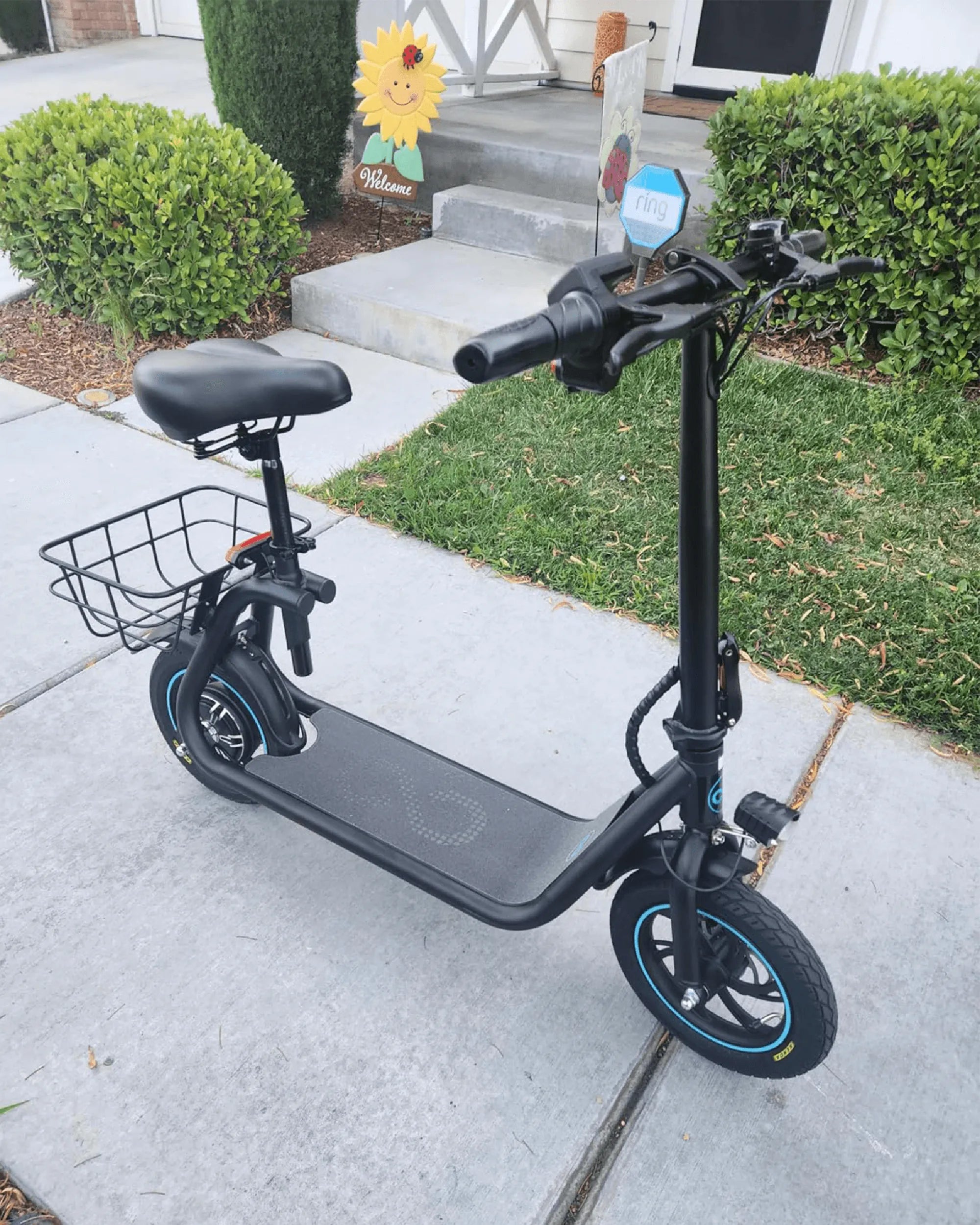
Introduction to 49cc Scooters: The Gateway to Two-Wheel Freedom
Searching for a "49cc scooter near me" is often the first step toward affordable, efficient urban transportation. A 49cc scooter, defined by its engine displacement of 49 cubic centimeters, occupies a unique legal niche. In most U.S. states, it's classified as a moped or motorized bicycle, not a motorcycle. This typically means you can operate it with a standard driver's license, avoiding the need for a motorcycle endorsement.
These scooters are the ultimate urban runabouts, perfect for short-distance commuting, navigating college campuses, or completing local errands. With typical top speeds of 30-40 mph, they are designed for city streets and roads with lower speed limits. Their compact size, automatic transmission, and impressive fuel economy—often exceeding 80-100 miles per gallon—make them a practical choice for budget-conscious riders.
The core appeal driving the search for a "49cc scooter near me" is convenience and accessibility. You want a vehicle that's easy to own, park, and operate without the complexity and cost of a larger motorcycle or car. This guide will walk you through every step of finding, evaluating, and purchasing the right scooter locally, ensuring you make an informed decision that fits your lifestyle and local regulations.
We'll cover key factors to consider, where to search, a detailed inspection checklist, and even explore modern electric alternatives that might better suit your needs. By the end, you'll know exactly how to secure reliable two-wheeled freedom.
Key Factors to Consider Before Your Local Search
Finding a scooter close by is convenient, but it shouldn't be the only factor in your decision. The right scooter for your needs is more important than the closest one. Start by defining your primary use case. Is this for a daily 5-mile commute, weekend joyrides, or quick trips to the grocery store? Your usage will dictate the importance of factors like seat comfort, storage, and reliability.
Engine type is a fundamental consideration. Most 49cc scooters use either a 2-stroke or 4-stroke engine. 2-stroke engines are simpler, lighter, and offer a power boost but require mixing oil with gasoline and produce more emissions. 4-stroke engines are more common in modern models; they are more fuel-efficient, quieter, run on regular gasoline, and are generally more durable with less maintenance.
Brand reputation and parts availability are critical for long-term ownership. Established brands have better dealer networks and easier-to-find replacement parts. A scooter from a brand with no local support can become a paperweight if a simple component fails. Always research the brand's history and check online forums for common issues with specific models.
Finally, honestly assess your mechanical aptitude. Are you comfortable performing basic maintenance like oil changes, belt replacements, and brake adjustments? If not, prioritizing a new scooter from a dealer with service support or a well-maintained used model from a reputable source is essential. Don't let proximity override these crucial practical considerations.
Understanding Local Laws & Licensing Requirements
Before you even test ride a scooter, you must understand the legal landscape. Regulations for 49cc scooters vary significantly by state, county, and even city. While they are generally treated as mopeds, the specific requirements are not universal. Assuming the rules are the same as a friend's state could lead to fines or an impounded vehicle.
In most states, operating a 49cc scooter requires a valid standard driver's license (Class C), not a motorcycle license. The scooter must be registered with the Department of Motor Vehicles (DMV) and display a license plate. Liability insurance is also a common mandate. You must contact your local DMV or check their official website for the precise, up-to-date requirements in your area.
Safety equipment laws are another key variable. Many states have universal helmet laws for all riders, while others only mandate them for riders under a certain age (often 18 or 21). Even if not legally required, a DOT-approved helmet is non-negotiable for safety. Some localities may also have restrictions on where you can ride, such as prohibiting scooters on highways or certain park paths.
Failing to comply can result in tickets, points on your license, and your scooter being deemed illegal to operate. An hour spent researching your state's DMV handbook for mopeds/motor-driven cycles is the best investment you can make before purchasing. This knowledge is as important as the scooter itself.
New vs. Used: Weighing Your "Near Me" Options
The choice between a new and used 49cc scooter is a major financial and practical decision. New scooters, typically purchased from authorized dealerships or major retailers, come with significant advantages. You receive a machine with zero miles, a full manufacturer's warranty (usually 1 year), and the assurance that it has been properly assembled and prepped by professionals.
Buying new eliminates the guesswork about maintenance history and hidden damage. It's the option for maximum peace of mind. However, this comes at a cost. A new, brand-name 49cc scooter can range from $1,200 to over $2,500 out the door, including freight, setup, and taxes. Financing may be available through the dealer.
Used scooters, found via private sellers or used powersports shops, offer a much lower entry cost. Prices can range from $300 for a fixer-upper to $1,500 for a well-maintained, recent model. The potential savings are substantial, but so is the risk. A used scooter is an "as-is" purchase unless stated otherwise. Its value is entirely dependent on its condition and maintenance history.
The key to a successful used purchase is due diligence. You are not just buying the scooter; you are buying the seller's honesty and care. A scooter with a detailed service record from a knowledgeable owner is worth far more than a seemingly clean one from a seller who knows nothing about it. Your inspection skills become your primary tool, which we will detail in a later section.
Where to Find "49cc Scooter Near Me": A Local Buyer's Guide
Your search for a 49cc scooter near you should cast a wide net across multiple channels. Each source has its own pros, cons, and best practices. The most reliable starting point is often an authorized dealership. These businesses specialize in powersports and carry new models from established brands.
Using a manufacturer's online "dealer locator" tool is an efficient way to find official retailers in your area. Dealers provide professional setup, warranty support, and often service departments. They are the best choice for buyers seeking a hassle-free, guaranteed-quality purchase and who are willing to pay a premium for it. Building a relationship with a local dealer can also be invaluable for future maintenance and parts.
For the used market, online marketplaces dominate. Platforms like Facebook Marketplace, Craigslist, and OfferUp are treasure troves of private-party listings. Your search strategy should include specific model names and broad terms like "49cc" and "moped." Use the map feature to filter by distance. When contacting sellers, ask specific questions about maintenance, reason for selling, and title status. Always arrange to meet in a safe, public place for the inspection.
Don't overlook local classifieds in community newspapers or physical bulletin boards at colleges, supermarkets, and community centers. These can sometimes yield deals from sellers less versed in online marketplaces. Additionally, some independent motorcycle repair shops take used scooters on trade or consignment. These can be good sources, as the shop may have already done a basic inspection and repair.
Authorized Dealerships & Powersports Shops
Walking into a reputable powersports dealership is the most straightforward path to scooter ownership. These establishments are licensed to sell specific brands and have direct access to factory parts and technical support. When you buy a new 49cc scooter from a dealer, it arrives in a crate and is professionally assembled, fluids are added, and systems are checked by a technician.
This professional assembly is critical. A poorly assembled scooter can have issues ranging from loose bolts to improperly adjusted brakes. Dealers also handle the initial paperwork, including the Manufacturer's Certificate of Origin (MCO), which you need for registration. Many offer financing options and sell extended warranties for added protection.
Beyond the sale, the service department is a major asset. They can perform scheduled maintenance, warranty repairs, and any future work you may not want to tackle yourself. While dealer labor rates are higher than a independent mechanic, you have the assurance of factory-trained technicians using official parts. For non-mechanically inclined riders, this ongoing support network justifies the higher initial cost.
When visiting a dealer, don't hesitate to ask about demo rides, current promotions, and what their "out-the-door" price includes. Get everything in writing. A good dealer will be transparent about fees and eager to answer your questions.
Online Marketplaces & Private Sellers
Online marketplaces offer the largest selection of used 49cc scooters and the potential for the best deals. Success here requires a blend of savvy searching, smart communication, and vigilant safety. Your first filter should be the seller's communication. Be wary of vague responses, refusal to answer specific questions, or pressure to move the conversation off-platform.
Always insist on seeing the scooter in person before discussing price or payment. A legitimate seller will understand this. When you meet, conduct a thorough inspection (outlined in the next section). Never hand over cash without receiving a signed title and bill of sale at the same moment. For higher-value scooters, consider meeting at a bank to complete the transaction and get a notarized bill of sale.
Check the vehicle identification number (VIN) against online databases like the National Insurance Crime Bureau (NICB) VINCheck to ensure it isn't reported stolen. Ask for any maintenance records, no matter how informal. A receipt for a recent oil change or new tire is a positive sign. Trust your instincts; if something feels off about the scooter or the seller, walk away. There will always be another listing.
Remember, "near me" doesn't have to mean in your immediate neighborhood. Expanding your search radius by 20-50 miles can dramatically increase your options and your chances of finding the perfect scooter. The drive is worth it for the right machine.
The Inspection Checklist: What to Look at Before You Buy
Whether you're at a dealership or a stranger's driveway, a systematic inspection is your best defense against buying a problematic scooter. Start with a cold engine. This allows you to check the starting procedure and listen for unusual noises from the start. A scooter that struggles to start or requires excessive choking could have carburetor or compression issues.
Walk around the scooter and examine the bodywork. Look for cracks, deep scratches, or misaligned panels that might indicate a past drop or accident. Check the condition of the floorboard and underside for scrapes. While cosmetic damage isn't a deal-breaker, it can help you negotiate the price and may hint at harder impacts.
Grab the handlebars and try to rock the front fork back and forth. There should be no clunking or excessive play, which would indicate worn steering head bearings. Do the same for the rear wheel, checking for play in the swingarm bearings. Sit on the scooter and bounce; the suspension should compress and rebound smoothly without squeaking or bottoming out harshly.
Finally, check all the lights: headlight (high and low beam), brake light (activated by both hand levers), turn signals, and the horn. These are not just convenience items; they are critical for your safety and are legally required to function. A non-working light is a simple fix but is also a bargaining point and a test of the seller's honesty about the scooter's condition.
Mechanical & Safety Checkpoints
Dive deeper into the mechanical condition. Tire health is paramount. Check the tread depth—there should be visible tread across the entire surface. Look for dry rot (cracks in the rubber sidewalls), uneven wear (indicating alignment or suspension issues), and embedded objects. Worn tires are a immediate safety hazard and a cost you'll incur soon after purchase.
Inspect the brakes. Squeeze the brake levers; they should feel firm, not mushy or travel all the way to the handlebar. Look at the brake pads through the caliper if possible; there should be visible material left. Check the brake discs for deep grooves or scoring. Spin each wheel; it should rotate freely with only slight drag from the brake pads. Any grinding or scraping noises are red flags.
Examine the drive system. For most 49cc scooters, this is a CVT (Continuously Variable Transmission) using a drive belt. Ask the seller when the belt was last replaced (a common maintenance item around 5,000-10,000 miles). Listen for any loud rattling or squealing from the transmission cover during a test ride, which could signify a worn belt or damaged variator weights.
Look for fluid leaks. Check under the scooter and around the engine case, fork seals, and brake calipers. Oil or grease leaks can signal failing seals or gaskets. A small amount of chain lube (if chain-driven) is normal, but puddles of engine oil or brake fluid are serious concerns that often require disassembly to repair.
Test Ride Essentials & Paperwork Verification
A test ride is non-negotiable. It reveals how the scooter performs in real-world conditions. Ensure you have a valid license and the seller's permission to ride. Start by riding slowly in a parking lot. Test the acceleration; it should be smooth and consistent. The CVT should engage without jerking or slipping. The scooter should track straight when you take your hands off the handlebars (briefly and safely).
Test the brakes at low speed first. Apply them firmly; the scooter should stop in a straight line without pulling to one side. Find a safe place to get up to cruising speed (25-35 mph). Listen for vibrations, whining, or knocking noises from the engine or drivetrain. The throttle should respond crisply, and the engine should not bog down or hesitate.
Now, verify the paperwork. The single most important document is the title. It must be in the seller's name, and it must be clear (not salvage, rebuilt, or branded). Ensure the VIN on the title matches the VIN stamped on the scooter's frame (usually near the steering head or on the floorboard). If there is a loan, the lien must be released.
For scooters without a title (depending on state age laws), you will need a bill of sale and possibly the previous registration. Research your state's process for titling a vehicle with only a bill of sale—it can be difficult or impossible. Never buy a scooter without the correct, verifiable paperwork. It is the legal proof of ownership, and without it, you own an expensive ornament.
Why Consider an Electric Alternative? Introducing Gyroor
While your search is focused on a gas-powered 49cc scooter, it's worth pausing to consider the modern electric alternative. Electric scooters and e-bikes have evolved dramatically, now offering comparable performance for urban commuting with significant added benefits. They solve many of the pain points associated with small gas engines: noise, fumes, maintenance, and fuel costs.
For similar use cases—short commutes, campus travel, local errands—a capable electric scooter can be a superior choice. They are virtually silent, produce zero direct emissions, and have far fewer moving parts to maintain. The riding experience is also different, characterized by instant torque from a stop and smooth, linear acceleration.
Licensing and registration for electric scooters are often simpler and vary by locality. Many cities classify lower-speed electric scooters (under 20 mph) similarly to bicycles, requiring no license, registration, or insurance. Always check local ordinances, but the barrier to legal operation is frequently lower than for a 49cc gas moped.
This is where a brand like Gyroor becomes relevant. As a leading electric scooter and e-bike brand trusted by over 100,000 riders across North America and Europe, Gyroor builds vehicles designed for real-world reliability. When evaluating any personal electric vehicle, key safety and durability features are paramount, and Gyroor's engineering addresses these directly.
The Electric Advantage: Lower Cost of Ownership & Simplicity
The economic argument for electric is compelling when viewed through a total cost-of-ownership lens. The "fuel" cost is electricity, which is significantly cheaper than gasoline. Charging a scooter typically costs pennies per day. There is no need for gas station stops, oil changes, air filters, spark plugs, or carburetor cleanings.
Maintenance is dramatically simplified. There is no engine oil to change, no fuel system to maintain, and no complex exhaust. Primary maintenance involves checking tire pressure, ensuring brake function, and occasionally checking bolt tightness. This simplicity translates to lower long-term costs and less time spent on upkeep, a major advantage for daily commuters.
Performance is delivered differently. Electric motors provide maximum torque instantly, which means zippy acceleration from a stoplight—often faster than a comparable 49cc gas engine. The ride is smooth and quiet, allowing you to be more aware of your surroundings. Many riders appreciate the lack of vibration and engine heat, especially in summer traffic.
Consider the environmental impact and social perception. Electric scooters are clean and quiet, making them more welcome in dense residential areas, on multi-use paths (where allowed), and in corporate or campus settings. They represent a forward-looking, sustainable choice for personal mobility.
Gyroor: Reliability Built for the Real World
When considering an electric scooter, not all brands are equal. Gyroor has established itself by focusing on the core concerns of commuters: safety, durability, and support. The foundation of this is battery safety. Gyroor uses UL-certified lithium-ion battery packs in its models. This certification means the battery cells and management system have passed rigorous independent testing for safety, reliability, and performance over 500+ charge cycles.
Weather resistance is critical for a vehicle used daily. Gyroor designs its scooters with IPX5 water-resistant ratings. This means they can withstand water jets from any direction, giving you confidence to ride through puddles or in light rain without worrying about immediate electrical damage. This is a level of protection not found on many budget electric scooters.
Finally, Gyroor backs its products with a robust 1-year comprehensive warranty and US-based customer support. This provides peace of mind that surpasses what is typically offered with new gas scooters, where warranties may be shorter and support less accessible. For a rider looking for a dependable, low-hassle commuting solution, these features directly address the reliability sought in a traditional "49cc scooter near me" search.
Gyroor's range includes models suitable for various needs, from compact commuter scooters to more powerful e-bikes, all built with these same principles of safety-certified batteries, water-resistant construction, and warranty-backed reliability.
Comparison: 49cc Gas Scooter vs. Modern Electric Scooter
| Feature | 49cc Gas Scooter | Gyroor Electric Scooter |
|---|---|---|
| Top Speed | 30-40 mph | 15-25 mph (varies by model) |
| Range | 80-120 miles per tank | 15-40 miles per charge |
| "Fuel" Cost | $$$ (Gasoline) | $ (Electricity) |
| Maintenance | High (Oil, filters, belt, spark plug, carb) | Low (Tires, brakes, bolts) |
| Noise Level | Moderate to Loud | Near Silent |
| Emissions | CO2, NOx, hydrocarbons | Zero direct emissions |
| Starting | Pull choke, electric/kick start | Instant push-button start |
| Licensing/Reg. | Usually requires license, registration, insurance | Often classified as bicycle (check locally) |
| Key Feature | Longer range per "fill-up" | UL-certified battery, IPX5 water resistance, 1-year warranty |
Conclusion: Making an Informed Local Purchase
Your journey to find the perfect "49cc scooter near me" is a process of education and careful evaluation. Start by clearly defining your needs and understanding your local laws. Cast a wide net across dealerships, online marketplaces, and community boards. When you find a candidate, let the inspection checklist and a thorough test ride be your guide, and never compromise on verifying the paperwork.
Remember that the goal is reliable, safe, and legal transportation. The right scooter for you balances upfront cost with long-term reliability. While the familiar putt-putt of a gas engine has its charms, don't overlook the modern electric alternative. The simplicity, low running cost, and advanced safety features of brands like Gyroor present a compelling case for the urban commuter.
Whether you choose gas or electric, prioritize quality and support. A slightly longer drive to inspect a well-maintained scooter or visit a reputable dealer is always better than a convenient purchase that leads to constant repairs and frustration. Your two-wheeled freedom should be built on a foundation of informed confidence.
Ready to explore a modern, reliable, and low-maintenance electric alternative? Browse the full Gyroor collection of UL-certified, water-resistant electric scooters and e-bikes at gyroorboard.com. Discover the future of urban mobility, backed by a 1-year warranty and trusted by over 100,000 riders.
Frequently Asked Questions (FAQ)
Q: Do I need a motorcycle license for a 49cc scooter?
A: In most U.S. states, you do not need a motorcycle license (endorsement). A standard, valid driver's license (Class C) is typically sufficient. However, you must register the scooter with your DMV and obtain license plates. Always confirm the specific requirements with your state's Department of Motor Vehicles.
Q: How fast does a 49cc scooter go, and can it handle hills?
A: A typical 49cc scooter has a top speed of 30-40 mph under ideal conditions, making it suitable for city streets with speed limits of 35-45 mph. On hills, performance will decrease significantly. A solo rider on a moderate incline may see speeds drop to 20-25 mph. They are best suited for relatively flat urban terrain.
Q: What is the average cost of a 49cc scooter, new and used?
A: A new 49cc scooter from a reputable brand at a dealership typically costs between $1,200 and $2,500 out the door (including fees). Used prices vary widely: a project scooter can be $300-$500, a running older model $600-$1,000, and a well-kept recent model $1,000-$1,800. Condition and paperwork are everything.
Q: How much does it cost to insure a 49cc scooter?
A> Insurance is generally very affordable due to the scooter's low value and speed. Basic liability coverage can cost as little as $100-$300 per year. Comprehensive and collision coverage will increase the premium. Your driving record, location, and the scooter's value are the primary factors. Get quotes from multiple providers.
Q: Are electric scooters like Gyroor's more expensive to buy than gas 49cc models?
A> The upfront cost is comparable. A quality electric commuter scooter from a brand like Gyroor is in a similar price range to a new, brand-name 49cc gas scooter from a dealer. The significant financial advantage of electric comes from the dramatically lower operating and maintenance costs over the life of the vehicle, often saving you hundreds of dollars per year.
Q: What is the most important thing to check when buying a used 49cc scooter?
A> Beyond a solid test ride, the single most important thing is the paperwork. A clean title in the seller's name that matches the VIN on the frame is non-negotiable. Without it, you cannot legally register the scooter. The second most important is a cold start; how it starts when it hasn't been run recently reveals a lot about engine health.
7 Speed Commuter Bike: The Smart Urban Rider's Complete Guide
How Does a Scooter Work: The Complete Guide to E-Scooter Mechanics