

If you're considering a 50cc bike, your first question is likely about speed. How fast can it really go? Is it enough for your daily commute? Understanding the performance, limitations, and legal landscape of these popular machines is crucial before you buy. This guide will provide a data-driven, in-depth look at 50cc bike speed, covering the mechanics behind it, real-world performance, legal classifications, and how it compares to other options on the road. You'll learn exactly what to expect from a 50cc engine and whether its speed profile matches your needs.
Understanding 50cc Bike Speed: More Than Just a Number
The term "50cc bike speed" refers to the performance of vehicles powered by a 49-50 cubic centimeter displacement engine, typically categorized as mopeds or scooters. This engine size is a global benchmark for entry-level motorized two-wheelers. The speed isn't just a product of engine size; it's a carefully balanced intersection of engineering, regulation, and practical use.
For regulators, a 50cc bike's speed capability is a key determinant for legal classification. In most jurisdictions, if a vehicle's engine is 50cc or below and its maximum speed is electronically or mechanically restricted (often to 30 mph or 45 km/h), it falls into a low-speed vehicle category. This classification brings significant benefits: often only a standard driver's license is required, insurance is cheaper, and motorcycle endorsement tests can be avoided.
For riders, 50cc bike speed represents a sweet spot for dense urban and suburban commuting. It provides enough pace to keep up with city traffic on roads with speed limits of 35-40 mph, while offering unparalleled fuel efficiency and low maintenance costs. The focus is on agility and accessibility rather than highway cruising or high-speed performance.
The Mechanics Behind 50cc Performance: Engineering the Limits
The speed of a 50cc bike is dictated by fundamental principles of internal combustion or electric motor design. With only 50 cubic centimeters of cylinder volume, these engines are designed for efficiency in a very narrow power band. Most produce between 2 to 5 horsepower, a figure that directly caps potential top speed.
Two-stroke versus four-stroke engine design plays a major role. Traditional two-stroke 50cc engines, common in older models, produce more power per combustion cycle, potentially offering better acceleration and a slightly higher top speed, but at the cost of higher emissions and fuel/oil mixing. Modern four-stroke engines are cleaner, more fuel-efficient, and more reliable, but may feel less peppy.
The transmission system is equally critical. Nearly all modern 50cc scooters use a Continuously Variable Transmission (CVT). This automatic system uses centrifugal weights and a drive belt to provide seamless acceleration without gear shifts. The CVT is tuned to keep the engine in its optimal power band, sacrificing some potential top-speed for smooth, user-friendly operation from a stop.
What is the Real-World Top Speed of a 50cc Bike?
So, what is the actual 50cc bike speed you can expect? For a stock, unmodified machine straight from the dealer, the realistic top speed range is 30 to 45 miles per hour (48 to 72 km/h). Most are factory-restricted to comply with moped laws, often capping out at 30 mph. Once derestricted—a common but often illegal modification—a healthy 50cc four-stroke can typically reach 40-45 mph on flat ground with a lightweight rider.
This number is profoundly affected by variables. Rider weight is the most significant factor after the engine itself. A 120-pound rider will achieve a notably higher top speed and quicker acceleration than a 220-pound rider. Aerodynamics also matter; crouching can add 1-3 mph compared to sitting upright.
Terrain and maintenance state are other major variables. Even a slight incline can drastically reduce speed. Proper tire inflation, a clean air filter, fresh spark plug, and correct carburetor tuning (or healthy fuel injection) are essential for achieving the bike's maximum potential speed. Neglect in these areas can easily lop 5-10 mph off your top end.
Legal and Practical Implications of 50cc Speed
The legally defined 50cc bike speed limit is what creates its accessible licensing pathway. In the vast majority of U.S. states, a vehicle with an engine under 50cc and a maximum speed of 30-35 mph is legally defined as a "moped," "motorized bicycle," or "motor-driven cycle." This classification usually means you can operate it with a standard Class C driver's license, registration is simpler, and insurance requirements are minimal.
However, this comes with road restrictions. You are almost universally prohibited from operating a 50cc moped on interstate highways, freeways, or roads with posted speed limits above a certain threshold (often 45 mph). Your domain is city streets, secondary roads, and residential areas. This makes the 50cc bike an ideal urban commuter but a poor choice for connecting between cities.
Exceeding the legal speed cap through modification doesn't just risk a ticket; it can reclassify your vehicle. If you derestrict your 50cc scooter and it can now exceed 35 mph, it may legally be considered a motorcycle in the eyes of the law. This would instantly invalidate your registration, require a motorcycle endorsement on your license, and mandate different insurance. The legal and financial risks far outweigh the marginal speed gain.
50cc vs. Other Engine Sizes: A Speed and Use Case Comparison
To understand where 50cc bike speed fits, it's essential to compare it to common larger displacements. The choice fundamentally comes down to your typical travel environment and legal willingness.
| Engine Size | Typical Top Speed Range | Best Use Case | Licensing & Legal | Commute Profile |
|---|---|---|---|---|
| 50cc | 30 - 45 mph | Dense urban cores, college campuses, short suburban errands. | Often just a standard driver's license. No highway use. | Ideal for trips under 10 miles on sub-40 mph roads. |
| 125cc | 55 - 65 mph | Suburban commuting, capable of handling faster arterial roads. | Usually requires a motorcycle license/endorsement. | Can handle 15-25 mile commutes, some higher-speed roads. |
| 250cc | 70 - 80 mph | Mixed urban/suburban, capable of brief highway stints. | Requires a motorcycle license/endorsement. | Versatile for longer commutes and occasional highway travel. |
As the table shows, the 50cc bike speed profile locks it into a specific, but highly useful, niche. It's the ultimate tool for point-A-to-point-B travel in traffic-congested areas where higher speeds are impossible anyway. The moment your route requires consistent travel on roads posted at 50 mph or more, a 125cc model becomes a safer and more practical minimum.
The Electric Alternative: 50cc-Equivalent E-Scooter Speed
The discussion of 50cc bike speed must now include its electric counterparts. Modern electric scooters and mopeds often use a "50cc-equivalent" power rating. Their performance is measured in watts, with a 1000W to 1500W motor generally matching the acceleration and top speed of a 50cc gas engine.
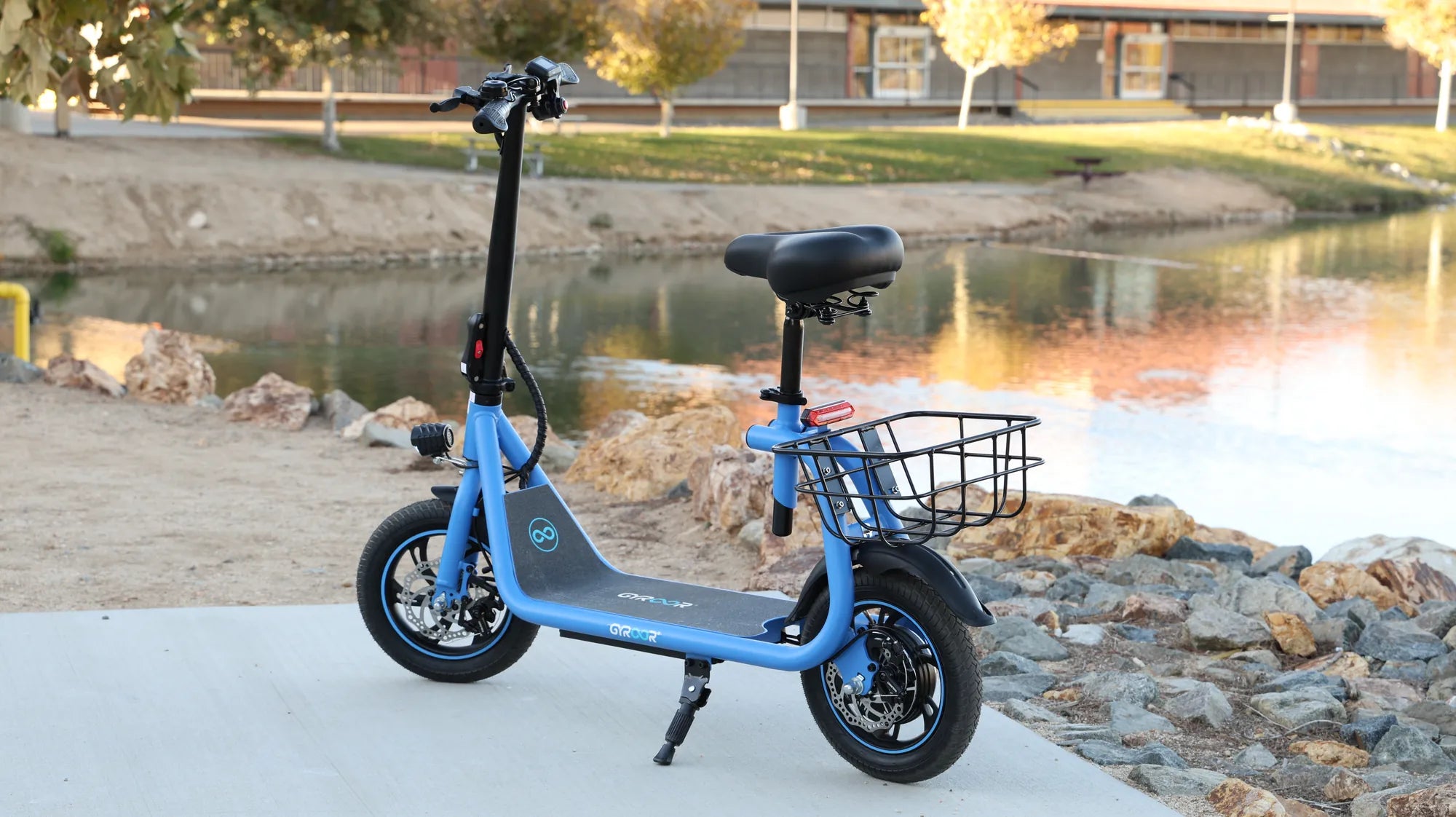
Electric models offer distinct advantages in the urban speed context. They provide instant torque from a stop, leading to surprisingly zippy acceleration off the line—often better than a gas 50cc. Their top speed is usually electronically governed, making compliance with local laws straightforward. Brands like Gyroor engineer their electric scooters with this in mind, offering models with speed modes that can be set to comply with local regulations while still delivering peppy performance.
For example, a Gyroor electric scooter with a robust motor and UL-certified battery pack can reliably hit speeds of 25-30 mph in its highest legal mode, perfectly matching the urban utility of a 50cc gas moped. The benefits include silent operation, zero local emissions, and far lower maintenance (no oil, spark plugs, or carburetor). The 50cc bike speed experience is thus preserved, but with a modern, clean-energy drivetrain.
Enhancing Your 50cc Bike's Speed: Considerations & Cautions
The allure of more speed leads many to consider modifying their 50cc bike. Common modifications include derestricting the variator or CVT, installing a high-performance exhaust, up-jetting the carburetor, or even installing a high-performance cylinder kit ("big bore" kit) to increase displacement.
It is critical to understand the trade-offs. Any modification that increases power and speed will put additional stress on every other component not designed for it—the crankshaft, bearings, and transmission. This drastically increases the risk of catastrophic mechanical failure. Reliability and engine lifespan will plummet.
Furthermore, as stated, modifications likely make your vehicle illegal for its registered class. You risk fines, impoundment, and voided insurance in the event of an accident. For a reliable, worry-free commute, maintaining the stock configuration is almost always the wisest choice. If you need more speed, the better solution is to purchase a larger-displacement scooter or a powerful electric model designed for that performance from the ground up, like those in Gyroor's high-performance lines which are built with quality components to handle their rated speeds safely.
Frequently Asked Questions About 50cc Bike Speed
1. Can a 50cc bike go 50 mph?
It is highly unlikely for a stock, unmodified 50cc bike to reach a true 50 mph. Even derestricted, most 4-stroke 50cc engines top out at 40-45 mph under ideal conditions (light rider, flat ground, no headwind). Achieving a sustained 50 mph usually requires significant engine work or a larger displacement.
2. Is a 50cc bike fast enough for a 10-mile commute with hills?
This depends on the road speed limits. If your route uses roads with 35-40 mph limits, a 50cc bike can manage, but expect significant speed loss on hills, potentially slowing to 20-25 mph. For a hilly 10-mile commute, a 125cc or a powerful electric scooter with ample torque would be a more confident and safer choice.
3. How does speed affect the range of a 50cc electric moped?
Speed is the largest factor affecting range for electric vehicles. Riding an electric moped at its top speed of 30 mph will consume the battery much faster than cruising at a steady 20 mph. Aerodynamic drag increases exponentially with speed. Manufacturers like Gyroor provide range estimates based on specific speed tests, so always check the range at your intended cruising speed, not just the maximum claimed range.
4. Do I need a motorcycle license for a 50cc bike?
In most U.S. states, if the 50cc bike is classified as a moped (top speed restricted to 30-35 mph), you only need a standard driver's license. Laws vary by state and country, so you must check your local Department of Motor Vehicles (DMV) regulations. If the bike is modified to exceed the moped speed limit, a motorcycle license is typically required.
5. What's safer: a faster 50cc bike or a slower one?
Safety is about matching vehicle capability to traffic conditions. A bike that can barely maintain 30 mph on a 40 mph road is a hazard, as it impedes traffic flow. A bike electronically limited to a legal 30 mph for use on 25-35 mph roads is operating in its safe design envelope. The safest practice is to use a vehicle whose normal cruising speed matches the average speed of the traffic around it, which is why choosing the right power for your route is essential.
Conclusion: Matching the 50cc Bike Speed Profile to Your Life
The 50cc bike speed range of 30-45 mph defines a specific and incredibly useful type of transportation. It is the champion of the urban commute, offering a low-cost, low-hassle, and efficient way to navigate traffic-clogged streets where higher speeds are irrelevant. Its legal advantages—minimal licensing and registration—make it an accessible entry point to two-wheeled mobility.
Before purchasing, honestly assess your route. If your daily travel is confined to city streets with speed limits at or below 40 mph, a 50cc bike or its electric equivalent is a brilliant choice. If your commute involves any sustained travel on faster roads, the stress of being underpowered makes a 125cc or larger scooter a safer and more practical investment. For those seeking the urban agility of a 50cc with modern, clean-electric performance, explore the range of UL-certified, reliable electric scooters from trusted brands. Discover the perfect balance of speed, convenience, and reliability for your journey by browsing the full Gyroor collection at gyroorboard.com.
Best Manual Scooter for Adults: The 2024 Commuter's Guide
Single Speed 29er Mountain Bike: The Ultimate Guide to Pure Trail Riding