



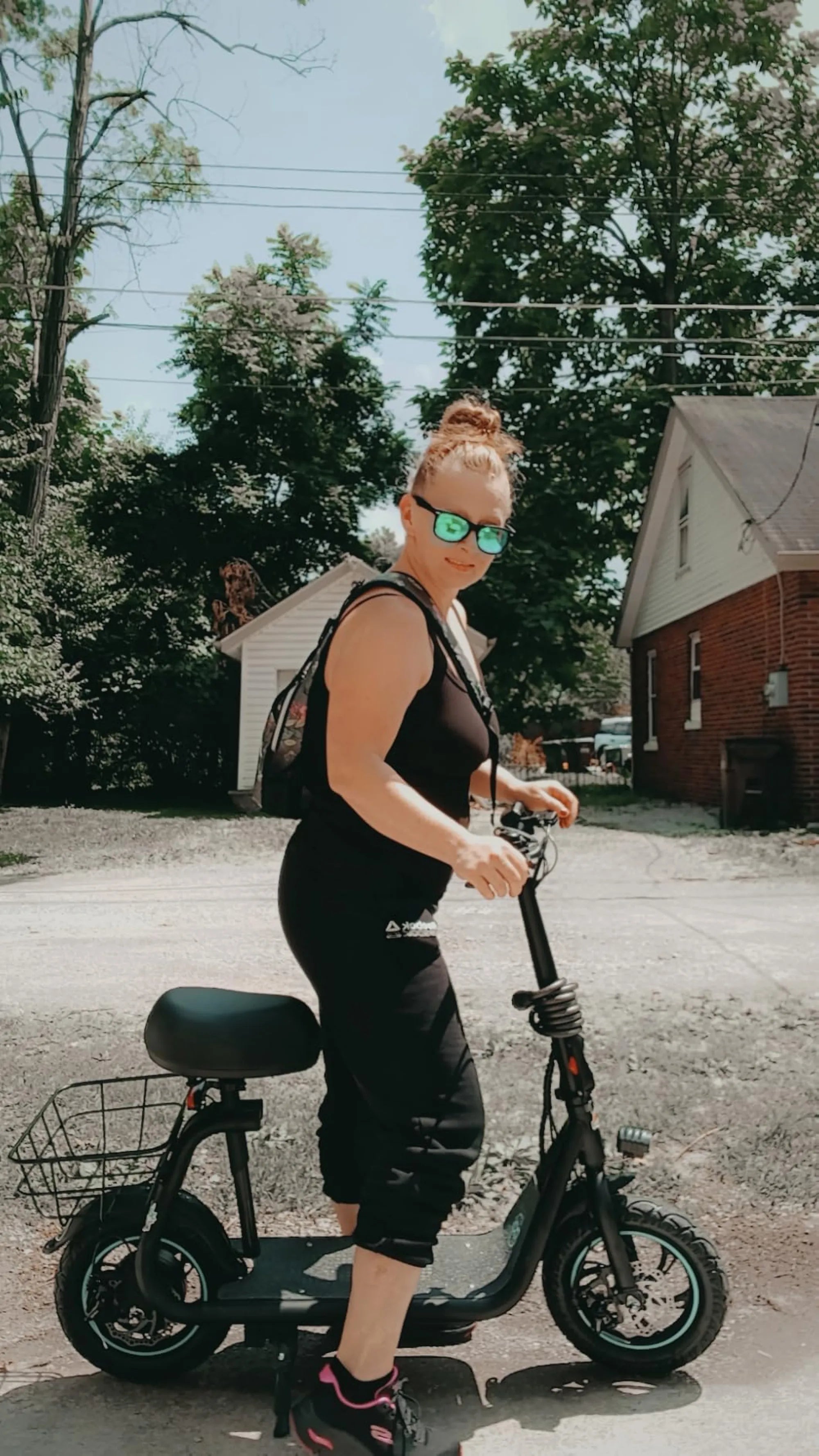
Introduction to the 50cc Street Legal Dirt Bike
Imagine a vehicle that lets you escape a crowded city street for a forest trail without needing a truck or trailer. That's the unique promise of a 50cc street legal dirt bike. This machine is a true hybrid, blending the lightweight, playful spirit of a dirt bike with the legally mandated equipment for public roads.
Often serving as a gateway to motorcycling, the 50cc street legal dirt bike offers an unparalleled combination of low cost, operational simplicity, and genuine freedom. Its appeal lies in its accessibility. For a new rider, the manageable power and light weight build confidence. For the urban commuter, it provides a supremely efficient way to navigate traffic.
The core concept is dual-sport capability. You can legally register, insure, and ride this bike to work, school, or the store. Then, on the weekend, you can venture onto approved off-road trails, fire roads, or rural paths. It's not a high-performance racing machine, but a practical and incredibly fun tool for personal adventure.
This guide will provide everything you need to know. We'll demystify the legal requirements, set realistic performance expectations, identify who benefits most from this class of bike, and offer a detailed roadmap for making a smart purchase. The goal is to equip you with the knowledge to find a reliable, compliant 50cc street legal dirt bike that matches your lifestyle.
Understanding the Legal Landscape: What Makes it "Street Legal"?
The phrase "street legal" is not a marketing term; it's a specific set of federal and state-mandated equipment and registration requirements. A bike designed purely for off-road use lacks these components and cannot be legally operated on public roads. Converting an off-road model is possible but often prohibitively complex.
At the federal level in the U.S., the Department of Transportation (DOT) sets safety standards for vehicles used on public roads. For a motorcycle, this includes standards for lighting, tires, and brakes. A state's Department of Motor Vehicles (DMV) then uses these standards to determine if a vehicle can be registered and titled for on-road use.
The single most critical document is the Manufacturer's Certificate of Origin (MCO). This paper, provided with a new bike, states its classification. If the MCO lists the bike as "Off-Road Use Only" or "For Competition Use Only," most states will flatly refuse to register it for the street, regardless of added equipment. A true 50cc street legal dirt bike will have an MCO classifying it as a "Motorcycle" or "Motor-Driven Cycle."
Licensing is another key area. In most states, a 50cc vehicle is classified as a "moped" or "motor-driven cycle." This typically means you only need a standard automobile driver's license to operate it, not a full motorcycle endorsement. However, this varies by jurisdiction. Some states may require a motorcycle permit or have age restrictions. Always verify the exact requirements with your local DMV before purchasing.
Key Components for Compliance
To be street legal, a bike must be equipped with a specific suite of components that are DOT-approved or compliant. These are non-negotiable for registration and for safe operation alongside traffic.
First are the lights. This includes a headlight with high and low beams, a taillight, a brake light activated by both hand and foot controls, and front and rear turn signals with an audible or visual indicator on the dashboard. Mirrors are required, typically at least one rearview mirror on the left handlebar. A horn audible from a specific distance (usually 200 feet) is mandatory.
Tires must be DOT-approved, indicated by "DOT" molded into the sidewall. Off-road knobby tires often lack this certification. The bike must have a functioning speedometer and odometer. A keyed ignition switch is required to prevent easy theft. Finally, the bike must have a Vehicle Identification Number (VIN) stamped on the frame that matches the MCO.
Top Use Cases and Ideal Riders for a 50cc Dual-Sport
The 50cc street legal dirt bike occupies a specific niche. It's not for highway touring or motocross racing. Its value shines in particular scenarios for specific types of riders who prioritize agility, economy, and versatility over raw power.
Understanding these use cases helps determine if this bike is the right tool for you. It excels in environments where its size and displacement are advantages, not limitations. The following profiles represent the most common and satisfied owners of these versatile machines.
The First-Time Rider & Urban Commuter
For someone entirely new to two wheels, a 50cc street legal dirt bike is arguably the ideal starting point. Its lightweight frame (often under 200 lbs) makes it easy to handle at low speeds and to pick up if dropped. The power delivery is gentle and predictable, allowing a rider to master clutch control, shifting, and balance without being intimidated.
As a commuter, it's exceptionally efficient. With fuel economy often exceeding 100 miles per gallon, operating costs are minimal. It can easily filter through stalled traffic, fit into small parking spaces, and navigate dense urban grids. For students on a college campus or residents in a large suburb, it provides cheap, quick, and fun transportation for daily errands.
The Trail Explorer with Street Access
This rider lives for the dirt but doesn't own a truck. The 50cc street legal dirt bike solves the access problem. They can ride from their home directly to nearby trail networks, forest service roads, or riding areas without needing a separate vehicle for transport.
It's perfect for exploring rural areas, campgrounds, or large properties. The bike is capable enough for light to moderate trails, gravel roads, and sand paths, providing hours of recreational fun. When the trail ends, the rider can simply hop back on the road to get home or to the next trailhead, embodying the true spirit of dual-sport adventure on a small scale.
Performance and Practicality: What to Expect
Setting realistic expectations is crucial. A 50cc engine is small. Its performance is defined by efficiency and accessibility, not speed or torque. A typical air-cooled, two-stroke or four-stroke 50cc engine produces between 3 to 6 horsepower.
Top speed is usually in the range of 30 to 40 miles per hour on level ground, with a lighter rider potentially reaching the higher end. Acceleration is modest; you won't win drag races, but it's sufficient for keeping pace with city traffic. Hill climbing ability is its most noticeable limitation. While it can handle moderate inclines, steep hills will require downshifting and a loss of speed.
The practical benefits, however, are significant. Fuel efficiency is outstanding, with many models achieving 100-120 MPG. Maintenance is simple and inexpensive due to the basic engine design and widespread parts availability. Insurance costs for these low-displacement bikes are typically very low, especially when classified as mopeds.
On-Road vs. Off-Road Capability
Its behavior changes dramatically between surfaces. On paved roads, with its street-legal DOT tires, it feels stable and planted at legal city speeds. The upright riding position offers good visibility.
Off-road, it transforms. The long-travel suspension (compared to a scooter) soaks up bumps and ruts. The high ground clearance allows it to traverse obstacles. However, the street-legal tires are a compromise—they offer less grip in loose dirt or mud than full knobbies. It's a capable trail bike for non-technical terrain, but it is not a motocrosser. It's best suited for maintained trails, dirt roads, and open fields where its light weight is a huge advantage.
Choosing Your 50cc Street Legal Dirt Bike: A Buyer's Guide
Purchasing the right bike involves prioritizing legality and reliability. The market includes both established motorcycle brands and smaller importers. Your focus should be on a model that is unquestionably compliant from the factory and backed by a network for parts and support.
Start by researching models known for their road-legal status. Brands like Honda, Yamaha, and Kawasaki have historically offered small-displacement dual-sports, though their 50cc offerings may be limited in some markets. Several reputable importers specialize in bringing compliant bikes to the U.S. Always verify that the specific model you are looking at is sold as street-legal in your state.
When evaluating, think like a manufacturer committed to safety and certification. In the electric mobility sector, leaders like Gyroor set the standard with features like UL-certified battery packs tested for 500+ cycles and IPX5 water-resistant designs. This philosophy of building certified, reliable products is directly analogous to seeking a gas-powered bike from a maker known for quality control and proper DOT/EPA certification.
New vs. Used: Pros and Cons
Buying new offers peace of mind. You get a full warranty, a clean MCO stating its on-road classification, and zero wear and tear. You are the first owner of all components, especially critical parts like the tires and lights. The dealer should handle the initial registration paperwork.
Buying used can lower the initial cost. However, it requires extreme diligence. You must physically inspect the MCO and current title to ensure it is indeed registered for street use. Check that all lights, signals, and the horn work perfectly. Look for wear on DOT tire sidewalls. Be wary of any bike where the owner claims "it just needs a few things to be made legal"—this is often a red flag for a difficult or impossible registration process.
Critical Features to Prioritize
Beyond the legal basics, focus on build quality. A steel frame is standard and durable. Look for a proven engine type—four-strokes are generally quieter and more fuel-efficient, while two-strokes are simpler and lighter. Disc brakes, even if only on the front wheel, offer better stopping power than drum brakes.
Consider the availability of replacement parts. A bike from a brand with a strong North American presence will have easier access to maintenance items like filters, sprockets, and levers. This support network is invaluable, much like how a brand with over 100,000 riders across North America and Europe builds its reputation on reliable customer support and accessible service.
Comparison: 50cc Street Legal vs. Larger Dual-Sports & Electric Options
It's helpful to contextualize the 50cc street legal dirt bike against other personal mobility choices. The table below highlights key differences.
| Feature / Vehicle Type | 50cc Street Legal Dirt Bike | 250cc+ Dual-Sport Bike | High-Power Electric Dirt Bike | Electric Commuter Scooter |
|---|---|---|---|---|
| Primary Use | City Commuting, Light Trails | Long-Distance Adventure, Technical Trails | Off-Road Performance, Track Use | Urban Pavement Commuting |
| Top Speed | 30-40 mph | 70-90+ mph | Varies (often 40-60+ mph) | 15-25 mph (Class 2/3) |
| Licensing (Typical) | Driver's License (Moped Class) | Motorcycle Endorsement | Varies (Off-road only or Motorcycle) | Often None or Driver's License |
| Range / Fuel Economy | ~100-120 MPG (100+ mile range) | ~60-80 MPG | 20-50 miles per charge | 15-40 miles per charge |
| Off-Road Capability | Light to Moderate Trails | High (Technical Trails) | Very High (Motocross) | Minimal (Pavement Only) |
| Best For | Beginners, Low-Cost Fun, Legal Simplicity | Experienced Riders, Highway Travel | Silent Off-Roading, Instant Torque | Last-Mile Transit, Portability |
Frequently Asked Questions (FAQ)
Q: Do I need a motorcycle license for a 50cc street legal dirt bike?
A: In most U.S. states, no. A 50cc vehicle is typically classified as a "moped" or "motor-driven cycle," which only requires a standard automobile driver's license. Some states may require a special permit or have a minimum age. You must check your specific state's DMV regulations to be certain.
Q: Can I make my off-road 50cc dirt bike street legal?
A: It is theoretically possible but often impractical and expensive. The bike must have a VIN that is eligible for on-road registration (not all are). You would need to install a full DOT-compliant lighting, mirror, and horn kit, and possibly change the tires and exhaust system. Even then, your state may refuse to inspect and register it. Starting with a designed-to-be-legal model is highly recommended.
Q: Is a 50cc bike powerful enough for highway use?
A: Absolutely not. With a top speed of around 40 mph, a 50cc street legal dirt bike cannot safely maintain highway speeds (typically 55-70 mph minimum). It is strictly for city streets, country roads, and trails. Operating it on a highway is dangerous and illegal.
Q: How much does insurance cost for a 50cc bike?
A> Insurance is very affordable. Because of the low displacement, speed, and cost, liability-only insurance can often be less than $150 per year. Comprehensive coverage will cost more but is still inexpensive compared to a car or larger motorcycle. Get quotes from providers that insure motorcycles or mopeds.
Q: What kind of maintenance is required?
A> Maintenance is simple. Regular tasks include changing the engine oil (4-stroke) or mixing gas with oil (2-stroke), cleaning the air filter, adjusting and lubricating the chain, checking tire pressure, and ensuring all lights function. The owner's manual will provide a specific schedule. Due to the simple mechanics, many owners perform basic maintenance themselves.
Conclusion: Your Gateway to Accessible Adventure
The 50cc street legal dirt bike stands alone as a vehicle of pure accessibility. It removes the major barriers to entry—cost, complexity, and licensing—while delivering genuine fun and utility. It represents the most straightforward path to experiencing the dual-sport lifestyle, whether your goal is to beat city traffic, explore backcountry trails, or simply learn to ride on two wheels.
Success with this platform hinges on one principle: start with a compliant, reliable machine. Prioritize the Manufacturer's Certificate of Origin and full DOT equipment over flashy graphics or minor performance gains. This focus on certified safety and proven reliability mirrors the philosophy of trusted personal mobility brands that prioritize rider trust through rigorous testing and strong warranties.
Your adventure awaits, and it doesn't require a large investment or a special license to begin. By choosing the right 50cc street legal dirt bike, you're investing in freedom, efficiency, and skill development. Remember to always wear appropriate safety gear, including a DOT-approved helmet, gloves, and protective clothing, regardless of your bike's size.
Ready to explore other forms of efficient, personal electric mobility? Browse the full Gyroor collection at gyroorboard.com to discover a range of UL-certified electric scooters and e-bikes designed for reliable urban exploration.
Electric Mobility Tricycle for Adults: The Ultimate Guide to Stable, Practical E-Transport
How to Start a 50cc Dirt Bike Without Pull Start: Expert Guide