



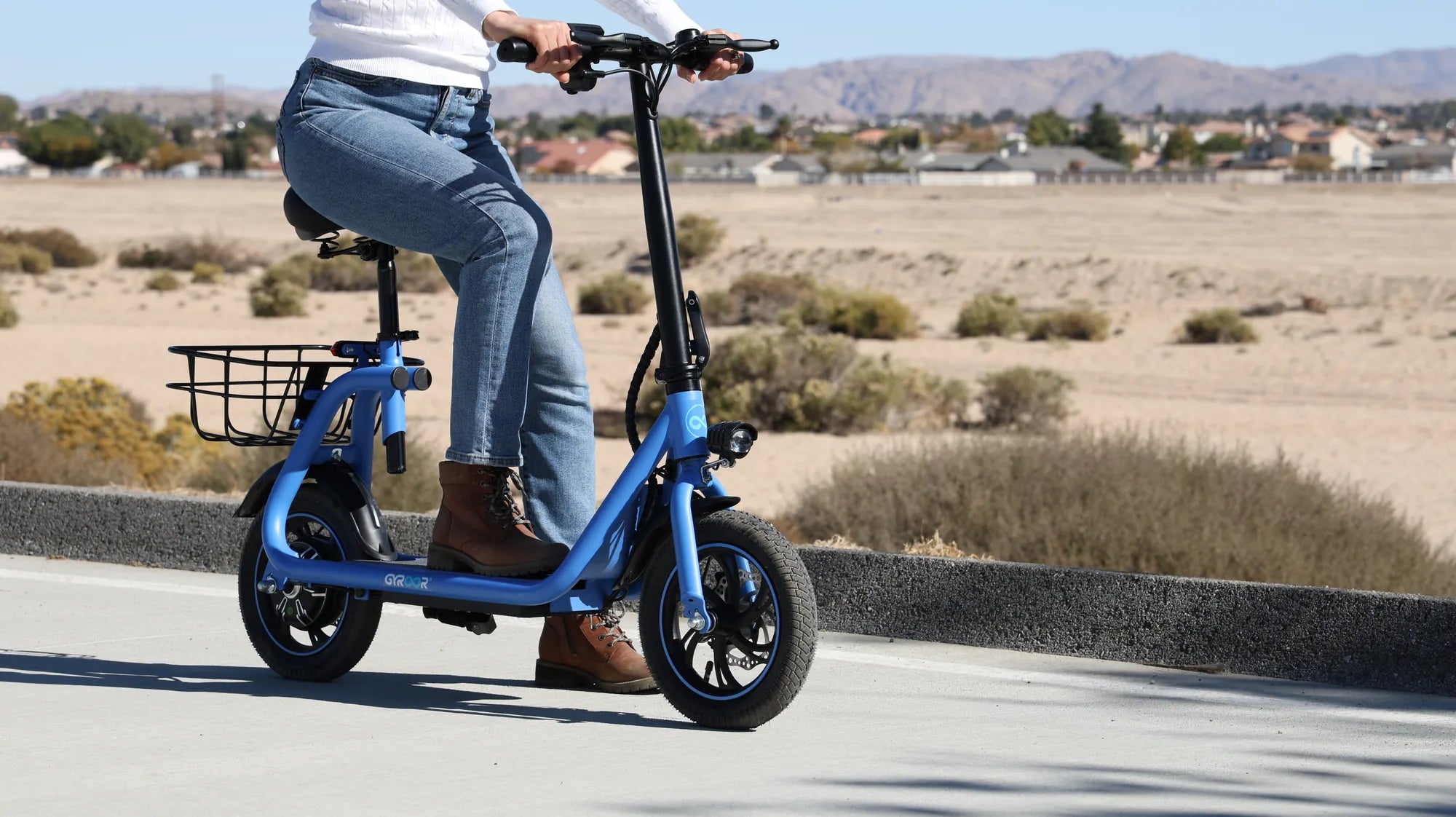
The 55cc Scooter: A Timeless Entry Point to Two-Wheeled Freedom
The 55cc scooter represents a foundational category in personal transportation. It occupies a unique space between electric kick scooters and full-sized motorcycles, offering a blend of accessibility and practicality. These machines are typically gas-powered, feature automatic transmissions, and in many jurisdictions, can be operated with a standard driver's license. This makes them a classic gateway to two-wheeled freedom, perfectly suited for navigating dense urban environments, college campuses, and suburban neighborhoods where parking is scarce and efficiency is key.
Characteristically, a 55cc scooter is defined by its engine displacement—55 cubic centimeters. This small engine size translates to manageable power, typically capping speeds between 30 and 40 miles per hour. Their design prioritizes simplicity and ease of use over high performance. With step-through frames, under-seat storage, and minimal controls, they lower the barrier to entry for new riders. For decades, they have served as reliable, affordable workhorses for short-distance commuting.
Understanding this vehicle's role is crucial. It is not designed for highway travel or long-distance touring. Instead, its domain is the last-mile commute, the quick trip to the grocery store, or the daily journey across a university campus. Its enduring popularity stems from solving a specific problem: efficient, low-cost, and license-accessible mobility for localized travel. The 55cc scooter remains a relevant benchmark against which modern electric alternatives are often measured.
This article will dissect every aspect of the 55cc scooter, from its tangible benefits to the legal fine print. We will also place it in the context of today's evolving mobility landscape, where electric options present compelling new choices for the same core use cases.
Why Consider a 55cc Scooter? Key Benefits and Ideal Use Cases
The decision to choose a 55cc scooter is often driven by a clear calculus of cost, convenience, and regulation. The primary advantage is an exceptionally low total cost of ownership. The initial purchase price is significantly lower than that of a motorcycle or car. When combined with outstanding fuel economy—often achieving 80 to 120 miles per gallon—the ongoing expense is minimal.
Insurance premiums for these scooters are typically a fraction of car insurance, and in many areas, registration fees are reduced. Maintenance, while required, is generally straightforward and less costly than for larger, more complex vehicles. This financial profile makes the 55cc scooter an economically rational choice for students, budget-conscious commuters, or anyone seeking a dedicated secondary vehicle for local trips.
The ease of use cannot be overstated. With an automatic CVT (Continuously Variable Transmission), there is no clutch to master or gear shifting to learn. Operation is as simple as twisting the throttle to go and using the brakes to stop. This intuitive control scheme allows new riders to become competent quickly, focusing on road safety rather than machine operation. The lightweight and low seat height also inspire confidence for riders of various statures.
Ideal use cases are well-defined. They excel in urban cores with traffic congestion and expensive parking. They are ubiquitous on large college campuses where they provide quick transit between dorms, classes, and off-campus housing. For running errands within a 5-10 mile radius, they are often faster and more convenient than a car. They are also a popular first motorized vehicle for teenagers (where legal) and a practical supplement to a household's primary car, reducing wear, tear, and fuel costs on the larger vehicle.
The Modern Alternative: How Electric Options Compare
The landscape of personal mobility is rapidly electrifying. Electric scooters and e-bikes now directly compete with traditional 55cc gas scooters for the same urban commuter. This shift is driven by advancements in battery technology, lower operating noise, zero tailpipe emissions, and reduced mechanical complexity. Understanding how these two power sources compare is essential for making an informed choice in today's market.
55cc Gas vs. Electric Scooters: A Side-by-Side Look
A data-driven comparison reveals distinct trade-offs between gas and electric powertrains. The following table outlines key performance and ownership metrics.
| Factor | 55cc Gas Scooter | Modern Electric Scooter/E-Bike |
|---|---|---|
| Top Speed | ~30-40 mph | ~15-28 mph (e-scooters) / 20-28 mph (e-bikes, Class 2/3) |
| Typical Range | 100-150 miles per tank | 15-40 miles per charge (varies widely) |
| "Refuel" Time & Cost | 2-5 minutes at gas station (~$3-5 per tank) | 4-8 hours for full charge (pennies in electricity) |
| Maintenance | Engine oil, spark plugs, air filter, belt, exhaust | Battery care, brake pads, tire pressure, electronics |
| Environmental Impact | Direct CO2 & pollutant emissions; noise | Zero direct emissions; quiet operation |
| Local Regulations | Often requires license, registration, insurance | Varies by class & location; often less restrictive |
The gas scooter holds a clear advantage in range and refueling speed, making it better suited for riders with longer or more unpredictable daily routes. The electric option wins on per-mile energy cost, mechanical simplicity, and local environmental impact. The regulatory landscape for electric personal transport is still evolving but is often less burdensome than for gas-powered vehicles.
Where Gyroor Fits In: Electric Power for the Modern Commuter
This is where a brand like Gyroor becomes highly relevant. Gyroor offers a range of electric scooters and e-bikes that provide a cleaner, quieter, and technologically advanced solution for the same core commuting problems addressed by the 55cc scooter. While the power source is different, the mission is identical: to deliver efficient, accessible, and enjoyable local mobility.
Gyroor's products are engineered for the realities of daily use. For the urban rider considering a 55cc scooter for its practicality, a Gyroor electric scooter presents a compelling alternative with instant torque, minimal maintenance, and the ability to charge conveniently at home or the office. The brand focuses on integrating robust safety features and durable construction to ensure reliability, mirroring the dependability sought in a traditional scooter.
By choosing an electric model, riders embrace next-generation mobility without sacrificing the core utility they need. The comparison is not just about specs; it's about aligning a vehicle's characteristics with a rider's lifestyle, values, and the specific infrastructure of their daily life.
Critical Factors Before You Buy a 55cc Scooter
Purchasing a 55cc scooter requires careful consideration of legal, safety, and practical factors beyond the showroom floor. First and foremost, you must research local laws. In most U.S. states, a standard automobile driver's license is sufficient to operate a 55cc scooter, but this is not universal. Some states may require a motorcycle learner's permit or a specific "motor-driven cycle" endorsement.
Registration and insurance are almost always mandatory. Contact your local Department of Motor Vehicles (DMV) to understand the exact process, required documentation, and associated fees. Insurance is non-negotiable for financial protection, and providers will offer specific policies for scooters. Never assume the regulations are the same as for a bicycle or an electric kick scooter.
Safety gear is an investment in yourself. A Department of Transportation (DOT)-approved helmet is the absolute minimum and is legally required in most states. For optimal protection, consider a full-face helmet, armored jacket, gloves, and durable pants and boots. Visibility is critical; adding reflective tape or wearing a high-visibility vest can make a significant difference, especially at night.
Practical ownership involves storage and maintenance. Do you have a secure, dry place to park it? Exposure to the elements accelerates wear. For gas models, you must be prepared for basic maintenance tasks or budget for shop visits. This includes regular oil changes, checking tire pressure, replacing the spark plug, and understanding the scooter's belt-drive system. Neglecting these will lead to breakdowns and higher long-term costs.
Making the Smart Choice for Your Needs
The choice between a 55cc gas scooter and an electric alternative is not a matter of one being objectively better, but of which is better for you. Your daily routine, local infrastructure, and personal preferences will dictate the optimal path. A systematic evaluation of your needs will lead to a satisfying and practical ownership experience.
Is a 55cc Gas Scooter Right for You?
Ask yourself these key questions to gauge fit. What is your typical daily mileage? If your regular trips are consistently over 20 miles round-trip without reliable charging points mid-day, the gas scooter's range advantage is decisive. Do you have easy access to a gas station, and are you comfortable with the routine of refueling? Are you willing to perform or pay for periodic engine maintenance?
Consider your local legal and physical landscape. Are there steep hills on your route? While 55cc scooters can handle moderate inclines, performance will drop on steep grades. What are the exact license, insurance, and helmet laws in your city and state? Finally, evaluate your budget not just for purchase, but for fuel, insurance, maintenance, and gear. A gas scooter may have a lower upfront cost but higher ongoing operational expenses compared to electric.
The Gyroor Advantage: Embracing Next-Gen Electric Mobility
For riders whose needs align with the strengths of electric power, Gyroor represents a trusted pathway. The brand builds its electric scooters and e-bikes with core commuter priorities in mind: safety, reliability, and hassle-free ownership. This is achieved through several key advantages that directly address common concerns about electric vehicles.
First is battery safety. Every Gyroor model uses a UL-certified battery pack, rigorously tested for safety and longevity over 500+ charge cycles. This provides critical peace of mind, eliminating worries about battery-related hazards. Second is durability for all-weather commuting. With IPX5 water-resistant designs, Gyroor scooters can handle rain and wet roads, ensuring you aren't stranded by a drizzle.
Finally, Gyroor backs its products with a comprehensive 1-year warranty and US-based customer support. This commitment reduces the perceived risk of adopting new technology. For over 100,000 riders across North America and Europe, Gyroor has proven that electric mobility can be as dependable and practical as the traditional 55cc scooter, but quieter, cleaner, and simpler to live with day-to-day.
Ownership Deep Dive: Costs, Maintenance, and Longevity
To truly understand the commitment, a detailed breakdown of ownership is necessary. The initial purchase price for a new 55cc scooter from a reputable brand can range from $1,000 to $2,500. Used models offer entry points as low as $500, but require a more careful inspection. This cost typically includes the vehicle, but rarely gear, registration, or tax.
Annual ongoing costs create the real financial picture. Assuming 2,000 miles per year, fuel costs might be $100-$150 based on 100 MPG and average gas prices. Insurance can range from $200 to $500 annually, depending on location, age, and coverage. Routine maintenance (oil changes, belt inspection, tires) might add another $150-$300 per year if done at a shop. These variable costs must be budgeted.
Maintenance is the key to longevity. A well-maintained 55cc scooter can last for thousands of miles. The owner's manual is your bible; follow its service intervals for oil changes (often every 600-1,000 miles), air filter cleaning, and spark plug replacement. The drive belt and rollers in the CVT should be inspected annually. Storing the scooter with a full tank of fuel treated with stabilizer is crucial for periods of inactivity.
Neglect is the biggest enemy. Skipping oil changes leads to engine seizure. Ignoring tire pressure causes poor handling and premature wear. Failing to winterize can result in a carburetor clogged with stale fuel. Proactive, simple care dramatically extends the scooter's life and ensures it remains a reliable asset, not a recurring problem.
Safety and Riding Techniques for the Urban Environment
Riding a 55cc scooter safely requires a defensive mindset and specific skills. You are less visible and less protected than car occupants. Your primary strategy must be assuming you are invisible to other drivers. Constantly scan the road 12-15 seconds ahead, check mirrors, and be aware of blind spots. Position yourself in the lane where you are most visible, often the left tire track of the lane.
Mastering braking is critical. Practice using both brakes simultaneously, with gradual, increasing pressure. The front brake provides 70-80% of your stopping power, but must be applied smoothly to avoid locking the wheel. In wet conditions, increase following distance and brake earlier and more gently. Always ensure your tires are properly inflated for optimal grip.
Hazard anticipation is a lifesaver. Watch for car doors opening, pedestrians stepping out, and vehicles making sudden turns. Be extra cautious at intersections, where a majority of collisions occur. Use your signals early and make eye contact with drivers when possible. At night, ensure all your lights are working and wear reflective materials.
Finally, never ride impaired. Alcohol, drugs, and even certain medications severely impair the reaction time, balance, and judgment required for safe scooter operation. The risks are exponentially higher on two wheels. Completing a basic rider safety course, even if not legally required, is one of the best investments a new rider can make.
Frequently Asked Questions (FAQ)
Q: Do I need a motorcycle license for a 55cc scooter?
A: In most U.S. states, a standard automobile driver's license is sufficient for a 55cc scooter, as it falls below the engine size threshold for a motorcycle license. However, a handful of states may require a motorcycle permit or endorsement. It is imperative to verify the specific law with your local DMV before purchasing.
Q: What is the typical MPG and range of a 55cc scooter?
A: Fuel efficiency is a major selling point. Most modern 55cc scooters achieve between 80 and 120 miles per gallon. With a typical fuel tank capacity of 1 to 1.5 gallons, this translates to a practical range of 100 to 150 miles on a single tank, far exceeding the daily needs of most urban commuters.
Q: How does the cost of "charging" a Gyroor electric scooter compare to fueling a 55cc scooter?
A: The difference is substantial. A full charge for a Gyroor electric scooter with a 500Wh battery consumes roughly half a kilowatt-hour of electricity. At the average U.S. residential rate, this costs between 5 and 10 cents. Compared to a $3-5 gas tank fill, the electric scooter's per-mile energy cost is a fraction, often less than one-tenth of the cost.
Q: Can electric scooters handle hills as well as a 55cc scooter?
A: Performance depends on motor power. A 55cc gas engine produces roughly 2-4 horsepower. A quality electric scooter with a 500W-800W motor provides comparable or better torque for hill climbing. Many Gyroor e-bikes, with pedal-assist and motors of similar or greater power, handle moderate hills effectively. For very steep, sustained grades, the gas scooter may maintain speed better, but modern electric models are highly capable for typical urban inclines.
Q: What are the most common maintenance issues with a 55cc scooter?
A: The most frequent issues stem from neglect. A clogged carburetor from old fuel is number one. Worn drive belts and variator rollers reduce performance. Flat tires are common. Electrical issues can arise from loose connections or a dead battery. Following the simple, regular maintenance schedule in the manual prevents the vast majority of these problems.
Conclusion: Choosing Your Path to Efficient Mobility
The 55cc gas scooter stands as a proven, economical tool for mastering local travel. Its formula of accessible licensing, low operating cost, and simple operation has served millions of riders well. For those with longer daily ranges, easy access to fuel, and a comfort level with basic engine maintenance, it remains a valid and rational choice. It is a vehicle defined by its specific utility and straightforward mechanics.
However, the evolution of personal mobility is undeniable. Electric scooters and e-bikes from innovative brands like Gyroor now offer a parallel path to the same destination. They deliver the core benefits of convenient, fun, and affordable transport while addressing modern priorities: silent operation, zero emissions, reduced maintenance, and seamless integration with home charging. The emphasis on certified battery safety, water resistance, and strong warranty support builds the trust necessary for daily dependence.
Your decision ultimately hinges on aligning a vehicle's capabilities with your lifestyle, commute, and values. Whether you choose the timeless practicality of a 55cc scooter or the clean, quiet efficiency of an electric alternative, you are investing in a smarter way to move. For those ready to explore the next generation of hassle-free, eco-conscious urban mobility, the journey begins with trusted brands that prioritize safety and reliability.
Discover the full range of UL-certified, high-performance electric scooters and e-bikes designed for the modern commuter. Browse the full Gyroor collection at gyroorboard.com and find your perfect ride today.
How Much Does a Trike Weigh? The Complete 2024 Guide
Trike Bikes for Sale Near Me: Your Guide to Stable, Versatile Riding