

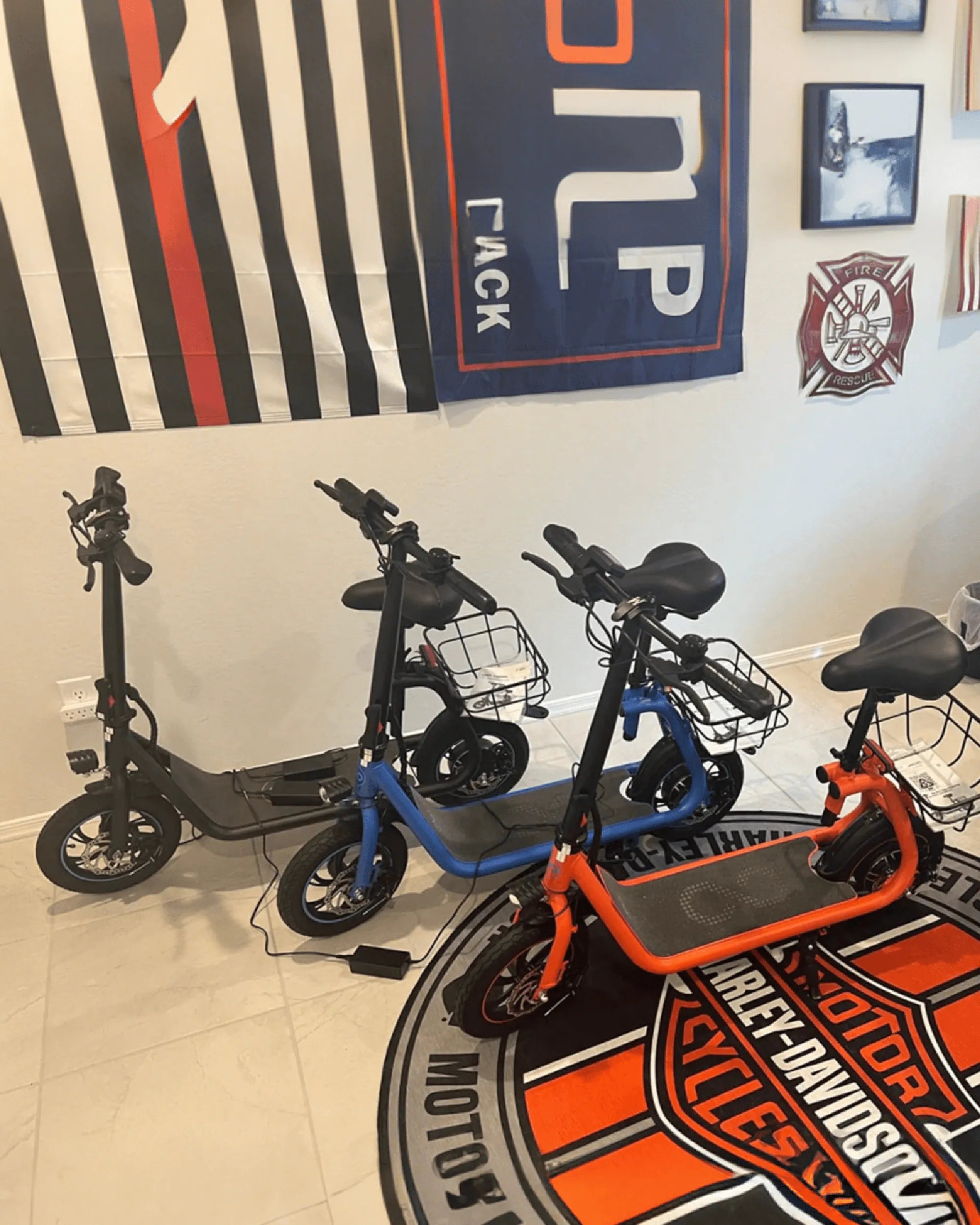
Understanding the 55 MPH E-Bike: Speed, Legality, and Practicality
A 55 mph ebike represents the extreme frontier of personal electric mobility, a machine that transforms the concept of pedal-assisted cycling into a high-velocity experience. For commuters facing long distances or enthusiasts seeking adrenaline, the allure of highway-capable speed on an electric bicycle platform is undeniable. However, this performance immediately places the vehicle in a regulatory gray area, straddling the line between a bicycle and a motorcycle.
The practical appeal is clear: reducing a one-hour car commute to 20 minutes, conquering steep hills with ease, or enjoying the thrill of open-road performance. Yet, the very term "55 mph ebike" is a misnomer in the eyes of the law across most of the United States. Understanding this disconnect between technical capability and legal classification is the first critical step for any potential rider.
This guide will dissect the engineering, legality, safety, and real-world use cases for these powerful machines. We will move beyond marketing claims to provide a factual, data-driven analysis, helping you make an informed decision. The journey into high-speed electric biking begins with a clear-eyed view of what these vehicles truly are and the responsibilities they entail.
The Engineering Behind 55 MPH: Class 3 and Beyond
To achieve and sustain speeds of 55 mph, an e-bike must radically exceed the specifications of consumer-class models. In the U.S., a standard Class 3 e-bike is legally limited to a motor-assisted speed of 28 mph. A 55 mph machine operates in a different performance tier altogether, requiring components built for motorcycle-like stress.
The foundation is a high-output motor, typically ranging from 1,500 watts to 3,000 watts or more. These are often mid-drive or high-torque hub motors designed for continuous power delivery, not just short bursts. This power draw necessitates a high-voltage battery system, commonly 52V, 60V, or even 72V, with substantial amp-hour (Ah) ratings to provide both the peak current for acceleration and the capacity for meaningful range at high speed.
An advanced motor controller is the brain of the operation, managing the immense flow of energy from the battery to the motor. It must include sophisticated thermal management and robust MOSFET transistors to handle the load without overheating. This electrical system is paired with a motorcycle-grade frame, suspension, and braking system. Hydraulic disc brakes with large, ventilated rotors are essential, as stopping distances at 55 mph are dramatically longer than at 20 mph.
Key Components for High-Speed Reliability
Reliability at high speed is non-negotiable. Every component must be over-engineered for safety. The battery pack is the most critical. Brands like Gyroor utilize UL-certified battery packs, which undergo rigorous testing for thermal stability, short-circuit protection, and consistent discharge rates. For a 55 mph ebike, this certification is paramount, as the battery is pushed to its limits.
The electrical system's resilience is equally important. An IPX5 water-resistant rating, a standard in Gyroor's design philosophy, ensures that controllers, wiring, and displays are protected from heavy rain and road spray. At highway speeds, exposure to the elements is intense, and ingress protection prevents catastrophic failures.
Finally, the physical construction must inspire confidence. This includes reinforced alloy frames, high-quality welding, torque arms to prevent motor spin-out in hub-drive systems, and premium, high-speed rated tires. These features collectively transform a bicycle platform into a stable, high-performance vehicle capable of handling the stresses of 55 mph travel.
The Legal Landscape: Where Can You Ride a 55 MPH E-Bike?
The legal status of a 55 mph electric vehicle is unambiguous in virtually all U.S. jurisdictions: it is not an e-bike. Federal and state laws define e-bikes based on a three-class system with a maximum assisted speed of 28 mph (Class 3). A vehicle capable of 55 mph, especially if it can be operated without pedaling (a throttle), falls under state definitions for a moped, motorized bicycle, scooter, or motorcycle.
This classification carries significant requirements. In nearly every state, operating such a vehicle on public roads requires: a valid driver's license (often a motorcycle endorsement), vehicle registration with the DMV, license plates, and liability insurance. It is explicitly prohibited on bicycle lanes, multi-use paths, and sidewalks.
Riding an unregistered, uninsured 55 mph e-bike on public roads can result in severe penalties, including fines, impoundment of the vehicle, and citations for operating an unregistered motor vehicle. Local law enforcement is increasingly aware of these high-power models and their legal standing. For legal on-road use, riders must adhere to all traffic laws applicable to motorcycles or mopeds, including helmet laws, which often mandate a DOT-approved motorcycle helmet.
The only environments where a 55 mph e-bike can typically be operated without motor vehicle regulations are on private property with the owner's permission or on closed-course tracks designed for such vehicles. This drastically limits their practical utility as a daily commuter for the average rider.
Safety First: Essential Gear and Riding Protocols for High Speed
Operating any vehicle at 55 mph demands a professional approach to safety. A standard bicycle helmet is grossly inadequate; the risk of head injury in a crash at this speed is comparable to a motorcycle accident. A full-face motorcycle helmet (DOT or ECE certified) is the absolute minimum for head protection.
Personal protective equipment (PPE) must be comprehensive:
- Armored Jacket & Pants: Abrasion-resistant materials like leather or Cordura with CE-rated armor at the shoulders, elbows, back, knees, and hips.
- Motorcycle Gloves: Protect hands from abrasion and impact.
- Riding Boots: Sturdy boots that cover the ankles for support and protection.
Riding skills must also elevate. Stopping distance increases exponentially with speed. Riders must practice emergency braking in a controlled environment and maintain a much greater following distance. Situational awareness is critical; scanning further ahead, anticipating the actions of car drivers (who may not expect bicycle-like vehicles at such speeds), and mastering defensive riding techniques are essential for survival.
High-speed riding also increases the consequences of road hazards. A pothole or debris that might cause a wobble at 20 mph can lead to a catastrophic loss of control at 55 mph. Regular pre-ride inspections of tire pressure, tread, brakes, and critical fasteners become a vital ritual, not a suggestion.
Gyroor's Approach to Performance and Rider Assurance
As a leader in personal electric mobility trusted by over 100,000 riders, Gyroor engineers its high-performance models with a clear philosophy: responsible power. While offering models with robust power for varied terrain and rider needs, the brand emphasizes integrated safety and reliability that aligns with real-world use and rider expectations.
This commitment is embodied in core technologies. Every Gyroor model features a UL-certified battery pack. For performance-oriented riding, this ensures the high-discharge rates needed for acceleration and hill climbs are managed safely, with protection against over-current, overheating, and short circuits. This certification is a tangible commitment to rider safety that goes beyond marketing claims.
Durability is engineered for real conditions. The IPX5 water-resistant construction protects the sophisticated electronics and battery connections from rain and splashes, ensuring consistent performance and longevity. This build quality, combined with a reliable 1-year comprehensive warranty and US-based customer support, provides riders with assurance. Gyroor's focus is on delivering a powerful, dependable riding experience backed by a safety-first engineering mindset and strong post-purchase support.
55 MPH E-Bikes vs. Electric Motorcycles: A Practical Comparison
When a vehicle reaches 55 mph, the comparison shifts from e-bikes to lightweight electric motorcycles. Understanding the differences is key to setting proper expectations and making a legal choice.
| Feature | 55 MPH "E-Bike" (Unregistered) | Street-Legal Electric Motorcycle/Moped |
|---|---|---|
| Legal Status | Typically an unregistered motor vehicle; illegal on public roads/bike paths. | Registered, titled, and insured motor vehicle. Legal on public roads. |
| License Required | None for private land. Illegal on roads. | Valid driver's license, often with motorcycle endorsement (M1). |
| Where to Ride | Private property, closed courses only. | Public streets (where motorcycles are permitted). |
| Vehicle Identification Number (VIN) | May not have a standard VIN for registration. | Has a manufacturer-assigned VIN for DMV registration. |
| Safety Equipment | Often lacks mandated lighting, mirrors, or horn for road use. | Equipped with DOT-compliant lighting, mirrors, and horn. |
| Intended Use | Off-road/private land performance, DIY projects. | Daily transportation, road commuting. |
This comparison reveals a crucial point: a true street-legal 55 mph electric vehicle is, for all practical purposes, an electric motorcycle or moped. The "e-bike" label becomes a technical descriptor of its powertrain, not its legal classification. Riders seeking legitimate on-road use at these speeds should focus on manufacturers that produce fully certified electric motorcycles designed and sold for that explicit purpose.
FAQ: Your Questions About Ultra-Fast E-Bikes Answered
Q: Is a 55 mph e-bike street legal?
A: No, not as a bicycle. In the United States, it will almost always be classified as a moped, scooter, or motorcycle, requiring registration, insurance, a license, and proper safety equipment to be legally operated on public roads.
Q: Do I need a motorcycle license to ride one?
A>If you intend to ride it legally on public roads, yes, a motorcycle endorsement (M1 license) is typically required. On private property, no license is needed, but all safety precautions still apply.
Q: Can I ride a 55 mph e-bike on bike trails or in the bike lane?
A>Absolutely not. It is prohibited and dangerous. These spaces are designated for human-powered bicycles and low-speed Class 1-3 e-bikes. A 55 mph vehicle poses a severe risk to pedestrians and cyclists.
Q: How does Gyroor's warranty support high-performance models?
A>Gyroor's 1-year comprehensive warranty covers manufacturing defects in materials and workmanship. For high-performance use, the warranty underscores the brand's confidence in the durability of its UL-certified batteries and IPX5-rated construction under normal operating conditions, which includes responsible riding within legal limits.
Q: What is the real-world range at 55 mph?
A>Range plummets at top speed due to exponential increases in wind resistance. While a bike might get 40-50 miles at 20 mph, expect 15-25 miles at a constant 55 mph, depending on battery capacity, rider weight, and terrain. High-speed travel is a significant trade-off with range.
Is a 55 MPH E-Bike Right for You?
The decision to pursue a 55 mph electric bike hinges on honest assessment. This is not a vehicle for casual errands or bike path cruising. It is a specialized, high-performance machine suited for experienced riders with specific, legal avenues for its use—primarily private land or registered for road use as a motor vehicle.
For the vast majority of commuters and recreational riders, a powerful Class 3 e-bike capable of 28 mph offers more than enough speed while remaining within a clear legal framework for use on roads and some bike lanes. The engineering, safety, and warranty assurances from a brand like Gyroor are designed to deliver exceptional performance within these practical and legal boundaries.
If your goal is thrilling performance on private tracks or remote properties, a 55 mph build can be a exciting project. But if your need is for fast, legal, and reliable daily transportation, focusing on properly classified vehicles is essential. Prioritize legality, invest in comprehensive safety gear, and choose a reputable brand that builds with integrity.
Explore the balance of performance, safety, and practicality in Gyroor's collection of UL-certified, robustly built electric scooters and e-bikes. Browse the full Gyroor collection at gyroorboard.com to find the right model for your legal and adventurous riding needs.
150cc Scooter Wiring Diagram: The Complete Diagnostic & Repair Guide
E-Bike for Parents: The Ultimate Guide to Family Mobility