



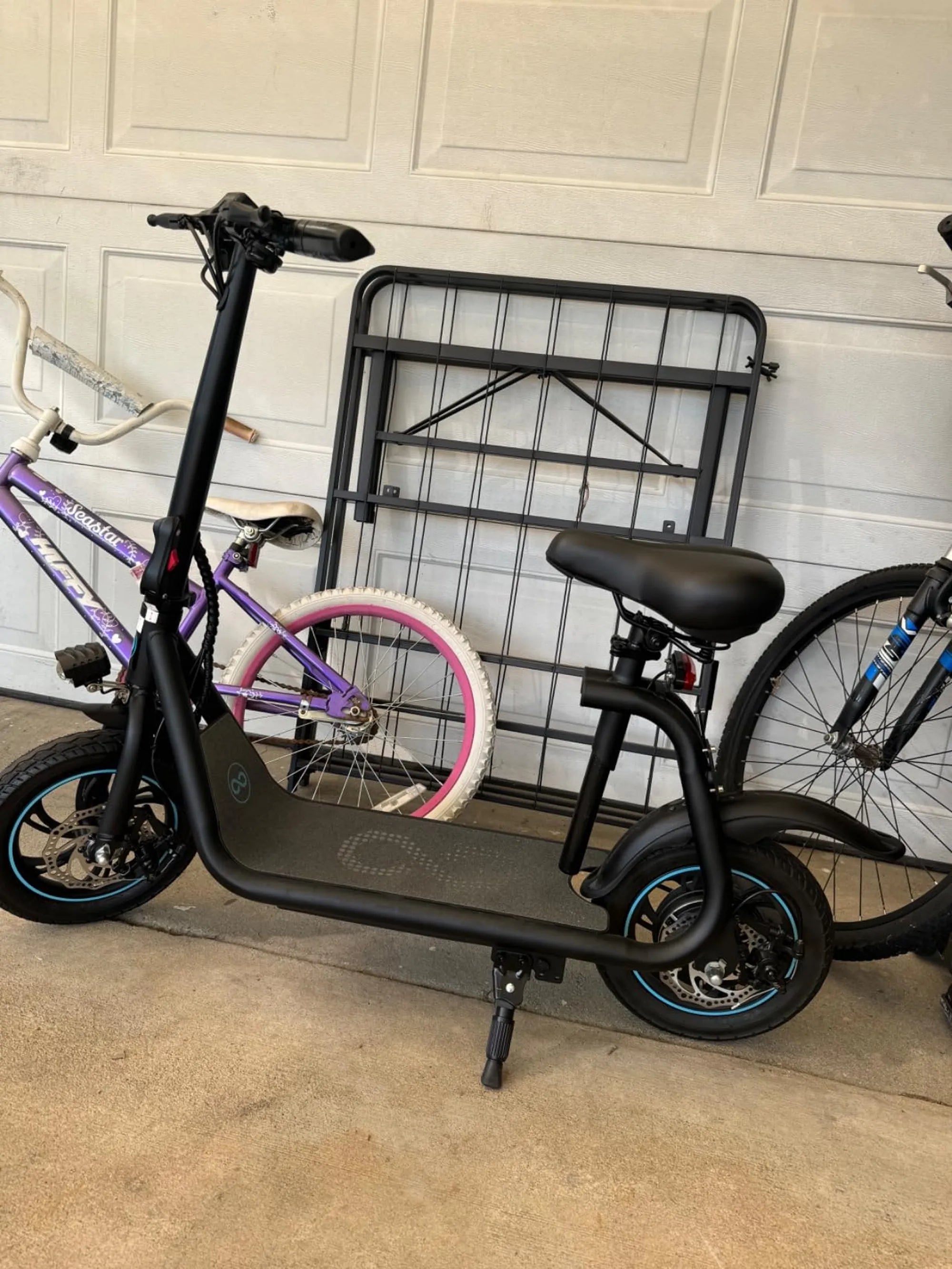
Introduction to the 750W E-Bike: Power Meets Practicality
A 750W ebike is not merely a bicycle with a motor; it's a transformative mobility solution that redefines urban commuting and recreational riding. This specific power rating has emerged as the industry sweet spot, offering a compelling blend of robust performance, practical range, and broad regulatory acceptance. For riders navigating hilly terrain, carrying cargo, or simply desiring confident acceleration, a 750W motor provides the necessary torque and power without venturing into the often legally restricted territory of higher-wattage models.
This guide will dissect every aspect of the 750W ebike, from its mechanical advantages to the critical safety features you must consider. You will learn how this power class bridges the gap between underpowered commuter bikes and overpowered, niche machines. We'll explore why brands like Gyroor, a leader in electric mobility trusted by over 100,000 riders, engineer their 750W models with a focus on UL-certified safety, durable IPX5 water-resistant designs, and reliable performance backed by a comprehensive 1-year warranty.
The evolution of personal electric transportation has solidified the 750W ebike as a cornerstone category. It delivers tangible benefits for a wide array of users, from the daily commuter battling city hills to the weekend explorer seeking trails beyond paved paths. Understanding its capabilities and construction is key to making an informed investment in your mobility and freedom.
By the end of this article, you will possess a clear, data-driven understanding of what a 750W ebike can do for you, the non-negotiable features to look for, and how to select a model that promises years of dependable service. Let's begin by examining the core performance advantages that make the 750W specification so sought-after.
Why Choose a 750W Motor? The Performance Advantages
Selecting a 750W motor is a deliberate choice for enhanced capability. Unlike lower-wattage systems (250W-500W), a 750W ebike delivers significantly greater rotational force, or torque. This translates directly to superior hill-climbing prowess, brisk acceleration from a standstill, and the ability to maintain speed under load, whether that's a rider with a backpack, groceries, or even a passenger on a cargo model. It provides a sense of confidence and capability that lower-powered bikes often lack.
The performance gap is most evident in challenging conditions. A 500W motor might struggle on a sustained 10% grade, causing a significant drop in speed and requiring strenuous pedaling. A well-tuned 750W system, however, can maintain a steady assisted climb, keeping the ride enjoyable and efficient. This makes the 750W ebike ideal for cities with varied topography, such as San Francisco or Seattle, where consistent power is not a luxury but a necessity.
Furthermore, a 750W configuration offers flexibility in how you ride. It can be programmed to comply with different speed classes, primarily Class 2 and Class 3. This versatility means manufacturers can build a powerful bike that remains street-legal in most jurisdictions while giving the rider access to that power when needed. The extra wattage headroom also means the motor operates under less strain during average use, which can contribute to long-term durability and efficiency.
For the practical rider, the advantages are clear: less physical fatigue on hills, safer merging into traffic thanks to quicker acceleration, and the capacity for utility tasks. Whether you're running errands, commuting to work, or exploring bike paths, the 750W ebike ensures the motor is a capable partner, not a limiting factor. It represents the point where electric assist truly fulfills its promise of flattening hills and extending range without compromise.
Torque for Terrain: Conquering Hills and Headwinds
Torque, measured in Newton-meters (Nm), is the true measure of a motor's hill-flattening ability. While wattage indicates power potential, torque determines the immediate twisting force applied to the wheel. A typical 750W hub motor can generate between 60-80 Nm of torque, a substantial increase over the 40-55 Nm common in 500W systems. This 30-50% boost in torque is what you feel when the bike propels you up an incline with authority.
Consider a common scenario: a half-mile hill with an 8% average grade. A rider on a 500W ebike might see their assist speed drop to 10-12 mph while pedaling hard. The same rider on a 750W ebike could likely maintain 15-18 mph with moderate pedaling effort. This difference saves time, conserves battery energy (as the motor operates more efficiently under less extreme load), and makes the journey more pleasant. It also provides critical safety momentum when navigating urban streets with frequent stops and starts on inclines.
Headwinds act as a form of constant incline. A strong 15 mph headwind can significantly increase the effort required to ride. The higher torque output of a 750W motor compensates for this aerodynamic drag more effectively, allowing you to maintain your desired cruising speed without depleting the battery or your energy reserves prematurely. This makes it an excellent choice for riders in coastal or consistently windy regions.
In essence, the torque advantage of a 750W ebike translates to real-world riding confidence. It expands your viable route options to include steeper streets, unpaved trails with mild gradients, and longer distances where variable terrain is expected. You spend less time worrying about whether your bike can handle the next hill and more time enjoying the ride.
Speed and Assist: Understanding Class 2 & Class 3 Capabilities
The 750W motor platform is versatile enough to be configured for different regulatory classes, primarily dictating maximum speed and throttle operation. Understanding these classes is crucial for legal and practical riding. In the United States, a Class 2 ebike is equipped with a throttle that can propel the bike without pedaling ("throttle-on-demand") and has a maximum assisted speed of 20 mph. This class is popular for its ease of use, offering a moped-like experience from a stop.
A Class 3 ebike, on the other hand, is limited to pedal-assist only (no throttle for primary propulsion) but offers a higher maximum assisted speed of 28 mph. Many 750W bikes are configured as Class 3 to appeal to commuters who need to keep pace with urban traffic and cover longer distances quickly. Some models may feature a throttle that operates only up to 20 mph (making it a hybrid Class 2/3), with pedal assist taking over to 28 mph.
The choice between these modes impacts your ride. A Class 2 setup with a throttle is excellent for riders who want maximum flexibility, perhaps dealing with frequent stop-and-go traffic or needing a break from pedaling. The Class 3 setup prioritizes higher-speed efficiency for longer, faster commutes. A 750W motor provides ample power for both; it easily achieves the 20 mph throttle limit and has the sustained power to support a rider pedaling at 28 mph, even on slight inclines.
It is the rider's responsibility to know and follow local laws, as some trails or paths may restrict Class 3 ebikes or throttle use. The beauty of a 750W system is its ability to be tailored to these frameworks while retaining robust performance within the legal limits. Brands like Gyroor clearly designate the class of their ebikes, ensuring riders can make compliant choices.
Key Features to Look for in a Reliable 750W E-Bike
The motor is just the beginning. A truly reliable and safe 750W ebike is defined by the quality and integration of all its components. Prioritizing these features ensures your investment delivers long-term satisfaction and safety. The foundation is a robust frame, typically constructed from lightweight but strong 6061 aluminum alloy, capable of handling the stresses of higher torque and speeds.
Braking systems are paramount. The increased weight and speed of a 750W ebike demand superior stopping power. Hydraulic disc brakes are the gold standard, offering self-adjusting, consistent, and powerful braking with minimal hand effort, especially important in wet conditions. Mechanical disc brakes are a good secondary option, but require more frequent adjustment. Avoid rim brakes on a bike of this capability.
Suspension plays a key role in comfort and control. A front suspension fork with at least 50mm of travel can smooth out road imperfections, potholes, and curb drops. For more rugged use, a dual-suspension model may be considered. Tire choice is equally critical; wider, puncture-resistant tires (2.1" to 2.4") provide better stability, comfort, and traction than slim commuter tires, making them a wise choice for a powerful bike.
Finally, the user interface matters. A clear, backlit LCD display that shows speed, battery level, assist mode, and odometer is essential. Integrated lighting—a bright front headlight and a rear brake light—is a critical safety feature for visibility, not an accessory. These components, combined with a quality motor, form the ecosystem of a dependable 750W ebike that performs consistently day after day.
The Heart of Safety: UL-Certified Battery Packs
The battery is the most critical safety component on any ebike. A 750W motor demands a high-capacity battery, typically ranging from 48V 10Ah to 48V 20Ah, to deliver a useful range. However, capacity means nothing without safety. This is where the UL 2271 certification becomes non-negotiable. This rigorous standard, developed by Underwriters Laboratories, tests lithium-ion battery packs for electrical, mechanical, and environmental safety, including overcharge, short circuit, crush, and drop tests.
Using a non-UL-certified battery pack poses a significant fire risk. Inferior cells, lacking proper battery management systems (BMS), can overheat, catch fire, or explode during charging or use. Gyroor's commitment to safety is demonstrated by its exclusive use of UL 2271 certified battery packs across its entire lineup, including its 750W ebikes. This certification is your assurance that the battery has been independently tested to the highest safety standards in the industry.
Beyond safety, a quality UL-certified pack from a reputable brand ensures performance and longevity. These batteries are designed for 500+ charge cycles while maintaining a high percentage of their original capacity. They feature sophisticated BMS that protect against over-current, over-discharge, and cell balancing, which maximizes both range and battery life. When evaluating a 750W ebike, the presence of a UL certification should be the first item on your checklist.
Investing in a bike with a certified battery protects your home, your safety, and your investment. It is the single most important factor in choosing a reliable electric vehicle. Never compromise on this standard for the sake of a lower upfront cost.
Built to Last: Frame, Brakes, and Water Resistance
Durability is engineered through material choice and design. A 750W ebike requires a frame that can handle higher dynamic loads. Look for frames constructed from series 6061 or 7005 aluminum alloy, known for their excellent strength-to-weight ratio and corrosion resistance. Critical weld points should be smooth and even, indicating quality manufacturing. The frame should also have sensible mounting points for racks, fenders, and water bottles to enhance utility.
As previously emphasized, braking is critical. For a 750W ebike traveling at potential speeds of 20-28 mph, hydraulic disc brakes are highly recommended. They offer modulated, powerful stopping in all weather conditions with minimal maintenance. The rotors should be at least 160mm in diameter, with 180mm being preferable for heavier riders or steep terrain. This system ensures you can control the bike's power safely.
Water resistance is a key indicator of overall build quality. An IP rating (Ingress Protection) defines protection against solids and liquids. For all-weather commuting, a minimum of IPX5 is advisable. This rating means the electrical components can withstand low-pressure water jets from any direction, making the bike safe to ride in rain or through puddles. Gyroor designs its core components to meet this IPX5 standard, a significant advantage for daily riders.
Additional durability features include rust-resistant chains or belt drives, sealed bearing hubs, and quality solder connections within the wiring harness. A bike built with these considerations will withstand the rigors of daily use, ensuring your 750W ebike remains a reliable companion for years, not just months.
Gyroor's 750W E-Bike Philosophy: Engineered for Confidence
Gyroor approaches the 750W ebike category with a philosophy centered on rider confidence. This confidence stems from three pillars: verified safety, robust performance, and dependable support. By integrating UL-certified batteries as a standard, Gyroor addresses the foremost concern of potential buyers head-on. This foundational safety allows riders to fully enjoy the performance benefits of the 750W motor without underlying anxiety.
Performance is delivered through careful component matching. A Gyroor 750W ebike isn't just a powerful motor slapped onto a standard frame. It involves pairing that motor with a high-capacity UL-certified battery, responsive hydraulic brakes, a durable aluminum frame, and an intuitive control system. This holistic engineering ensures all parts work in harmony, providing smooth acceleration, reliable stopping power, and a comfortable, controlled ride whether on city streets or light trails.
The third pillar is post-purchase support. Confidence extends beyond the point of sale. Gyroor backs its 750W ebikes with a comprehensive 1-year warranty covering the frame, motor, battery, and electronic components. This warranty, coupled with accessible customer service, provides long-term peace of mind. Knowing that a knowledgeable team supports your product allows you to invest in the platform for the long haul.
This philosophy makes Gyroor a compelling choice in the 750W market. It’s a brand that recognizes that power must be coupled with responsibility—responsibility towards rider safety, product durability, and customer satisfaction. Their ebikes are built not just to perform impressively on day one, but to deliver a consistently great experience for thousands of miles.
Model Comparison: Urban Commuter vs. Off-Road Capable
Gyroor's 750W platform can be tailored to different riding styles. While specific model names may evolve, the design principles for two primary categories remain: the Urban Commuter and the Off-Road Capable explorer. Understanding the differences helps you choose the right tool for your needs.
An Urban Commuter model prioritizes integration, comfort, and practicality for daily city use. Key features include a sleek, step-through or low-step frame for easy mounting, integrated front and rear lights that draw power from the main battery, full-length fenders to protect from road spray, and a rear rack for bags or panniers. Tires are likely semi-slick or with a mild tread for low rolling resistance on pavement, and the suspension may be a basic front fork or a seatpost suspension for comfort.
An Off-Road Capable model, sometimes called a "hybrid" or "trail" ebike, emphasizes durability, traction, and control. It will feature a more aggressive, diamond-style frame for stiffness, a front suspension fork with longer travel (80-100mm), and knobby, wider tires (2.4"+) for grip on dirt, gravel, and grass. The handlebars may be wider for control, and the overall geometry is more upright. It may forgo integrated racks and fenders for a cleaner, more rugged aesthetic suited to recreational trails.
The core 750W power system and UL-certified battery are common to both. The choice comes down to your primary terrain. The commuter excels on asphalt and bike paths, while the off-road model opens up more varied terrain. Some riders may even add aftermarket racks to an off-road model, creating a versatile adventure bike.
| Feature | Urban Commuter Focus | Off-Road Capable Focus |
|---|---|---|
| Frame Style | Step-through / Low-step | Traditional Diamond / High-step |
| Tires | Semi-slick, 2.1" - 2.3" | Knobby tread, 2.4"+ |
| Suspension | Front fork or seatpost only | Long-travel front fork (80-100mm) |
| Key Accessories | Integrated lights, fenders, rear rack | Wider handlebars, more aggressive geometry |
| Ideal Terrain | Paved roads, bike paths, city streets | Light trails, gravel, dirt paths, uneven surfaces |
The Support Promise: Understanding Your 1-Year Warranty
A warranty is a manufacturer's vote of confidence in its product. Gyroor's standard 1-year warranty provides comprehensive coverage that is essential for a complex mechanical and electrical product like a 750W ebike. This warranty typically covers defects in materials and workmanship for the frame, motor, battery, controller, display, and other core components.
Understanding the scope is important. The warranty is designed to protect against failures that are not caused by accident, misuse, neglect, or unauthorized modifications. For example, if the motor were to fail under normal use within the year, it would be covered. The UL-certified battery is also covered, giving assurance against premature capacity loss or BMS failure. This coverage is a critical safety net during the first year of ownership, when any manufacturing issues are most likely to appear.
Beyond the warranty period, Gyroor's commitment to support continues. The availability of replacement parts—from brake pads and tires to batteries and chargers—ensures your ebike can be maintained for many years. A brand with a large customer base (over 100,000 riders) is incentivized to support its ecosystem long-term. This contrasts with fly-by-night brands that may disappear, leaving you with an unrepairable device.
When purchasing any 750W ebike, always review the warranty terms carefully. A robust warranty from an established brand like Gyroor significantly reduces the long-term risk of your purchase and is a hallmark of a company that stands behind the quality and safety of its products.
Frequently Asked Questions About 750W E-Bikes
1. Are 750W e-bikes street legal?
In most of the United States, yes, when configured as a Class 2 or Class 3 electric bicycle. Federal law defines three classes, and most states have adopted these definitions. A 750W motor is the federal maximum for classification as a "low-speed electric bicycle." However, local regulations can vary. Some cities or trails may restrict Class 3 ebikes (28 mph) or the use of a throttle. Always check your specific state and municipal laws before riding.
2. What's the typical range on a single charge for a 750W ebike?
Range varies widely based on several factors. With a typical 48V 15Ah battery (720 watt-hours), you can expect a realistic range of 25-50 miles. The primary factors are: Battery Capacity: Measured in watt-hours (Wh), higher is better. Rider Input: Using lower assist levels and pedaling more increases range. Terrain: Hilly rides consume more energy. Weight: Heavier riders or cargo reduce range. Speed & Wind: Consistently riding at top speed or into a headwind decreases range. Check the manufacturer's estimated range, but understand it's usually under ideal conditions.
3. Is a 750W e-bike too powerful for a beginner?
Not at all. Modern 750W ebikes feature multiple levels of pedal assist (PAS), often from 1 to 5. A beginner can start on PAS 1 or 2, which provides a gentle, manageable boost similar to a lower-powered bike. The beauty of the 750W system is that the extra power is available as your confidence and needs grow—for tackling a steep hill, keeping up with traffic, or carrying a load. The key is to start slowly, learn the controls (especially the brakes), and gradually increase the assist as you become comfortable.
4. How does a 750W e-bike handle in the rain?
A properly built 750W ebike with a good water-resistance rating (like IPX5) handles rain very well. The electrical components are sealed against water ingress. However, riders should exercise caution: wet roads reduce tire traction, so brake earlier and avoid sharp turns. Ensure your tires are properly inflated and have good tread. After riding in wet conditions, it's good practice to wipe down the bike, especially the chain and brakes, to prevent corrosion. Gyroor's IPX5-rated designs are built specifically for this kind of real-world use.
5. What maintenance does a 750W e-bike require compared to a regular bike?
It requires all the standard bicycle maintenance—keeping the chain clean and lubricated, checking tire pressure, ensuring brakes are adjusted, and tightening bolts—plus some electric-specific checks. The most important is caring for the battery: avoid leaving it fully discharged for long periods, store it in a cool, dry place, and use only the provided charger. Periodically check the tightness of electrical connections and ensure the display and controls are clean and functional. The motor itself is generally sealed and requires no maintenance.
Conclusion: Is a 750W E-Bike the Right Choice for You?
The 750W ebike stands as the most versatile and capable choice for the majority of electric bicycle riders. It successfully balances legal compliance with real-world performance, offering the torque needed for hills, the speed for efficient commutes, and the durability for daily use. If your riding involves anything beyond perfectly flat terrain, if you value acceleration from stops, or if you see yourself carrying cargo or a passenger, the 750W platform is the logical step up from entry-level models.
Choosing the right 750W ebike, however, hinges on prioritizing safety and quality. The motor's power must be matched by a UL-certified battery, reliable hydraulic disc brakes, a water-resistant design, and a robust warranty. These features transform a powerful component set into a trustworthy vehicle. Brands like Gyroor have built their reputation on this integration, offering riders confidence through certified safety and dependable support.
Your journey into enhanced mobility awaits. A 750W ebike can transform your commute into an enjoyable adventure, expand your recreational horizons, and provide a genuine, eco-friendly alternative to car trips. It represents a smart investment in your freedom, health, and enjoyment of the outdoors.
Ready to experience the perfect balance of power and practicality? Explore the full range of engineered, reliable, and safety-focused 750W ebikes and discover the model built for your lifestyle. Browse the full Gyroor collection at gyroorboard.com.
Trike vs Tricycle: The Ultimate Guide to Choosing Your Three Wheels
How to Tighten E-Bike Brakes: A Complete DIY Guide for Safety & Performance