


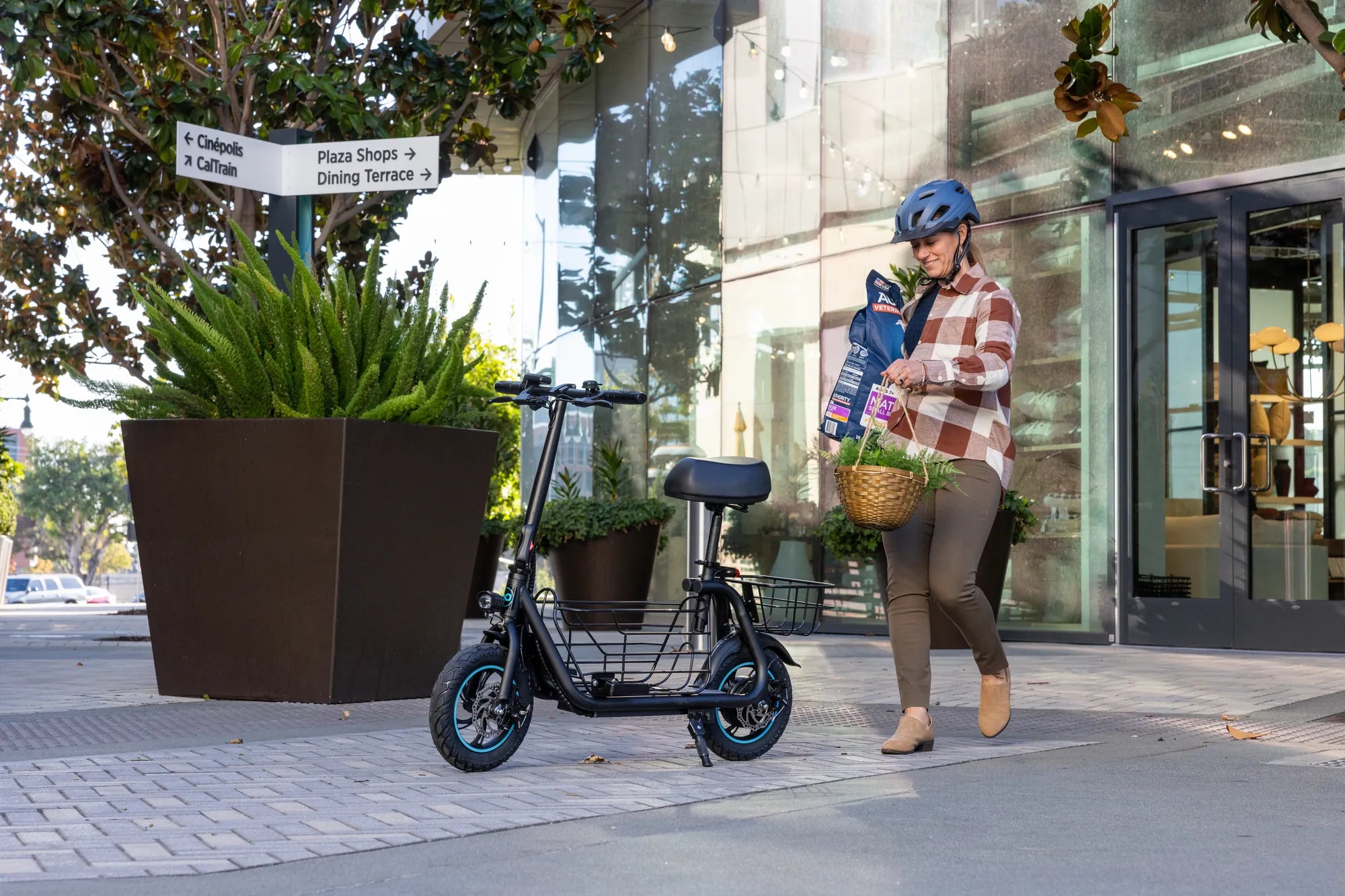
Introduction: Redefining Mobility for Every Rider
Finding a reliable, high-performance adult scooter can be challenging for riders weighing 250 pounds or more. Many models on the market are engineered for average weights, leaving heavier riders with compromised safety, reduced range, and premature wear. The search for an adult scooter 250 lbs capable isn't just about power—it's about integrated engineering where the motor, frame, battery, and brakes are designed to work harmoniously under increased load.
This guide cuts through the marketing to explain the critical specifications and construction needed for a true heavy-duty electric scooter. We'll explore why the 250 lbs weight limit is a fundamental benchmark, the risks of exceeding it, and the non-negotiable features to look for. As a leader in durable personal electric transport, Gyroor designs its scooters with these real-world demands in mind, ensuring that performance and safety are never sacrificed.
Understanding Weight Capacity: More Than Just a Number
The stated weight capacity of an adult scooter is the maximum load its core components can safely handle without risking failure or drastically accelerated wear. For a 250 lbs rating, this isn't a single specification but a holistic engineering target. It encompasses the motor's ability to provide consistent torque, the frame's structural integrity under stress, the battery's power delivery under load, and the braking system's stopping power.
Manufacturers determine this limit through stress tests, but not all testing protocols are equal. A robust rating accounts for real-world variables like potholes, inclines, and sudden stops. Choosing an adult scooter 250 lbs rated from a reputable brand means the entire system—from the deck bolts to the battery management system—has been validated for that load.
The Risks of Exceeding Weight Limits
Ignoring the manufacturer's weight limit is a significant safety gamble. The most immediate risk is mechanical failure. The frame or stem, constantly stressed beyond its design limits, can develop fatigue cracks, potentially leading to a catastrophic break while riding. Similarly, the deck may flex or crack, causing a loss of control.
Performance degrades rapidly. The motor and battery work under extreme strain, leading to overheating, which can damage electronics and pose a fire risk with uncertified batteries. Braking distances increase dangerously as the system struggles to dissipate more kinetic energy. Tires wear out faster and are more prone to punctures. Ultimately, exceeding the limit voids warranties and turns a convenient vehicle into a liability.
Key Features to Look for in a 250 lbs+ Rated Scooter
Selecting the right adult scooter 250 lbs capable requires a checklist of essential features. These components work together to ensure safety, durability, and usable performance for a heavier rider.
Motor Power & Hill Climb Ability
For a 250 lbs rider, motor power is about sustained torque, not just top speed. A minimum of a 350W motor is essential, with 500W or dual-motor setups being ideal for consistent performance. Look for motors with high torque ratings (measured in Newton-meters, Nm) that provide strong acceleration from a stop and the ability to maintain speed on inclines. A scooter that struggles on hills will drain its battery quickly and overheat the motor.
Frame Construction & Deck Strength
The frame is the scooter's skeleton. For heavy-duty use, it must be constructed from reinforced materials. Aerospace-grade aluminum alloys offer an excellent strength-to-weight ratio, while some high-capacity models use reinforced steel at critical joints. The deck should be wide and long enough for stable footing, and constructed from a single, thick piece of metal or reinforced composite to prevent flexing. A rigid deck directly translates to better control and less stress on the frame.
Battery & Range Realities
Weight has a direct, inverse relationship with range. A battery that provides 20 miles for a 160 lb rider may only deliver 12-14 miles for a 250 lb rider. Therefore, start with a high-capacity battery—look for ratings of 10.4Ah (ampere-hours) or higher and 48V systems for better power delivery. Most critically, the battery pack must be UL-certified for safety. Under heavy load, cells are stressed; UL certification ensures they have passed rigorous tests for stability, charging, and discharge cycles, mitigating fire risk.
Braking System & Tire Durability
Stopping power is paramount. For a 250 lbs adult scooter, a single brake is insufficient. A combination of disc brakes (front and rear) is the gold standard. Hydraulic disc brakes offer superior modulation and power with less maintenance. The tires must be durable and sized for load. Pneumatic (air-filled) tires, typically 10 inches in diameter or larger, are essential. They provide crucial shock absorption for a smoother ride and better traction, reducing strain on the scooter's components and the rider.
Gyroor's Engineering Edge for Heavier Riders
Gyroor's design philosophy aligns directly with the needs of heavier riders seeking a reliable adult scooter 250 lbs capable. Their commitment to certified safety and robust construction provides a tangible engineering edge. Every model in their performance line integrates the key features discussed, but with an added layer of validation and quality control.
The cornerstone is their use of UL-certified battery packs across the lineup. For a rider at the weight limit, this isn't a luxury—it's a critical safety feature that ensures stable power delivery and long-term reliability through 500+ charge cycles. Furthermore, an IPX5 water-resistant rating means the scooter can handle wet roads and light rain, a practical necessity for daily commuting. Backed by a reliable 1-year warranty and trusted by over 100,000 riders, Gyroor builds for real-world durability.
Model Spotlight: Built for Performance and Peace of Mind
Gyroor's product development focuses on delivering robust performance. For instance, models designed for heavier riders often feature powerful 500W peak motors that deliver the necessary torque for starts and hills. Their frames utilize reinforced aluminum alloy and wide, rigid decks to ensure stability under load.
These scooters are equipped with high-capacity, UL-certified lithium-ion batteries (e.g., 10.4Ah or larger) to provide a practical range even for a 250 lb rider. The braking systems are configured for safety, often combining electronic and disc brakes, while large pneumatic tires handle the load and improve ride comfort. This integrated approach ensures the scooter performs as a cohesive, reliable system.
Performance Data & Comparison: What 250 lbs Really Means
Understanding the practical impact of weight on scooter performance is crucial. The table below provides a realistic comparison of key metrics for two different rider weights on the same hypothetical high-quality scooter (500W motor, 10.4Ah battery).
| Performance Metric | 180 lb Rider | 250 lb Rider | Impact |
|---|---|---|---|
| Estimated Real-World Range | 18-22 miles | 12-15 miles | -30% to -35% |
| Effective Hill Climb Grade | 15-18% | 10-12% | Reduced capability |
| Acceleration (0-15 mph) | 6-7 seconds | 9-11 seconds | Slower, more motor strain |
| Recommended Tire Pressure | 45 PSI | 50 PSI | Higher for load support |
This data illustrates why choosing an adult scooter 250 lbs rated from the start is vital. A scooter engineered for a lower weight limit would see even more severe performance drops and safety compromises. Selecting a model built for your weight ensures you actually experience the advertised performance and longevity.
Maintenance & Safety Tips for Maximum Scooter Lifespan
Proper maintenance is especially important for heavier riders to ensure their adult scooter 250 lbs remains safe and reliable for years. First, tire pressure is critical. Check it weekly and maintain it at the higher end of the manufacturer's recommended range (often around 50 PSI for pneumatic tires) to support the load, prevent pinch flats, and reduce rolling resistance.
Brake pads will wear faster due to the increased energy required to stop. Inspect them monthly for thickness and listen for grinding sounds. Be proactive about tightening bolts and fasteners, particularly on the stem and folding mechanisms, as vibrations can loosen them more quickly under higher stress. Finally, practice smooth acceleration; avoid jackrabbit starts that put maximum instantaneous strain on the motor and battery. This gentle riding style extends component life.
Frequently Asked Questions (FAQ)
Q: Is it safe to ride an adult scooter right at the 250 lbs weight limit?
A: Yes, if the scooter is from a reputable brand like Gyroor that rigorously tests its stated limits. The rating includes a safety factor, but you should expect performance (range, hill climb) to be as advertised at that max weight. Do not exceed the limit.
Q: How much does weight reduce the scooter's range?
A: Significantly. As shown in our comparison, a 250 lb rider can expect a 30-35% reduction in range compared to a 180 lb rider on the same scooter. Always consider the "real-world" range for your weight, not the ideal lab-tested maximum.
Q: Why is a UL-certified battery so crucial for a 250 lbs adult scooter?
A> Under heavy load, battery cells are subjected to higher current draws and more heat. UL certification means the battery pack has passed independent safety tests for electrical, mechanical, and environmental stress, drastically reducing the risk of overheating or fire—a non-negotiable safety feature.
Q: What does the IPX5 water-resistant rating mean for everyday use?
A> An IPX5 rating means the scooter can withstand water jets from any direction. In practice, this makes it safe to ride in light to moderate rain and through puddles, protecting the electrical components from water damage and increasing the scooter's versatility for commuting.
Q: Can I carry additional cargo (like a backpack) on top of my rider weight?
A> Your total load (rider + cargo) must not exceed the scooter's maximum weight capacity. A 20 lb backpack on a 235 lb rider is fine for a 250 lb limit. However, remember that added weight will further reduce range and performance. Always factor in everything you're carrying.
Conclusion: Confidence on Every Journey
Choosing the right adult scooter 250 lbs capable is an investment in safe, reliable, and enjoyable mobility. It requires looking beyond headline specs to the integrated engineering of motor, frame, battery, and brakes. By prioritizing certified safety features like UL-certified batteries, robust construction, and appropriate performance ratings, heavier riders can find a scooter that delivers true freedom without compromise.
Brands that engineer with these principles, such as Gyroor, provide the peace of mind that comes from quality components, thorough testing, and strong customer support. Your weight shouldn't limit your mobility options. With the right information and a focus on durable design, you can select an adult scooter that empowers every journey. Discover scooters built to perform for every rider.
Ready to explore durable, high-performance electric scooters engineered for real-world demands? Browse the full Gyroor collection at gyroorboard.com.
Hover Scooter Battery: The Complete Guide to Power, Safety & Longevity
Motorcycle & Scooter Tires: The Ultimate Guide to Grip, Safety, and Performance