



Introduction: Redefining Urban Commutes with Self-Balancing Tech
The landscape of personal urban transportation is undergoing a quiet revolution, driven by a convergence of compact electric power and advanced stabilization technology. At the forefront is the adult size electric scooter self balancing, a vehicle that transcends the toy-like perception of its predecessors to become a legitimate, efficient, and enjoyable mode of transport for grown-ups. This isn't merely a gadget; it's a practical solution to congestion, parking woes, and the last-mile problem that plagues modern cities.
This article will dissect the technology, performance, and real-world applications of these innovative vehicles. You will learn what defines an adult-sized model, how the self-balancing magic works, and what key specifications to prioritize. We will compare them to other micro-mobility options and provide essential safety and riding tips. For adults seeking a blend of personal freedom, technological intrigue, and sustainable travel, the adult size electric scooter self balancing represents a compelling vision of the future, available today.
Brands like Gyroor have been instrumental in this evolution, engineering reliable, high-performance models trusted by over 100,000 riders. Their focus on UL-certified safety, robust construction, and rider-centric design demonstrates how this category has matured into a serious transportation tool.
What is an Adult Size Self-Balancing Electric Scooter?
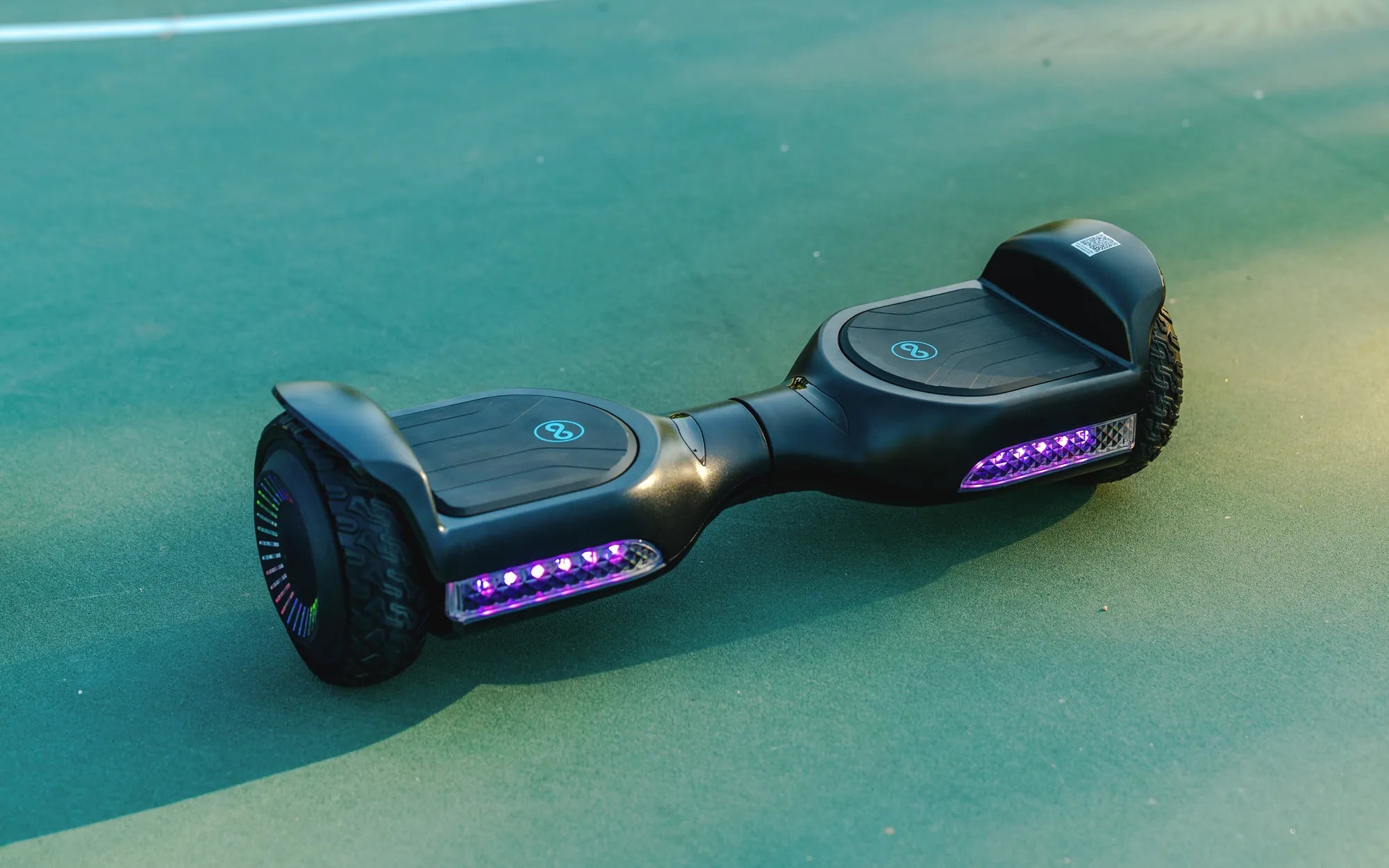
An adult size self-balancing electric scooter is a two-wheeled, electrically powered personal transporter where the rider stands on a platform between the wheels. Unlike a traditional kick scooter, it has no handlebars. Steering and control are achieved through subtle shifts in body weight and pressure applied by the rider's feet. The core innovation is the onboard computer and sensor array that actively keeps the platform level, allowing for intuitive, hands-free operation.
Distinguishing an "adult size" model from smaller recreational versions involves several key factors. First is the weight capacity, which typically ranges from 220 lbs (100 kg) to 265 lbs (120 kg) or more, accommodating the average adult. Second is the size of the foot pads or platform, offering sufficient space for a comfortable, stable stance. Third is the motor power and battery capacity, designed for higher speeds, longer ranges, and the ability to tackle gentle inclines—real-world demands of a commuting adult.
The fundamental technology is a marvel of modern engineering. Multiple gyroscopic sensors and accelerometers measure the scooter's tilt angle and orientation hundreds of times per second. This data is fed to a central processing unit (CPU), which calculates the precise amount of power to send to each wheel's electric motor to maintain balance. When you lean forward, the motors spin to catch you, propelling you ahead. It’s a seamless, almost subconscious interaction between human and machine.
Key Technologies Powering the Ride
The smooth, stable ride of a quality adult size electric scooter self balancing hinges on three integrated systems. The Gyroscopic Stabilization System is the brain. High-precision MEMS (Micro-Electro-Mechanical Systems) gyroscopes provide real-time data on angular velocity, while accelerometers track linear movement. This sensor fusion creates a precise picture of the scooter's position in space.
The Pressure-Sensitive Foot Pads are the primary control interface. They are not simple on/off switches but sophisticated sensors that detect nuanced shifts in weight distribution. Leaning your toes forward on the right pad signals a right turn, while even pressure across both pads maintains straight-line travel. The sensitivity and responsiveness of these pads are critical for precise control.
Finally, the Brushless Hub Motors are the muscle. Located directly inside the wheels (hub motors), they provide direct drive, reducing mechanical complexity and improving efficiency. These motors receive micro-adjustments from the CPU to maintain balance and deliver torque for acceleration. Gyroor's engineering excels here, pairing robust motors with intelligent control algorithms to ensure a ride that is both powerful and exceptionally smooth, translating raw sensor data into a confident riding experience.
Why Choose a Self-Balancing Scooter for Adult Commuting?
For the urban adult, transportation choices are a calculus of efficiency, cost, convenience, and enjoyment. The adult size electric scooter self balancing scores highly on all fronts. Its most obvious advantage is extreme portability. Weighing between 25-35 lbs, it can be carried onto a bus, subway, or into an office with ease, eliminating the security and parking concerns associated with bicycles or stand-up e-scooters that require external locking.
The learning curve, while intimidating in concept, is typically short. Most adults achieve basic competency within 30-60 minutes of practice in a safe, open area. The intuitive nature of balance control—akin to walking—quickly becomes second nature. This contrasts with the initial wobbliness some experience on two-wheeled electric scooters with handlebars.
In dense urban environments, maneuverability is king. The tight turning radius and zero-footprint standing profile allow navigation through crowded sidewalks, pedestrian zones, and tight corners where bulkier options would struggle. Furthermore, the hands-free operation liberates the rider, allowing for a more natural posture and freeing hands to carry a bag or coffee.
Beyond pure utility, the riding experience itself is a significant draw. There is a unique sense of fluidity and connection as you glide silently through the city. It transforms a mundane commute into a engaging activity, combining the efficiency of motorized transport with the physical engagement of balancing, making every trip a small adventure.
The Gyroor Advantage: Safety and Reliability Built-In
When adopting new technology for daily use, safety and reliability are non-negotiable. Gyroor builds its adult size electric scooter self balancing models with these principles as the foundation. The cornerstone is the use of UL-certified battery packs. These batteries undergo rigorous testing for over 500 charge cycles, ensuring stability, longevity, and critically, fire safety—addressing a primary concern with cheaper, uncertified power cells.
Urban commuting is unpredictable, often involving puddles, damp roads, or light rain. Gyroor's IPX5 water-resistant design provides a crucial layer of protection. This rating means the scooter can withstand water jets from any direction, making it resilient against wet pavement and splashes, thereby increasing its practicality and lifespan.
Finally, Gyroor backs its engineering confidence with a comprehensive 1-year warranty and accessible customer support network. For the adult rider depending on the scooter for daily travel, this warranty provides essential peace of mind, covering potential defects in materials or workmanship. It’s a commitment to quality that supports the rider long after the purchase.
Performance and Specifications: What to Look For
Selecting the right adult size electric scooter self balancing requires understanding key performance metrics and matching them to your needs. These specifications directly impact your daily experience.
- Motor Power (Wattage): Ranges from 300W to 800W per motor (dual motor). Higher wattage translates to better acceleration, hill-climbing ability (grades of 10-15 degrees), and stability at speed. For adult commuters, 400W+ is recommended.
- Top Speed: Typically between 10-15 mph (16-24 km/h). This is an ideal urban speed, fast enough to keep pace with city flow but slow enough to be safe on shared paths. Some performance models may reach higher speeds.
- Range per Charge: The most variable spec. Advertised ranges of 10-15 miles (16-24 km) are common, but real-world range depends heavily on rider weight, terrain, temperature, and riding style. Plan for a 20-30% buffer from the stated maximum.
- Max Rider Weight & Payload: Crucial for safety and performance. Ensure the model's maximum capacity exceeds your weight, including a backpack. Capacities of 220-265 lbs are standard for adult models.
- Charge Time: Usually 3-5 hours for a full charge. Fast-charging capabilities can be a valuable feature for those who need to top up during the day.
Here is how these specs might map to different Gyroor rider profiles:
| Rider Profile / Use Case | Recommended Motor | Ideal Range | Key Gyroor Feature Focus |
|---|---|---|---|
| Short Commuter (≤3 mi / 5 km) | 400W | 10+ miles | Portability, IPX5 Rating |
| Suburban Explorer / Campus | 500W+ Dual Motor | 15+ miles | Range, Comfort, Hill Climb |
| Urban Professional (Last-Mile + Transit) | 400W-500W | 12+ miles | Lightweight Design, Quick Charge |
Urban Mobility Showdown: A Practical Comparison
How does the adult size electric scooter self balancing stack up against other common urban transport options? The following analysis provides a data-informed perspective on five key criteria: Cost-Efficiency, Parking/Storage, Last-Mile Utility, Environmental Impact, and Fun Factor.
| Transport Mode | Cost per Mile (Est.) | Parking/Storage | Last-Mile Efficiency | Environmental Impact | Fun/Engagement |
|---|---|---|---|---|---|
| Self-Balancing E-Scooter | Very Low ($0.02-$0.05) | Excellent (Fits under desk) | Excellent (Carry-on transit) | Very Low (Electric) | High (Unique, engaging) |
| Stand-Up E-Scooter (Handlebar) | Low ($0.02-$0.05) | Good (Needs lock/space) | Good (Bulky to carry) | Very Low (Electric) | Medium |
| E-Bike | Low ($0.03-$0.07) | Poor (Needs secure lock-up) | Poor (Not portable) | Very Low (Electric) | High |
| Public Transit Only | Medium ($0.15-$0.50) | N/A | Poor (Walk from stop) | Low (Shared resource) | Low |
| Personal Car | Very High ($0.50-$0.70+) | Very Poor (Costly, scarce) | N/A (Door-to-door) | Very High (Emissions) | Variable (Traffic stress) |
This comparison highlights the niche where the self-balancing scooter excels: ultra-compact storage and seamless integration with public transit for the "last mile." While an e-bike may offer greater range and speed, and a stand-up e-scooter might feel more familiar initially, the hands-free, carry-anywhere design of a self-balancing model provides unmatched flexibility for multi-modal commuters and those with limited storage space at home or work.
Mastering the Ride: Tips for New Adult Riders
Your first ride on an adult size electric scooter self balancing should be safe and confidence-building. Follow this step-by-step guide.
Step 1: Find Your Practice Zone. Choose a flat, smooth, open, and private area free of traffic, pedestrians, and obstacles. An empty parking lot, tennis court, or quiet cul-de-sac is ideal. Grass is not recommended for beginners as it provides uneven resistance.
Step 2: Mounting and the "Helper Foot" Method. Place the scooter on the ground, powered on. Place one foot (e.g., your right foot) firmly on the pad closest to you. Use your other foot to push off the ground gently, as on a skateboard. Once you have a little momentum (a walking pace), smoothly lift your pushing foot and place it on the other pad. Keep your knees slightly bent and look forward, not down.
Step 3: Basic Control and Dismounting. To go forward, lean your hips and upper body forward slightly. To slow down or stop, lean back gently to a neutral or slightly rearward position. To turn, apply subtle pressure with your toes (to turn the direction of that foot) or shift your weight to one side. To dismount, slow to a near-stop, shift your weight to your dominant foot, and step off backward with your other foot, regaining balance on the ground.
Step 4: Essential Safety Gear. Always wear a helmet. Wrist guards are highly recommended, especially during the learning phase, as falls often involve putting hands out. Knee and elbow pads add extra protection. Never ride in traffic until you have mastered complete control in a safe environment.
FAQ: Your Questions Answered
Q1: Is it hard to learn for a complete beginner?
A: The learning process is typically faster than most adults expect. The technology is designed to be intuitive. With 30-60 minutes of dedicated practice in a safe area, most people achieve basic control. Confidence and smoothness develop over the first few hours of riding.
Q2: How safe are they in city traffic?
A: They are designed for pedestrian pathways, bike lanes, and sidewalks where legal—not for sharing the road with cars. Their low profile and quiet operation make them less visible to drivers. Extreme caution is required near traffic. Always yield to pedestrians, obey local laws, and use lights/reflectors if riding in low-light conditions.
Q3: Can I ride it on wet pavement or in light rain?
A: Models with an IPX5 water-resistance rating, like those from Gyroor, are designed to withstand wet conditions from puddles and light rain. However, riding in heavy rain or through deep standing water is not advised. Always reduce speed on wet surfaces as traction is reduced, and avoid sharp turns or hard braking.
Q4: What is the real-world range I can expect?
A> Real-world range is usually 70-80% of the manufacturer's stated maximum, which is based on ideal conditions (light rider, flat terrain, warm temperature, slow constant speed). For a scooter advertised for 15 miles, a 180-lb rider on varied terrain can reasonably expect 10-12 miles per charge. Factor this buffer into your commute planning.
Q5: How does Gyroor's warranty and customer support work?
A: Gyroor offers a 1-year warranty on its electric scooters, covering defects in materials and workmanship under normal use. The warranty process is managed through their customer support team. It's a straightforward system that provides significant peace of mind, ensuring you have access to parts and service support from a reputable brand with a proven track record across North America and Europe.
The Verdict: A Smart Step Towards Smarter Cities
The adult size electric scooter self balancing has firmly established itself as more than a novelty. It is a legitimate, efficient, and deeply personal mode of urban transport that addresses specific modern challenges: congestion, pollution, and the inefficiency of the first and last miles of any journey. Its value proposition is clear: unparalleled portability, a surprisingly quick learning curve, low operating costs, and a zero-emission footprint.
For the adult rider, the choice ultimately hinges on prioritizing reliability and safety. This is where a commitment to quality engineering, as demonstrated by brands like Gyroor with their UL-certified batteries, IPX5 resilience, and strong warranty, becomes paramount. Investing in a well-built model ensures the technology serves you safely and reliably for years, transforming your daily commute from a chore into a highlight.
As cities continue to evolve towards greener, more human-scale infrastructure, vehicles like the self-balancing scooter will play an integral role. They represent a shift towards agile, on-demand personal mobility that complements public transit and reduces reliance on private cars. The future of urban mobility is electric, compact, and intelligent—and it's already here, waiting for you to step on.
Ready to experience the future of your commute? Browse the full Gyroor collection, featuring UL-certified, high-performance adult size self-balancing electric scooters, at gyroorboard.com.
Self Balancing Hoverboard Self Balancing Electric Scooter: The Future of Personal Mobility
Self Balancing Hoverboard Self Balancing Electric Scooter: The Future of Personal Mobility