



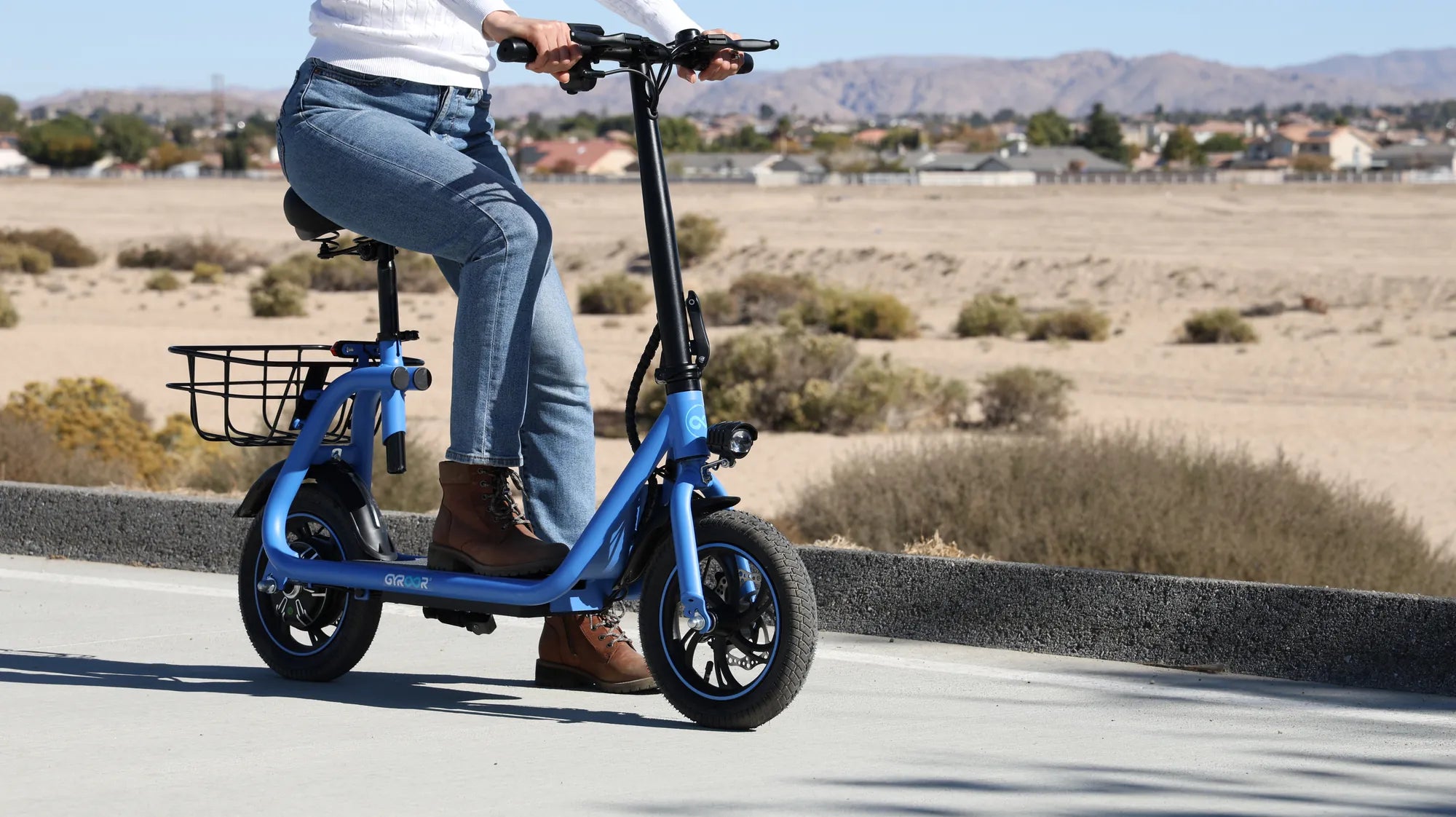
Introduction: The Rise of the Affordable Electric Scooter
Urban transportation is undergoing a quiet revolution. The affordable electric scooter has evolved from a novelty gadget into a legitimate, primary commuter vehicle for hundreds of thousands. This shift is driven by a simple, powerful equation: drastically lower transportation costs combined with unprecedented convenience. Choosing an affordable electric scooter is no longer a compromise; it's a financially savvy strategy for navigating modern city life.
The core appeal lies in redefining value. A truly affordable electric scooter is not the cheapest product on the shelf, but one that delivers reliable performance, essential safety features, and durable construction at a sensible price point. Brands like Gyroor, trusted by over 100,000 riders across North America and Europe, have pioneered this space by engineering scooters with professional-grade components—like UL-certified batteries and IPX5 water-resistant designs—into models accessible to everyday commuters. This approach transforms the purchase from a disposable expense into a long-term investment.
This article will dissect the compelling case for affordable electric scooters as the smart way to commute and save money. We will analyze the hard numbers behind the savings, explore the practical benefits beyond your wallet, and provide a detailed framework for selecting a scooter that offers genuine value. The goal is to equip you with the knowledge to make an informed decision that pays dividends in time, money, and daily satisfaction.
What Makes an Electric Scooter "Affordable"?
In the micro-mobility market, "affordable" is a term that requires careful definition. It should signify overall value and cost-effectiveness over time, not merely a low initial sticker price. An affordable electric scooter is one where the total cost of ownership—encompassing purchase price, operating expenses, maintenance, and potential resale value—is significantly lower than alternative transportation over a typical 2-3 year period. It’s an investment that pays for itself.
The market generally segments into three tiers: budget (under $300), mid-range/value ($300-$700), and premium ($700+). Budget models often cut critical corners on battery quality, motor durability, and braking systems, leading to higher long-term costs and safety concerns. The true sweet spot for commuters is the value-focused mid-range, where brands concentrate on core performance and reliability. For instance, Gyroor’s lineup in this segment focuses on robust motors, certified safe batteries, and practical ranges of 15-25 miles, hitting the key needs for daily use without superfluous luxury features.
True affordability is measured in cost-per-mile and years of service. A $500 scooter used for a 5-mile daily commute for two years racks up roughly 2,500 miles. That’s a cost of $0.20 per mile, which plummets further with each additional year of use. When that scooter is built with quality components, its operational life extends, making the per-mile cost negligible compared to a car’s $0.60+ per mile. This long-term perspective is crucial for understanding the real economics.
Key Features That Deliver Value Without High Cost
Identifying value requires knowing which features are non-negotiable. The first is battery safety and longevity. A UL-certified battery pack, like those used in all Gyroor models, is tested for safety and rated for 500+ charge cycles. This means years of daily use before significant capacity degradation, protecting your investment and, more importantly, your safety from fire risks associated with uncertified cells.
Second is durability against the elements. An IPX5 water-resistance rating means the scooter can withstand water jets from any direction, making it safe to ride in light rain or through puddles. This is essential for a reliable commuter tool. Third is a reliable warranty and customer support. A comprehensive 1-year warranty on critical components like the motor, battery, and controller provides peace of mind and protects against early failure costs, a hallmark of a brand that stands behind its products.
Other value-driven features include a sufficiently powerful motor (250W-350W for most urban terrain), pneumatic or air-filled tires for better shock absorption, and a sturdy folding mechanism for portability. Prioritizing these practical, durability-focused features over flashy extras like oversized digital displays or excessive top speed is the key to finding an affordable electric scooter that lasts.
The Commuter's Savings Calculator: Breaking Down the Costs
The financial argument for affordable electric scooters is overwhelming when laid out with real numbers. Let’s compare annual commuting costs for a typical urban dweller with a 5-mile each way commute (10 miles daily). The contrast is stark and immediately persuasive for anyone looking to save money.
Car ownership is the most expensive option. Beyond the car payment, annual costs include insurance ($1,200+), fuel ($1,500+ for 5,000 miles at $3/gallon), parking ($1,200-$3,600), maintenance/repairs ($500+), and depreciation. Conservatively, this totals $5,000-$8,000+ annually. Public transit offers relief but still represents a recurring, sunk cost. A monthly transit pass often ranges from $70-$150, leading to an annual expense of $840-$1,800, with no asset retained.
Now, consider the affordable electric scooter. The initial investment is the largest cost. A reliable model like those from Gyroor typically falls in the $400-$600 range. The operating cost is virtually nil—charging a 360Wh battery for 15 miles of range costs less than $0.15 in electricity. Annual maintenance might include a new tire tube or brake pads, totaling around $30. Over the first year, the total cost is the purchase price plus minimal upkeep. In year two and beyond, the annual cost drops to just the tiny electricity and maintenance fees.
| Transport Mode | First-Year Cost (Est.) | Annual Cost Year 2+ | 5-Year Total Cost |
|---|---|---|---|
| Personal Car | $5,000 - $8,000 | $5,000 - $8,000 | $25,000 - $40,000 |
| Public Transit Pass | $840 - $1,800 | $840 - $1,800 | $4,200 - $9,000 |
| Affordable E-Scooter | $400 - $600 | <$50 | $500 - $800 |
This table illustrates the profound long-term savings. The affordable electric scooter pays for itself within a few months when replacing a car commute or a yearly transit pass. The savings compound annually, freeing up significant income.
The Long-Term Financial Advantage
The savings extend beyond simple substitution. An affordable electric scooter immunizes you from volatile costs that plague other modes of transport. You are no longer subject to gas price spikes, annual transit fare hikes, or surprise parking fee increases. The cost structure is fixed and predictable after the initial purchase.
Furthermore, the 1-year warranty offered by reputable brands acts as a financial safeguard. It covers the most likely period for any manufacturing defect, ensuring you are not faced with a major repair bill shortly after buying. This warranty is a critical component of the value proposition, turning a potential liability into a guaranteed period of worry-free operation. The long-term advantage is clear: you lock in low transportation costs for years, building equity in a tangible asset rather than burning cash on consumables like gas and fares.
Beyond Savings: The Practical Benefits for Urban Life
While the financial case is powerful, the benefits of commuting on an affordable electric scooter extend deeply into quality of life. The most immediate gain is time. Scooters navigate traffic jams, utilize bike lanes, and take direct routes impossible for cars or buses. A 30-minute car commute in congestion can easily become a 15-minute scooter ride, reclaiming hours per week.
This mode of travel also drastically reduces commute stress. There is no road rage, no searching for parking, and no cramming into a crowded train carriage. The ride itself can be enjoyable—a moment of fresh air and engagement before and after work. It also provides light, low-impact physical activity, promoting better posture and core engagement compared to sitting in a car or on a bus.
Environmentally, the impact is significantly positive. An electric scooter produces zero direct emissions. When charged on an average grid, its carbon footprint per mile is a fraction of a car's. For the eco-conscious commuter, it’s one of the most effective personal actions to reduce one's carbon footprint from daily travel. It also reduces urban congestion and noise pollution, contributing to a better city for everyone.
Choosing the Right Affordable Model for Your Route
Maximizing these benefits requires matching the scooter to your specific commute. Key considerations are range, terrain, and portability. For a 10-mile total daily commute, a scooter with a 15-20 mile real-world range is essential to account for variables like wind, rider weight, and hills. Always choose a model that exceeds your daily distance by 25-30%.
For hilly cities, motor power is critical. A 350W motor is a good minimum for moderate inclines. Tire size and type matter for comfort and stability; 8.5-inch or larger pneumatic tires handle cracks and bumps far better than small solid tires. If your commute involves multi-modal travel (e.g., scooter to train), weight and foldability are paramount. Look for a scooter under 30 lbs with a secure, easy folding mechanism. Gyroor’s range, for example, includes models optimized for longer distances, others for portability, and some with enhanced suspension for rough pavement, allowing you to select based on your primary route challenges.
Smart Shopping: How to Spot True Value and Avoid Pitfalls
The market is flooded with options, making discernment critical. The biggest pitfall is equating a low price with a good deal. Ultra-low-cost scooters often achieve their price through dangerous compromises, most notably in the battery system. Non-certified, generic lithium-ion packs are a leading cause of failure and fire hazard. Insist on UL, CE, or RoHS certification for the battery—this is non-negotiable for safety and longevity.
Another red flag is vague or non-existent water resistance claims. A scooter without a clear IP rating (like IPX5) is a fair-weather toy, not a reliable commuter tool. Check the warranty details closely. A reputable brand will offer at least a 1-year warranty on the battery, motor, and controller. Be wary of warranties that are difficult to claim or brands with no visible customer service presence.
Finally, consider the brand's reputation and support infrastructure. Read independent reviews and user testimonials. A brand like Gyroor, with a track record of over 100,000 riders and a 4.5/5 average rating, demonstrates proven reliability. Access to replacement parts, clear manuals, and responsive customer service are all part of the product's real cost and your long-term satisfaction.
The Gyroor Difference: Affordable, Not Cheap
Gyroor exemplifies the philosophy of delivering affordability through engineering and value-focused design, not cost-cutting on critical components. This is achieved by integrating industry-standard safety and durability features directly into their mid-range price point. Every Gyroor scooter uses a UL-certified battery pack, ensuring safety and a lifespan that supports the long-term savings model.
The IPX5 water-resistant rating across their commuter lineup guarantees all-weather capability, a feature often reserved for more expensive models. Their 1-year comprehensive warranty is straightforward and backed by US-based customer support, reducing the risk and potential hidden costs of ownership. By focusing on these core pillars—certified safety, environmental durability, and reliable support—Gyroor provides a product that is affordable in the truest sense: a high-value tool that reduces your cost of living without introducing new risks or frustrations.
Frequently Asked Questions (FAQ)
Q: How far can I really go on a single charge with an affordable scooter?
A: Real-world range varies based on rider weight, terrain, temperature, and speed. Manufacturers often advertise a "maximum" range under ideal conditions. For a reliable daily commute, assume a real-world range of 60-70% of the advertised maximum. A scooter advertised for 20 miles will typically deliver 12-15 miles for an average rider on mixed terrain. Always choose a scooter whose real-world estimate exceeds your daily round-trip distance.
Q: Are affordable electric scooters safe to use in the rain?
A: Safety in wet conditions depends entirely on the scooter's IP rating. A rating of IPX5 or higher, like those on Gyroor models, means the electrical components are protected against water jets, making it safe for light to moderate rain. However, no scooter is submersible. Always avoid deep puddles, reduce speed on wet surfaces due to reduced tire traction, and dry the scooter off after a wet ride.
Q: What kind of maintenance does an e-scooter require?
A> Maintenance is minimal but crucial. Regularly check tire pressure (for pneumatic tires), inspect brakes for wear, and ensure all bolts and folding mechanisms are tight. Keep the scooter clean, especially after wet rides. The battery requires the most care: avoid draining it to 0% regularly, store it in a cool, dry place, and use the provided charger. This simple regimen can extend the scooter's life for years.
Q: Is it difficult to learn to ride one?
A: Most adults with basic balance can learn to ride a standard electric scooter in under 30 minutes. Start in a safe, flat, open area. Begin by kicking off manually to get a feel for balancing, then gradually engage the throttle. Practice braking and turning at low speeds first. Always wear a helmet and consider wrist guards during the learning phase.
Q: Where am I allowed to ride an electric scooter?
A> Laws vary significantly by city, state, and country. Common rules include: riding in bike lanes or on roads (not sidewalks), adhering to speed limits (often 15-20 mph), wearing a helmet (often required for minors, strongly recommended for all), and having lights for night riding. It is your responsibility to research and comply with all local regulations before riding.
Conclusion: Your Ticket to a Smarter, More Affordable Commute
The evidence is clear and compelling. Selecting a well-built, reliable affordable electric scooter is one of the most impactful financial and lifestyle decisions an urban commuter can make. It represents a direct path to saving thousands of dollars annually, reclaiming lost hours from your day, and reducing your environmental footprint—all while making your daily journey more enjoyable. The keyword is smart: smart shopping for features that matter, smart financial planning that looks at long-term value, and smart commuting that bypasses the frustrations of the past.
This isn't about buying a toy; it's about investing in a tool for a better life. By prioritizing certified safety, durable construction, and reputable support, you secure an asset that pays for itself and continues to deliver freedom and savings for years to come. The future of urban mobility is personal, efficient, and electric. The transition starts with a single, smart choice.
Ready to transform your commute and start saving? Browse the full Gyroor collection of UL-certified, IPX5-rated electric scooters at gyroorboard.com and find the model that fits your journey and your budget.
Electric Scooters Under $300: Affordable, Efficient, and Fun Commuting Solutions
Sit Down Electric Scooters: The Ultimate Guide