



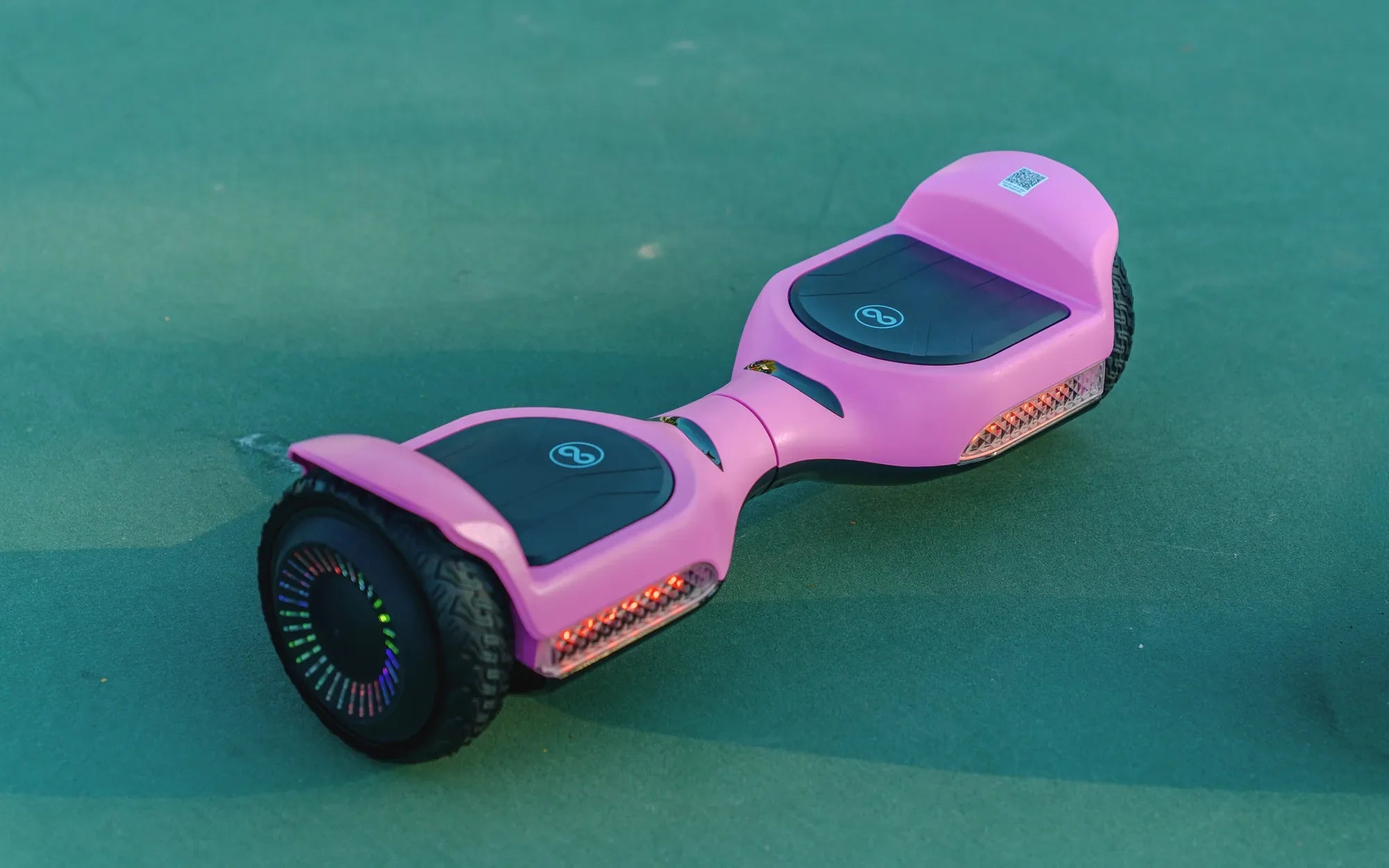
Introduction: Redefining Off-Road Mobility with 10-Inch Wheels
Forget the pavement. The true frontier for personal electric vehicles lies beyond the smooth concrete, in the dirt, grass, and gravel of the natural world. The all terrain hoverboard 10 inch wheels is engineered specifically for this domain, transforming from a novelty gadget into a legitimate adventure vehicle. This isn't just a hoverboard with bigger tires; it's a complete re-engineering for capability, safety, and durability where it matters most.
The 10-inch wheel size is the critical, non-negotiable specification that unlocks true off-road performance. It serves as the perfect bridge between the agility of smaller urban boards and the raw capability of larger, bulkier off-road PEVs. By focusing on this key dimension, manufacturers create a platform that offers superior obstacle clearance, stability, and comfort on unpredictable surfaces. This makes the all terrain hoverboard 10 inch wheels not just a toy, but a reliable companion for exploration.
This article will dissect exactly why this specification is so vital. We'll explore the physics of wheel size, detail the must-have features that complement those large wheels, and provide a practical comparison against other off-road options. You'll learn what to look for in a quality model, how to ride safely, and why brands that prioritize certified safety components, like Gyroor, are essential for peace of mind on the trail.
Why Wheel Size Matters: The 10-Inch Advantage for All-Terrain Riding
In off-road dynamics, wheel diameter is the first and most important determinant of performance. Larger wheels fundamentally change how a vehicle interacts with the ground. While standard hoverboards use 6.5-inch or 8-inch wheels for smooth indoor and pavement use, they falter on anything rougher. The 10-inch wheel emerges as the optimal size, providing a calculated balance of agility, clearance, and shock absorption that smaller wheels cannot match.
The primary benefit is a significant reduction in the roll resistance presented by surface irregularities. A small wheel hitting a 2-inch rock or root must lift the entire board and rider over that obstacle, causing a jarring impact. A 10-inch wheel, with its greater circumference, simply rolls over it with a much smaller vertical displacement. This translates directly to a smoother ride and less strain on the motors and battery as they don't have to work as hard to overcome constant bumps.
Furthermore, the larger diameter allows for a taller, more voluminous tire. This volume is crucial for air pressure management. Lower air pressure can be used in a 10-inch tire to increase the contact patch and improve traction on soft surfaces like sand or mud, without the same risk of pinch flats that plague smaller wheels. This versatility is key for a true all terrain hoverboard 10 inch wheels designed for multiple surface types.
Conquering Obstacles: Ground Clearance and Traction
Ground clearance is the distance between the lowest point of your board (usually the chassis or battery casing) and the ground. With 10-inch wheels, the axle is positioned higher, naturally lifting the board's body. This is critical for preventing the dreaded "belly scrape" on rocks, curbs, or uneven trail surfaces. A scrape can damage vital electronics, unbalance the rider, or even stop the board dead in its tracks.
The tires themselves are a key part of the equation. A true all terrain hoverboard 10 inch wheels will feature knobby, treaded tires—often made of a durable, rubber compound—rather than the slick rubber found on street models. These knobs dig into loose dirt, gravel, and grass, providing the lateral and forward traction needed for control on slippery inclines and during turns. The wider profile common to these tires also increases stability, preventing the board from sinking into soft terrain.
Ride Comfort and Stability on Rough Patches
Comfort off-road is directly tied to stability. A bumpy, unstable ride forces the rider to constantly micro-adjust their balance, leading to quick fatigue and reduced control. The 10-inch wheel's superior ability to roll over obstacles creates a more predictable and stable platform. The impact from a bump is absorbed over a longer period and a greater distance, dampening the shock before it reaches the rider's feet and ankles.
This stability builds rider confidence. When you trust that your board will handle a patch of gravel or a minor dip without throwing you off, you can focus on the path ahead and enjoy the ride. This is the hallmark of a well-designed adventure companion. The difference between 8-inch and 10-inch wheels off-road is not incremental; it's transformative, moving the experience from precarious to pleasurable.
Key Features to Look for in a True All-Terrain Hoverboard
While 10-inch wheels are the foundation, they are just one part of a complete off-road system. A capable all terrain hoverboard 10 inch wheels must integrate several other critical features to deliver on its promise. Compromising on any of these can turn an adventure into a frustrating or unsafe situation. The best models, from brands like Gyroor, treat these features as interconnected requirements, not optional extras.
First, the frame must be constructed from reinforced materials, often a robust aluminum alloy or high-grade polymer composite, to withstand the torsional stresses and impacts of off-road use. The footpad surfaces should be textured and non-slip, even when wet or muddy. Integrated LED headlights and taillights are not just for style; they are essential safety features for visibility during dusk rides or in shaded trail areas.
Power & Performance: Motor Wattage and Climbing Ability
Off-road terrain demands power. Dual motors are standard, but their combined wattage is what determines climbing ability and acceleration on loose surfaces. For genuine all-terrain capability, look for a total wattage between 500W and 800W or more. This power allows the board to tackle inclines of 15-30 degrees, depending on rider weight and surface conditions.
High torque is more important than top speed for off-road use. This torque is what gets you up a grassy hill or through a patch of soft dirt. A powerful motor system also maintains better control at lower speeds, which is crucial for navigating technical sections of a trail. The all terrain hoverboard 10 inch wheels from leading brands pairs this motor power with intelligent control systems that deliver smooth acceleration and regenerative braking for better control and slightly extended range.
Safety and Durability: Battery Certification and Water Resistance
This is the most critical non-negotiable. Off-road use subjects a hoverboard to vibrations, impacts, and potential environmental hazards that a street board never encounters. A high-quality, UL-certified battery pack is essential. UL certification means the battery has passed rigorous independent tests for safety, including overcharge, short circuit, and impact resistance. Gyroor, for example, uses exclusively UL-certified batteries tested for over 500 charge cycles, providing a fundamental layer of safety trusted by over 100,000 riders.
Water and dust resistance is equally vital. An Ingress Protection (IP) rating of IPX5 or higher is recommended. IPX5 means the board can withstand water jets from any direction, protecting it from puddles, wet grass, and light rain. This protection prevents corrosion and electrical shorts, ensuring the board's longevity and reliability. Without these certifications, an off-road hoverboard poses a significant risk.
Build Quality and Warranty: Investing in Reliability
The off-road environment is a rigorous testing ground. A one-year comprehensive warranty on parts and labor is a strong indicator of the manufacturer's confidence in their product's durability. It shows they stand behind their build quality. When evaluating an all terrain hoverboard 10 inch wheels, research the warranty terms carefully.
A robust warranty often correlates with better customer service and access to replacement parts. Brands that sell through authorized dealers and have a clear support channel, like Gyroor's established presence in North America and Europe, add significant value. This support network is crucial for a product designed for adventurous use, where the potential for wear and tear is higher than with a commuter scooter.
Gyroor's All-Terrain Models: Engineered for the Adventure
Gyroor translates the principles of off-road engineering into concrete product excellence. Their all-terrain hoverboards are built around the core premise of the all terrain hoverboard 10 inch wheels, integrating the essential features into a cohesive and reliable package. By starting with a UL-certified battery and IPX5-rated water-resistant chassis, they establish a baseline of safety that allows riders to focus on the experience, not on potential hazards.
Models like those in Gyroor's off-road series typically feature powerful dual 350W motors (700W total), providing ample torque for hills and varied terrain. The 10-inch knobby tires are mounted on a reinforced frame designed to handle impacts. Bright LED lighting systems ensure the board is visible, while the intuitive gyroscopic control system offers a responsive ride that experienced riders appreciate and beginners can learn confidently.
Designed for Confidence and Control
Beyond raw specs, Gyroor designs for the rider's experience. The footpads are extra-wide and textured, providing a secure platform even with muddy shoes. The board's responsiveness is tuned to be progressive, not twitchy, which is key for maintaining balance on uneven ground. Many models also include Bluetooth speakers and companion apps for speed mode adjustment, reflecting an understanding that the adventure is about enjoyment as well as capability.
This holistic approach—where safety, power, durability, and user experience are given equal weight—is what separates a true adventure-ready product from a mere novelty. It's the reason Gyroor has cultivated a loyal base of outdoor enthusiasts who trust their equipment for recreational exploration. Their 1-year warranty acts as a final seal of confidence on this engineered reliability.
All-Terrain Hoverboard vs. Other Off-Road PEVs: A Practical Comparison
Choosing the right off-road personal electric vehicle (PEV) depends on your primary use case, budget, and desired experience. The all terrain hoverboard 10 inch wheels occupies a unique niche. The following table provides a clear, data-driven comparison to help you understand where it excels.
| Vehicle Type | Portability | Learning Curve | Terrain Versatility | Typical Price Point |
|---|---|---|---|---|
| All-Terrain Hoverboard (10-inch) | High (Compact, ~30 lbs, easy to carry) | Moderate (Requires balance skill, 1-2 hours practice) | High (Excels on trails, grass, dirt, gravel; fair on pavement) | Mid-Range |
| Electric Scooter (Off-Road) | Moderate (Larger frame, often 40-70 lbs, may fold) | Low (Intuitive handlebar steering) | Moderate-High (Good on trails/pavement; can struggle in very soft/muddy terrain) | Mid to High |
| E-Bike (Hardtail Mountain) | Low (Bulky, heavy, requires rack transport) | Low (Like a standard bicycle) | Very High (Superior on steep, technical trails and long distances) | High |
| All-Terrain Electric Skateboard | Moderate-High (Long deck, but carryable) | Steep (Requires skateboarding balance and stance) | High (Similar to hoverboard but with different control style) | Mid to High |
The all terrain hoverboard 10 inch wheels shines in its combination of high portability and genuine off-road capability. It is the easiest to transport in a car trunk, carry over a short obstacle, or store in a small space. Its fun, intuitive (once learned) control scheme offers a unique, immersive riding sensation that handlebar vehicles can't match. For recreational trail exploration, park rides, and beach cruising where ultimate distance or speed isn't the goal, it is arguably the most enjoyable and convenient option.
Getting Started: Tips for Your First Off-Road Ride
Owning a capable machine is the first step; knowing how to use it safely is the next. The transition from pavement to trail requires preparation and a gradual approach. Your first ride should be about building confidence in a controlled environment, not testing limits.
Begin by fully charging your board and performing a quick pre-ride check: ensure tire pressure is correct (as per manual, usually 25-35 PSI), check that all lights are functional, and confirm the board powers on and calibrates levelly. Always start in the slowest speed mode, even if you have prior hoverboard experience, as off-road surfaces react differently.
Essential Safety Gear
Never ride off-road without proper protection. The minimum gear includes:
- Helmet: A certified multi-impact helmet (bike or skateboard style) is non-negotiable.
- Wrist Guards: The most common fall is forward; wrists are highly vulnerable.
- Knee and Elbow Pads: Essential for protecting joints during falls on hard or rough surfaces.
- Sturdy, Closed-Toe Shoes: Provides ankle support and protects your feet.
This gear can prevent serious injury and allows you to practice falls safely, which is a key part of the learning process. Investing in quality protection is as important as investing in the board itself.
Finding the Right Terrain and Practicing Skills
Your first venue should be a wide, open, flat grassy field. Grass provides a soft landing and enough resistance to make the board feel stable as you practice mounting, dismounting, and basic forward/backward movement. Avoid hills, loose gravel, or sand initially.
Practice turning by applying gentle pressure with your toes or heels. Learn to dismount by stepping backwards off the board, not jumping forward. Once comfortable on flat grass, seek out a gentle, packed-dirt trail with few obstacles. Approach inclines slowly, leaning slightly forward when going up and shifting weight back when going down. Always look several feet ahead on the trail to anticipate obstacles, and never ride beyond your skill level or in conditions where you cannot clearly see the path.
Frequently Asked Questions (FAQ)
Q1: Are 10-inch all-terrain hoverboards safe for beginners?
A1: With proper practice and full safety gear, yes. The larger wheels provide more stability than smaller models, which can be beneficial. However, the fundamental skill of balancing must be learned. Beginners should dedicate their first few sessions to a safe, flat, grassy area away from traffic and obstacles.
Q2: How far can I ride on a single charge off-road?
A2: Range varies by model, battery capacity, terrain, rider weight, and temperature. Off-road riding consumes more power than pavement. A typical quality all terrain hoverboard 10 inch wheels with a 36V/4.4Ah battery may offer 8-12 miles on mixed off-road terrain. Models with larger batteries (e.g., 6Ah+) can extend this to 15+ miles. Always check the manufacturer's stated range for off-road or real-world conditions.
Q3: Can they really handle hills and wet grass?
A3> A properly powered model (500W+ dual motors) can handle moderate hills (15-25° grade). Wet grass is one of the more challenging surfaces due to low traction. Knobby 10-inch tires provide the best possible grip, but riders must accelerate and turn very gradually to avoid slipping. It is doable but requires caution.
Q4: What is the weight limit for these hoverboards?
A4: Weight limits are typically between 220 lbs and 265 lbs for quality off-road models. Exceeding this limit stresses the motors, battery, and frame, reducing performance, range, and safety. Always adhere to the manufacturer's specified maximum load.
Q5: How does the IPX5 water resistance benefit off-road use?
A5> IPX5 rating means the board is protected against low-pressure water jets from all directions. This allows you to ride through puddles, on dew-covered grass, or in light rain without immediately damaging the electronics. It protects against splashes from mud and allows for easy cleaning with a damp cloth. It is a crucial feature for durability in real-world outdoor conditions.
Q6: How do I maintain my all-terrain hoverboard?
A6> Regular maintenance includes: checking and inflating tires to the correct PSI, cleaning mud and debris from the wheel wells and undercarriage after rides, inspecting the tire tread for wear or damage, ensuring all screws are tight (especially after initial use), and storing the board in a cool, dry place. Avoid full submersion and charging the board immediately after a wet ride; let it dry completely first.
Conclusion: Your Gateway to Off-Road Exploration
The all terrain hoverboard 10 inch wheels stands as a uniquely accessible portal to outdoor adventure. By combining the portability and intuitive fun of a hoverboard with the serious engineering needed for rough ground, it unlocks trails, fields, and beaches in a way few other vehicles can. The key is choosing a model built with integrity—one that prioritizes certified battery safety, legitimate water resistance, robust construction, and a meaningful warranty.
This commitment to quality ensures that your adventure companion is reliable, safe, and built to last. Brands like Gyroor exemplify this approach, delivering products that riders can trust beyond the city limits. As you master the balance and explore new paths, you'll discover that the journey itself—the wind, the scenery, the sense of exploration—becomes the ultimate reward. Adventure responsibly, gear up, and start exploring.
Ready to find your ultimate off-road adventure companion? Browse the full Gyroor collection, featuring UL-certified, IPX5-rated all-terrain hoverboards, at gyroorboard.com.
Kids Electric Scooter: The Ultimate Guide to Fun and Safety
Customize a Hoverboard: The Ultimate Guide to Personalizing Your Ride