

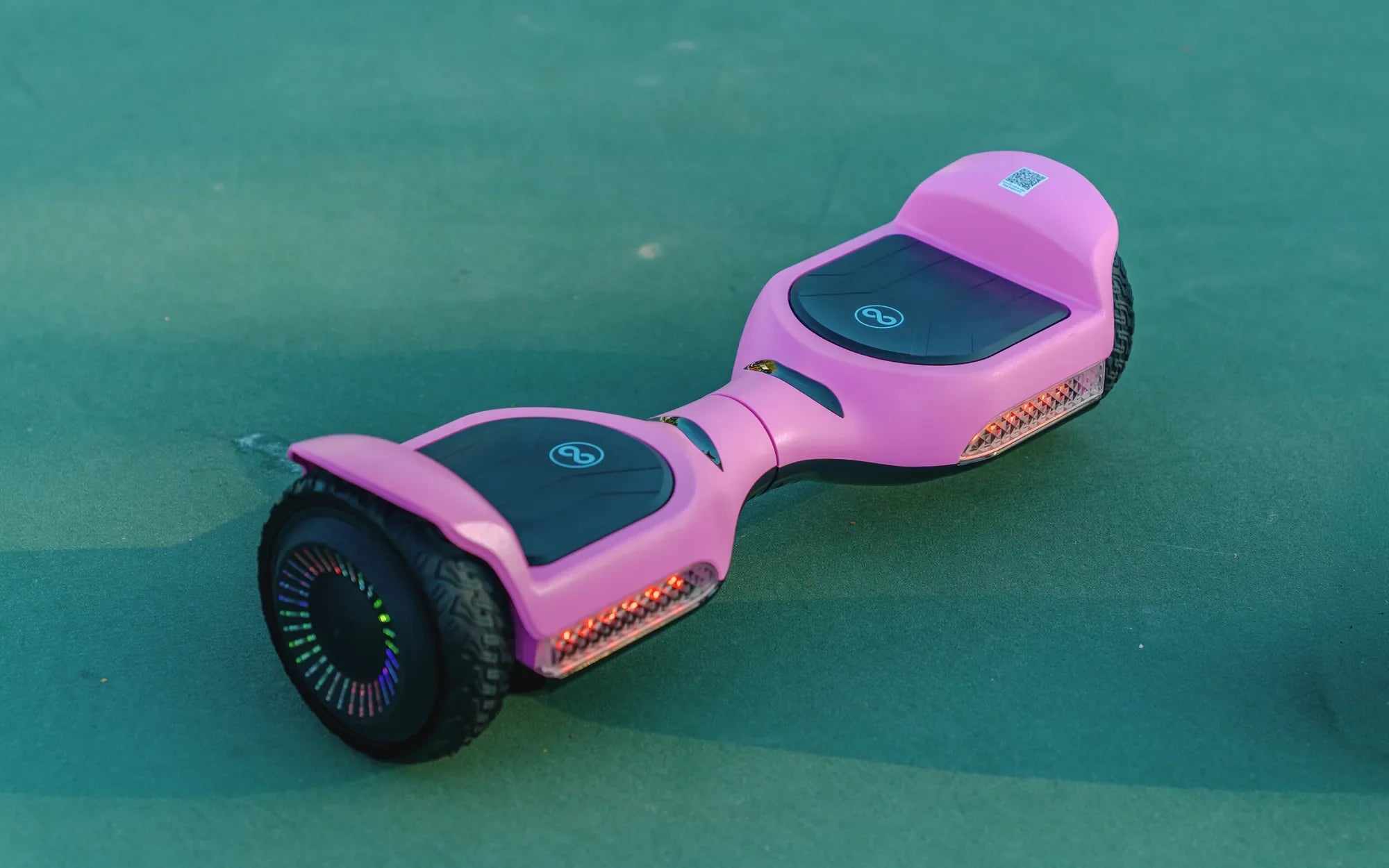
Redefining Off-Road Exploration
The pavement ends, but your journey doesn't have to. An all terrain hoverboard with Bluetooth represents a fundamental shift in personal electric transport, transforming from a sidewalk cruiser into a legitimate off-road adventure vehicle. This device is engineered to conquer the unpredictable—dirt trails, grassy fields, gravel paths, and gentle slopes—freeing riders from the constraints of urban infrastructure. The integration of Bluetooth connectivity elevates it from a simple thrill machine to a smart, customizable adventure companion, allowing for performance tuning, ride tracking, and enhanced control directly from a smartphone. This article will dissect the engineering, features, and practical knowledge required to choose and master the ultimate off-road adventure companion, ensuring your forays into nature are both exhilarating and reliable.
We will explore the critical design elements that separate true all-terrain models from their urban counterparts, focusing on power, durability, and tire technology. You'll learn how Bluetooth functionality extends far beyond playing music, serving as a digital control hub for safety and customization. Furthermore, we will examine the brand philosophies and engineering standards, like those championed by Gyroor, that ensure these vehicles can withstand the rigors of trail use. By the end, you'll be equipped with a data-driven buyer's guide and the confidence to select a model that matches your adventurous spirit.
What is an All-Terrain Hoverboard? Beyond the City Streets
An all-terrain hoverboard is a self-balancing electric vehicle specifically designed for unstable, uneven surfaces where standard hoverboards would falter or fail. While traditional models rely on small, solid rubber tires for smooth pavements, all-terrain variants are distinguished by their robust construction and adaptive components. The core mission is to provide stability, traction, and power where the ground is soft, bumpy, or inclined. This capability unlocks a new dimension of riding, turning forest paths, park lawns, and beachfronts into personal playgrounds.
The transformation from street to trail is achieved through several key hardware upgrades. The most visible difference is the tire system. Standard hoverboards use 6.5 or 8.5-inch solid tires, but an all terrain hoverboard with Bluetooth typically features 10-inch or larger air-filled (pneumatic) tires. These tires, similar to those on bicycles, provide crucial shock absorption and vastly improved grip on loose surfaces like dirt and sand. The increased diameter also offers greater ground clearance, allowing the board to roll over small rocks, roots, and debris without getting stuck or damaging the undercarriage.
Beneath the deck, dual motors are significantly more powerful. Where a commuter board might have 250W motors per side, an off-road model often boasts 500W, 800W, or even 1000W motors combined. This raw power is essential for climbing gradients, powering through resistance like thick grass or mud, and maintaining speed on challenging terrain. The chassis and frame are also reinforced to handle the repeated stress of impacts and vibrations that come with off-road travel, ensuring long-term structural integrity.
Key Features That Define True All-Terrain Capability
Not every board marketed as "off-road" is created equal. True capability is defined by a specific set of non-negotiable features that work in concert. First is motor power and torque. High wattage (e.g., 800W-1000W total) translates directly to hill-climbing ability. A board with sufficient torque can handle inclines of 15-30 degrees, depending on rider weight and surface conditions. This is the difference between conquering a hill and having to dismount and carry your board.
Second, tire specification is paramount. Look for pneumatic (air-filled) tires, ideally 10 inches in diameter or larger. The air pressure within these tires can be adjusted: lower pressure for maximum grip on sand or soft dirt, and higher pressure for harder-packed trails and better range. The tread pattern is equally important; deep, aggressive lugs provide the necessary bite to prevent slippage on loose or wet surfaces. Third, ground clearance—the space between the lowest point of the board (often the battery casing) and the ground—should be at least 2-3 inches to clear obstacles safely.
Finally, the overall build quality dictates durability. A robust, often aluminum alloy, frame houses and protects the core components. High-quality battery management systems (BMS) and waterproofing seals are not luxury features but necessities for a device exposed to dust, moisture, and jarring impacts. A high weight capacity (often 220 lbs or more) also indicates a sturdier build that can handle the dynamic forces of off-road riding.
The Bluetooth Advantage: More Than Just Playing Music
While the inclusion of Bluetooth speakers is a common selling point, the technology's real value in an all terrain hoverboard with Bluetooth lies in its function as a integrated control and diagnostics system. Pairing the board with a dedicated manufacturer's app via Bluetooth transforms your smartphone into a dashboard and tuning console. This connectivity turns a powerful vehicle into an intelligent one, allowing for customization that adapts the ride to your skill level and the specific terrain.
Through the app, riders can typically access and adjust several core parameters. Speed modes are a fundamental safety feature; you can lock the board into a gentle beginner mode for learning or when lending it to a friend, or unlock its full power for experienced trail riding. Real-time battery monitoring is more precise than simple LED indicators, showing exact percentage and voltage, which is critical for planning longer off-grid adventures to avoid being stranded. Some apps even offer firmware updates, ensuring your board's performance and safety features are always up-to-date.
Additional customization often includes control over LED lighting systems. Riders can change colors, patterns, or set the lights to pulse in sync with music—a fun feature for evening rides. More advanced apps provide ride statistics, tracking metrics like total distance traveled, average speed, and route mapping via your phone's GPS. This data not only fuels a rider's sense of achievement but can also be used to monitor the board's performance over time and identify any potential issues.
Safety and Control Through Connectivity
The smart features enabled by Bluetooth directly contribute to a safer and more controlled riding experience, especially in the variable conditions of off-road environments. For novice riders, the ability to remotely set a strict speed limit is invaluable. This allows them to build confidence on uneven ground without the risk of accidentally accelerating beyond their comfort level. A "beginner mode" often also makes the board's self-balancing algorithm less sensitive, providing a more stable and forgiving platform for learning.
Anti-theft functionality is another significant safety benefit. Many apps allow you to electronically lock the motors via your smartphone. If someone tries to ride off with your board without your phone paired and unlocked, the wheels will not turn, or they will judder violently, acting as a powerful deterrent. Furthermore, diagnostic alerts can be pushed to your phone. If the board's internal systems detect an anomaly—such as motor overheating, a voltage irregularity, or a stuck sensor—it can send a notification, allowing you to address a potential problem before it leads to a failure during a ride.
Gyroor's Engineering Edge: Built for the Adventure
When subjecting a personal electric vehicle to the demands of off-road use, brand philosophy and engineering standards become critically important. Gyroor, a leading brand trusted by over 100,000 riders across North America and Europe, designs its products with a focus on reliability, safety, and performance. Their approach to building an all terrain hoverboard with Bluetooth is rooted in using premium, certified components and adhering to rigorous testing protocols. This results in vehicles that aren't just capable of an off-road adventure but are built to endure many of them.
The brand's lineup, which includes over 20 models of electric scooters, e-bikes, and hoverboards, shares a common DNA of robust construction. For off-road hoverboards, this translates to reinforced decks, high-torque motor systems, and intelligent battery management. The average 4.5/5 customer rating highlights a consistent track record of performance and durability. This reputation is earned by prioritizing the factors that matter most when you're miles from a power outlet: battery safety, environmental resistance, and dependable support.
UL-Certified Battery: Power and Peace of Mind on Remote Trails
The battery is the heart of any electric vehicle, and its importance is magnified in off-road applications. Gyroor equips its models with UL-certified lithium-ion battery packs. UL certification is a globally recognized safety standard indicating the battery has undergone extensive independent testing for hazards like short-circuiting, overheating, and thermal runaway. On a remote trail, a battery failure is more than an inconvenience; it's a potential safety risk and a guarantee of a long walk home.
These certified packs are engineered for stability and longevity. They are designed to deliver consistent power output even when tackling steep inclines, preventing the sudden voltage drops that can cause a board to lose power unexpectedly. Rated for 500+ charge cycles, these batteries are built for the long haul, ensuring the board's range remains reliable over years of use. The peace of mind that comes with a UL-certified battery allows riders to focus on the adventure, not on worrying about their power source.
IPX5 Water Resistance: Conquering Puddles and Light Weather
Off-road riding inevitably involves encounters with moisture: morning dew on grass, muddy patches, shallow puddles, or a sudden light drizzle. An IPX5 water resistance rating is therefore a essential specification for a true all-terrain companion. This rating means the board's internal electronics are protected against low-pressure water jets from any direction, making it resistant to splashes and light rain.
This level of protection prevents water ingress that could damage motors, control boards, or battery connections. It allows riders to confidently traverse wet conditions without fearing immediate damage. While submerging any hoverboard is not advised, IPX5 protection ensures that the occasional splash or ride on damp terrain won't end your trip or require expensive repairs. It's a fundamental feature that defines a board's readiness for real-world, unpredictable outdoor use.
Warranty and Support: Your Adventure Backstop
The true test of a brand's confidence in its product is the warranty it offers. Gyroor backs its all-terrain hoverboards with a comprehensive 1-year warranty, covering manufacturing defects in materials and workmanship. For a product designed to handle bumps, vibrations, and varied environments, this warranty acts as a crucial safety net. It assures the rider that the board is built to a standard that can withstand legitimate off-road use.
Coupled with responsive U.S.-based customer support, this warranty structure means any issues that do arise can be diagnosed and resolved efficiently. Whether it's a question about tire pressure for a specific terrain or a needed component replacement, having reliable support ensures minimal downtime. This backstop is an integral part of the ownership experience, transforming the board from a disposable gadget into a dependable adventure tool.
Choosing Your Ultimate Companion: A Practical Buyer's Guide
Selecting the right all terrain hoverboard with Bluetooth requires matching technical specifications to your intended use, physical size, and riding goals. A board perfect for hard-packed dirt bike trails may struggle on loose beach sand, and a model ideal for a lightweight rider may be underpowered for someone carrying a backpack. A data-driven approach, focusing on the following key specifications, will lead you to the best companion for your adventures.
Start by honestly assessing your primary terrain. Is it mostly flat, hard-packed gravel paths, or do you envision tackling sandy shores and steep, grassy hills? Your answer will dictate the necessary motor power and tire type. Next, consider your weight plus any gear (backpack, camera equipment) you might carry; always choose a board with a maximum weight capacity at least 20-30 lbs above your total weight for optimal performance and motor longevity. Finally, think about trip distance. Advertised range is always calculated under ideal conditions (smooth pavement, lightweight rider, moderate speed). For off-road use, a good rule of thumb is to reduce the advertised range by 30-40% to account for the increased energy demands of uneven surfaces.
Specification Showdown: What the Numbers Mean
To make an informed decision, you must understand how specifications translate to real-world performance. The following table breaks down the key metrics for two hypothetical off-road hoverboard profiles, illustrating how specs align with use cases.
| Specification | Trail Cruiser (Hard-packed dirt, gravel) | Adventure Explorer (Sand, grass, steep hills) | What It Means For You |
|---|---|---|---|
| Total Motor Power | 800W | 1000W+ | Higher wattage = better hill climb (15° vs. 25°+) and acceleration in resistance. |
| Battery Capacity | 36V 4.4Ah (158Wh) | 36V 6.6Ah (237Wh) | Higher Watt-hour (Wh) = longer potential range. Essential for longer off-grid trips. |
| Tire Size & Type | 10" Pneumatic | 10.5" or 11" Pneumatic, Deep Tread | Larger tires = better clearance/comfort. Deep tread = superior grip on loose/wet terrain. |
| Max Weight Capacity | 220 lbs | 265 lbs | Choose a limit well above your weight for safety, performance, and durability. |
| Water Resistance | IPX4 | IPX5 | IPX5 is the recommended minimum for confident all-terrain use. |
Terrain Matching: Picking the Right Model for Your Trails
With the specification framework in mind, you can match a board to your environment. For flat, hard-packed trails and gravel paths, a model like the Gyroor H20 with its 8.5" solid tires might suffice, but for true versatility, a board with 10" pneumatic tires and 800W of power is a better foundation. It will absorb bumps and handle minor inclines with ease.
For grass, fields, and moderate hills, you need increased torque and traction. Look for a minimum of 1000W combined motor power and 10" tires with a pronounced tread pattern. The added power ensures you can maintain speed through longer grass and climb steeper gradients without overtaxing the motors. For sandy beaches or loose dirt, tire size and pressure management become paramount. The largest tires available (10.5" or 11") provide the necessary floatation. The ability to lower tire pressure significantly increases the tire's contact patch, preventing it from digging into soft sand.
Always cross-reference the manufacturer's stated hill gradeability (e.g., "15° slope") with your local terrain. When in doubt, opt for the more powerful motor and larger battery. The marginal extra cost is a worthwhile investment for the expanded capability and confidence it provides on diverse adventures.
Mastering the Ride: Safety and Maintenance for the Long Trail
Owning an all-terrain hoverboard comes with the responsibility of proper operation and care. Off-road environments are less forgiving than sidewalks, making safety gear non-negotiable. Always wear a certified bicycle or multi-sport helmet, knee pads, elbow pads, and wrist guards. The uneven surface increases the risk of falls, and protective gear can prevent serious injury. Start your practice in a flat, open, grassy area free of obstacles. The softer surface is more forgiving during the inevitable dismounts while you learn the different balance points required for terrain changes.
Be acutely aware of your surroundings. Scan the trail ahead for large rocks, roots, holes, or sudden drop-offs. Learn to shift your weight to navigate small obstacles and dismount to walk over hazards that exceed your board's clearance. Respect trail etiquette: yield to hikers and horses, avoid skidding or tearing up sensitive terrain, and adhere to local regulations regarding motorized vehicles on public trails. Ride within your limits, especially as you learn how your board reacts to different surfaces like mud, loose gravel, or wet leaves.
Essential Maintenance for Peak Performance
Regular maintenance is key to longevity and reliability. After each off-road ride, perform a basic cleaning. Use a dry cloth or soft brush to remove mud, dust, and debris from the tires, wheel wells, and deck. Avoid spraying water directly at the board; instead, use a damp cloth to wipe it down. This prevents abrasive particles from wearing down moving parts or compromising seals.
Weekly, check the tire pressure with a gauge. Maintaining the manufacturer's recommended PSI (typically 24-36 PSI) is crucial for range, ride comfort, and preventing pinch flats. Inspect the tires for cuts, embedded stones, or excessive wear. Every few months, check all visible screws and bolts for tightness, as vibrations can loosen them. For battery care, avoid completely draining it. Try to recharge when it drops to 20-30% capacity, and store the board in a cool, dry place away from direct sunlight when not in use for extended periods.
Riding into the Future: The Evolution of Outdoor Personal Transport
The all terrain hoverboard with Bluetooth is more than a toy; it's a testament to the rapid evolution of personal micro-mobility. It represents a convergence of rugged mechanical engineering and smart digital integration, creating a vehicle that is both physically capable and intelligently adaptable. This fusion empowers individuals to explore their natural surroundings with a new sense of freedom and fun, bridging the gap between human-powered recreation and motorized adventure without the noise, fumes, or bulk of traditional vehicles.
As battery technology advances, we can expect even greater ranges and faster charging, enabling day-long expeditions. Motor and suspension systems will likely become more sophisticated, offering smoother rides over truly rough terrain. Connectivity will deepen, with potential for more advanced ride analytics, social sharing of trails, and even integration with other smart outdoor gear. The core appeal—the silent, thrilling, and personal connection to the trail—will only be enhanced by these technological strides.
FAQ: Your Off-Road Hoverboard Questions Answered
Q: What is the real-world range on off-road terrain?
A: Expect a significant reduction compared to pavement. If a board is advertised for 12 miles on smooth surfaces, a realistic off-road range (on grass/dirt) is 7-9 miles. Factors like rider weight, hill frequency, and surface softness (sand drastically reduces range) all contribute. Always plan your trip with a safe margin and know how to check your battery level via the app.
Q: How do I maintain an all-terrain hoverboard?
A: Regular cleaning after rides to remove debris is crucial. Check and maintain proper tire pressure weekly. Inspect tires for damage and ensure all screws are tight periodically. For battery health, avoid full discharges, don't charge immediately after a hot ride, and store in a temperate environment. Following these steps will maximize the lifespan of your board.
Q: Is it safe to ride on public trails? What are the rules?
A: Regulations vary widely by city, state, and park. Many public parks and multi-use trails prohibit motorized vehicles, while others allow them. Always check local ordinances and specific trail rules before riding. Regardless of the law, always practice good trail etiquette: yield to others, travel at a safe speed, and do not disturb wildlife or damage the trail.
Q: Can it handle steep hills?
A: This depends entirely on the motor power. A board with 1000W+ total power can typically handle hills with a 25-30 degree incline for a rider of average weight. Weaker motors may struggle with anything over 15 degrees. Always check the manufacturer's stated gradeability and know that performance will decrease on loose surfaces like gravel or wet grass.
Q: What's the learning curve like compared to a regular hoverboard?
A: Interestingly, many find a quality all-terrain model easier to learn on than a small-wheeled street board. The larger, pneumatic tires provide more stability and absorb bumps that would cause a smaller board to jerk. The key difference is learning to anticipate and absorb larger bumps and understanding how traction varies on different surfaces. The core balancing skill is the same, but the ride is generally more forgiving initially.
Q: Are these boards suitable for adults?
A> Absolutely. In fact, they are primarily designed for teens and adults. Their higher weight capacities (often 220-265 lbs), powerful motors, and larger size make them ideal for adult riders. The off-road capability is particularly appealing to adults seeking an adventurous recreational activity.
The journey beyond the pavement awaits. The right all terrain hoverboard with Bluetooth unlocks a world of exploration, combining the thrill of riding with the serenity of nature. By choosing a responsibly engineered model from a trusted brand like Gyroor, you invest in reliability, safety, and lasting performance. Ready to find your ultimate off-road adventure companion? Browse the full Gyroor collection at gyroorboard.com and take the first step toward your next great adventure.
Girls Hoverboard with Seat: The Ultimate Guide to Fun and Safety
Kids Scooter Age 4: The Ultimate Guide for Parents