



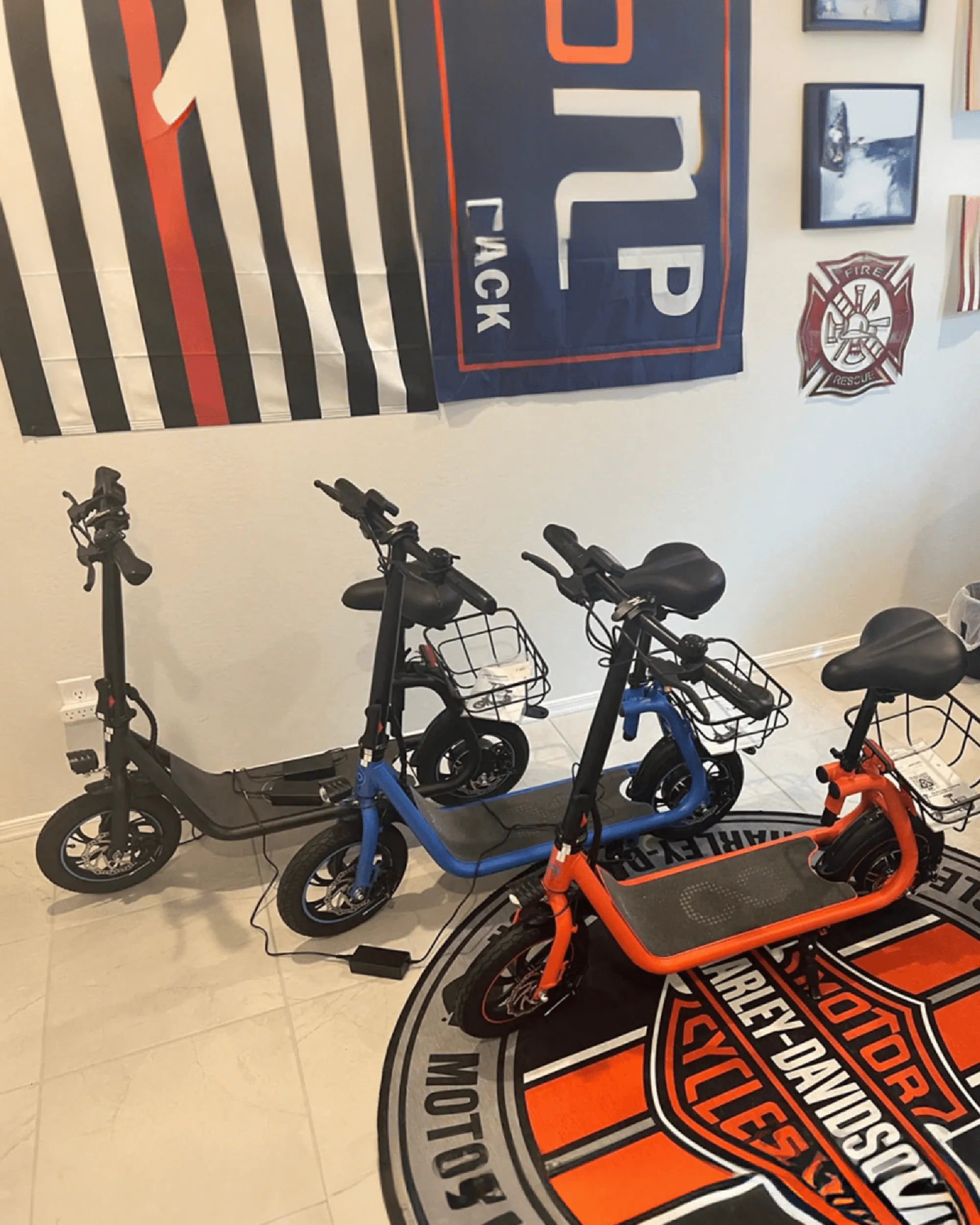
Navigating the Gray Area of Sidewalk Scooting
You're ready to ride, but a critical question halts you: Are electric scooters allowed on sidewalks? The answer is rarely a simple yes or no, creating a widespread legal gray area that confounds new and experienced riders alike. This confusion stems from a fundamental tension between rider safety and pedestrian right-of-way, with regulations varying dramatically from one city block to the next.
This ultimate guide provides a clear, location-aware framework to understand and comply with local laws. We'll move beyond vague advice to deliver a data-driven analysis of where and why you can ride, how to definitively research your local ordinances, and the safety principles underlying these rules. The goal is to transform uncertainty into confident, compliant commuting.
Navigating this landscape is essential not just to avoid fines, but to ensure the safety of everyone sharing our sidewalks, bike lanes, and roads. The proliferation of personal electric mobility devices has outpaced uniform regulation, making personal diligence your most important tool.
The Core Rule: Why Sidewalk Bans Are the Norm
In most urban and suburban areas across the United States, Canada, and Europe, the default legal stance is that electric scooters are not allowed on sidewalks. The primary rationale is unequivocally pedestrian safety. Sidewalks are legally designated as pedestrian spaces, and introducing a silent, motorized vehicle traveling at 15-20 mph creates a significant and dangerous speed differential.
Consider the physics: a pedestrian walks at 3-4 mph. A standard commuter scooter travels at least four times that speed. This mismatch drastically reduces reaction time for both the rider and the pedestrian, increasing the risk of collisions that can cause serious injury. The near-silent operation of modern scooters exacerbates this risk, as pedestrians often rely on auditory cues.
Legally, most jurisdictions classify electric scooters with a motor above a certain wattage (often 250W) as "motorized vehicles" or "low-speed vehicles." This classification places them in a similar regulatory category as bicycles for road use, not as pedestrians for sidewalk use. The operating principle is that motorized vehicles belong on the roadway or in designated infrastructure like bike lanes.
This norm exists to protect the most vulnerable users: children, the elderly, and individuals with disabilities for whom a collision could be catastrophic. It also preserves the sidewalk as a predictable, low-speed environment. Understanding this foundational safety logic is key to accepting why the rules exist, even when they seem inconvenient.
Understanding Your Local Laws: A Step-by-Step Decoder
Because there is no universal federal or national law governing electric scooter use on sidewalks, the responsibility falls on you to decode a three-tiered system of regulations. Ignorance of the law is rarely accepted as an excuse, and fines for sidewalk riding can be substantial.
The first tier is state or provincial law. Some states, like California, have passed legislation (the "California Vehicle Code") that provides a baseline framework, often defining e-scooters and prohibiting sidewalk riding in business districts. However, these laws frequently delegate further rule-making authority to local cities.
The second and most critical tier is city or municipal bylaws. This is where the most specific and enforceable rules are found. A city may completely ban sidewalk riding, permit it only in residential areas, or allow it but impose a strict speed limit (e.g., walking speed only). These rules can change at the city limits.
The third tier involves specific district or park rules. Downtown business districts, university campuses, and public parks often have their own additional regulations. A city may allow sidewalk riding in general but explicitly ban it in a crowded downtown core or on scenic park paths.
How to Find Your City's Specific Ordinance
Effective research requires using precise search terms. Open your browser and search for "[Your City Name] electric scooter ordinance" or "[Your City Name] municipal code personal mobility device." The official results will typically come from your city's transportation or public works department website.
Be sure to distinguish between rules for privately-owned scooters and rental scooters. Many cities have specific, and often more restrictive, permits and geofencing rules for rental companies like Bird or Lime. The rules for your own scooter may be different. If the online code is confusing, a direct call or email to your local police department's non-emergency line or the city clerk's office can provide clarity.
The Data-Driven Safety Case: Sidewalks vs. Bike Lanes vs. Roads
Choosing where to ride isn't just about legality; it's fundamentally about safety. Public health studies and traffic safety data provide clear guidance on the relative risks of each environment. The following table synthesizes key findings from urban mobility studies and hospital admission reports.
| Riding Environment | Key Risk Factors | Relative Safety Level | Data-Informed Recommendation |
|---|---|---|---|
| Sidewalks | Collisions with pedestrians, driveways, uneven surfaces, street furniture. High severity for pedestrian injuries. | Lowest (for pedestrians and riders) | Avoid. Highest conflict potential. Only use if legally mandated and at walking speed. |
| Protected Bike Lanes | Dooring from parked cars, conflicts with cyclists, intersections. | Highest | Optimal. Physically separated from high-speed traffic. The gold standard for safe scooter travel. |
| Standard Bike Lanes (painted) | Close proximity to car traffic, debris, parked cars encroaching on lane. | Moderate to High | Recommended. Use with high visibility (lights, reflective gear) and defensive positioning. |
| Low-Speed Residential Roads (≤25 mph) | Sharing lane with cars, driver inattention, right hooks at intersections. | Moderate | Acceptable. Ride predictably, take the lane when necessary for safety, and use hand signals. |
| Arterial/High-Speed Roads (≥35 mph) | High speed differential, driver expectation of faster vehicles, increased severity of any collision. | Lowest (for the rider) | Dangerous. Avoid. Speed mismatch is extreme. Seek an alternate route. |
The data consistently shows that protected or standard bike lanes are the safest legal option for electric scooter riders. They balance separation from high-speed traffic with a designated space where drivers expect to see smaller, slower vehicles. When a bike lane is not available, calm residential streets are the next best choice.
Gyroor's Commitment to Responsible Riding
At Gyroor, we believe that the freedom of electric mobility comes with a responsibility to ride safely and lawfully. Our engineering philosophy directly supports this goal. Every Gyroor scooter is built not just for performance, but to empower confident riding in the correct, legal environments.
Safety begins with control. All Gyroor models feature responsive dual braking systems (electronic and disc or drum) and bright front and rear lights for visibility in bike lanes or on roads. Wide, pneumatic tires provide stability on varied road surfaces commonly found in designated cycling infrastructure, not on sidewalk cracks.
We go beyond basic features with a foundational commitment to safety through our UL-certified lithium-ion battery packs. These rigorously tested batteries, rated for 500+ charge cycles, are engineered for reliable, stable performance, reducing any risk of failure that could cause a hazardous situation in traffic. This reliability is backed by a comprehensive 1-year warranty with US-based customer support, ensuring your scooter remains a dependable partner for lawful commuting.
By choosing a scooter built with these robust, safety-first features, riders are better equipped to handle the demands of riding in bike lanes and on streets where local laws intend them to be. Our design choices intentionally align with the data-driven recommendation for safer, legal riding environments.
Best Practices for Legal and Courteous Riding
When sidewalk riding is legally permitted (e.g., in some residential zones), or when navigating shared spaces like multi-use paths, adopting a set of best practices is non-negotiable. These guidelines protect you, pedestrians, and the positive perception of the e-scooter community.
- Yield Unconditionally to Pedestrians: The sidewalk is their domain. Slow to a near-stop, give a wide berth, and make eye contact. Use a polite voice or a bell to announce your presence from a distance, never from directly behind.
- Walk Your Scooter in Crowded Areas: If a sidewalk is busy, or you're navigating a pedestrian plaza, simply dismount and walk. This is the ultimate sign of respect and often a legal requirement in dense areas.
- Observe Strict Speed Limits: If local law allows sidewalk riding with a speed limit (e.g., "walking speed"), adhere to it diligently. This is typically 3-6 mph. Your scooter's eco mode is perfect for this.
- Practice Impeccable Parking Etiquette: Never block sidewalks, ramps, building entrances, or access points. Park upright in a designated bicycle parking area or another location that causes zero obstruction. A discarded scooter is a hazard and fuels public opposition.
- Ride Defensively and Predictably: Assume drivers don't see you. Use hand signals for turns, obey all traffic signals, and never weave between cars or dart out from behind obstacles. In bike lanes, ride in a straight line at a consistent speed.
Global Regulatory Snapshot: How Cities Are Adapting
Examining how major cities worldwide handle the sidewalk question reveals evolving trends and common regulatory themes. This global snapshot can help you understand the direction of future laws in your own area.
In North America, the trend is firmly toward restricting sidewalk use. New York City, Chicago, and San Francisco all have clear bans on e-scooters on sidewalks. Many cities permit them in bike lanes and on streets with speed limits under 35 mph. Some, like Denver, use a hybrid model, banning them in the busy downtown core but permitting them in residential areas.
Across Europe, regulations are often more nuanced and tied to vehicle classification. In the UK, privately-owned e-scooters remain illegal on public roads, sidewalks, and bike lanes, though rental trials are ongoing. In Paris, sidewalk riding is banned, and riders must use bike lanes or roads with a 30 km/h (18 mph) speed limit. Berlin similarly prohibits sidewalk use, directing scooters to bike lanes and roads.
This global movement underscores a consensus: as micromobility matures, integrating these devices into the existing transportation hierarchy—specifically into cycling infrastructure—is the preferred path forward. The focus is on building more protected bike lanes rather than allowing shared use of pedestrian spaces.
FAQ: Quick Answers to Common Sidewalk Scooter Questions
Q: What's the typical fine for riding an electric scooter on the sidewalk?
A: Fines vary widely but can be significant. In cities like San Francisco, fines start at $100. In New York, violations can result in fines over $150. Repeated offenses may lead to higher penalties or even impoundment of the scooter. Always check your local municipal code for the exact penalty.
Q: Are there any exceptions for children or teens?
A> Some jurisdictions have age-specific rules. A common model is that sidewalk riding is prohibited for all, but another is that riders under a certain age (e.g., 16) may be required to ride on the sidewalk for safety, as they may not legally operate the device on the road. This is rare and highly location-specific. Parental supervision laws also apply.
Q: Do the same rules apply to electric bikes (e-bikes)?
A: Not always. E-bike laws are often separate and can be more permissive or more restrictive. Many places allow Class 1 and 2 e-bikes (which assist only when pedaling) on bike paths and trails where scooters might be banned. However, sidewalk riding for e-bikes is also commonly prohibited. Always check the specific regulations for "electric bicycles."
Q: What if my city has no specific law about electric scooters?
A> In the absence of a specific ordinance, default traffic laws usually apply. Police may classify your scooter under existing laws for "motorized vehicles" or "low-speed vehicles," which are almost always prohibited on sidewalks. They could also use nuisance or reckless endangerment statutes. The safest course is to operate as if they are banned from sidewalks and use bike lanes/roads, while advocating for clear local legislation.
Q: Is it safer to ride on an empty sidewalk versus a busy street?
A> This is a common dilemma. While an empty sidewalk feels safer from cars, it is legally risky and can be physically hazardous due to driveways, uneven slabs, and unexpected pedestrian entry. The data shows that predictable behavior in a bike lane or calm street is statistically safer than unpredictable mixing with pedestrians. If the street feels too dangerous, it may indicate that your route needs to be replanned to use calmer streets or that local infrastructure is inadequate.
Your Path to Confident, Compliant Commuting
The core question of are electric scooters allowed on sidewalks demands a responsible, informed answer. The ultimate rule of thumb is clear: when in doubt, take the sidewalk out. Prioritize bike lanes and calm streets as your primary riding environments. This approach aligns with the law in most places, follows the compelling data on safety, and shows respect for your community.
Your journey begins with five minutes of research into your city's municipal code. Arm yourself with that knowledge, then gear up with a reliable vehicle designed for the task. A well-built scooter from a brand like Gyroor, with its UL-certified batteries and robust safety features, provides the dependable performance needed for lawful urban travel.
By choosing to ride legally and courteously, you become part of the solution—helping to build positive community relations and paving the way for better, safer micromobility infrastructure for everyone. The future of urban transportation is electric and personal, and it is built by riders who lead by example.
Ready to ride with confidence and compliance? Explore the Gyroor collection of electric scooters and e-bikes, engineered for safety and reliability in the environments where you're meant to ride. Browse the full Gyroor collection at gyroorboard.com and find the perfect model for your legal, safe, and enjoyable commute.
Electric Scooters for Elderly: A Safe Mobility Solution for Independence
Prices for Electric Scooters: A Comprehensive Guide to Finding the Best Deals