



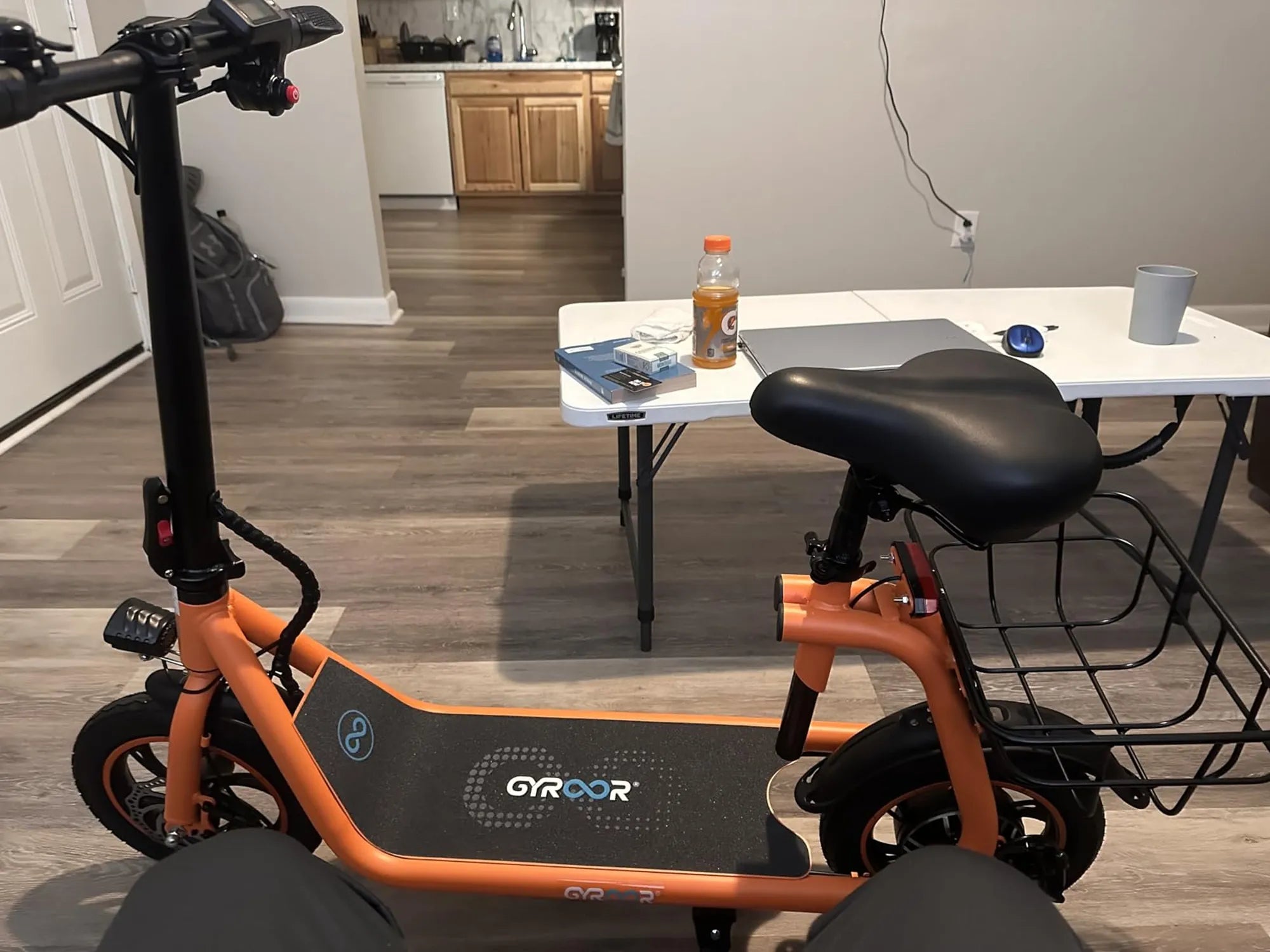
Introduction: The Need for Speed in Urban Mobility
For modern commuters and urban explorers, speed is a critical currency. It dictates how quickly you can reach work, run errands, or simply enjoy your free time. In the quest for efficient, sustainable personal transport, two contenders dominate: the traditional bicycle and the modern electric scooter. The central question, Are Electric Scooters Faster Than Bicycles? A Speed Comparison is not just about peak velocity; it's about which vehicle delivers the most effective speed in the complex reality of city travel.
This article provides a data-driven, factual breakdown. We will examine motor power versus human power, legal limits, and the often-overlooked factors of portability and convenience that define true trip efficiency. As a leader in micro-mobility, Gyroor—trusted by over 100,000 riders across North America and Europe—provides a benchmark for how performance, safety with UL-certified batteries, and design converge in modern electric scooters.
Defining the Race: Key Factors That Influence Top Speed
Declaring a universal winner in the speed comparison between electric scooters and bicycles is impossible without context. The answer depends on an interplay of mechanical specifications, human capability, and regulatory frameworks. Understanding these variables is essential for an accurate assessment.
First, the power source is fundamentally different. An electric scooter's speed is governed by its motor's wattage (e.g., 350W, 500W, 800W), battery voltage, and the electronic controller's settings. A bicycle's speed is generated solely by the rider's pedaling power, which is influenced by fitness level, stamina, and riding technique. This creates a contrast between consistent electric assistance and variable human output.
Vehicle design plays a major role. Weight and aerodynamics significantly impact acceleration and maintaining speed. Electric scooters have a compact, upright riding stance that is less aerodynamic than the crouched position on a road bike. However, scooter motors deliver instant torque to offset this. Tire size also matters; larger bicycle wheels sustain momentum better over cracks and bumps, while smaller scooter tires can feel less stable at higher speeds.
Finally, legal restrictions are a decisive, often limiting, factor. Many municipalities impose strict speed limits on electric scooters used in public bike lanes or paths, typically capping them between 15 and 20 mph. Bicycles, classified as human-powered vehicles, generally face no such electronic governors, allowing riders to travel as fast as their legs permit within the general flow of traffic.
Head-to-Head: Electric Scooter vs. Bicycle Speed Benchmarks
With the key factors established, we can move to direct performance comparisons. The following data provides a clear framework for understanding where each vehicle excels under typical conditions.
Average Commuting Speed on Flat Terrain
For the daily commute on relatively flat city streets, average speed is more telling than a brief burst of top speed. A typical commuter on a standard hybrid or city bicycle averages between 10 and 15 mph. This pace is sustainable for a moderately fit individual over a distance of 3-5 miles.
In contrast, a commuter-focused electric scooter, such as a Gyroor model with a 350W or 500W motor, is designed to cruise comfortably at its governed speed. This is typically between 15.5 and 19 mph. The rider expends no physical effort to maintain this pace, making it a consistent average regardless of fatigue. In this common scenario, the electric scooter holds a clear advantage in sustained commuting speed.
It's important to note that higher-performance e-scooters can push these averages further. However, for the speed comparison of typical devices used by most people, the e-scooter's ability to lock in a 15-19 mph cruise often outperforms the variable 10-15 mph of a casual cyclist.
Maximum Potential Speed
When examining peak velocity, the dynamics shift. A fit, experienced cyclist on a lightweight road bike can achieve speeds of 25-28 mph on flat ground and even higher during sprints or descents. In professional settings, speeds exceed 30 mph. The bicycle's mechanical efficiency and aerodynamic posture enable these high velocities.
Most mass-market electric scooters intended for public use have electronic speed limiters for safety and legal compliance, capping their maximum speed at 19-25 mph. While this matches or exceeds the average cyclist, it falls short of a dedicated road bike rider's peak potential.
There is a category of high-performance electric scooters with motors exceeding 1000W that can reach 30+ mph. However, these are often unsuitable or illegal for use in standard bike lanes. Therefore, in a contest of maximum potential speed under typical legal conditions, a well-ridden bicycle can achieve higher peaks than a street-legal e-scooter.
Acceleration and Hill-Climbing Ability
This is where the electric scooter's advantage becomes most pronounced. Acceleration from a standstill—such as at a traffic light—is driven by torque. An electric motor delivers 100% of its available torque instantly, allowing a quality e-scooter to leap ahead of most bicycles when the signal changes.
Hill climbing dramatically illustrates the difference. A cyclist's speed will invariably drop on an incline, with the grade and length of the hill dictating the severity of the slowdown. The rider must exert significantly more power to maintain momentum.
An electric scooter with a sufficiently powerful motor maintains near-constant speed up a hill. The motor compensates for the gradient, requiring no extra effort from the rider. A Gyroor scooter with a robust 500W motor, for example, will climb moderate hills with only a minor reduction in speed, ensuring a consistent and faster average pace on hilly routes compared to a traditional bicycle.
Beyond Top Speed: The Real-World Commuting Equation
Raw speed metrics tell only part of the story. True commuting efficiency is measured in door-to-door time, where factors beyond pure velocity become critical. This is where the fundamental design differences between e-scooters and bicycles create distinct advantages.
The Portability & Convenience Factor
Portability directly impacts trip time. A foldable electric scooter like those in Gyroor's lineup can be collapsed in seconds, carried into a building, and stored under a desk or in a closet. This eliminates the time spent searching for a bike rack, locking up securely, and potentially removing accessories.
For multi-modal commutes involving buses or trains, portability is paramount. Most public transit systems allow folded e-scooters onboard with minimal fuss, whereas taking a full-sized bicycle may be restricted to specific racks or banned during peak hours. This seamless integration can shave significant minutes off a total journey, making the e-scooter the faster choice in a combined transit scenario.
The compact size also allows for easier navigation in crowded pedestrian areas when dismounted, and it reduces the risk of theft, as the vehicle can remain with the rider. This convenience factor often translates into a faster, less stressful overall commute.
Rider Fitness and Consistency
An electric scooter delivers a perfectly consistent performance every single trip. Your speed does not fluctuate based on how tired you are, whether you had a good night's sleep, or if you're carrying a backpack. This reliability ensures predictable commute times.
A bicycle's performance is intrinsically linked to the rider's physical condition. A morning commute after a workout might be slower than the evening ride home. Headwinds, heat, and humidity also have a far greater impact on a cyclist's speed and energy expenditure than on an e-scooter rider.
This consistency means that for the average commuter seeking a reliable and predictable arrival time without sweating, the electric scooter provides a faster and more manageable experience. You arrive at your destination as fresh as when you left, eliminating the need for a shower or change of clothes, which is another hidden time cost of bicycle commuting.
Safety and Legal Considerations at Speed
Operating any vehicle at speed necessitates a serious discussion of safety and legality. The design and regulation of electric scooters and bicycles reflect their different risk profiles and historical contexts.
Stability and handling differ greatly. Bicycles, with their large wheels and elongated wheelbase, are inherently more stable at higher speeds and handle bumps, potholes, and rail tracks more safely. Electric scooters have smaller wheels (typically 8-10 inches) and a shorter wheelbase, requiring greater rider alertness to surface hazards at speed.
Braking systems are crucial. Quality bicycles use reliable mechanical disc or caliper brakes. Reputable e-scooter brands like Gyroor employ dual braking systems, often combining electronic regenerative braking with mechanical disc or drum brakes, providing strong, controlled stopping power. The integrity of the electrical system, underscored by Gyroor's use of UL-certified battery packs and IPX5 water-resistant designs, is non-negotiable for safe operation.
Legally, the landscape is evolving but clear distinctions remain. As noted, many cities cap e-scooter speeds at 15-20 mph on bike paths. Some require helmet use specifically for e-scooters. Bicycles are rarely subject to such specific speed limits on roadways. Understanding and adhering to local laws is not just about avoiding fines; it's a fundamental component of safe and responsible riding for all.
Detailed Performance Comparison Table
| Performance Metric | Standard Commuter Bicycle | Commuter Electric Scooter (e.g., Gyroor) | Performance Road Bicycle | High-Performance E-Scooter |
|---|---|---|---|---|
| Average Commuting Speed (Flat) | 10-15 mph | 15.5-19 mph | 16-22 mph | 20-28 mph* |
| Maximum Potential Speed | 18-25 mph (Fit Rider) | 19-25 mph (Governed) | 25-30+ mph | 30-40+ mph* |
| Hill Climbing Consistency | Speed drops significantly | Maintains near-constant speed | Speed drops, requires high effort | Maintains high speed |
| Acceleration (0-15 mph) | Moderate, rider-dependent | Quick, instant torque | Fast, rider-dependent | Very quick, powerful torque |
| Primary Power Source | Human Pedaling | Electric Motor (350W-800W) | Human Pedaling | Electric Motor (1000W+) |
| Trip Consistency | Varies with rider fitness | Consistent, regardless of fatigue | Varies with rider fitness | Consistent |
| Multi-Modal Portability | Low (bulky, requires rack) | High (foldable, carry-on) | Very Low | Moderate (heavier, but foldable) |
| Typical Legal Speed Limit on Paths | None (follow traffic laws) | Often 15-20 mph | None (follow traffic laws) | Often illegal on paths |
*Note: High-performance e-scooter speeds often exceed legal limits for public paths and may be restricted to private property.
Use Case Scenarios: Which is Faster For You?
The winner of the speed comparison depends entirely on your specific journey profile. Let's apply our findings to common scenarios.
The Short, Hilly Urban Commute (2-4 miles): The electric scooter is almost certainly faster. Its superior hill-climbing and acceleration from frequent stops will outperform a bicycle. The time saved by carrying the scooter directly to your desk seals the advantage. A Gyroor model with good torque is ideal here.
The Long, Flat Recreational Ride (10+ miles): The bicycle becomes more competitive. A fit rider on a road or hybrid bike can maintain a high average speed over distance, and the physical exercise is part of the goal. The e-scooter's range limitation (though many exceed 20 miles) and potential discomfort on longer rides may tip the scale toward the bicycle for pure speed over this distance.
The Multi-Modal Commuter (Scooter/Train/Walk): This is the electric scooter's domain. The ability to fold and carry the scooter seamlessly onto transit, then quickly unfold it for the last mile, makes it unambiguously faster and more convenient than dealing with a full-sized bicycle on crowded buses or trains.
The Fitness-Focused Traveler: If the purpose is exercise and speed is a secondary metric, the bicycle is the only choice. The speed you generate is a direct result of your workout. An e-bike might be a middle ground, but a traditional bicycle serves this specific goal best.
Conclusion: Choosing the Right Tool for Your Journey
So, are electric scooters faster than bicycles? The comprehensive answer is nuanced. In terms of maximum potential speed on open ground, a capable cyclist on a proper bike can outpace a street-legal e-scooter. However, for the real-world, door-to-door speed of a typical urban commute—factoring in hills, stops, traffic, portability, and rider effort—a quality electric scooter like those from Gyroor often provides a faster, more consistent, and more convenient experience.
Your choice should hinge on your primary use case, local terrain, fitness goals, and regulations. If you value a sweat-free, predictable commute with easy logistics and potent hill-flattening power, a reliable e-scooter is your high-efficiency tool. If you seek peak velocity, physical exercise, and unrestricted road use for longer distances, the bicycle remains a superb and timeless option.
For those leaning toward the efficiency and innovative design of modern electric scooters, exploring a brand that prioritizes performance alongside safety is key. Browse the full Gyroor collection at gyroorboard.com to find a model with the speed, range, and UL-certified reliability to transform your daily travel.
Frequently Asked Questions (FAQ)
Q1: Can an electric scooter go faster than a road bike?
A: In a direct race for maximum speed, a trained cyclist on a lightweight road bike will generally achieve a higher top speed (25-30+ mph) than a commuter e-scooter, which is typically limited to 19-25 mph. However, high-performance, non-street-legal e-scooters can exceed these speeds. In real-world conditions with hills and stops, the e-scooter's instant acceleration and consistent power often make it faster point-to-point.
Q2: Are electric scooters allowed to go the same speed as bicycles?
A: Typically, no. Most jurisdictions impose specific lower speed limits (commonly 15-20 mph) on electric scooters when used in bike lanes or on multi-use paths. Bicycles are not subject to these same electronic or legal caps and must only obey general traffic speed laws. Always check your local regulations before riding.
Q3: What makes Gyroor e-scooters safe at higher speeds?
A: Gyroor designs its scooters for stable, safe performance. Key features include wide, textured decks for secure footing; large pneumatic (air-filled) tires for better shock absorption and traction; reliable dual braking systems (often electronic + disc); and a robust frame. Crucially, all models use UL-certified battery packs tested for 500+ charge cycles, significantly reducing fire risk, and are backed by a 1-year warranty.
Q4: Is it easier to maintain speed uphill on an e-scooter or a bicycle?
A: It is significantly easier to maintain speed uphill on an electric scooter. The electric motor provides constant assistance, requiring only that the rider maintains throttle. On a bicycle, the rider must supply all the extra power to climb, causing speed to drop dramatically based on the hill's grade and the cyclist's fitness level.
Q5: For a 3-mile city commute with two big hills, which will get me to work faster and less sweaty?
A: An electric scooter is the clear choice for this scenario. It will conquer the hills with minimal effort and negligible speed loss, while a bicycle would require strenuous effort, slowing you down and causing sweat. The scooter's portability also means no time spent locking up, potentially getting you to your desk quicker and in a presentable state.
Q6: How does rider weight affect the speed of an e-scooter vs. a bicycle?
A: Rider weight impacts both, but differently. On an e-scooter, heavier riders may experience slightly reduced acceleration and hill-climbing ability, and a minor decrease in maximum range, but top speed on flat ground is often maintained. On a bicycle, rider weight directly and significantly impacts the power-to-weight ratio, affecting acceleration, hill climbing, and sustained speed much more profoundly, as the rider is the sole power source.
Are Electric Scooters Legal in Amsterdam? A Complete Guide
Best Electric Scooters in India Under 1 Lakh: Top Picks for 2024