



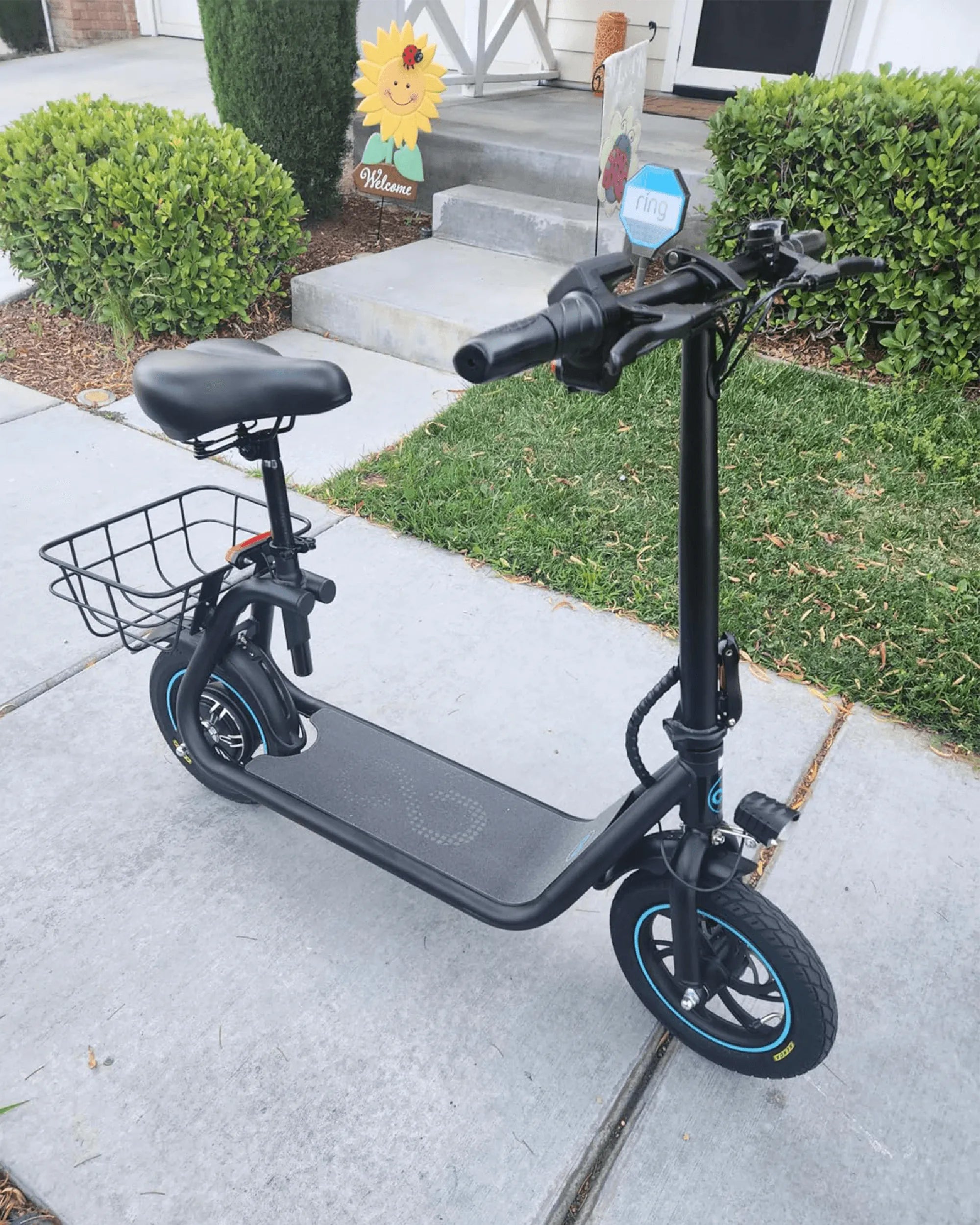
Introduction: The Electric Scooter Revolution
City streets have transformed. Where once there was only car traffic and bicycles, a new class of quiet, zippy vehicles now weaves through urban landscapes. Electric scooters represent more than a fleeting trend; they are a legitimate, rapidly evolving mode of personal transportation. The central question for many potential riders isn't about popularity, but practicality: Are electric scooters good? The answer isn't a simple yes or no. It depends entirely on your commute, your local infrastructure, your budget, and your willingness to adapt. This guide will explore every facet of that question, providing the data-driven analysis you need. We'll examine the undeniable advantages, confront the real-world challenges head-on, and see how manufacturers like Gyroor—a brand trusted by over 100,000 riders across North America and Europe—engineer solutions for reliability and safety.
The Compelling Advantages: Why an E-Scooter Might Be Your Perfect Ride
For the right user, an electric scooter isn't just good; it's transformative. The benefits touch on economics, time, and environmental impact, creating a powerful value proposition for short-distance travel.
Unbeatable Efficiency for Urban Commuting
For distances between 1 and 5 miles, few modes of transport can match the door-to-door efficiency of a personal e-scooter. They excel as a 'last-mile' solution, bridging the gap between public transit stops and your final destination. In congested city centers, a scooter rider often outpaces cars stuck in gridlock. The financial efficiency is equally stark. You eliminate parking fees, costly garage rentals, and the hunt for a scarce meter. For the daily commuter, this can translate to hundreds of dollars in savings per month, paying for the scooter itself in a relatively short time.
A Lightweight Eco-Friendly Footprint
Choosing an electric scooter is a direct, personal step toward reducing your carbon footprint. They produce zero tailpipe emissions during operation. When compared on a per-mile basis, the energy consumption and associated emissions of an e-scooter are a fraction of those from a private car, even an electric one, due to its minimal weight and size. A 2021 study from the North Carolina State University Transportation Research Group found that shared e-scooters, despite their collection and charging logistics, still offered a net environmental benefit over the car trips they replaced. A privately owned and charged scooter, used for years, has an even more favorable profile.
Cost-Effective Operation and Low Maintenance
The economics are compelling. The upfront cost of a quality electric scooter ($400-$1500) is a fraction of a car, e-bike, or even an annual public transit pass in many cities. 'Refueling' costs pennies; a full charge typically consumes less than 10 cents worth of electricity. Maintenance is straightforward: keeping tires properly inflated, checking brakes, and ensuring bolts are tight. There are no oil changes, smog checks, insurance premiums (for private use in most areas), or complex drivetrain repairs. This simplicity makes the total cost of ownership remarkably low.
Portability and Convenient Storage
This is a critical advantage over e-bikes and bicycles. Most modern electric scooters feature a one-click folding mechanism. This allows you to carry it onto a bus or train during bad weather or a long leg of your journey, roll it into your office to store under a desk, or tuck it into a closet in a small apartment. This seamless integration into multi-modal travel and urban living solves the 'parking problem' at both ends of your trip, a hurdle that often negates the benefits of other micro-mobility options.
The Practical Considerations: Challenges and Limitations
Ignoring the drawbacks would provide an incomplete picture. Success with an electric scooter requires acknowledging and planning for these very real limitations.
Safety Concerns and Riding Skill Requirements
Safety is the most significant concern. Riding requires balance, constant situational awareness, and an understanding of vehicle dynamics. A helmet is non-negotiable; studies show they drastically reduce head injury risk. Wrist guards, knee pads, and elbow pads are highly recommended, especially for new riders. The riding environment is hazardous: potholes, wet manhole covers, gravel, and curbs are major risks. Car drivers may not see you. Choosing a scooter with a robust frame, reliable dual braking systems (electronic and disc or drum), and bright front and rear lights is a fundamental safety decision, not just a feature check.
Weather, Terrain, and Range Limitations
E-scooters are fair-weather friends. Rain not only makes riding slippery and dangerous but can also damage electrical components if the scooter isn't properly sealed. Hills rapidly drain battery life and test motor power; a scooter with a 250W motor will struggle on steep inclines where a 500W or dual-motor model would fare better. Manufacturers' range estimates (e.g., 'up to 25 miles') are based on ideal conditions: a light rider on flat, smooth pavement at a low speed. Real-world range is often 60-70% of that figure. Rider weight, speed, hill frequency, and temperature all play a role. This makes them less suitable for long, hilly, or consistently wet commutes.
Regulatory Gray Areas and Infrastructure Gaps
The legal landscape is a patchwork quilt that changes by city, and sometimes by neighborhood. Key questions include: Are they allowed on sidewalks (often prohibited for safety)? Are they required to use bike lanes? What is the minimum age? Are helmets mandated by law? Many cities are still playing catch-up, creating uncertainty for riders. Furthermore, dedicated micro-mobility infrastructure is lacking. The absence of protected bike/scooter lanes forces riders to choose between dangerous roads or illegal sidewalk riding.
Gyroor's Approach: Engineering for Reliability and Peace of Mind
Understanding the common challenges highlights the importance of choosing a scooter from a brand that prioritizes engineering solutions. Gyroor, as a leading brand in North America and Europe, directly addresses these pain points through specific design and service philosophies.
The cornerstone of their approach is the use of UL-certified battery packs. Battery fires, while rare, are a top concern for all lithium-ion devices. UL certification means the battery cells and management system have undergone rigorous independent testing for safety, performance, and durability over 500+ charge cycles. This certification mitigates the single biggest technical risk of e-scooter ownership.
To combat weather limitations, Gyroor builds models with IPX5 water-resistant ratings. This engineering designation means the scooter can withstand water jets from any direction, making it resistant to rain, puddles, and street spray. While not submersible, this level of protection significantly increases durability and allows for more confident riding in damp conditions, a practical necessity for daily commuting.
Finally, Gyroor backs its products with a comprehensive 1-year warranty and accessible customer support. This warranty covers defects in materials and workmanship, providing a tangible safety net for your investment. For a product that endures daily vibration and use, this warranty is a critical component of long-term value and owner peace of mind, distinguishing quality builds from disposable ones.
Choosing the Right Scooter: A Data-Driven Comparison
Not all electric scooters are created equal. Your ideal model depends on your primary use case: short urban hops, longer commutes, or recreational riding on varied terrain. The table below compares common scooter types based on key performance and feature metrics.
| Type / Use Case | Typical Motor Power | Real-World Range | Key Features | Best For |
|---|---|---|---|---|
| Lightweight / Last-Mile | 250W - 350W | 8 - 12 miles | Ultra-portable (< 30 lbs), foldable, basic brakes | Short trips from transit, campus use, easy carrying |
| Commuter / Urban | 350W - 500W | 12 - 22 miles | Better suspension, brighter lights, stronger brakes, IPX4/5 rating | The daily 3-6 mile commuter; handles rougher pavement |
| Performance / Long-Range | 500W+ (Single or Dual) | 22 - 40+ miles | Dual suspension, hydraulic or dual disc brakes, wider deck/tires | Longer commutes, tackling hills, recreational trail use |
For the vast majority of urban commuters, the Commuter / Urban category offers the best balance of range, power, durability, and portability. Models in this class, like several in Gyroor's lineup, are designed specifically to handle daily urban grind with features that address real-world challenges like potholes and wet weather.
Making the Decision: Is an Electric Scooter Right for You?
Answer these key questions honestly to guide your decision. If most answers lean 'yes,' an e-scooter could be an excellent fit.
- Primary Use: Is your main goal a sub-6 mile commute, running local errands, or fun recreation on paved paths?
- Travel Distance: Is your one-way trip within 60-70% of a scooter's advertised range, accounting for your weight and local hills?
- Terrain & Climate: Is your route relatively flat with decent pavement? Do you have a dry place to store and charge it? Can you avoid riding in heavy rain?
- Storage & Portability: Do you have a safe place to store it at home and work? Will you need to carry it upstairs or onto transit?
- Local Laws: Have you checked your city's regulations for e-scooters regarding where you can ride and park?
- Safety Mindset: Are you committed to wearing a helmet and protective gear, and learning to ride defensively?
Essential Safety and Maintenance Tips
Owning an electric scooter comes with responsibility. Following these practices will maximize your safety, your scooter's lifespan, and your enjoyment.
Pre-Ride Check (The ABC Quick Check): Air in tires. Brakes function. Connections (folding mechanism, handlebars) are secure. Quick check of lights. This 30-second habit is crucial.
Riding Defensively: Assume cars do not see you. Never ride while wearing headphones. Use hand signals. Obey traffic laws as if you were a bicycle. Be hyper-aware of road surface changes—especially metal, paint, and gravel when wet.
Battery Care for Longevity: Avoid draining the battery to 0% regularly. Try to keep it between 20% and 80% for daily use. Store it in a cool, dry place. Use only the manufacturer-provided charger. Proper care of a UL-certified battery, like those from Gyroor, ensures it lasts for its full rated cycle life.
Routine Maintenance: Tighten bolts and fasteners every few weeks with the provided tools. Keep tires inflated to the PSI listed on the sidewall. Regularly clean the deck and stem with a damp cloth to prevent grit from damaging moving parts. Check brake pads for wear.
Frequently Asked Questions (FAQ)
Are electric scooters worth the money?
For individuals replacing short car trips or ride-share rides, the payback period can be under a year. When you factor in saved parking, gas, and transit fares, a quality scooter is a high-utility, low-operating-cost investment. Choosing a reliable model with a warranty protects that investment.
How long do electric scooters typically last?
With proper care and maintenance, a well-built electric scooter should last 2-5 years. The battery is the primary wear item; a quality UL-certified pack is rated for 500+ full charge cycles, which translates to several years of daily use before significant range degradation.
Can I ride an electric scooter in the rain?
It is not recommended for safety reasons (reduced traction, visibility). However, if you must, ensure your scooter has a sufficient water-resistance rating (IPX4 or higher, like Gyroor's IPX5). Always dry the scooter thoroughly after riding in wet conditions and avoid deep puddles.
Do I need a license or insurance to ride one?
For privately owned scooters under a certain power threshold (which includes most consumer models), a driver's license, vehicle registration, or insurance is typically not required in the US and Canada. However, laws vary locally, so you must check your municipal regulations. Rental scooters often have their own insurance via the app.
What's the difference between a cheap and a quality e-scooter?
Critical differences include: battery quality (certified vs. uncertified), motor reliability, brake performance (disc vs. cheap foot brakes), frame durability, and water resistance. A cheap model may save money upfront but can pose safety risks, have dramatically shorter real-world range, and fail prematurely, leading to higher long-term cost and frustration.
Conclusion: A Smart Tool for a Modern Lifestyle
So, are electric scooters good? The evidence shows they are an exceptionally good tool for a specific job: short-distance, urban and suburban personal mobility. They are not a universal car replacement, but they are a potent weapon against traffic, high transport costs, and carbon emissions for the individual commuter. Their value is maximized when the rider chooses a responsibly engineered model from a brand that prioritizes safety certifications and durability, commits to riding with protective gear and defensive awareness, and navigates the local regulatory framework. For millions, the electric scooter has evolved from a novelty into a legitimate, empowering piece of the sustainable transportation puzzle. If your lifestyle and commute align with its strengths, it might just be the best small investment you make for your daily routine.
Ready to explore reliable, UL-certified electric scooters built for the real world? Browse the full Gyroor collection, featuring IPX5 water-resistant designs and backed by a 1-year warranty, at gyroorboard.com.
Best Electric Scooters for 9 Year Olds: A 2024 Parent's Guide to Safe & Fun Rides
Electric Scooters for Kids: Safety, Fun, and Innovation