



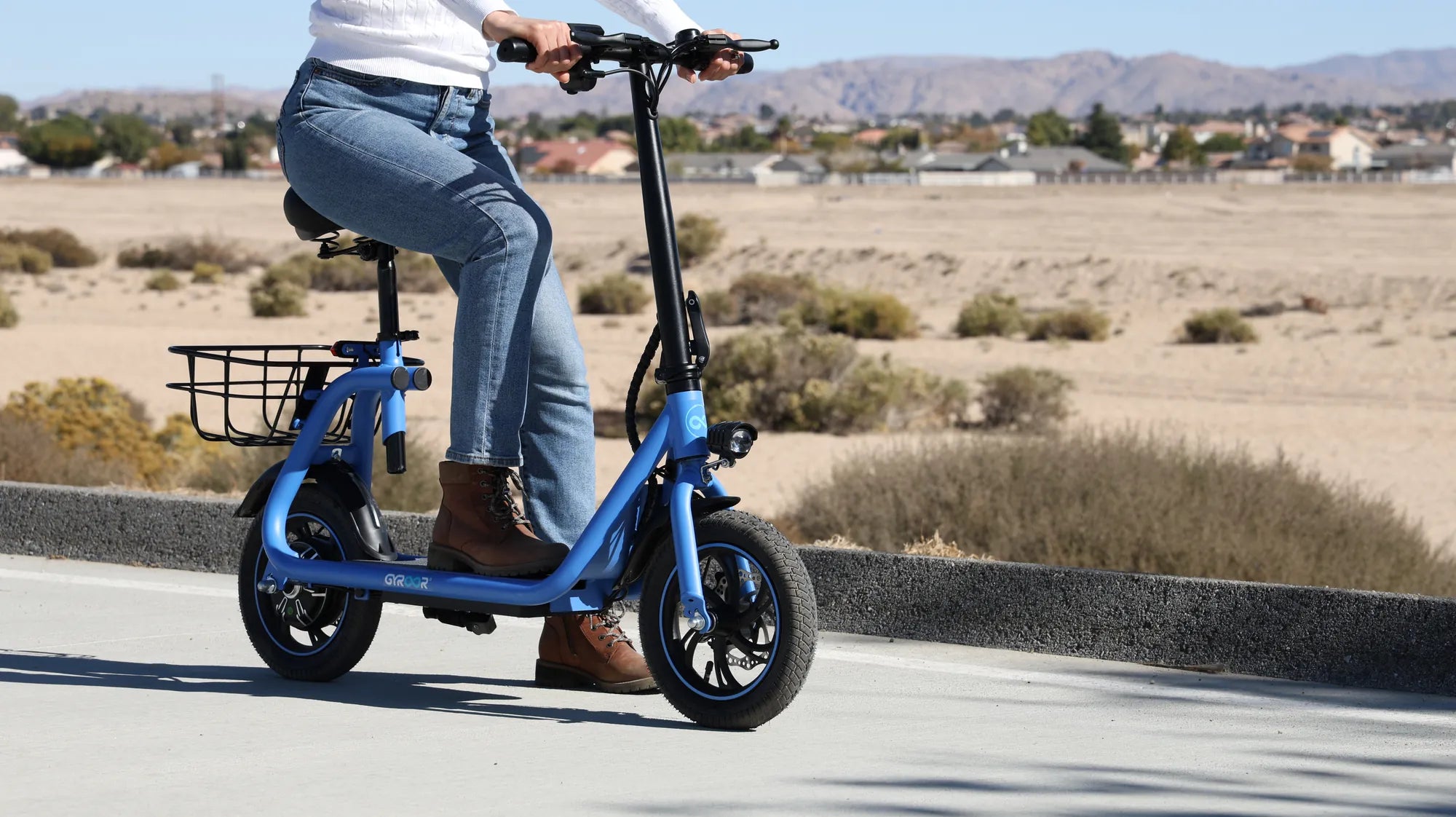
Navigating Australia's E-Scooter Landscape
The sight of electric scooters zipping through city streets and along bike paths has become common in Australia. Yet, for riders and prospective buyers, a cloud of confusion persists over a fundamental question: Are electric scooters illegal in Australia? The answer is not a simple yes or no. It is a complex mosaic of state and territory regulations that vary dramatically, turning a national purchase into a local legal minefield.
This guide is your definitive roadmap. We will dissect the national framework, provide a meticulous state-by-state legal breakdown, and explain the critical technical specifications that determine legality. Understanding these rules is essential to avoid hefty fines, confiscation of your device, and ensuring the safety of yourself and others. The core legal distinction hinges on whether your e-scooter is classified as a 'personal mobility device' for use on paths or a 'motor vehicle' requiring registration—a line defined by power and speed.
Understanding the National Framework: Why Laws Vary by State
Australia has no single, overarching federal law governing electric scooters. Road rules and vehicle classifications are the responsibility of individual states and territories. This decentralisation is the root cause of the widespread confusion. A scooter perfectly legal in Brisbane could be an illegal vehicle just across the border in New South Wales.
Across jurisdictions, regulators use specific terms to categorise these devices. A 'Personal Mobility Device' (PMD) or 'wheeled recreational device' typically refers to lower-powered scooters permitted on footpaths and shared paths. The moment a scooter exceeds certain thresholds, it is often reclassified as a 'motor vehicle,' subject to the same requirements as a car or motorcycle: registration, insurance, licensing, and road-only use. For the rider, this classification is everything.
The primary thresholds that draw this legal line are motor wattage and maximum speed. The most common benchmark in several states is a motor not exceeding 250 watts and a speed capped at 25 km/h on level ground. Some states, like New South Wales, have an even stricter limit of 200 watts. Exceeding these specifications often instantly makes the scooter illegal for use on public land without formal registration, which is typically not available for these devices.
State-by-State Legal Breakdown: Where Can You Ride?
This section provides a detailed, comparative overview of the rules as of early 2024. Always verify with your local transport authority, as laws can evolve.
New South Wales (NSW)
NSW has some of the most restrictive rules. Privately-owned e-scooters are only legal on private property. For public use, they are considered a 'motor vehicle' and require registration, which is not available for most models. However, there are government-approved rental trials in selected council areas (like the Inner West of Sydney). These trial scooters are geofenced to 20 km/h. For private owners, the effective answer is that they are illegal for public use.
Victoria (VIC)
Victoria permits privately-owned e-scooters under a clearer framework. They are legal on bike lanes, shared paths, and roads with a speed limit of 50 km/h or less, unless signs prohibit them. Key rules: maximum power of 250 watts, speed limited to 20 km/h on footpaths and 25 km/h on bike lanes/roads. Riders must be 16 or over, and helmets are mandatory. They are not allowed on footpaths in busy CBD areas.
Queensland (QLD)
Queensland is one of the most e-scooter-friendly states. E-scooters with a maximum motor output of 200 watts are considered 'personal mobility devices.' They can be ridden on footpaths (where the speed limit is 12 km/h) and bike paths (where the limit is 25 km/h). Helmets are mandatory for all riders. They are prohibited on roads unless crossing or where there is no footpath/path. Scooters over 200w require registration.
South Australia (SA)
South Australia legalised private e-scooters in 2024. They can be used on footpaths (max 15 km/h) and shared/bike paths (max 25 km/h). The motor must not exceed 250 watts. Riders must be 16+, wear a helmet, and have a front white light and rear red light when riding at night. They are not permitted on roads with a dividing line or a speed limit over 50 km/h.
Western Australia (WA)
WA allows e-scooters with a maximum power of 200 watts. They can be ridden on footpaths (10 km/h limit), shared paths, and local roads with a speed limit of 50 km/h or less. Helmets are mandatory. It is illegal to ride on roads with a median strip or a speed limit over 50 km/h. Specific CBD areas in Perth may have additional restrictions.
Tasmania (TAS)
Tasmania permits e-scooters with a motor not exceeding 200 watts. They can be used on footpaths (giving way to pedestrians) and bike paths. The maximum allowed speed is 15 km/h on footpaths and 25 km/h on bike paths. Helmets are mandatory. They are generally not permitted on roads, except to cross or where no path exists.
Australian Capital Territory (ACT)
The ACT has progressive rules. E-scooters with a maximum power of 250 watts and speed of 25 km/h are legal. They can be ridden on footpaths (at walking speed near pedestrians), shared paths, and cycle lanes. They are also allowed on roads with a speed limit of 50 km/h or less. Riders must be 12+, and helmets are mandatory for those under 16.
Northern Territory (NT)
The Northern Territory currently has no specific legislation for privately-owned e-scooters, placing them in a legal grey area. They are generally treated as 'motor vehicles' if used on public roads, requiring registration. It is strongly advised to check with NT Police for the latest interpretation before riding.
| State/Territory | Max Power | Max Speed (Path/Road) | Helmet Required? | Min. Age | Key Legal Areas |
|---|---|---|---|---|---|
| New South Wales | N/A (Trial only) | 20km/h (Trials) | Yes | 16+ | Private property only; Public trials in select LGAs |
| Victoria | 250W | 20km/h / 25km/h | Yes | 16+ | Bike lanes, shared paths, roads ≤50km/h |
| Queensland | 200W | 12km/h / 25km/h | Yes | Any | Footpaths, bike paths |
| South Australia | 250W | 15km/h / 25km/h | Yes | 16+ | Footpaths, shared paths |
| Western Australia | 200W | 10km/h / 50km/h* | Yes | Any | Footpaths, shared paths, local roads* |
| Tasmania | 200W | 15km/h / 25km/h | Yes | Any | Footpaths, bike paths |
| ACT | 250W | Walking / 25km/h | Under 16 | 12+ | Footpaths, shared paths, roads ≤50km/h |
| Northern Territory | Unclear | Unclear | Advised | Unclear | Legal grey area; use extreme caution |
Key Considerations for Riders: Safety and Compliance
Legality is just the first step. Responsible riding is paramount. Beyond your scooter's specifications, your behaviour dictates safety and compliance. First, protective gear is non-negotiable. A helmet meeting Australian Standards (AS/NZS 2063) is mandatory in almost all jurisdictions for all ages. Consider additional protection like knee and elbow pads, especially when learning.
Visibility is critical. Even if not required by law during the day, using front and rear lights dramatically increases your visibility to cars and pedestrians. Reflective clothing or strips on your backpack are excellent additions for dusk or night riding. Always assume that drivers have not seen you.
Riding etiquette on shared paths is essential. You must yield to pedestrians, slow down when passing, and use a bell or your voice to alert others of your approach. Never ride under the influence of alcohol or drugs—this is a traffic offence that can result in severe penalties, including loss of your driver's licence. Furthermore, check your local city or council bylaws; some areas may ban e-scooters entirely in pedestrian malls, beaches, or specific parks.
Gyroor E-Scooters: Engineered for Compliance and Confidence
Choosing the right scooter is where legality and safety intersect. This is where a brand like Gyroor, trusted by over 100,000 riders across North America and Europe, demonstrates its value. Gyroor designs its core commuter-focused models with key Australian regulatory thresholds in mind. For example, models featuring robust 250W motors align with the power limits in states like Victoria, South Australia, and the ACT, providing ample torque for hills while staying within legal bounds when speed is appropriately limited.
More importantly, Gyroor prioritises foundational safety features that are crucial for both rider protection and insurance considerations. Every Gyroor scooter uses UL-certified lithium-ion battery packs, tested for over 500 charge cycles. This certification is a critical differentiator, as non-certified, low-quality batteries are a leading cause of fires—a major concern for insurers and homeowners. The IPX5 water-resistant rating on key components provides essential protection against sudden rain showers, a common occurrence in many Australian cities, ensuring reliability and electrical safety.
This engineering philosophy is backed by a 1-year comprehensive warranty and accessible customer support. For the Australian rider, this means peace of mind. You are not just buying a vehicle; you are investing in a compliant, reliable, and safely engineered product from a brand that stands behind its construction. It’s about confidence on every ride.
The Future of E-Scooter Laws in Australia
The regulatory landscape is not static. Most states are actively reviewing their policies in response to the technology's popularity and the success (or challenges) of rental trials. There is a clear trend towards gradual harmonisation, with more states adopting rules similar to Queensland and Victoria's frameworks.
National transport ministers have discussed creating a more consistent national approach. Future changes may see adjustments to speed limits, power thresholds, or the expansion of approved riding areas. The key for riders is to stay informed. Bookmark your state's transport department website for official updates. As infrastructure like dedicated micro-mobility lanes expands in cities, the laws will likely evolve to accommodate safer integration with other road users.
Frequently Asked Questions (FAQ)
1. Do I need a license to ride an e-scooter in Australia?
Generally, no. If your e-scooter meets the legal definition of a 'personal mobility device' (under 200W/250W, under 25 km/h), you do not need a driver's licence. However, if it is classified as a motor vehicle (over those limits), you would need a licence, registration, and insurance—but such scooters are typically not registerable.
2. Can I ride my e-scooter on the road if there's no bike lane or path?
This depends heavily on your state. In Victoria and the ACT, you can ride on roads with speed limits of 50 km/h or less. In Queensland and Tasmania, you generally cannot, unless you are crossing the road. Always check your specific state rules. If you must, ride on the left, obey all traffic signals, and be hyper-visible.
3. What happens if I'm caught riding a non-compliant, high-powered scooter?
Penalties are severe. You can be fined for operating an unregistered and uninsured motor vehicle (often over $1,000), and the police may confiscate your scooter. You may also be fined for not holding a valid licence. It is simply not worth the risk.
4. Are Gyroor scooters covered by my home and contents insurance?
You must check your individual policy. Many insurers now have specific clauses for PMDs. The UL-certified battery in Gyroor scooters is a significant advantage here, as insurers are increasingly wary of fire risks from uncertified batteries. Always declare your e-scooter to your insurer to ensure coverage for theft or damage.
5. Can I modify my e-scooter to go faster?
Absolutely not. Modifying the motor or removing the speed limiter will almost certainly make your scooter illegal for public use. It also voids your warranty, compromises the safety engineering (especially of the battery and braking systems), and increases your liability in the event of an accident.
Ride Informed, Ride Safely: Your Path to Legal E-Scooting
So, are electric scooters illegal in Australia? The definitive answer is that their legality is entirely conditional on the precise specifications of your scooter and the state or territory in which you wish to ride. A compliant, lower-powered model is legal in most states under specific path and road rules, while a high-performance model is likely illegal for public use nationwide.
The path to enjoyable, worry-free riding starts with knowledge. Before you purchase or ride, commit to understanding your local laws. Use this guide as a starting point, but always confirm with official sources. Then, invest in a scooter from a brand that prioritises compliant engineering and certified safety features. This due diligence protects you from fines, ensures your safety, and promotes the positive integration of e-scooters into Australia's transport ecosystem.
Ready to find a scooter built for compliance and reliability? Explore the range of thoughtfully engineered electric scooters designed with real-world riding in mind. Browse the full Gyroor collection at gyroorboard.com to find your perfect ride.
Cheap Electric Scooters Online: The Ultimate Guide to Affordable Commuting
Privately Owned Electric Scooters: The Future of Urban Mobility