



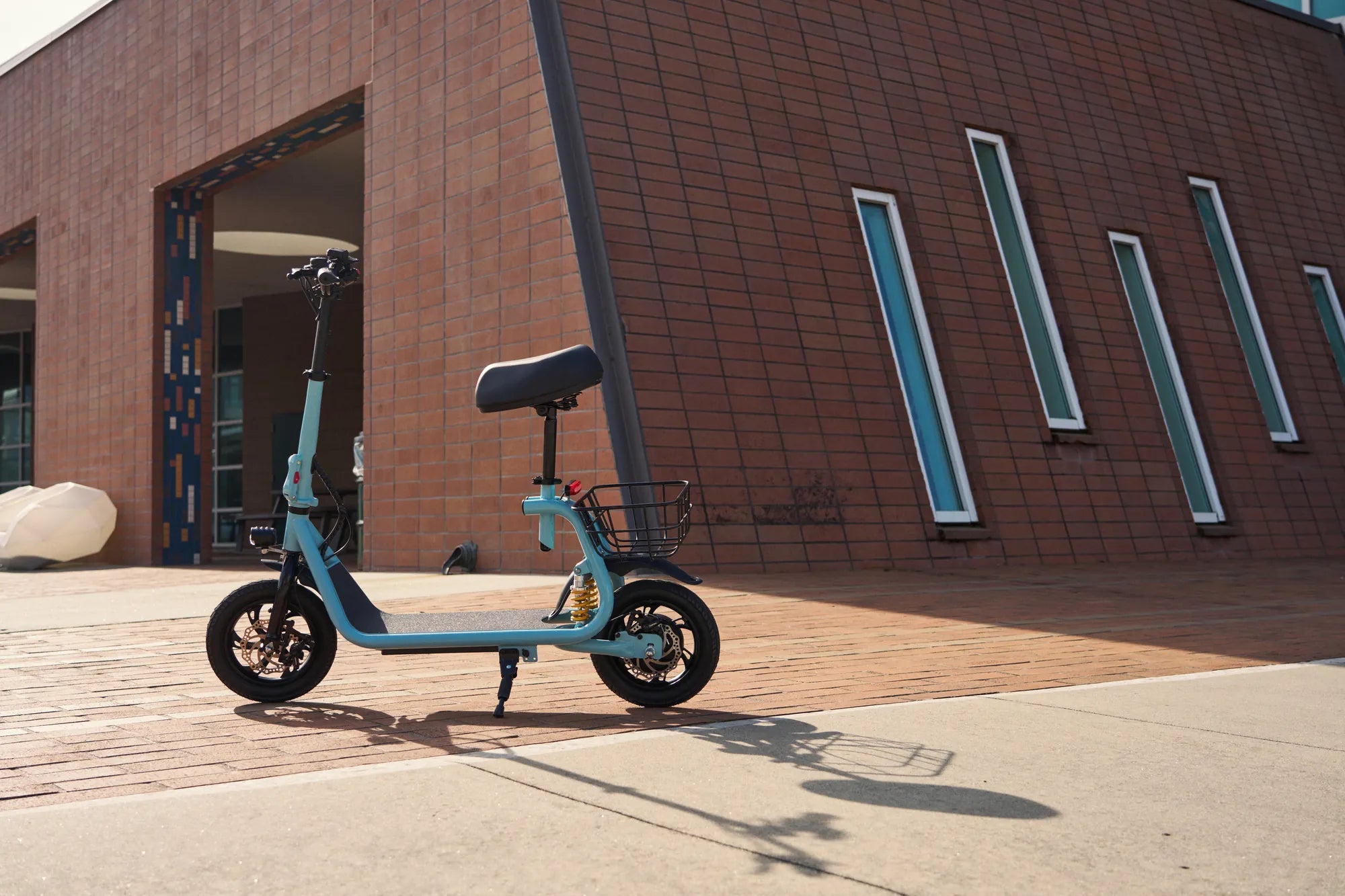
Navigating Pennsylvania's E-Scooter Landscape
Electric scooters have surged in popularity across Pennsylvania, offering a convenient and eco-friendly way to navigate urban centers and college campuses. However, their rapid adoption has created a significant patchwork of regulations that often leaves riders confused. The core question, "Are electric scooters illegal in PA?" is not a simple yes or no. The answer depends entirely on where you are, your age, and the specifications of your scooter.
This article serves as your definitive, practical guide to Pennsylvania's evolving e-scooter laws. We will dissect the statewide legal framework, dive into the critical local ordinances that govern daily use, and outline the safety and equipment standards you must follow. By the end, you'll have a clear roadmap to ensure your rides are not only enjoyable but fully compliant with the law.
Understanding Pennsylvania’s Statewide E-Scooter Law (Act 119)
The foundation for electric scooter use in Pennsylvania is Act 119 of 2020. This legislation formally legalized "electric personal assistive mobility devices" (EPAMDs), a category that explicitly includes electric scooters. It provides the baseline rules that apply across the entire Commonwealth, though local governments can impose stricter regulations.
Act 119 defines key operational parameters. On sidewalks, shared-use paths, and bicycle lanes, the maximum speed for an e-scooter is capped at 15 miles per hour. When operated on a roadway, the scooter cannot exceed 25 mph. The law also specifies that the motor must not exceed 750 watts of power, a standard that aligns with many consumer models.
Perhaps the most critical state-level rule is the age requirement. To legally operate an electric scooter on public property in Pennsylvania, you must be at least 16 years old. This is a non-negotiable statewide mandate. Furthermore, while not always enforced at the state level, the law implies that riders should follow the rules of the road applicable to bicycles when riding in the street.
It is essential to understand that Act 119 is an enabling law. It makes electric scooters legal by default at the state level but explicitly grants cities, boroughs, and townships the authority to regulate or even prohibit their use on streets, sidewalks, and public property within their jurisdictions. This delegation of authority is why local rules are paramount.
Local Ordinances: Where You Can (and Cannot) Ride in PA
Your ability to ride an electric scooter in Pennsylvania hinges on local law. Ignorance of a municipal code is not a defense, so proactive research is a rider's responsibility. Regulations can vary dramatically from one block to the next, especially when crossing from a city into a suburb.
Philadelphia: A Case Study in Permitted Use
In Philadelphia, electric scooters are legal, but under a specific regulatory model. The city operates a permitted shared-scooter program, where companies like Spin and Lime have official agreements to deploy their fleets. For private scooter owners, the landscape is less clear-cut but generally permissible under state law, provided they follow city rules.
Philadelphia ordinances prohibit e-scooter riding on sidewalks in the central business district and other high-pedestrian areas. Riding in bike lanes or on streets where the speed limit is 25 mph or less is the standard. The city strongly recommends, and in some pilot areas has required, that riders use helmets. Parking is also regulated; scooters cannot block sidewalks, building entrances, or ADA accessibility ramps.
Pittsburgh & Allegheny County’s Evolving Rules
Pittsburgh has a history of pilot programs for shared scooters. The city's current regulations allow for their operation, often with geofencing technology to create slow-speed or no-ride zones in crowded areas like Market Square or certain park trails. Private scooter riders are subject to similar location-based restrictions.
Key rules in Pittsburgh include a prohibition on sidewalk riding in designated business districts and a requirement to use bike lanes where available. Allegheny County and its numerous surrounding municipalities may have their own distinct rules. For example, some suburbs may ban them entirely from sidewalks or prohibit their use on certain roadways. Always check the specific borough's website for codes.
Rules for Suburbs, College Towns, and State Parks
In suburbs, college towns, and smaller cities, the approach is fragmented. Towns like State College (home to Penn State) or boroughs around Harrisburg may have ordinances addressing "motorized foot scooters" or "low-speed vehicles." These often mirror state law but can add restrictions like helmet mandates for all ages or a complete ban on sidewalk riding.
A universal rule across Pennsylvania applies to state parks and trails. The Department of Conservation and Natural Resources (DCNR) generally prohibits motorized vehicles, including electric scooters, on natural surface hiking and biking trails. Their use may be permitted on specific paved multi-use trails, but this is the exception. Always look for posted signage or contact the park office directly before riding.
Safety, Equipment, and Rider Responsibility
Legal compliance is intrinsically linked to safe operation. Following equipment and etiquette rules not only keeps you within the law but significantly reduces your risk of accidents and conflicts with pedestrians and drivers.
Mandatory and Recommended Gear for PA Riders
Pennsylvania state law mandates specific equipment for electric scooters. Every scooter must be equipped with a bell or other audible signaling device. If you ride at night, your scooter must have a front white light visible from at least 500 feet and a rear red reflector or light visible from at least 300 feet. These are legal requirements, not suggestions.
While a helmet is not mandated by state law for riders 18 and over, it is the single most important piece of safety gear you can use. Many local ordinances, especially in pilot areas, require helmets for all riders. We strongly recommend a properly fitted bicycle or multi-impact helmet. Additionally, wearing high-visibility clothing and sturdy, closed-toe shoes greatly enhances your safety on shared roadways.
Rules of the Road: Riding Etiquette and Best Practices
Knowing where to ride is crucial. The hierarchy is: use a bicycle lane if one is available. If not, ride on the roadway, as close to the right-hand curb as is practical and safe. Riding on sidewalks is often prohibited in business districts and should always be done with extreme caution at walking speed (under 6 mph) where allowed, yielding to every pedestrian.
Operate your scooter as you would a bicycle. Signal your turns, obey all traffic signals and stop signs, and never ride under the influence of alcohol or drugs. Be predictable. When parking your private scooter, never block pedestrian pathways, building access points, or disability ramps. Responsible parking is a key component of maintaining positive community relations and avoiding fines or impoundment.
Why Gyroor Scooters are Built for PA’s Legal Framework
Choosing the right electric scooter is the first step toward compliant and safe riding. Gyroor designs its scooters with the North American regulatory landscape in mind, ensuring riders have a reliable partner that meets key legal and safety benchmarks right out of the box.
UL-Certified Batteries: Meeting the Highest Safety Standards
Battery safety is a top concern for legislators, property managers, and riders alike. All Gyroor electric scooters and e-bikes use UL-certified battery packs, tested for over 500 charge cycles. This certification is a rigorous third-party validation of electrical and fire safety, providing peace of mind and aligning with the kind of safety-first standards that cities look for when crafting regulations.
IPX5 Water Resistance: Ready for Pennsylvania Weather
Pennsylvania weather is unpredictable, from sudden summer downpours to riding through spring puddles. Gyroor scooters feature IPX5 water-resistant designs. This rating means the scooter's critical electrical components can withstand low-pressure water jets from any direction, ensuring reliable performance and durability in wet conditions. A water-resistant scooter is a more dependable and longer-lasting one.
Warranty and Support: Riding with Confidence
Maintaining your scooter in roadworthy condition is part of being a responsible rider. Gyroor backs its products with a comprehensive 1-year warranty and accessible U.S.-based customer support. This commitment protects your investment and helps ensure your scooter remains a safe, legal, and functional vehicle for commuting and recreation. With over 100,000 riders across North America and Europe trusting the brand, Gyroor stands for proven reliability.
Comparing Electric Scooter Types for PA Riders
Selecting a scooter that fits your commute and local laws is vital. The following table compares common scooter categories with Pennsylvania's legal context in mind.
| Scooter Type | Typical Max Speed | Motor Power | Best For PA Use Case | Key Legal Consideration |
|---|---|---|---|---|
| Commuter / Last-Mile (e.g., Gyroor F1 Pro) | 15-18 mph | 350W-500W | Urban commuting, campus travel, errands in bike lanes. | Ideal for 15 mph sidewalk/path limit. Easily stays under 25 mph road limit. |
| Performance / Long-Range | 25+ mph | 500W-750W | Longer suburban commutes on roadways. | Must not exceed 750W state limit. Rider must consciously limit speed to 25 mph on roads. |
| Off-Road / Trail Models | Varies, often high | Often 750W+ | Private property, designated motorized trails only. | Likely exceeds PA's 750W limit for public roads/paths. Generally illegal in state parks. |
| Shared Scooter (Rental) | Typically capped at 15 mph | Varies | Short, one-way trips in permitted cities like Philadelphia. | Speed and geofencing are controlled by operator to ensure local compliance. |
Frequently Asked Questions (FAQs)
Q1: Do I need a license, registration, or insurance to ride an electric scooter in PA?
A: No. Under Act 119, electric scooters classified as EPAMDs do not require a driver's license, vehicle registration, or mandatory insurance to operate on public property. However, using one on private property is at the owner's discretion.
Q2: Can I ride my electric scooter on the sidewalk in my town?
A: It depends entirely on local ordinance. Many cities, including Philadelphia and Pittsburgh, prohibit sidewalk riding in business districts. Some suburbs ban it entirely. Always check your local municipal code. When in doubt, ride on the road or in a bike lane.
Q3: What happens if I get stopped by police while riding?
A> Be polite and informed. The officer will likely check for compliance with local rules: your age (16+), whether you're in a permitted zone, if you have the required lights at night, and if you're riding where allowed. Fines for violations are set by local municipalities.
Q4: Are e-bikes treated the same as e-scooters in Pennsylvania?
A: No. E-bikes are regulated under a separate law, Act 154 of 2014, which establishes a three-class system. Class 1 and 2 e-bikes (with max assisted speeds of 20 mph) are generally allowed anywhere bicycles are. The rules differ significantly from e-scooter regulations.
Q5: Can I carry a passenger on my e-scooter?
A: No. Pennsylvania law and virtually all local ordinances are clear: electric scooters are designed for a single rider only. Carrying a passenger is illegal and extremely unsafe due to the scooter's balance and braking dynamics.
Riding Smart and Legal in the Keystone State
The legality of electric scooters in Pennsylvania is defined by a dual-layer system: the permissive state framework of Act 119 and the often-stricter mosaic of local ordinances. The key to confident riding is knowledge. Before you ride, take five minutes to search your city or borough's website for "electric scooter" or "motorized foot scooter" ordinances.
Equip yourself and your scooter properly. A helmet, lights for night riding, and a functional bell are non-negotiable for safe, legal operation. Choose a scooter from a reputable brand that prioritizes safety certifications, like UL for batteries and IP ratings for weather resistance, to ensure long-term reliability and compliance.
As micro-mobility continues to evolve, laws will adapt. By being a responsible rider today—following road rules, parking thoughtfully, and wearing safety gear—you help shape a positive future for e-scooters in Pennsylvania. For a scooter built to meet these standards and deliver a superior ride, explore the engineered performance and safety of the Gyroor collection.
Ready to find your perfect, PA-ready electric scooter? Browse the full Gyroor collection at gyroorboard.com.
Electric Scooters Arlington VA: The Ultimate Guide to Urban Mobility
Can You Take Electric Scooters on Planes? The Ultimate Guide