


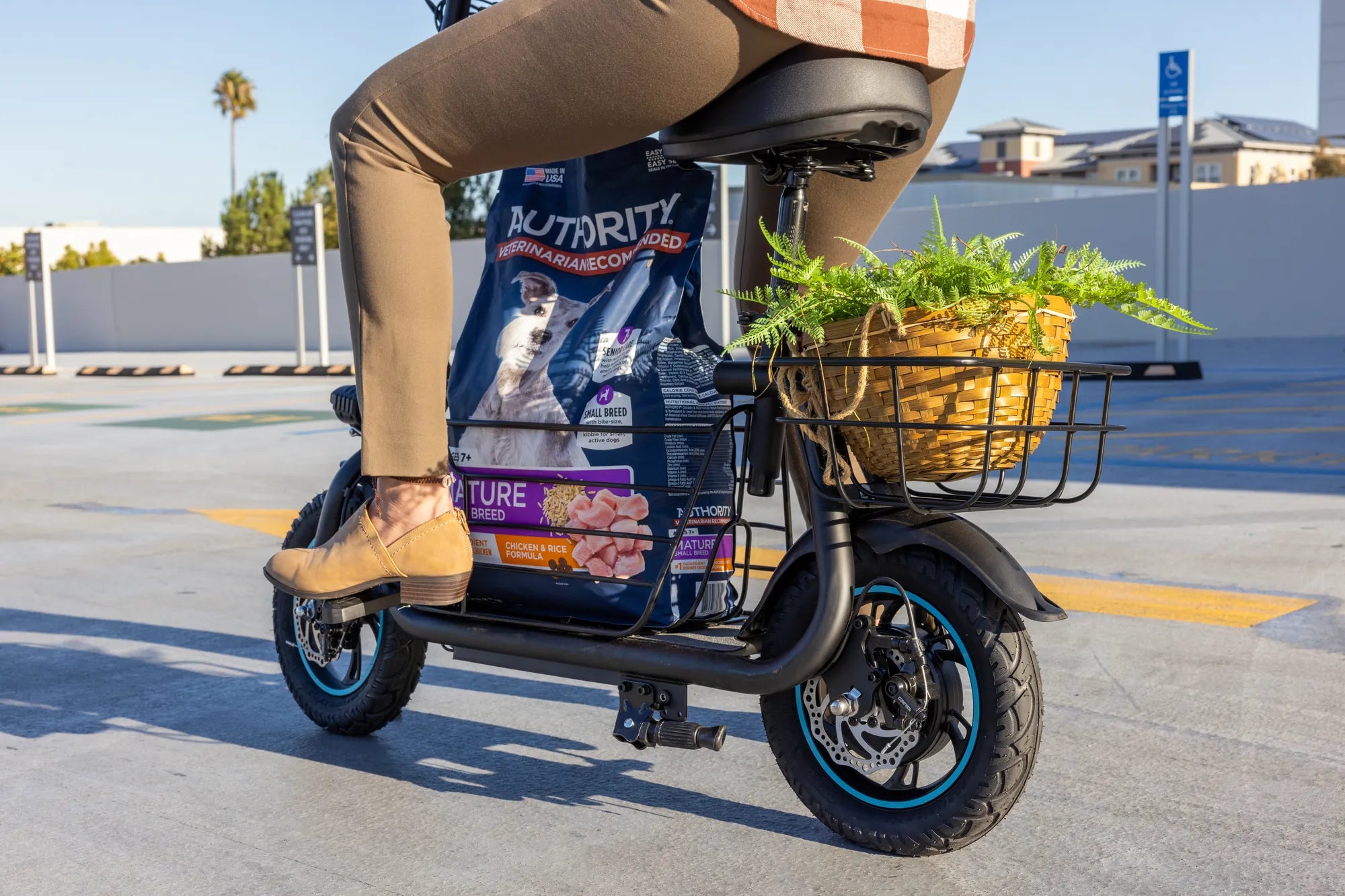
Navigating the Complex Legal Patchwork of E-Scooters
As a rider, you've likely asked: are electric scooters illegal? The answer is rarely a simple yes or no. The legality of electric scooters is governed by a complex, three-tiered system of federal guidelines, state statutes, and hyper-local municipal ordinances. This patchwork creates widespread confusion, leaving many riders uncertain about where and how they can legally operate their personal mobility devices.
This guide exists to demystify that confusion. We will provide a clear, factual breakdown of the current regulatory environment, empowering you with the knowledge to ride your Gyroor scooter confidently and within the bounds of the law. Understanding these rules is not just about avoiding fines—it's about ensuring your safety and the positive perception of micro-mobility in your community.
By the end of this article, you will know how to check your local laws, understand common restrictions, and see how choosing a compliant scooter from a reputable brand like Gyroor—trusted by over 100,000 riders across North America and Europe—simplifies legal riding. The core question of are electric scooters illegal depends entirely on your location and how you use the device.
The Federal Framework: Safety Standards, Not Outright Bans
First, a crucial clarification: there is no federal law in the United States that bans electric scooters outright. The federal government's role is primarily to establish baseline safety standards for consumer products, which indirectly shapes state and local legislation.
The Consumer Product Safety Commission (CPSC) oversees the safety of e-scooters as consumer goods. Their focus is on manufacturing standards to prevent hazards. The most significant area of federal influence is in battery safety, following incidents with poorly manufactured lithium-ion packs.
This is where brand choice matters profoundly. Reputable manufacturers design their products to meet or exceed these safety expectations. For instance, all Gyroor electric scooters and e-bikes utilize UL-certified battery packs rigorously tested for 500+ charge cycles, directly addressing the core safety concern highlighted at the federal level.
Federal guidelines provide a framework, but they do not dictate where you can ride. That authority is delegated to state and local governments. The absence of a federal ban means the path is open for local legalization, but it also creates the variance that leads to the current complex landscape.
State-by-State Breakdown: From Legalization to Grey Areas
State laws form the second layer of regulation. As of 2024, the vast majority of U.S. states have passed legislation that explicitly legalizes the use of electric scooters on public roads or bike lanes, but always with specific conditions. The status in any given state typically falls into one of three categories.
First, many states have fully legalized e-scooters with a clear regulatory framework. States like California, Texas, and Florida have statutes defining e-scooters, setting state-wide rules for their operation, and explicitly permitting local governments to add further restrictions.
Second, some states operate in a legal with restrictions model. Their laws may permit use but impose strict conditions, such as mandatory helmet use for all ages or a very low speed limit (e.g., 15 mph). It is critical to know your state's specific code.
Finally, a shrinking number of states or jurisdictions remain in a grey or unregulated area. In these places, state law may be silent on "electric scooters" specifically, leaving their status ambiguous. In such cases, local city ordinances become the de facto law, and riders must exercise extreme caution and research.
Common State-Level Restrictions and Requirements
While details vary, state laws commonly regulate several key areas. Knowing these will help you quickly understand any state's legal framework.
Age Requirements: Most states that have legalized e-scooters set a minimum operator age, frequently 16 years old. Some may allow younger riders with a helmet or under direct supervision.
Speed Limits: State laws often cap the maximum speed at which an e-scooter can be operated on public roads, typically between 15 and 20 mph. Some states limit the scooter's *maximum capable speed*, while others regulate the *speed of operation*.
Helmet Laws: These vary widely. Common patterns include mandatory helmets for all riders, for riders under 18, or with no state mandate (leaving it to localities). Always err on the side of safety.
Where to Ride: State law usually defines e-scooters as belonging in the bicycle lane or on the road, and explicitly prohibits them on sidewalks in business districts or at all times. Right-of-way rules matching those for bicycles are standard.
Local Ordinances: The Most Critical Layer for Riders
Even if your state has legalized e-scooters, your city or county's rules are the most critical and enforceable layer of regulation. Local governments possess the authority to further restrict or even prohibit use within their jurisdictions.
Local ordinances frequently address nuances that state law does not. This includes sidewalk riding bans in specific downtown areas, prohibitions in public parks or on recreational trails, and geofenced no-ride zones. They also govern where you can park, often banning attachment to street furniture like signposts or trees.
For shared scooter programs, cities enact strict permitting rules for operators. For private scooter owners, the rules about where you can ride and park are paramount. The penalty for violating a local ordinance is usually a fine, and confiscation of the vehicle is possible in some cities.
The actionable advice is simple: Always check your specific city's department of transportation or city clerk website. Search for "electric scooter" or "micromobility" ordinances. A 10-minute review can prevent a costly ticket and ensure you're riding as a respectful community member.
Data Comparison: How Gyroor Models Align with Common Regulations
Choosing an electric scooter designed with common regulations in mind removes a significant burden from the rider. Leading brands engineer compliance into their products. The table below illustrates how key features of popular Gyroor models align with typical legal requirements, demonstrating that a compliant ride starts with a well-designed vehicle.
| Common Legal Requirement | Gyroor Design & Feature Alignment | Example Model (Gyroor) |
|---|---|---|
| Speed Limit (often 15-20 mph) | Multiple speed modes (Eco, Standard, Sport) allowing rider to cap speed at compliant levels (e.g., 15 mph). | Gyroor S9 Max (Adjustable up to 19 mph, with lower modes) |
| Lighting for Night Riding | Integrated front headlight, rear brake light, and side reflectors as standard equipment. | All Gyroor commuter scooter models |
| Audible Signal (Bell/Horn) | Built-in electronic horn or bell to alert pedestrians and cyclists as required by law. | Gyroor F1 Pro |
| Battery Safety Certification | UL-certified battery packs meeting federal safety guidelines, tested for 500+ cycles. | Entire Gyroor Product Lineup |
| Durable Construction for Road Use | IPX5 water-resistant rating and robust frame design for safe operation on permitted roadways. | Gyroor H30 E-Bike |
This alignment is not accidental. Brands committed to the long-term viability of micro-mobility, like Gyroor, understand that building products that help riders obey the law is essential. Features like adjustable speed modes aren't just about performance; they are practical tools for legal compliance.
Safety and Etiquette: The Foundation of Legal Riding
Legal riding is intrinsically linked to safe and courteous riding. Your behavior on the road directly impacts how e-scooters are perceived by the public and regulated by officials. Adhering to etiquette strengthens the case for continued legal access.
First, always use bike lanes when available. This is both a legal requirement in most areas and the safest place to ride. If no bike lane exists, ride on the right side of the road, with traffic, following all standard traffic signals and signs.
Second, be predictable and communicative. Use hand signals for turns, and always use your bell or horn politely to alert pedestrians or cyclists before passing. Yield to pedestrians in all circumstances—they have the right of way.
Third, never ride impaired. DUI laws apply to e-scooters just as they do to cars and bicycles. Finally, park responsibly. Do not block sidewalks, ADA ramps, building entrances, or access lanes. Good parking etiquette prevents clutter and public nuisance complaints that lead to stricter laws.
Frequently Asked Questions (FAQ)
1. Do I need a license, insurance, or registration for my electric scooter?
In the vast majority of U.S. jurisdictions, no, you do not need a driver's license, vehicle registration, or specific insurance to operate a privately-owned electric scooter. They are generally classified as "low-speed electric bicycles" or similar, exempting them from these requirements. However, a handful of localities may have unique rules, so checking is always wise.
2. Can I ride my electric scooter on the sidewalk?
This is one of the most common points of regulation. Most cities prohibit riding e-scooters on sidewalks, especially in business districts, due to pedestrian safety concerns. Some may allow it in residential areas or if no bike lane is available. Always default to your local ordinance—when in doubt, walk your scooter on the sidewalk.
3. What are the penalties for breaking e-scooter laws?
Penalties are typically civil infractions resulting in fines, which can range from $50 to over $500 depending on the violation (e.g., sidewalk riding, speeding, riding under the influence). In severe cases or in areas where they are prohibited, law enforcement may confiscate the scooter.
4. Are Gyroor scooters considered "street legal"?
Gyroor electric scooters are designed to meet the common equipment and performance standards required for legal road and bike lane use in jurisdictions that permit them (e.g., lights, reflectors, adjustable speed). However, "street legal" is determined by local law, not the manufacturer. A Gyroor scooter provides the compliant features, but you must operate it within the rules of your city.
5. How can I find the exact laws for my city?
Start with an online search: "[Your City Name] electric scooter ordinance" or "micromobility regulations." Visit your city's official government website, specifically the pages for the Department of Transportation, City Clerk, or Police Department. For state laws, review your state's vehicle code online, searching for terms like "motorized scooter" or "electric low-speed scooter."
Empower Your Ride with Knowledge and the Right Equipment
The question are electric scooters illegal has a clear answer: it depends, but increasingly, the trend is toward regulated legalization. Your responsibility as a rider is twofold. First, proactively research the state and local laws that apply to you. This knowledge is your first line of defense and your key to confident riding.
Second, invest in a vehicle designed for responsible use. Choosing a reliable brand like Gyroor, with its commitment to UL-certified battery safety, IPX5 water-resistant builds, and a reliable 1-year warranty, means you start from a foundation of compliance and safety. Over 100,000 riders trust Gyroor not just for performance, but for peace of mind.
The future of urban mobility is electric and personal. By riding legally, safely, and courteously, you become an ambassador for this change. You help build communities where micro-mobility is a respected, integrated, and sustainable transportation solution. Check your local laws, gear up responsibly, and enjoy the ride.
Ready to choose a scooter built for compliant, reliable performance? Explore Gyroor's full range of over 20 models, from compact commuter scooters to powerful e-bikes, all engineered with safety and durability in mind. Browse the full Gyroor collection at gyroorboard.com and find the perfect ride for your city's streets.
Electric Chair Scooters for Adults: The Ultimate Guide to Mobility and Independence
Electric Scooters 20mph: The Future of Urban Mobility