



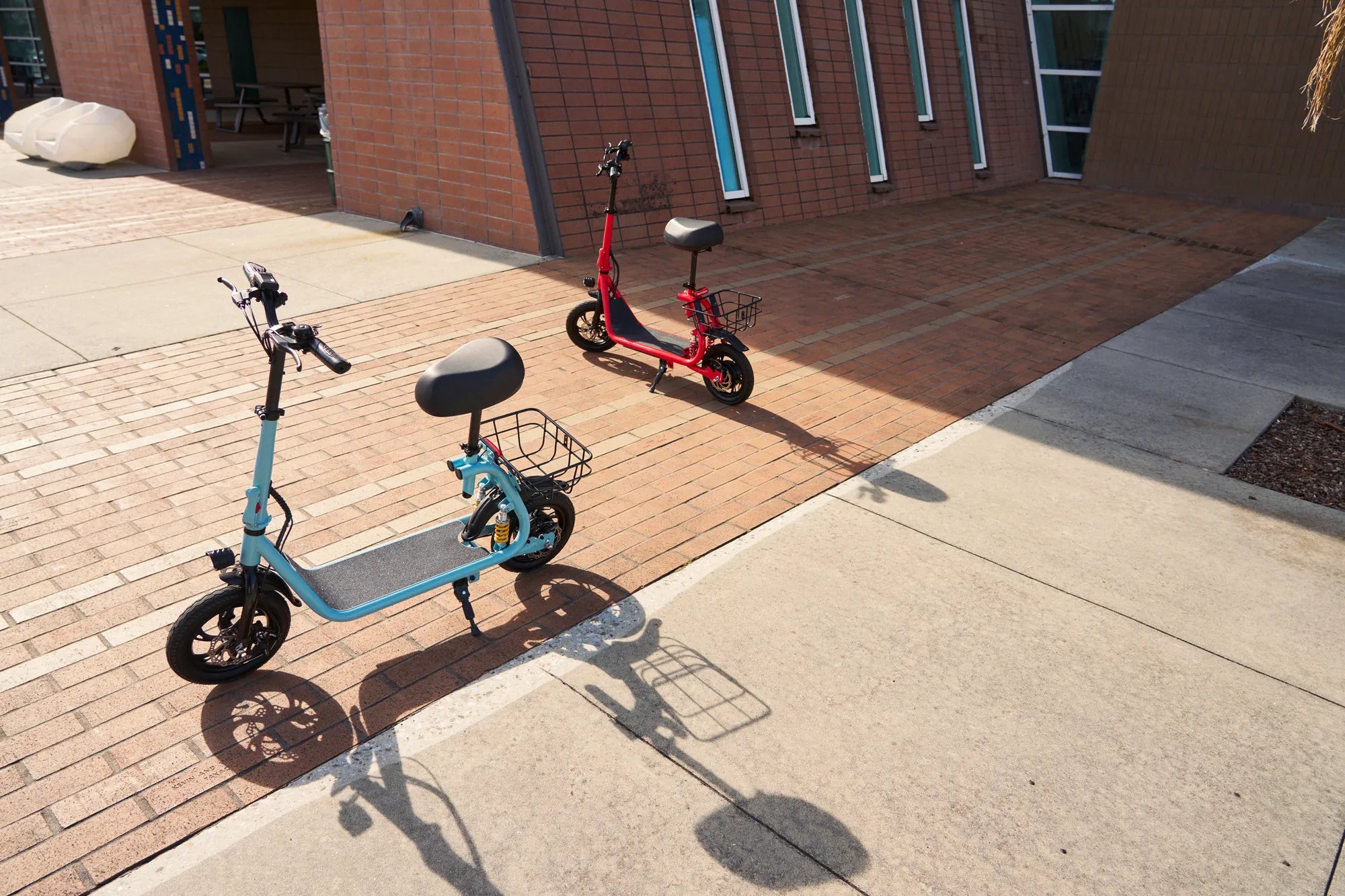
Introduction: Navigating India's E-Scooter Landscape
The streets of India's metropolitan cities are witnessing a quiet revolution, with electric scooters becoming an increasingly common sight. This surge brings a critical question to the forefront for potential riders and current owners alike: Are electric scooters legal in India? The answer is nuanced, hinging on precise technical specifications, central government guidelines, and often-overlooked municipal bylaws.
Navigating this regulatory maze is essential for safe and lawful operation. This guide provides a comprehensive, data-driven exploration of the rules governing electric scooters across India. We will dissect the Ministry of Road Transport and Highways (MoRTH) framework, detail operational mandates, and highlight regional variations.
Understanding these regulations is not just about compliance; it's about ensuring your safety and the longevity of your investment. As a leading global brand, Gyroor emphasizes that true mobility freedom comes from riding products engineered to meet and exceed safety benchmarks, providing reliability for over 100,000 riders worldwide.
Understanding the Legal Framework: MoRTH Guidelines and Classification
The central pillar of electric scooter regulation in India is the Ministry of Road Transport and Highways (MoRTH). Its guidelines, under the Central Motor Vehicles Act, 1989, and subsequent amendments, provide the primary classification that determines legality.
The most critical distinction lies in motor power and designed maximum speed. This bifurcation creates two fundamentally different legal categories for what are colloquially all called "e-scooters."
Category 1: Low-Speed Electric Scooters (Sub-250W/25 km/h). Vehicles with a motor power not exceeding 250 watts and a maximum designed speed of 25 kilometers per hour are classified as "bicycles with an electric assist" or simply as bicycles. They are not considered motor vehicles under the law.
This classification means they do not require mandatory registration with the Regional Transport Office (RTO), a vehicle insurance policy, or the rider to hold a valid driving license. Their use is typically governed by local civic body rules for bicycles.
Category 2: High-Speed Electric Scooters/E-Motorcycles (Above 250W/25 km/h). Any electric two-wheeler with a motor exceeding 250 watts or capable of speeds over 25 km/h is legally classified as a "motor vehicle." Specifically, they fall under the category of "electric two-wheeler" and are treated similarly to petrol-powered scooters and motorcycles.
This classification triggers a full suite of regulatory requirements: mandatory registration, third-party insurance, a valid driving license (at least a learner's license), and adherence to all traffic rules applicable to motor vehicles. The key question, "Are electric scooters legal in India?" is answered first by identifying which of these two categories your scooter falls into.
Key Regulations for Legal E-Scooter Operation in India
Once classified, specific operational regulations come into play. Compliance with these rules is non-negotiable for lawful and safe riding on public roads.
Registration, Insurance, and Licensing
For e-scooters classified as motor vehicles (>250W/25 km/h), registration with the local RTO is the first legal step. The dealer typically facilitates this process, providing the necessary documents, including the Form 22 (roadworthiness certificate) and Form 21 (sale certificate). The vehicle receives a permanent registration number, and a registration certificate (RC) is issued.
Third-party liability insurance is legally mandatory for all registered motor vehicles in India. This insurance covers damages caused to other people or property in an accident you are liable for. It does not cover damages to your own vehicle or injuries to yourself, for which comprehensive insurance is an optional but recommended add-on.
A valid driving license is required to operate any registered electric two-wheeler. For most models, a standard motorcycle license (for vehicles with engine capacity above 50cc or equivalent electric motor power) is necessary. Riders must always carry the original copy of their Driving License, Vehicle RC, and Insurance Certificate while riding.
Safety Standards: AIS and CMVR Compliance
Manufacturing and sale of electric vehicles in India must comply with specific safety standards. The Automotive Industry Standards (AIS), particularly AIS-156 (for electric powertrain vehicles) and AIS-102 (for lighting), are crucial.
These standards, notified under the Central Motor Vehicle Rules (CMVR), cover critical aspects like battery safety, electromagnetic compatibility, braking efficiency, and vehicle lighting. Purchasing a scooter from a brand that designs to these rigorous benchmarks is essential for safety and legality.
Gyroor's global design philosophy aligns with such stringent standards. For instance, the use of UL-certified battery packs—tested for over 500 charge cycles with protections against overcharge, short-circuit, and thermal runaway—exceeds basic requirements, offering a significant safety advantage that responsible riders should prioritize.
Helmet Laws and General Traffic Rules
The law is unequivocal: Helmet use is mandatory for the rider (and pillion, if carried) of any electric two-wheeler classified as a motor vehicle. Many states also mandate helmets for bicycle riders, making it a universal safety best practice regardless of your scooter's classification.
All standard traffic rules apply. This includes obeying traffic signals, following lane discipline, not riding under the influence of alcohol, and adhering to speed limits. E-scooter riders must use designated vehicle lanes and are prohibited from riding on sidewalks or pedestrian pathways, which are reserved for foot traffic.
State-Specific and Municipal Variations
While the MoRTH framework is national, states and municipal corporations have the authority to implement additional rules, incentives, and restrictions. This creates a patchwork of regulations that riders must be aware of.
Delhi, for example, has been aggressive in promoting EVs. Beyond central FAME-II subsidies, the state offers additional incentives and has waived road tax and registration fees for electric vehicles. However, it also enforces no-riding zones in certain congested areas like Chandni Chowk.
Karnataka and Maharashtra have their own EV policies offering purchase incentives and infrastructure support. Cities like Bengaluru and Mumbai may have specific parking regulations for two-wheelers and designated no-parking zones that apply to e-scooters as well.
Some cities are experimenting with or have implemented regulations for shared e-scooter services, governing parking docks, fleet size, and geofencing. The critical action for any rider is to check with their local RTO and municipal corporation website for the latest, location-specific bylaws that could affect where and how they can ride.
Choosing a Compliant and Reliable Electric Scooter
Selecting the right electric scooter in India is a balance of performance needs, budget, and, most importantly, compliance and reliability. A legally compliant scooter is inherently a safer and better-engineered product.
First, scrutinize the specifications. If you seek a vehicle that requires no license or registration, ensure the motor power is ≤250W and the maximum speed is ≤25 km/h. For higher performance, be prepared for the full registration process and choose a model from a manufacturer that provides all necessary CMVR/AIS compliance certificates.
Prioritize brands that are transparent about their safety features. Key indicators include battery certification (like UL or equivalent), water resistance rating (IP ratings), and warranty terms. A robust warranty often reflects confidence in product durability.
Gyroor's lineup, trusted globally, exemplifies this approach. Features like IPX5 water-resistant designs protect against Indian monsoon rains, while UL-certified batteries and comprehensive 1-year warranties ensure long-term reliability and peace of mind, making compliance the foundation of a superior riding experience.
Comparison: Low-Speed vs. High-Speed Electric Scooters in India
| Parameter | Low-Speed E-Scooter (≤250W, ≤25 km/h) | High-Speed E-Scooter/E-Motorcycle (>250W, >25 km/h) |
|---|---|---|
| Legal Classification | Bicycle / Non-Motor Vehicle | Motor Vehicle (Electric Two-Wheeler) |
| Registration with RTO | Not Required | Mandatory |
| Insurance | Not Mandatory (Optional Theft/Accident Cover) | Third-Party Liability Insurance Mandatory |
| Driving License | Not Required | Mandatory (Motorcycle License) |
| Helmet | Recommended; Mandatory in Some States | Mandatory for Rider & Pillion |
| Ideal Use Case | Last-Mile Connectivity, Campus, Gated Communities, Short Errands | Daily Commute, Longer Distances, Faster City Travel |
| Example Gyroor Focus* | Portable, Lightweight Commuter Models | Performance-Oriented, Longer-Range Models |
*Gyroor offers models suited to different global regulations; buyers must match specifications to Indian legal categories.
Frequently Asked Questions (FAQs)
Q1: Do I need a license for a 250W electric scooter in India?
No. As per MoRTH guidelines, an electric scooter with a motor power of 250 watts or less and a maximum speed of 25 km/h is classified as a bicycle. It does not require a driving license, registration, or mandatory insurance to operate.
Q2: Can I ride an e-scooter on the sidewalk or bicycle lane?
Riding on sidewalks is illegal and dangerous, as they are for pedestrians. Use of bicycle lanes is typically permitted for low-speed e-scooters (≤25 km/h) as they are classified as bicycles. High-speed e-scooters must use regular vehicle lanes.
Q3: What are the penalties for riding a non-compliant or unregistered e-scooter?
Riding an unregistered motor vehicle (>250W) can lead to fines under the Motor Vehicles Act, seizure of the vehicle, and invalidation of insurance claims in case of an accident. Fines for no helmet, no license, or no insurance also apply.
Q4: How can I verify if an e-scooter model is legally compliant?
Ask the dealer for the CMVR compliance certificate and AIS-156 test reports. Check the vehicle's specification sheet for exact motor power (in watts) and maximum speed. Reputable brands provide this documentation transparently.
Q5: Are there any government incentives for buying an e-scooter?
Yes. The central FAME-II scheme offers a direct discount on the ex-factory price of eligible high-speed electric two-wheelers. Several state governments (e.g., Delhi, Gujarat, Maharashtra) offer additional subsidies, road tax waivers, and registration fee waivers to promote EV adoption.
Conclusion: Riding Forward with Confidence
The journey towards sustainable urban mobility in India is well underway, with electric scooters playing a pivotal role. The central question—Are electric scooters legal in India?—has a clear, if two-tiered, answer defined by power, speed, and responsible adherence to layered regulations. Legality is the foundation of safe riding.
By understanding the MoRTH classifications, fulfilling registration and licensing mandates for motor vehicles, and respecting state-specific rules, riders can fully embrace the benefits of electric mobility without legal uncertainty. This knowledge empowers you to make an informed choice.
Ultimately, investing in a scooter from a brand that prioritizes certified safety, durability, and clear compliance is an investment in your own safety and peace of mind. As you consider joining India's electric revolution, choose a partner committed to engineering excellence that meets the demands of both regulation and the road ahead.
Explore a range of engineered, reliable electric mobility solutions designed with global safety standards. Browse the full Gyroor collection at gyroorboard.com to find a scooter that matches your need for performance, compliance, and enduring quality.
Real Electric Scooters: The Future of Urban Mobility and Sustainable Transportation
Does London Have Electric Scooters? A Complete Guide to the City's E-Scooter Scene