



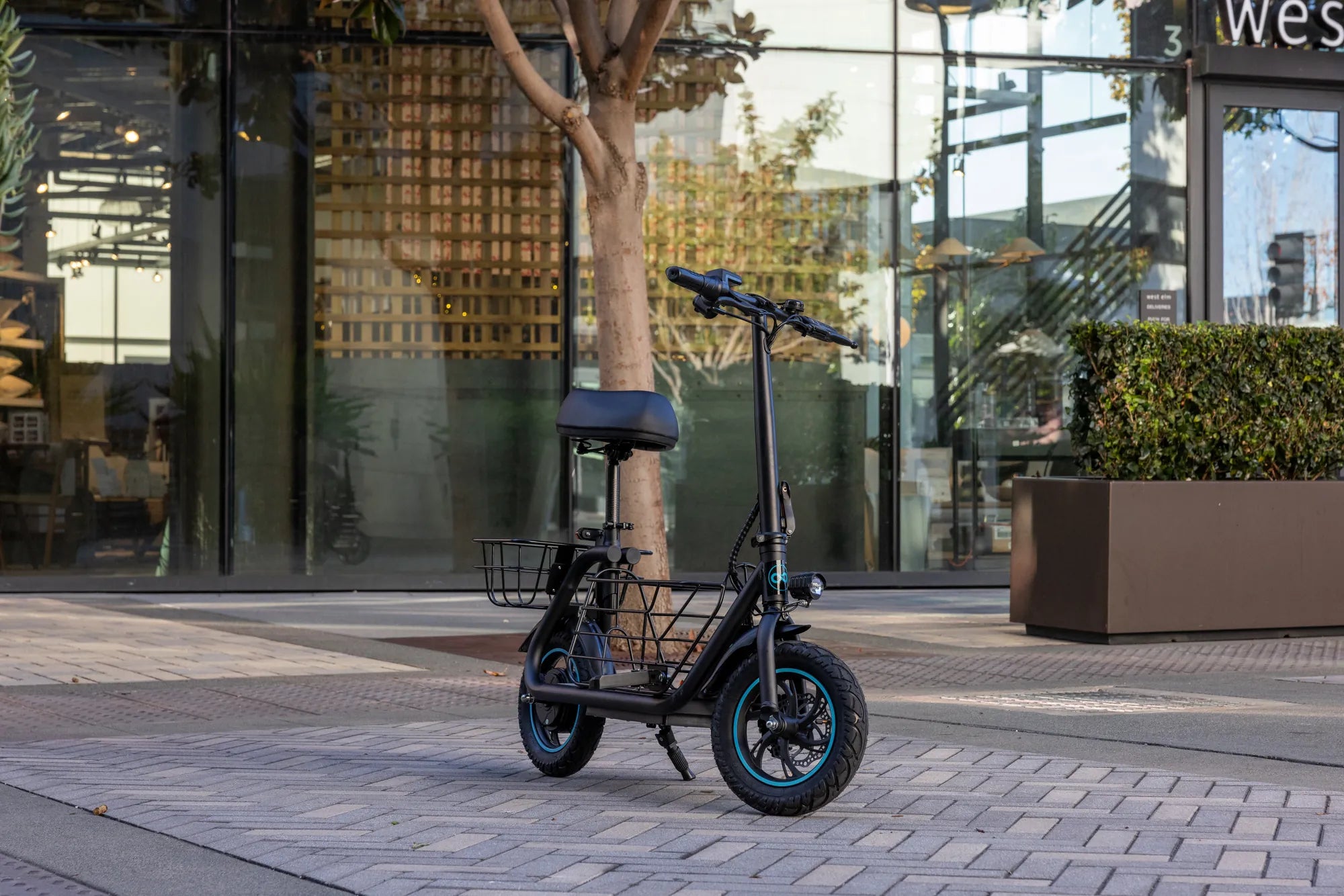
Navigating the Rules of Electric Scooters in NSW
The question "Are electric scooters legal in NSW?" has become increasingly common as their popularity surges. For riders and potential buyers, the legal landscape is confusing and filled with misconceptions.
This guide provides a definitive, up-to-date resource on NSW e-scooter laws. You will learn the exact legal status of privately owned scooters, understand the government's official position, and discover the severe penalties for non-compliance.
We also cover the sanctioned rental trials and offer practical advice for safe, legal riding. Clarity is essential, as riding an illegal e-scooter on public land carries significant financial and legal risks.
The Current Legal Status of E-Scooters in NSW
As of now, the use of privately owned electric scooters on public roads, footpaths, and shared paths in New South Wales is generally illegal. This is a direct result of how they are classified under the NSW Road Rules 2014.
The core issue is registration. E-scooters with a motor over 200 watts are classified as "motor vehicles." Under the Motor Vehicles Standards Act, these vehicles must be approved for registration to be used on public land.
No electric scooter model currently on the consumer market is approved for registration in NSW. Consequently, they are deemed "unregistrable motor vehicles" and their operation on public land is prohibited. This legal stance is actively enforced by NSW Police.
Where Can You Legally Ride a Private E-Scooter in NSW?
The only place you can legally ride a privately owned e-scooter without risk of penalty is on private property with the explicit permission of the landowner. This includes your own backyard, a private farm, or other enclosed private land.
This stands in stark contrast to government-sanctioned rental e-scooter trials. These trials, operated by approved companies like Neuron and Beam, are legal within specifically designated Local Government Areas (LGAs).
Key trial locations have included parts of the City of Sydney, City of Parramatta, City of Newcastle, and the Inner West Council. Riders must use the official app, follow geofenced rules, and park in designated areas. These trial schemes operate under a special regulatory framework that does not extend to privately owned devices.
Understanding the Official NSW E-Scooter Rules and Classifications
NSW law draws a critical distinction based on a device's capabilities. The classification determines where it can be used legally, making technical understanding crucial for compliance.
Devices like non-motorized kick scooters, skateboards, and rollerblades are classified as "wheeled recreational devices." These are generally permitted on footpaths if used safely and considerately.
However, once a device is propelled by a motor exceeding 200 watts, it is reclassified as a "motor vehicle." This threshold is low; most commuter e-scooters have motors ranging from 250W to over 1000W, instantly placing them in the illegal category for public use.
Speed is another factor. Even if a scooter's motor is under 200W, if it can be propelled over 10 km/h solely by that motor, it may still be considered a non-compliant vehicle. This tightly defined legislation leaves little room for most modern e-scooters.
Key Definitions: What is a "Legal" vs. "Illegal" E-Scooter?
The table below clarifies the technical and legal distinctions that determine e-scooter legality on public land in NSW.
| Criteria | "Legal" Wheeled Recreational Device | "Illegal" Unregistrable Motor Vehicle |
|---|---|---|
| Motor Power | 200 watts or less | More than 200 watts |
| Maximum Speed | 10 km/h or less (motor-only) | Capable of exceeding 10 km/h on motor power |
| Registration | Not required | Required but not available |
| Where to Use | Footpaths (with care) | Private property only |
| Example | Very low-powered child's scooter | Most adult commuter e-scooters (e.g., 350W+) |
This framework means that the high-performance, long-range scooters favored by commuters—like those from reputable brands offering reliable power—are categorically illegal for public road and path use in their current form.
Risks and Penalties for Illegal E-Scooter Use
Ignorance of the law is not a defense. The penalties for riding a non-compliant e-scooter on public land in NSW are severe and designed to deter use.
The most common fine is for operating an unregistered vehicle, which carries a penalty of $723 (as of 2023). You can also be fined for operating an uninsured vehicle, as Compulsory Third Party (CTP) insurance is impossible to obtain for an unregistrable vehicle.
Furthermore, if you are caught riding on a footpath, an additional fine of $349 applies. Police have the authority to issue multiple fines for a single incident, and they can also confiscate the scooter.
The implications extend beyond fines. In the event of an accident, you have zero insurance coverage. You would be personally liable for all medical costs, damage to property, and any legal claims from injured parties. This financial risk is enormous and a critical consideration for any rider.
Safe and Legal Alternatives for NSW Riders
Given the restrictions, NSW residents have two clear pathways for legal e-scooter use: participating in official rental trials or riding on private property.
The rental trials in designated LGAs offer a safe, legal, and hassle-free way to experience e-scooter travel. These scooters are speed-limited (usually to 20 km/h), have integrated safety features like helmets, and are insured by the operator for the duration of the ride.
For those with access to private land, purchasing a high-quality e-scooter for recreational use is a viable option. This is where choosing a reputable brand with a focus on safety and durability is paramount. A leading brand like Gyroor, trusted by over 100,000 riders, designs its electric scooters and e-bikes with UL-certified battery packs, IPX5 water-resistant construction, and robust warranties. These features ensure safety and reliability, which are essential even on private property.
The Importance of Safety-Certified Gear for Private Land Use
Safety should never be compromised, regardless of location. When riding on private land, a scooter's inherent safety features are your primary defense.
UL-certification for batteries, as used by Gyroor, is non-negotiable. It means the battery pack has undergone rigorous independent testing for over 500 charge cycles to prevent overheating, fire, or failure. This certification is a key marker of a responsible manufacturer.
Build quality is equally important. IPX5 water resistance protects the scooter's electronics from dust and water jets, ensuring it can handle varied conditions. Combined with reliable disc brakes, bright lighting, and a sturdy frame, these features from trusted brands provide the confidence needed for enjoyable, incident-free riding where it is permitted.
The Future of E-Scooter Regulation in NSW
Pressure for regulatory change is growing. Many other Australian states and territories have implemented permanent, permissive rules for private e-scooters, highlighting NSW's conservative stance.
The NSW government has conducted consultations and reviews, including the "Future Transport" strategy, which acknowledges the role of micromobility. Any future reform would likely involve creating a new vehicle category for "personal mobility devices" with defined rules on power, speed, helmet use, and where they can be ridden.
However, progress has been slow. Changes require amendments to primary legislation, a process that takes significant time. Riders must operate under the current law, not on the promise of future reform. Staying informed through official channels like Transport for NSW is crucial.
Frequently Asked Questions (FAQs) on NSW E-Scooter Laws
Q: Can I ride my private e-scooter on bike paths or in bike lanes?
A> No. The prohibition applies to all public land, which includes roads, footpaths, shared paths, and bicycle lanes. The classification as an unregistrable motor vehicle bans it from all these areas.
Q: What if I only ride slowly and wear a helmet?
A> The law is based on the vehicle's capability, not how you choose to ride it. Even if you ride at 5 km/h, if your scooter has a motor over 200W, it is illegal on public land. Riding responsibly does not change its legal classification.
Q: Are the police actually enforcing these rules?
A> Yes. NSW Police have run targeted compliance operations, particularly in metropolitan areas like Sydney. They issue fines and can confiscate scooters. Enforcement is inconsistent but a real risk.
Q: Is it legal to buy an e-scooter in NSW?
A> Yes, you can legally purchase one. The restriction is on where you can use it. Retailers should inform buyers of the use limitations, but the responsibility for legal compliance ultimately rests with the rider.
Q: Could I be fined for just pushing my e-scooter on a footpath?
A> If the scooter is powered off and you are genuinely wheeling it as you would a bicycle, it is unlikely. However, if the motor is engaged in any way (e.g., using a kick-start function), you could be deemed to be "operating" it.
Riding Responsibly and Looking Ahead
The central message is unambiguous: for the vast majority of riders, private electric scooters are not legal for use on public roads and paths in NSW. The financial and legal risks of non-compliance are substantial and should not be underestimated.
Your legal options are to utilize the sanctioned rental trials in participating areas or to enjoy your scooter exclusively on private property with permission. If you choose the latter, investing in a scooter from a reputable, safety-focused brand is a critical decision for your safety and long-term satisfaction.
Brands like Gyroor, with their commitment to UL-certified batteries, durable IPX5-rated designs, and comprehensive customer support, represent the standard of quality and safety that riders should seek for private land use. As regulations evolve, prioritizing safety-certified equipment will always be the responsible choice.
For those seeking reliable, well-engineered electric scooters and e-bikes designed with safety as a core principle, explore the options built for performance and peace of mind. Browse the full Gyroor collection at gyroorboard.com.
Are Electric Scooters Water Proof? What You Need to Know
Mopeds & Scooters Electric for Adults: The Ultimate Urban Commuting Guide