



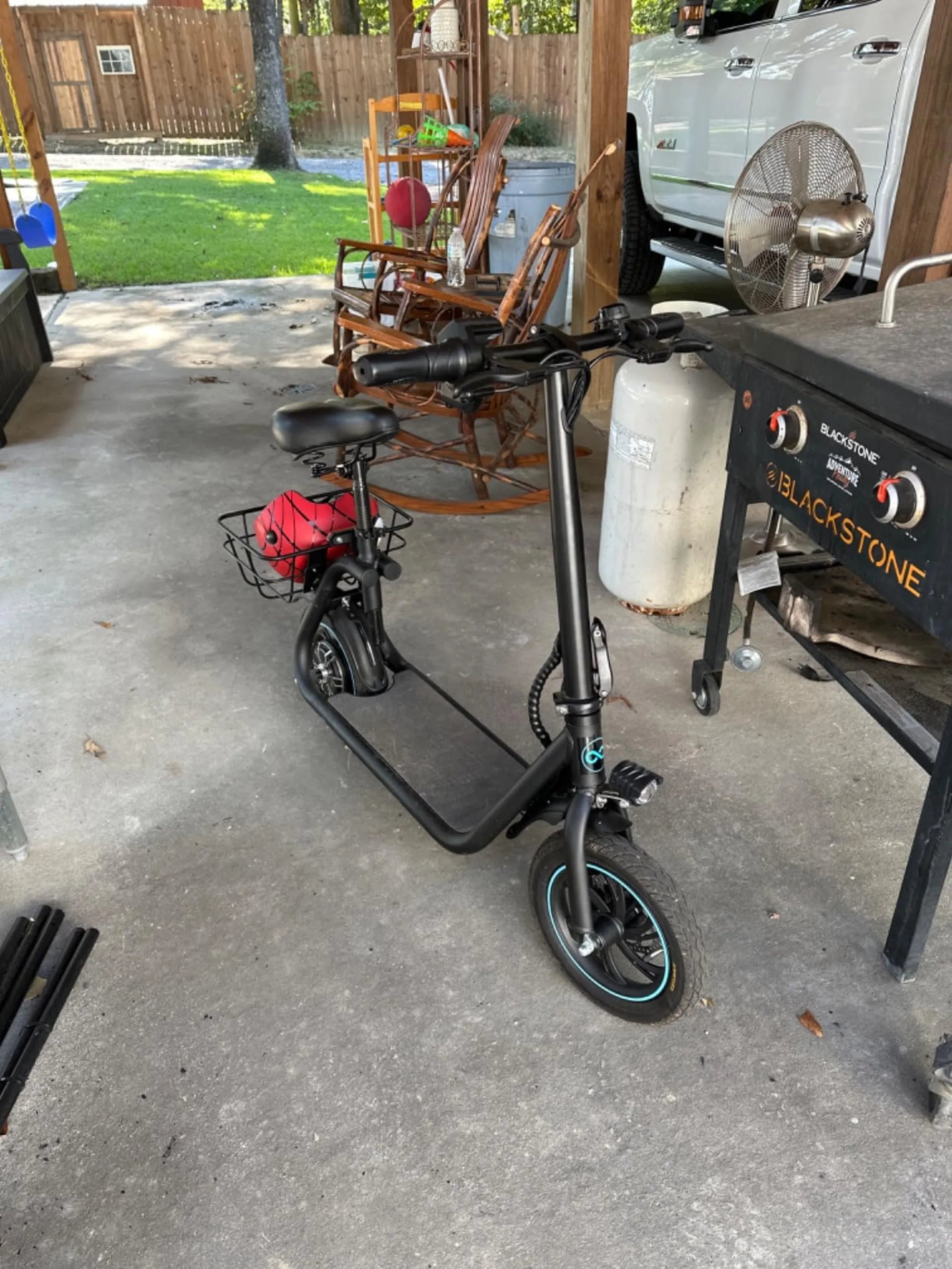
Navigating the legality of electric scooters in the United States can feel like deciphering a complex legal code that changes at every city limit. The straightforward answer is nuanced: while broadly permitted, their operation is governed by a intricate, three-tiered system of federal guidelines, state statutes, and hyper-local city ordinances. This guide demystifies that system. You will learn the core regulatory pillars, how to efficiently research the specific laws in your area, and why choosing a scooter designed for compliance, like those from trusted brands such as Gyroor, is a critical first step for safe and legal riding. Are electric scooters legal in the US? A complete guide to regulations starts here, providing the framework you need to ride with confidence.
The Federal Framework: Safety Standards Over Traffic Laws
At the national level, there is no single federal law that legalizes or bans electric scooters for use on public roads. Instead, federal involvement primarily concerns product safety and manufacturing standards. The Consumer Product Safety Commission (CPSC) oversees the safety of consumer goods, including e-scooters. They enforce standards related to electrical systems, mechanical integrity, and, crucially, battery safety.
This is where specifications like UL certification become paramount. A UL-certified battery, like those used in all Gyroor electric scooters, indicates the power pack has undergone rigorous testing for hazards like overheating, short-circuiting, and fire risk. For riders, choosing a model with such certifications is a non-negotiable safety baseline. Meanwhile, the U.S. Department of Transportation (USDOT) and the National Highway Traffic Safety Administration (NHTSA) offer guidance but explicitly delegate traffic law authority—including rules for e-scooters—to state and local governments.
The absence of federal traffic law means a scooter legal in one state may be non-compliant just across the border. This decentralized approach has created the current patchwork of regulations. Understanding this hierarchy is key: federal rules set the safety floor for the product you buy, while state and city laws dictate how, where, and when you can operate it.
State-Level Legality: A Spectrum of Approaches
State legislatures have taken varied paths in defining electric scooters within their vehicle codes. Most states have now passed legislation, but their frameworks fall into distinct categories that significantly impact rider freedom and responsibility.
First, many states have enacted explicit, permissive laws that define e-scooters as a distinct vehicle class. These laws typically establish a baseline of rules, such as a maximum speed limit (often 15-20 mph), a minimum rider age (commonly 16), and requirements for equipment like lights and brakes. States like California, Texas, and Florida fall into this category, providing clear, statewide guidelines.
Second, some states operate on a "local option" model. Here, state law may legalize e-scooters but explicitly grant cities and counties the authority to create stricter regulations or even ban them entirely. Illinois and Pennsylvania are examples where the local ordinance is the final word, making city-level research absolutely essential.
Finally, a handful of states remain in a gray area or have restrictive laws. In these jurisdictions, e-scooters may not be explicitly addressed in the vehicle code, leaving their status ambiguous. In others, they may be incorrectly classified as motor vehicles, subjecting them to burdensome requirements like registration, licensing, and insurance that make practical use nearly impossible. This landscape underscores why knowing your state's classification is the first critical step.
Common State Regulatory Pillars
When examining your state's law, look for these common regulatory pillars. Speed limits are the most universal; most states cap scooter speed between 15 and 20 mph on public roadways. Age restrictions are also common, with 16 being the frequent minimum. Helmet laws vary widely: some states require them for all riders, others only for minors, and many leave it as a strong recommendation.
Where you can ride is equally important. Most states prohibit riding on sidewalks in business districts and encourage or mandate the use of bike lanes where available. On roads, scooters are generally required to ride as far right as practicable. Furthermore, DUI/DWI laws universally apply to e-scooter operation, with the same legal limits and penalties as driving a car.
The Crucial Layer: City and Municipal Ordinances
If state law provides the canvas, city ordinances paint the detailed picture. This is the most critical and frequently changing layer of regulation. A scooter fully legal under state law can be heavily restricted or banned within a specific city, especially in dense urban centers.
Major cities like New York City, San Francisco, and Chicago have developed intricate rulebooks. These often include geofenced "no-ride" or "slow-ride" zones in pedestrian-heavy areas like parks, plazas, and waterfronts. Parking rules are also strict; improperly parked scooters (especially rental ones) can lead to fines and impoundment, prompting many cities to mandate designated parking corrals.
Local rules frequently impose lower speed limits than the state maximum. A downtown district might have a 10 mph limit, for example. Equipment requirements can also be more stringent, specifying lumen output for headlights or requiring audible bells. The enforcement mechanism is also local, meaning city police or parking authorities are the ones issuing citations. Therefore, a visit to your city's Department of Transportation or police website is an indispensable step before riding.
Rental Scooters vs. Privately Owned Scooters: A Regulatory Divide
The regulatory landscape often treats shared, dockless rental scooters differently from privately owned models. This distinction is vital for riders to understand. Municipalities primarily craft their strictest ordinances—like fleet caps, mandatory parking technology, and geofencing—in response to the challenges posed by large-scale rental operations.
Rental companies must obtain permits, pay fees, and share trip data with cities. Their scooters are often hardware-limited to local speed caps and contain GPS to enforce no-ride zones. As a private owner, you are generally not subject to these specific operational mandates. However, you are still bound by all the underlying traffic laws regarding speed, helmet use, and where you can ride.
The key advantage of ownership is consistency and control. You learn the rules once for your regular routes. You also invest in a higher-quality machine. Brands like Gyroor, with over 100,000 riders in North America and Europe, build private scooters with superior batteries, motors, and water resistance (like IPX5 ratings) compared to the heavily used rental fleet models, offering a safer and more reliable ride within the same legal framework.
Safety, Compliance, and Rider Responsibility
Legality and safety are two sides of the same coin. Proactive compliance is the rider's most important responsibility. This starts with due diligence: research your state's vehicle code and your city's municipal code. Don't assume rules are the same as a neighboring town.
Beyond the law, adopting best practices is crucial. Always wear a helmet, even if your state only requires it for minors. Use integrated front and rear lights day and night; visibility is your best defense. Ride predictably in bike lanes, signal your intentions, and never weave between pedestrians on sidewalks where it's prohibited. Regularly check your scooter's tire pressure, brakes, and lights. Responsible riding not only keeps you safe but also fosters positive community acceptance of e-scooters as a legitimate mobility option.
How Gyroor's Design Philosophy Aligns with Compliance
Choosing a scooter from a brand that prioritizes compliance simplifies the equation. Gyroor designs its models with common regulations in mind. Many feature multiple speed modes, allowing riders to easily restrict their top speed to match local limits. Integrated, bright LED lighting systems satisfy equipment requirements for night riding.
The focus on safety-critical components is paramount. Every Gyroor scooter uses a UL-certified battery pack, tested for over 500 charge cycles, addressing the core safety concern recognized at the federal level. The IPX5 water-resistant rating ensures reliability in various weather conditions, a practical feature for daily commuting. This design-forward approach means riders can focus on the rules of the road, not on whether their hardware is up to standard.
Key Regulations Comparison: State Examples
| State | Classification | Max Speed Limit | Min Age | Helmet Law | Where to Ride |
|---|---|---|---|---|---|
| California | Electric Scooter | 15 mph | 16 | Required for riders under 18 | Bike lanes, roads (max 25 mph speed limit). No sidewalks. |
| Texas | Motor-Assisted Scooter | 20 mph | 16 | Required for riders under 18 | Roads (if bike lane absent). Sidewalk use allowed locally. |
| New York | Limited Use Vehicle | 15 mph (city) | 16 | Required for all riders | Bike lanes & roads with speed limit ≤30 mph. No sidewalks. |
| Illinois | Low-Speed Scooter | 20 mph | 16 | Required for riders under 18 | Local ordinance governs. Chicago bans private scooters in downtown. |
| Florida | Electric Scooter | 20 mph | 16 | Required for riders under 16 | Bike lanes, roads. Sidewalks allowed if not prohibited locally. |
Frequently Asked Questions (FAQ)
1. Do I need a driver's license, insurance, or registration for my private e-scooter?
In the vast majority of states, no. Private electric scooters, as defined under state law, typically do not require a driver's license, vehicle registration, or mandatory insurance. However, you must always have a form of government-issued photo ID when riding. A handful of states with restrictive classifications may differ, so verification is key.
2. Can I legally ride my e-scooter on the sidewalk?
Generally, it is discouraged and often illegal, especially in business districts. Most state and city laws prohibit sidewalk riding to protect pedestrians. The default should be to use a bike lane or, if safe and legal, the right side of the road. Always check your local ordinance, as some residential areas may permit it.
3. What happens if I get stopped or receive a ticket?
Treat it like a traffic stop. Be polite and provide identification if requested. Violations are usually treated as infractions, resulting in a fine. Common citations are for riding on sidewalks, speeding, or failure to use lights at night. Ignoring a ticket can lead to increased fines or a suspended driver's license in some jurisdictions.
4. Are the rules different at night?
Yes, equipment rules become stricter. Almost all jurisdictions require a white front light and a red rear reflector or light when riding after dusk. Some cities may impose lower speed limits at night. Enhanced visibility through reflective clothing is a critical safety measure beyond the legal minimum.
5. How do I find the specific laws for my city?
Start with your state's Department of Motor Vehicles (DMV) or transportation website for the baseline law. Then, visit your city's official website and search for "electric scooter," "micromobility," or "traffic code" under the transportation or police department sections. Local bike advocacy groups often also provide helpful summaries.
Ride Informed, Ride Responsibly
The freedom and convenience of electric scooters come with the responsibility to understand and follow a dynamic set of laws. Legality is inherently local, requiring a few minutes of research that can prevent fines and ensure safety. By using this guide as a framework—checking federal safety standards, understanding your state's category, and drilling down into city ordinances—you can navigate the regulatory patchwork with ease. Pair this knowledge with a reliable, well-built scooter designed for compliance, and you have the recipe for a smooth, sustainable ride. Embrace the future of urban mobility, but do so as an informed ambassador for safe riding practices.
Ready to choose a scooter built with safety and compliance in mind? Browse the full Gyroor collection, featuring UL-certified batteries, IPX5 water-resistant designs, and models tailored for different city terrains, at gyroorboard.com.
Top 10 Electric Scooters for Kids Exporters: A Global Market Overview
Top Electric Scooters for Kids Company: Ultimate Parent's Guide