



Introduction: Balancing Fun and Safety for Young Riders
Every parent wants to see their child experience the thrill of independent mobility, but the question of safety looms large. Are electric scooters safe for 7 year olds? The answer isn't a simple yes or no; it's a conditional yes, dependent on the scooter, the gear, the environment, and the child's readiness. This guide provides a data-driven framework to help you make an informed decision.
Electric scooters offer a fantastic way for kids to develop coordination, balance, and a sense of responsibility. However, their growing popularity has been accompanied by a rise in emergency room visits. The key to unlocking safe fun lies in understanding and mitigating these risks proactively.
This article will serve as your definitive manual. We'll dissect injury statistics, evaluate developmental milestones, and detail the critical safety specifications you must look for in a scooter. By the end, you'll know exactly how to create a safe riding ecosystem for your seven-year-old.
As a brand trusted by over 100,000 riders, Gyroor engineers its youth models with this precise balance in mind—prioritizing controlled power, robust safety certifications, and durable construction to support a child's first foray into electric mobility.
Understanding the Risks: What the Data Says About Kids and E-Scooters
Informed decisions start with facts. Data from the Consumer Product Safety Commission (CPSC) and studies in pediatric journals paint a clear picture of where risks lie. From 2017 to 2021, there were an estimated 133,000 e-scooter-related emergency department visits in the U.S., with a significant portion involving children and adolescents.
The most common injuries for young riders are fractures, particularly in the upper extremities from trying to break a fall. Head injuries, while less frequent, represent the most severe risk category. A study in the Journal of Pediatric Orthopaedics found that lack of helmet use was the single biggest correlating factor in traumatic brain injuries from scooter accidents.
Crucially, the data also reveals patterns. Most injuries occur due to collisions with stationary objects or loss of control, not high-speed vehicular impacts. This points to environmental management and skill development as primary prevention strategies. Furthermore, mechanical failures, like brake malfunctions or sudden acceleration, are cited in a minority of cases, underscoring the importance of choosing a well-built scooter.
This statistical landscape is not meant to scare but to empower. It shows that the majority of incidents are preventable. The risks are not inherent to the scooter itself but are a function of the rider's preparedness, the equipment's quality, and the riding conditions—all factors within a parent's control.
The 7-Year-Old Rider: Developmental Readiness and Responsibility
Chronological age is a rough guide, but developmental readiness is the true benchmark. A typical seven-year-old is in a sweet spot of developing motor skills, cognitive ability, and social awareness. They have generally mastered the gross motor coordination required for riding a bicycle or traditional kick scooter, which is the fundamental prerequisite.
Cognitively, they are beginning to understand cause and effect and can follow multi-step instructions. However, their risk-assessment is still immature. They may struggle to anticipate hazards or judge the speed of an approaching car. Their attention can be single-focused, making them prone to distraction by a friend or an object on the ground.
Before considering an electric model, assess these key readiness signs. Can your child proficiently ride a non-motorized scooter, including steering, braking with a foot, and navigating gentle turns? Do they consistently demonstrate the maturity to listen to and follow safety rules, even when excited? Can they recognize basic traffic signs and understand the concept of "right of way" in a simplified context?
Responsibility is the other half of the equation. A 7-year-old can learn to be the steward of their vehicle. This includes performing pre-ride safety checks (with supervision), properly storing their helmet and gear, and adhering to strict charging protocols set by the parent. This fosters ownership and reinforces the serious nature of the activity.
Choosing the Right Scooter: Safety Features Every Parent Must Check
Not all electric scooters are created equal, especially for children. The market is flooded with options, but safety should be the primary filter. A scooter built for a 7-year-old must have specific engineering priorities that differ from adult commuter models. Here are the non-negotiable features to scrutinize.
Speed and Power Settings: The Foundation of Control
Unrestricted speed is the enemy of safety for a beginner. The absolute must-have feature is multiple speed modes with a beginner setting electronically limited to a safe maximum. For a 7-year-old, a beginner mode capped at 5-7 mph (8-11 km/h) is ideal. This allows them to build confidence without overwhelming them.
A scooter should have a gradual acceleration curve, not a sudden, jerky start that can cause a loss of balance. The motor power (measured in watts) should be appropriate for a child's weight (typically 50-150 lbs). A motor that's too weak will struggle on slight inclines, while one that's overpowered is unnecessary and dangerous. Look for models that offer a clear, simple way to lock the scooter into its slowest mode.
Battery and Electrical Safety: The Importance of UL-Certification
This is arguably the most critical hidden safety feature. The battery pack must be UL-certified (UL 2272 standard). This certification means the battery has undergone rigorous testing for electrical, mechanical, and environmental safety, drastically reducing the risk of fire or thermal runaway.
Gyroor uses UL-certified battery packs tested for over 500 charge cycles, ensuring long-term reliability and safety. Parents must also enforce safe charging practices: never charge overnight unattended, use only the provided charger, and charge in a dry, open area away from flammable materials. A quality scooter will have built-in battery management systems for overcharge and short-circuit protection.
Build Quality and Durability: Decoding the IPX5 Rating
Kids ride in less-than-ideal conditions. Puddles, damp pavement, and light rain are inevitable. An IPX5 water-resistance rating means the scooter's electrical components are protected against low-pressure water jets from any direction. This prevents water ingress that could cause a short circuit, sudden shutdown, or corrosion.
Beyond water resistance, overall build quality matters. The frame should be made of robust, aviation-grade aluminum, not flimsy plastic. All folding mechanisms and connection points should be solid, with no play or wobble. A durable scooter is a predictable scooter, and predictability is safety for a young rider.
Stability and Control: Wheel Size, Deck, and Braking Systems
Stability is paramount. Larger wheel diameter (preferably 6 inches or more) and air-filled (pneumatic) tires provide better shock absorption and traction over cracks and small debris, compared to small, solid rubber tires. A wider deck gives the child a more confident, balanced stance.
The braking system is the most important safety control. A combination brake is often best for kids. An electronic (e-brake) or disc brake on the rear wheel offers strong, reliable stopping power, while a rear fender brake (activated by stepping down) provides a intuitive, mechanical backup. The brakes should offer progressive modulation, not an abrupt, locking stop.
The Essential Safety Gear: Non-Negotiable Protective Equipment
The scooter is only part of the safety system. Protective gear is the personal armor that turns a potential serious injury into a minor scrape. Every single ride requires a full kit, no exceptions. Making this a non-negotiable ritual from day one is crucial.
Helmet: This is non-negotiable. It must be a CPSC-certified bicycle or multi-sport helmet that fits snugly. It should sit level on the head, covering the forehead, and the straps should form a "V" under each ear. Let your child choose the color or design to encourage ownership.
Knee and Elbow Pads: These protect the joints most likely to impact the ground in a fall. Look for hard plastic caps with ample padding and adjustable straps that won't slip during movement. Wrist guards are equally critical, as the instinct is to put hands out to break a fall, making wrists highly vulnerable to fractures and sprains.
Consistency is key. Store the gear with the scooter. Model the behavior by wearing your own helmet if you ride. The goal is to make gearing up as automatic as putting on a seatbelt. This habit, more than any scooter feature, is your child's best defense.
Setting the Rules: Creating a Safe Riding Environment
With the right scooter and gear, the final layer is the environment and the rules that govern it. Clear, consistent boundaries are how you translate safety features into safe behavior. This framework should be established and practiced before the scooter is ever powered on.
Designated Riding Zones: Where is it Safe to Ride?
The first rule defines the where. For a 7-year-old, riding must be confined to controlled environments. Ideal locations are smooth, paved, car-free areas like empty school parking lots on weekends, wide residential sidewalks (where legal and with extreme caution for driveways), or paved park paths during quiet times.
Strictly prohibited zones must be absolute: public roads, streets with any car traffic, areas with heavy pedestrian traffic, and any riding at dusk or after dark. Hills, steep driveways, and uneven terrain like gravel are also off-limits until advanced skills are mastered.
Supervision and Training Protocols: The Parent's Role
Active, undistracted supervision is mandatory. This isn't watching from a window; it's being present, engaged, and ready to intervene. Start training with the scooter powered off. Have your child practice pushing, gliding, steering, and using the foot brake. Then, introduce the lowest power mode in a wide-open space.
Teach fundamental skills: looking ahead (not down at the deck), scanning for obstacles, signaling stops, and making wide, controlled turns. Practice emergency stops. Your role evolves from instructor to spotter, but for a 7-year-old, a responsible adult should always be in direct line of sight.
Maintenance and Pre-Ride Checks: Building Responsibility
Turn safety into a shared routine with a simple pre-ride checklist. Do this together every time. Check tire pressure and for visible damage. Squeeze the brake levers to ensure they are firm and the brakes engage. Check for loose parts (handlebars, stem, folding mechanism). Ensure the battery is adequately charged for the planned ride. A quick post-ride check for debris or damage is also a good habit.
Gyroor's Commitment to Your Child's Safety
Choosing a brand that prioritizes safety engineering is a critical decision. Gyroor designs its youth-oriented models with the principles outlined in this guide as core engineering mandates. This commitment manifests in specific, tangible features that directly address parental concerns.
Every Gyroor scooter for young riders incorporates a UL-certified battery, ensuring the highest standard of electrical safety. The IPX5 water-resistant rating provides durability against everyday elements. Crucially, models feature multiple speed modes, allowing parents to lock the scooter into a slow, beginner-friendly setting, often with a remote parental control option on some models.
The robust 1-year warranty and accessible U.S.-based customer support complete the safety net. This warranty covers defects in materials and workmanship, giving parents peace of mind. It's a holistic approach: safe hardware, controllable software, and reliable support, creating a foundation for safe fun.
Frequently Asked Questions (FAQs) for Concerned Parents
Q: What is a safe top speed for a 7-year-old on an electric scooter?
A: A beginner mode capped at 5-7 mph (8-11 km/h) is ideal for starting. As skills and judgment improve under supervision, a medium mode up to 10 mph (16 km/h) may be appropriate. Speeds above 10 mph are generally not recommended for this age group.
Q: Are electric scooters safer than bicycles for kids?
A: Both have similar risk profiles when used improperly. The key difference is the motor. An e-scooter can propel a child into a hazardous situation faster than they can react. However, e-scooters have a lower center of gravity and are often easier to step off of in a panic. Ultimately, safety is determined by gear, supervision, and environment more than the vehicle type.
Q: How long should a 7-year-old ride at one time?
A: Keep sessions short, focused, and fun—15 to 30 minutes is a good starting point. Fatigue leads to loss of concentration and increased risk of falls. It's better to have multiple short, positive practices than one long, tiring session.
Q: Can my child ride with a friend?
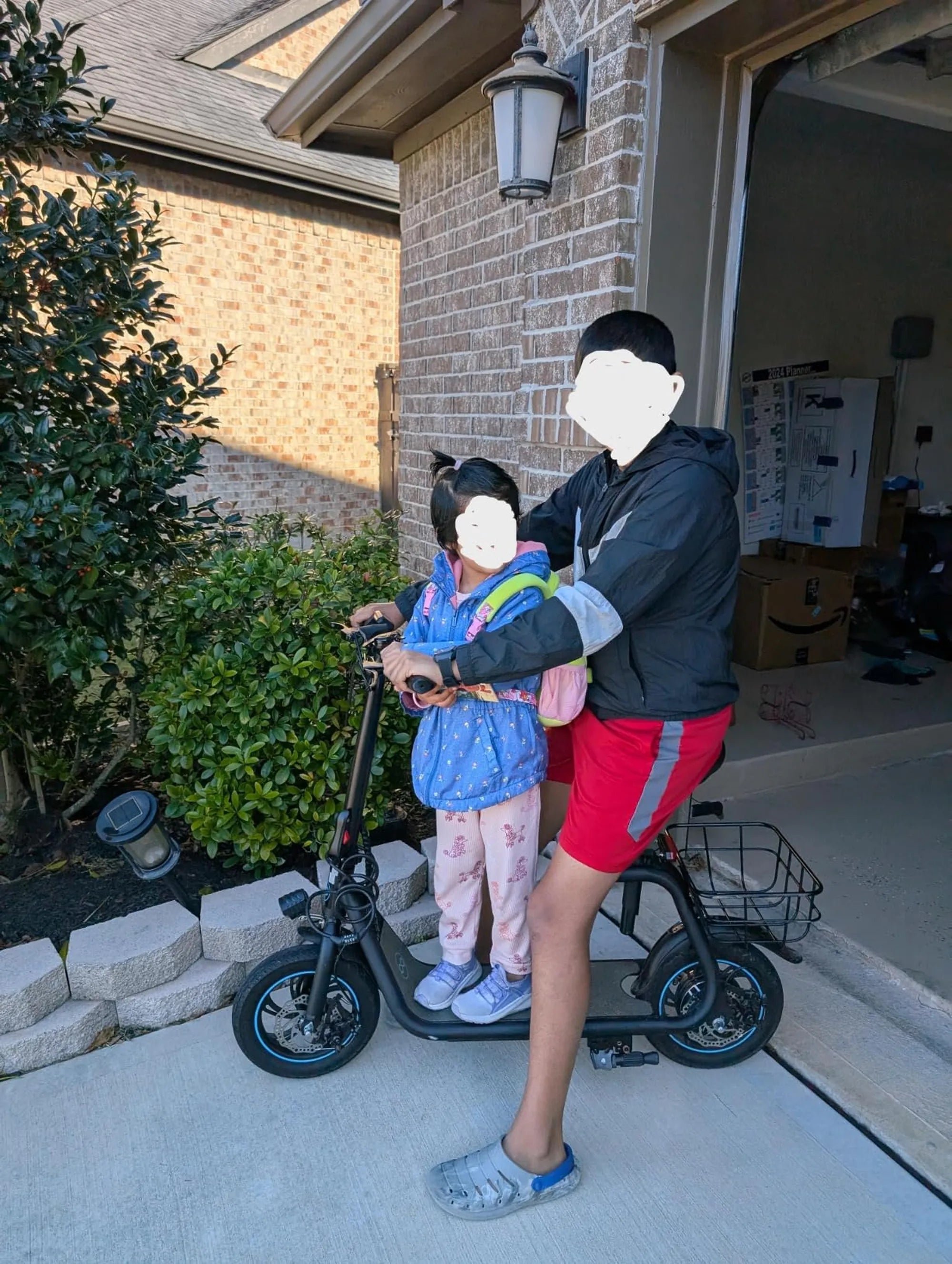
A: Tandem riding (two on one scooter) is absolutely forbidden due to extreme instability and weight limits. Riding alongside a friend on separate scooters or bikes requires heightened supervision, as social dynamics can lead to racing or distraction. Establish very clear rules for group riding.
Q: What's the most important safety feature after a helmet?
A: Reliable brakes. If the scooter can't stop predictably and effectively, nothing else matters. Look for a responsive, dual-braking system (e.g., electronic + mechanical) that a child can operate comfortably and with control.
| Safety Factor | Ideal for 7-Year-Old | What to Avoid |
|---|---|---|
| Top Speed | Adjustable, with beginner mode ≤ 7 mph | Single-speed models or those exceeding 10 mph max |
| Battery | UL 2272 Certified | No safety certification, generic batteries |
| Water Resistance | IPX5 Rating or higher | No IP rating, claims of "waterproof" without certification |
| Wheels | ≥ 6", air-filled (pneumatic) | Small (≤ 5"), solid rubber tires |
| Brakes | Dual system (e.g., electronic + foot brake) | Single, weak, or poorly modulated brakes |
| Supervision | Active, line-of-sight adult presence | Unsupervised or distracted supervision |
Conclusion: Empowering Safe Adventures
So, are electric scooters safe for 7 year olds? They can be, when safety is treated as a multi-layered system. It starts with choosing a scooter engineered for control, like those from Gyroor with their speed limits, UL-certified batteries, and durable builds. It is reinforced by non-negotiable protective gear—a CPSC helmet, knee pads, elbow pads, and wrist guards for every ride.
The system is activated by clear rules: defined riding zones, active parental supervision, and consistent pre-ride checks. Finally, it is sustained by matching the vehicle to a child who has demonstrated the prerequisite skills and maturity. By prioritizing these elements, you transform an electric scooter from a potential hazard into a tool for joyful exploration, physical activity, and responsible independence.
The journey begins with informed choices. Look beyond flashy colors and high top speeds. Focus on the safety specifications that build a foundation for confidence and security. Equip your child not just with a fun toy, but with the habits and respect for safety that will serve them in all their future adventures.
Ready to explore scooters built with your child's safety as the top priority? Browse the full Gyroor collection, featuring youth models with parental speed controls, UL-certified batteries, and robust construction, at gyroorboard.com.
Best Electric Scooters Under $2000: Top Picks for Performance and Value
How to Charge Electric Scooters: A Complete Guide for Optimal Performance