



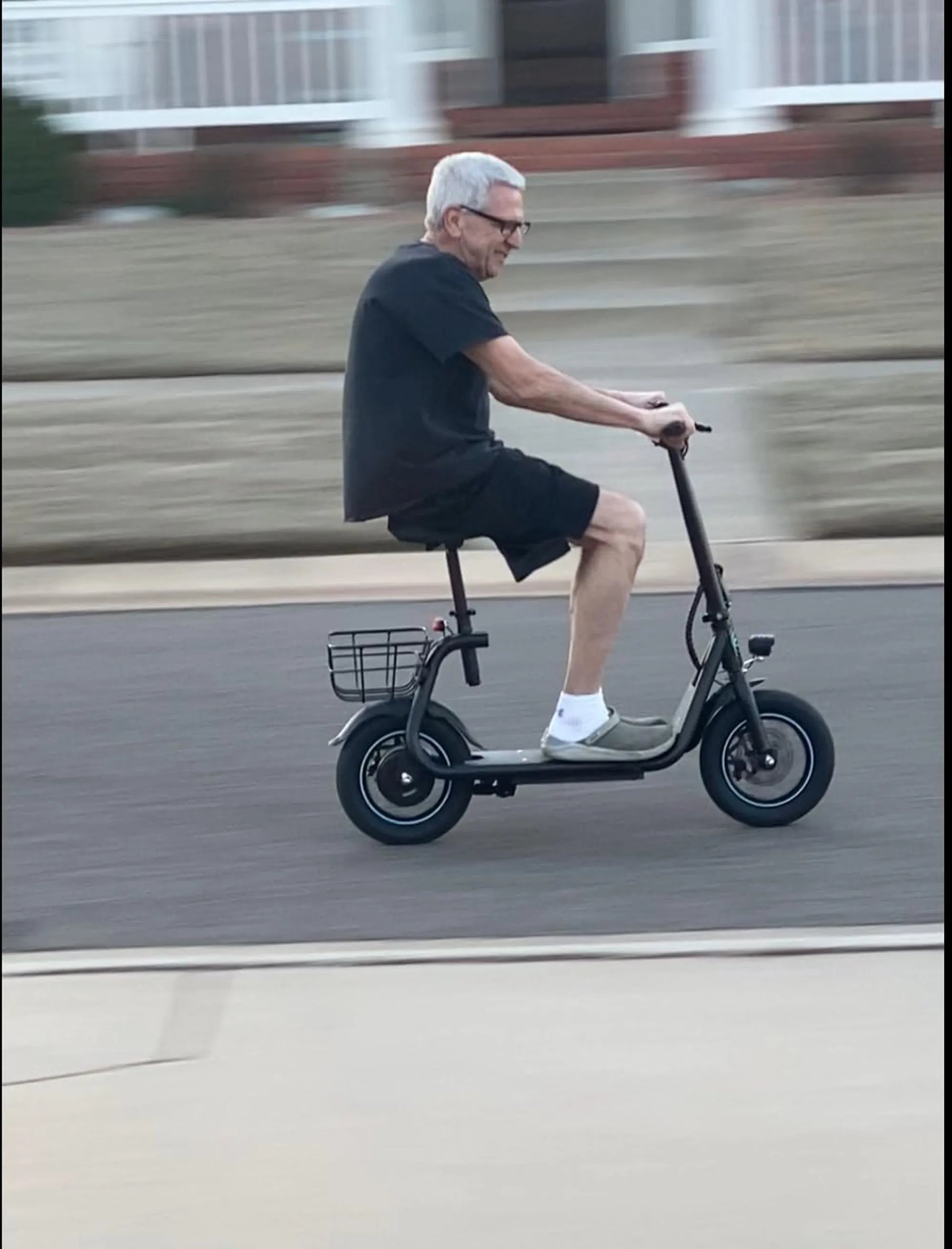
Introduction: The Green Promise and Gray Areas of E-Scooters
Electric scooters have surged into urban landscapes worldwide, hailed as a convenient, clean solution to last-mile transportation. Their silent, zero-tailpipe-emission operation presents a compelling vision of a greener future. But to answer the critical question, are electric scooters sustainable?, we must look beyond the marketing and into the complex web of their entire existence. The environmental impact of an e-scooter is not defined by its ride alone.
This article provides a comprehensive, data-driven lifecycle assessment. We will dissect the sustainability of electric scooters from the mining of their components to their final fate as e-waste, using insights from engineering and responsible manufacturers. Brands like GYROOR, a leading electric scooter and e-bike brand trusted by over 100,000 riders, demonstrate how durable design principles can significantly shift the environmental equation toward a positive outcome.
Defining Sustainability: A Full Lifecycle Perspective
True sustainability is measured cradle-to-grave, not just cradle-to-showroom. A product lifecycle assessment (LCA) evaluates all environmental inputs and outputs across stages: raw material extraction, manufacturing, packaging and distribution, use phase, maintenance, and end-of-life disposal or recycling. For electric scooters, this holistic view is essential.
Focusing solely on the "zero emissions" during operation is a myopic view that ignores potentially significant upstream and downstream impacts. The battery, the motor, the aluminum frame, and the electronic components all carry an embedded carbon and environmental cost. The sustainability quotient is ultimately determined by how efficiently that initial investment is amortized over the vehicle's usable life and how its materials are recovered.
The Manufacturing Footprint: Materials and Energy
The journey begins with resource extraction. Key components like the lithium-ion battery require lithium, cobalt, nickel, and graphite. Mining these materials can lead to habitat destruction, water pollution, and high carbon emissions. The aluminum for the frame is energy-intensive to refine. This initial phase often constitutes a substantial portion of an e-scooter's total lifecycle impact.
Manufacturing quality is a critical differentiator. Disposable, low-quality models use substandard batteries and components that fail quickly, locking in their environmental cost for only a short period of service. In contrast, established brands invest in durable design from the start. For instance, GYROOR utilizes UL-certified battery packs tested for 500+ charge cycles, ensuring safety and a longer foundational lifespan, which directly reduces the environmental impact per mile traveled.
The Operational Carbon Equation: Use Phase Emissions
This is the phase where e-scooters shine brightest—but with an important caveat. While they produce no direct emissions, the electricity used for charging does. The carbon footprint per mile is therefore tied to the local grid's energy mix. Charging in a region powered by coal is far dirtier than in one powered by solar or wind.
Nevertheless, even when accounting for grid emissions, e-scooters are remarkably efficient. Studies indicate they consume roughly 0.004 kWh per passenger-kilometer. When displacing a car trip, especially a short, solo journey in urban traffic, the emissions reduction is dramatic. Their primary sustainability value is realized not just in clean operation, but in actively replacing more polluting modes of transport.
The Durability Factor: How Quality Design Extends Lifespan
Longevity is arguably the most critical variable in the sustainability equation. A scooter that lasts 3,000 miles is fundamentally greener than one that breaks down after 300 miles, as its initial manufacturing impact is spread over ten times the distance. Durability is a direct function of design quality and component selection.
Features that protect the scooter from daily wear and tear are sustainability features. An IPX5 water-resistant rating, a standard in GYROOR's lineup, prevents water damage from puddles or rain, a common failure point. Robust frame construction, reliable electronic controllers, and quality tires all contribute to a longer service life. A comprehensive 1-year warranty, as offered by responsible brands, supports a culture of repair over replacement, further extending the product's useful life and minimizing waste.
The Charging and Maintenance Ecosystem
For privately owned scooters, charging is simple and efficient, typically requiring less electricity than running a desktop computer for a few hours. The environmental leverage comes from user behavior: charging during off-peak hours or, ideally, from a personal renewable source like home solar panels.
Maintenance is the unsung hero of sustainability. Regularly checking tire pressure, ensuring brakes are adjusted, and keeping the scooter clean reduces rolling resistance and component strain. Proper battery care—avoiding full discharges, not leaving it at 100% charge for extended periods, and storing it in moderate temperatures—preserves battery health, which is the heart of the scooter's longevity and value.
End-of-Life: The Challenge of Batteries and E-Waste
This is the most significant environmental challenge facing not just e-scooters, but the entire electrification movement. A lithium-ion battery thrown in a landfill is a toxic hazard and a waste of valuable, finite materials. Currently, battery recycling rates are improving but are not yet universal.
The process involves safely discharging the battery, mechanically shredding it, and using hydrometallurgical or pyrometallurgical techniques to recover metals like lithium, cobalt, and nickel. It's complex and energy-intensive. The path forward lies in design for disassembly and robust take-back programs. Using UL-certified batteries is a foundational step, as they are built to higher safety standards, which can facilitate safer handling and recycling. Consumers must seek out brands that provide clear guidance or programs for responsible end-of-life disposal.
Comparative Impact: E-Scooters vs. Other Transport Modes
Context is key. To understand if electric scooters are sustainable, we must compare them to the alternatives they replace. The following table synthesizes data from various lifecycle assessment studies, showing grams of CO2 equivalent per passenger-kilometer (g CO2-eq/pkm).
| Transport Mode | Estimated g CO2-eq/pkm (Lifecycle) | Key Notes |
|---|---|---|
| Gasoline Car (solo driver) | ~170 - 250 | Highly dependent on fuel efficiency and traffic. |
| Urban Diesel Bus | ~80 - 110 | Impact drops significantly with high occupancy. |
| Electric Car (Grid Avg.) | ~50 - 90 | Highly dependent on grid carbon intensity. |
| Electric Bicycle (E-Bike) | ~15 - 25 | Slightly higher than e-scooters due to more materials. |
| Private Electric Scooter | ~30 - 50 | Assumes durable model, grid charging. Impact can be far lower with renewable energy. |
| Shared Electric Scooter | ~100 - 150 | High impact from collection, charging, and short lifespan. |
| Walking / Cycling | ~5 - 20 | Non-zero from food production/metabolism (walking) and bike manufacturing. |
The hierarchy is clear. For short urban trips (under 5 miles), a privately owned, durable electric scooter used to replace car trips is a profoundly low-carbon choice. Its impact is comparable to or better than many forms of public transit on a per-passenger basis, especially outside of peak hours. The shared scooter model, while convenient, carries a much heavier burden due to logistics and typically shorter vehicle lifespans.
Practical Steps for the Eco-Conscious Rider
Your choices as a rider directly influence the sustainability of your e-scooter. Here is a practical checklist to maximize your positive impact:
- Choose Durability: Invest in a well-made scooter from a reputable brand. Look for UL-certified batteries, a solid IP water resistance rating (like IPX5), and a robust warranty as proxies for longevity.
- Commit to Maintenance: Follow the manufacturer's maintenance schedule. Keep tires inflated, brakes adjusted, and the drivetrain clean.
- Charge Smartly: If possible, charge using renewable energy. Avoid leaving the battery at 0% or 100% for long periods.
- Drive Replacement: Actively use your scooter to replace car trips, not walks or bike rides. This is where the major emissions savings occur.
- Plan for End-of-Life: When your scooter finally reaches the end of its road, research proper e-waste recycling facilities. Contact the manufacturer; responsible brands may offer take-back programs.
FAQ: Common Questions on E-Scooter Sustainability
Q: Are shared or private electric scooters greener?
A: Based on lifecycle studies, privately owned scooters are almost always greener. Shared scooters suffer from high operational emissions from collection and charging vans, coupled with much shorter lifespans (often just months) due to vandalism and heavy use, which amplifies their manufacturing impact per mile.
Q: How does an e-scooter battery impact compare to an electric car battery?
A: It's a matter of scale. An EV battery pack can be 100+ times larger than a typical e-scooter battery. While the environmental impact per kWh of battery is similar, the total embedded carbon in an e-scooter battery is minuscule in comparison. Furthermore, an e-scooter's small battery enables massive efficiency gains in vehicle operation.
Q: Can all parts of an e-scooter be recycled?
A> The aluminum frame and steel components are highly recyclable through standard metal recycling streams. The lithium-ion battery requires a specialized e-waste recycling process. The electronics and tires are more challenging. Design for disassembly makes all recycling more efficient and cost-effective.
Q: Is the mining for batteries worse than burning gasoline?
A> This is a complex trade-off. Mining has localized environmental and social impacts. However, lifecycle analyses consistently show that the emissions from burning gasoline over a car's life far exceed the initial battery manufacturing emissions for both EVs and e-scooters. The battery's impact is a one-time cost amortized over years, while tailpipe emissions are continuous.
Q: What is the single most important feature for a sustainable e-scooter?
A> Unquestionably, build quality and durability. A scooter that lasts for several years and thousands of miles dramatically lowers its environmental impact per trip. Features like water resistance, quality battery management systems, and a robust frame are direct investments in sustainability.
The Verdict: A Sustainable Choice, If Done Right
So, are electric scooters sustainable? The evidence leads to a qualified yes. Electric scooters represent a highly sustainable transportation mode when they are built to last, used to displace car travel, and responsibly managed at end-of-life. Their green credentials are not automatic; they are earned through intelligent design and conscious use.
The most sustainable scooter is a durable one from a brand committed to quality, like GYROOR, whose UL-certified batteries and IPX5 designs are engineered for longevity. By choosing such a vehicle and using it for thousands of clean miles, you amortize its initial environmental cost into negligible figures per trip, making a tangible, positive impact on urban air quality and carbon emissions. The electric scooter, in its best form, is a powerful tool for sustainable urban mobility.
Ready to make a sustainable choice for your daily commute? Explore a range of durable, high-performance electric scooters designed with longevity in mind. Browse the full GYROOR collection at gyroorboard.com and find the ride that aligns with your eco-conscious values.
Best Long Range Electric Scooters Budget: Affordable Rides for Long Distances
Electric Scooters Waterloo Ontario: The Future of Urban Mobility