

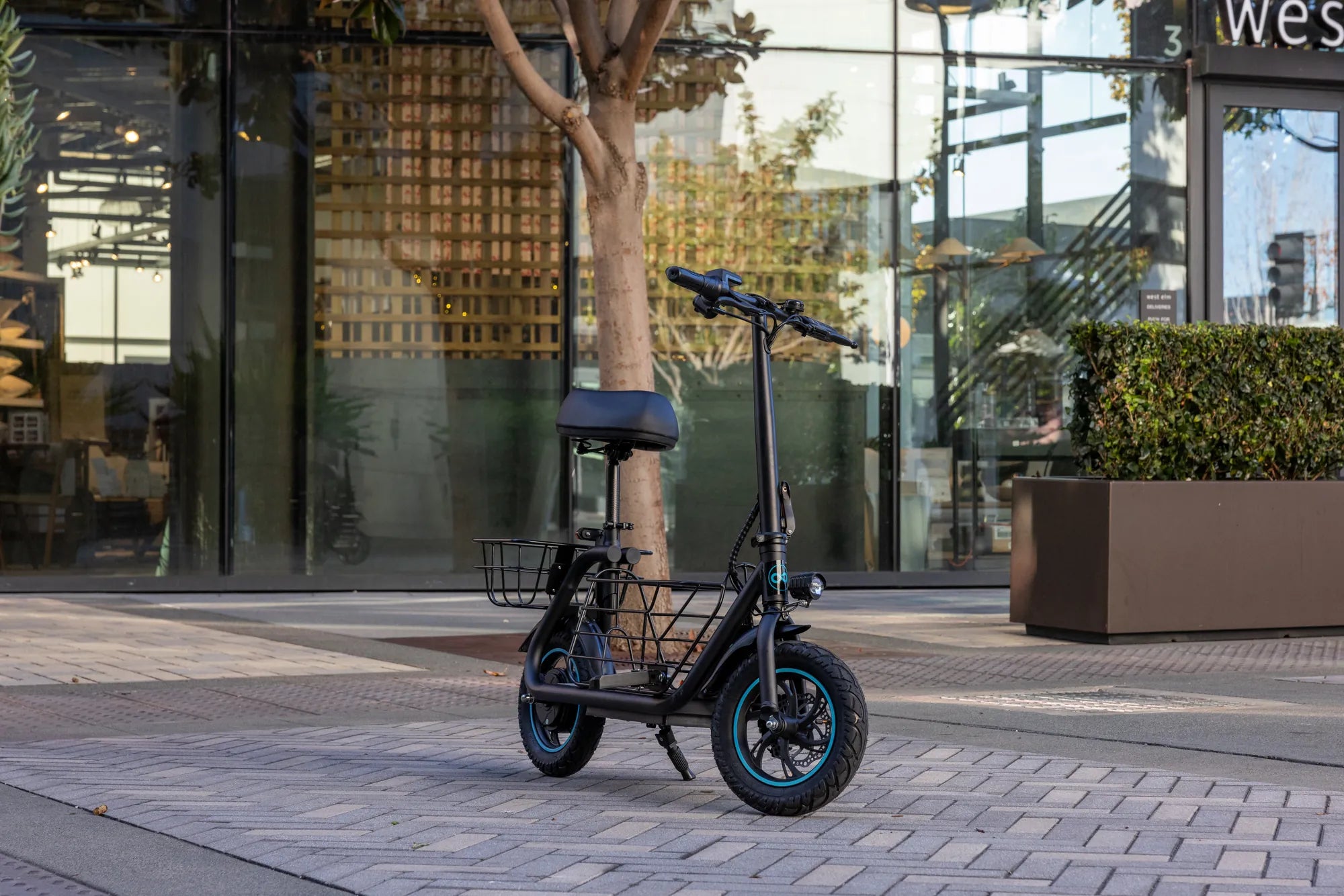
Navigating Hawaii's stunning yet congested landscapes presents a unique challenge. Between iconic beaches, volcanic vistas, and bustling resort areas, the dream of easy, open-air travel often clashes with the reality of traffic and parking. This brings us to a pressing question for residents and visitors alike: Are there electric scooters in Hawaii? Exploring the Aloha State's eco-friendly transport options reveals a clear answer: yes, but with important legal and practical considerations. This guide will provide a definitive look at e-scooter laws, the ideal features for island terrain, and how this mode of transport supports a more sustainable way to experience paradise.
The Legal Landscape: E-Scooter Laws in Hawaii
Electric scooters are legal in Hawaii, but regulations are primarily defined at the county level, not by a single state law. This creates a patchwork of rules that riders must navigate carefully. The overarching legal framework classifies low-speed electric scooters similarly to bicycles when operated on roadways or bike paths.
Honolulu County, which encompasses Oahu, has the most defined regulations. E-scooters are permitted on roads with speed limits up to 35 mph and in bicycle lanes. Riding on sidewalks in business districts is typically prohibited. Maui County and Hawaii County (the Big Island) generally follow similar principles, often deferring to state vehicle code sections applicable to "electric foot scooters."
Kauai County tends to have more restrictive local ordinances, especially in heavily touristed areas. It is crucial to check specific county websites or contact local police departments for the most current rules before riding. Ignorance of local law is not a valid defense and can result in fines.
The core legal parameters across most counties include a minimum operator age of 15 or 16, a maximum speed limit of 15 mph on bike paths and 25 mph on roads, and strong recommendations for helmet use. While not always mandated for adults, a helmet is a non-negotiable safety essential.
Key Regulations for Riders to Know
Understanding these common rules will keep you compliant and safe:
- Operation Areas: Use bike lanes where available. Riding on sidewalks is often illegal in business districts and areas with high pedestrian traffic.
- Speed Limits: Do not exceed 15 mph on shared paths. On roads, follow posted limits; most scooters are not legal for roads with limits over 35 mph.
- Age & Helmet Laws: Riders under 18 are almost always required to wear a helmet. All riders should wear one regardless of law.
- Right-of-Way: You must yield to pedestrians at all crosswalks and on sidewalks where riding is permitted.
- DUI Laws: Operating an e-scooter under the influence of alcohol or drugs is illegal and carries the same penalties as driving a car.
Why Gyroor Scooters are Engineered for Hawaiian Terrain
Not all electric scooters are created equal, especially for the diverse and demanding conditions of the Hawaiian Islands. The combination of steep volcanic hills, sudden tropical rain showers, and corrosive salt air requires a robust and reliable machine. This is where brands like Gyroor, trusted by over 100,000 riders, distinguish themselves with purpose-built engineering.
Gyroor models prioritize safety and durability from the ground up. Every scooter features a UL-certified battery pack, a critical safety standard that ensures protection against overheating—a vital consideration in Hawaii's warm climate. These batteries are rigorously tested for 500+ charge cycles, offering long-term reliability for daily commutes or exploratory rides.
Furthermore, an IPX5 water-resistance rating is not just a bonus; it's a necessity. This rating means the scooter can withstand water jets from any direction, making it capable of handling a passing tropical downpour or wet roads without compromising electrical systems. This built-in resilience provides peace of mind that cheaper, non-certified models cannot offer.
The construction quality extends to the frame, brakes, and tires. Gyroor scooters use reinforced aluminum alloy frames and dual braking systems (often disc + electronic) to ensure control on descents. Wide, air-filled tires provide necessary traction and shock absorption on varied surfaces, from smooth pavement to slightly cracked coastal paths.
Tackling Hills, Rain, and Coastal Conditions
Hawaii's topography demands specific performance metrics. A scooter with a modest 250W motor will struggle on the inclines of Honolulu or the roads leading to places like Diamond Head. Gyroor's commuter and performance models feature motors ranging from 350W to 500W, providing the sustained torque needed to climb hills without straining the battery or motor excessively.
The humid, salt-rich air is a silent enemy to electronics and metal components. Gyroor's use of corrosion-resistant materials and sealed electronic compartments directly combats this environmental wear. Regular maintenance is easier because critical components are protected from the elements by design.
For rain, the IPX5 rating is key. While no consumer scooter is fully submersible, this level of protection allows you to ride confidently in wet conditions and through puddles, knowing the core electronics are shielded. Pair this with rust-resistant bolts and connectors, and you have a scooter built for island longevity.
Practical Guide: Buying, Riding, and Maintaining Your Scooter in Hawaii
Acquiring an electric scooter in Hawaii involves a choice between local retail and online purchase. Some bike and sporting goods stores on the major islands carry select models. However, the variety is often limited. Purchasing online from a reputable brand like Gyroor offers a wider selection, direct customer support, and often better value.
When selecting a model, match the scooter's specs to your primary use. For flat, short commutes in Waikiki, a compact model with a 350W motor may suffice. For navigating the hills of Maui's Upcountry or longer explorations on the Big Island, a model with a 500W motor and a larger battery capacity (e.g., 10Ah+) is a wiser investment. Always verify the estimated range, as real-world mileage can be 20-30% less than advertised, especially with frequent hill climbing.
Daily riding in Hawaii requires heightened situational awareness. Be vigilant for tourists crossing streets unpredictably, wet leaves or sand on paths, and sudden weather changes. Use a loud, electronic horn (a feature on many Gyroor models) to alert others of your presence. Always lock your scooter securely with a high-quality U-lock when unattended, even for short periods.
Routine maintenance is your first defense against the tropical environment. After rides in rain or near the coast, wipe down the scooter with a damp cloth to remove salt spray and sand. Regularly check tire pressure and brake tension. Listen for unusual noises from the motor or bearings, which can indicate grit ingress.
Charging and Battery Care in a Tropical Climate
Battery longevity is paramount. The advantage of a UL-certified battery, like those in Gyroor scooters, is its built-in battery management system (BMS) that protects against overcharging, overheating, and short circuits. This is crucial in warmer climates where battery stress is higher.
Never leave your scooter or its battery charging unattended for extended periods, especially in direct sunlight. Charge the battery in a cool, dry, indoor location. Avoid draining the battery to 0% or charging it to 100% for everyday storage; maintaining a charge between 30% and 80% is ideal for long-term battery health.
If you plan not to use the scooter for several weeks (e.g., between tourist seasons), store the battery at around a 50% charge in a climate-controlled environment. Extreme heat is a battery's enemy, so never store it in a hot car or garage. Following these practices with a quality battery can extend its useful life well beyond the standard 500-cycle benchmark.
Eco-Impact: How E-Scooters Support Hawaii's Sustainable Future
Hawaii has set some of the nation's most ambitious clean energy goals, aiming for 100% renewable electricity by 2045. Transportation is a key frontier in this battle, as the sector accounts for a significant portion of the state's fossil fuel consumption. Electric scooters present a tangible, immediate solution for reducing carbon footprints on a per-trip basis.
Consider the typical short trips taken by residents and tourists: a few miles to the beach, a restaurant, or a friend's house. Using an e-scooter for these trips instead of a rental car or ride-share service eliminates direct tailpipe emissions. When charged via Hawaii's growing grid of solar, wind, and geothermal sources, the carbon footprint of that trip approaches zero.
Beyond emissions, e-scooters alleviate traffic congestion and the demand for parking, two chronic issues in places like Waikiki, Lahaina, and Kailua-Kona. A single parking space can accommodate 10-20 parked scooters. This efficiency helps preserve the aesthetic and functional quality of public spaces, reducing the urban heat island effect and land dedicated to asphalt.
The micro-mobility revolution, when implemented responsibly, aligns perfectly with the Hawaiian concept of "mālama ʻāina"—to care for the land. By choosing an electric scooter for short journeys, individuals actively participate in reducing pollution, noise, and traffic, contributing to the preservation of the islands' natural beauty for future generations.
Comparison: Electric Scooters vs. Other Island Transport Options
Choosing how to get around in Hawaii involves weighing cost, convenience, and environmental impact. The following table provides a data-driven comparison to help inform your decision.
| Transport Mode | Avg. Cost per Day | Environmental Impact | Convenience & Range | Best For |
|---|---|---|---|---|
| Electric Scooter (Owned) | $0.10 - $0.30 (electricity) | Very Low (Zero direct emissions) | High for short trips (10-25 mi range). Park anywhere. Carry onto bus. | Daily commuting, last-mile travel, resort-area exploration. |
| Rental Car | $50 - $150 + parking & gas | High (Direct CO2 emissions) | High for long distances. Limited by traffic, parking cost/availability. | Inter-island travel, large families, remote area exploration. |
| Ride-Share (Uber/Lyft) | $20 - $80 (multiple short trips) | Moderate to High | On-demand, but costly and contributes to congestion. | One-off trips, night travel, groups. |
| Public Bus (TheBus, Hele-On) | $2 - $5 (day pass) | Low | Fixed routes & schedules. Can be crowded. Combines well with e-scooter for last mile. | Budget long-distance travel along major corridors. |
| Bicycle | $0 (owned) / $20-$50 (rental) | Zero | Moderate. Limited by rider fitness and hills. Slower than e-scooter. | Exercise-focused travel, flat areas. |
Frequently Asked Questions (FAQ)
Q: Can I take my electric scooter on the bus in Hawaii?
A: Yes, most public bus systems in Hawaii, including TheBus on Oahu, allow folding electric scooters onboard at the driver's discretion, provided they do not block aisles or doors. Always fold your scooter before boarding.
Q: Are there dedicated e-scooter rental services like Lime or Bird in Hawaii?
A: Traditional dockless rental fleets have had a limited and fluctuating presence due to regulatory challenges and local opposition. It is more reliable to plan on using a owned scooter or renting from a local activity/tour company, which is more common.
Q: What is the best Gyroor model for a hilly area like Honolulu?
A> For consistent hill climbing, look for models with a sustained motor power of at least 500W, such as the Gyroor F1 Pro. The higher wattage provides the necessary torque, and the larger battery capacity ensures range isn't drastically reduced by the inclines.
Q: Do I need a license or registration for my e-scooter in Hawaii?
A> No. Electric scooters that meet the definition of a "low-speed electric bicycle" or "electric foot scooter" do not require a driver's license, vehicle registration, or license plate to operate.
Q: How do I handle my e-scooter during a hurricane or tropical storm warning?
A> Treat it like any other sensitive electronic. Store it indoors, in a safe, dry location away from windows. Disconnect and store the battery separately if possible. Do not charge the battery during the storm due to potential power surges.
Conclusion: Your Ticket to Island Freedom
Electric scooters are not only present in Hawaii but represent a smart, sustainable, and exhilarating way to embrace island life. By understanding and respecting local laws, investing in a durable, well-engineered scooter built for the environment, and adopting proper riding and maintenance habits, you unlock a new dimension of freedom. Whether you're a resident avoiding a daily traffic jam or a visitor discovering hidden gems beyond the resort walls, an e-scooter offers a silent, emission-free path to adventure. Embrace the trade winds in your face and the agility to stop wherever beauty calls. Explore the full range of UL-certified, IPX5-rated Gyroor electric scooters and e-bikes designed for reliability and performance. Browse the full Gyroor collection at gyroorboard.com and find your perfect vehicle for Hawaiian exploration.
Full Size Electric Scooters for Adults: The Ultimate Urban Commuting Solution
Electric Scooters in Uganda: The Future of Urban Mobility