



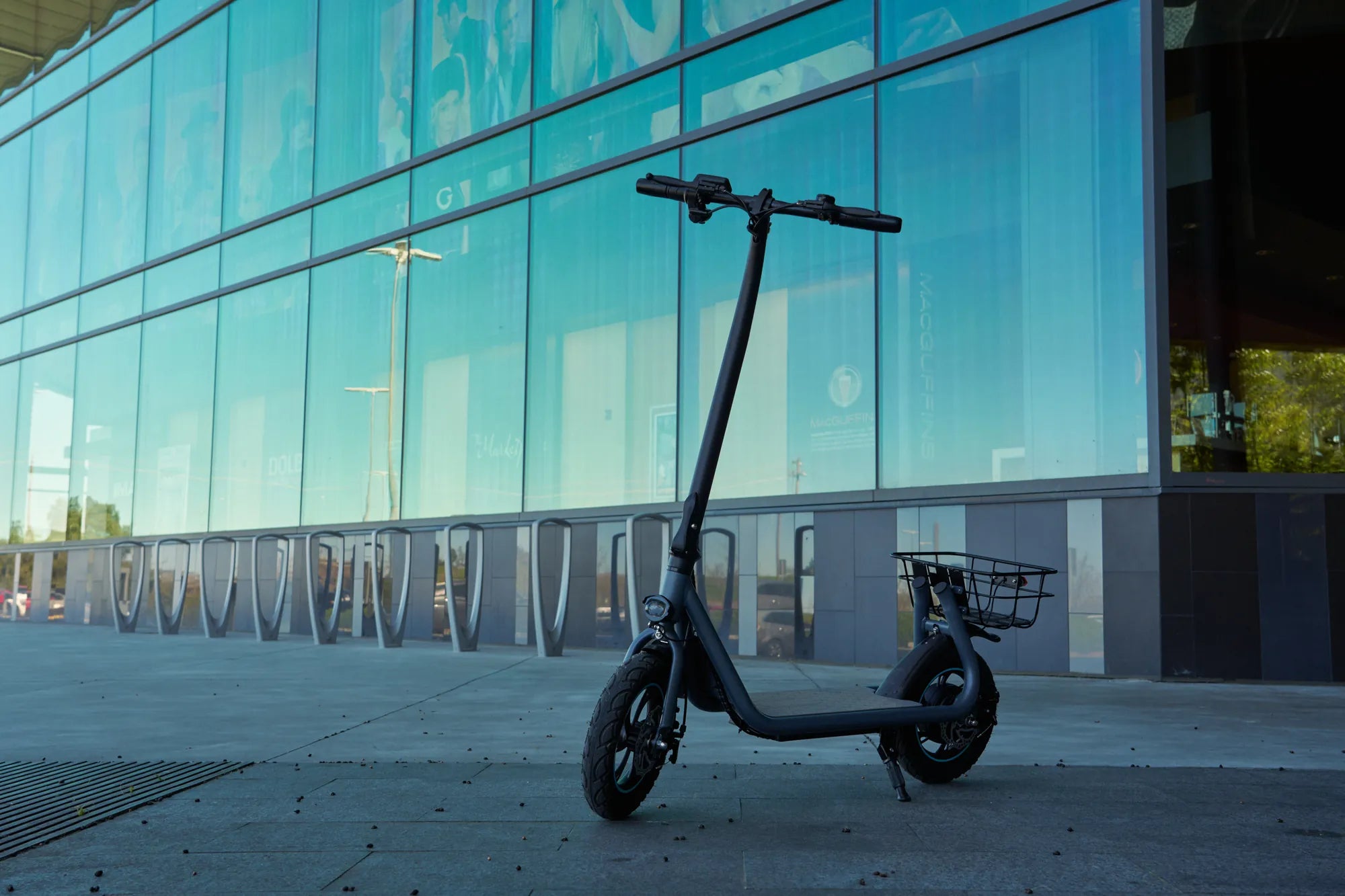
Introduction: The Electric Scooter Revolution Hits the Big Apple
New York City's streets are undergoing a quiet but profound transformation. Amidst the iconic yellow cabs and rumbling subways, a new, nimble form of transit has claimed its lane: the electric scooter. The question "Are there electric scooters in New York?" has shifted from speculative to definitive. Yes, they are here, legal, and reshaping how residents and visitors navigate the urban grid.
This revolution is driven by a potent mix of necessity and innovation. With chronic congestion, rising transit costs, and a collective push toward sustainability, personal electric vehicles (PEVs) offer a compelling alternative. They represent more than just a trendy gadget; they are a practical tool for solving the "last-mile" problem, connecting commuters from transit hubs to their final destinations with speed and efficiency.
This article will serve as your comprehensive guide to the electric scooter landscape in NYC. We will dissect the complex legal framework, analyze the data-driven benefits for New Yorkers, and provide essential guidance on choosing, riding, and maintaining a scooter in one of the world's most demanding urban environments. The presence of electric scooters in New York is now a key part of the urban mobility revolution.
Leading this charge are reputable manufacturers like Gyroor, a brand trusted by over 100,000 riders across North America and Europe. Their focus on UL-certified battery safety, durable construction, and rider-centric design provides the reliability needed to thrive on New York's concrete jungle.
The Legal Landscape: Navigating NYC's E-Scooter Rules
Before you hit the throttle, understanding the law is non-negotiable. New York State legalized electric scooters in 2020, but local regulations add critical layers. The rules differ distinctly between privately-owned scooters and shared rental fleets, a distinction every rider must know.
For personal electric scooters, key state and city laws apply uniformly. The scooter must have a maximum speed capability of no more than 20 mph. Riders must be at least 16 years old. Helmets are required for all riders aged 16 and 17, and strongly recommended for everyone. Crucially, electric scooters are prohibited on sidewalks; they must be ridden in bike lanes or on streets with speed limits of 30 mph or less.
The shared scooter landscape operates under a separate, pilot-based system. The city's "Shared Micromobility" program has launched in the Bronx, with plans for expansion. These DOT-approved rental scooters are geofenced to operate within specific zones, have a capped speed of 15 mph, and must be parked in designated corrals. This pilot aims to study integration and safety before a potential citywide rollout.
It is the rider's responsibility to stay informed. Regulations can evolve, and specific boroughs or parks may have additional restrictions. Always check for updated DOT guidelines. Riding a compliant scooter from a brand like Gyroor, which designs models specifically to meet these common legal speed limits, is the first step to a hassle-free commute.
Why New Yorkers Are Choosing Electric Scooters (Data-Driven Insights)
The adoption of electric scooters in New York isn't driven by hype, but by measurable advantages. For the average New Yorker, the calculus of cost, time, and convenience makes a powerful case for this mode of transport.
Financially, the savings are substantial. The average monthly unlimited MetroCard costs approximately $132. A quality electric scooter, like those from Gyroor, represents an upfront investment that pays for itself within a year for a regular commuter. This eliminates daily fares, surge-priced rideshares, and parking fees. It's a transition from a recurring operational cost to a one-time capital expense with minimal upkeep.
Time is the city's most precious commodity. Electric scooters excel at slicing through gridlock and bridging the gaps in the transit network. A 2-mile trip that might take 30 minutes on foot or 20 minutes in stalled traffic can be completed in under 10 minutes on an e-scooter. This efficiency for short-to-medium distance trips, often the most inefficient part of a commute, is a game-changer for daily logistics.
From an environmental standpoint, the impact is direct. Each e-scooter commute replaces a car trip or a portion of a fossil-fuel-powered transit journey. When charged on the NYC grid, which is increasingly renewable, the carbon footprint per mile is negligible. For a city committed to ambitious sustainability goals, the widespread adoption of light electric vehicles is a practical pathway forward.
Gyroor's Edge in the Urban Jungle: Safety and Reliability Built-In
New York City presents unique challenges: pothole-ridden streets, sudden rain showers, and the need for secure apartment storage. A scooter must be built to endure. This is where Gyroor's engineering philosophy directly addresses urban riders' core concerns.
Foremost is battery safety. The fear of battery fires is a legitimate concern in multi-unit dwellings. Every Gyroor scooter uses UL-certified battery packs, the gold standard for safety, rigorously tested for over 500 charge cycles. This certification means the battery management system prevents overcharging, short-circuiting, and overheating, providing peace of mind for indoor charging.
Weather resistance is non-negotiable. A sudden downpour shouldn't end your ride or damage your vehicle. Gyroor models feature IPX5 water-resistant ratings, protecting critical components from water spray from any direction. Coupled with robust suspension systems and pneumatic tires, they are designed to handle the imperfect topography of city streets while maintaining rider comfort.
Finally, reliability is backed by a robust 1-year warranty and accessible U.S.-based customer support. In a city where your vehicle is a daily essential, knowing you have dependable support and a warranty that covers manufacturing defects ensures your investment is protected for the long haul.
Choosing Your Ride: A Comparison for NYC Streets
Not all electric scooters are created equal for New York's demands. Your choice should be dictated by primary use-case, commute distance, and living situation. Below is a comparison framework to guide your decision.
| Use-Case Priority | Key Features to Look For | Gyroor Model Example | Ideal NYC Rider |
|---|---|---|---|
| Long Commutes & Range | High-capacity battery (15+ mile real-world range), comfortable deck, dual suspension, bright lights. | Gyroor S1: Features a 500W motor, long-range battery, and 8.5-inch pneumatic tires for smooth rides over longer distances. | The commuter traveling from Brooklyn to Manhattan, needing reliable power for bridges and longer stretches. |
| Storage & Portability | Lightweight frame (under 30 lbs), fast one-step folding mechanism, compact folded footprint. | Gyroor F1 Pro: Ultra-portable design that folds quickly, making it easy to carry onto a bus, store under a desk, or tuck in a small apartment closet. | The multi-modal commuter or apartment dweller with limited storage space. |
| All-Weather & Terrain Confidence | High water resistance (IPX5+), wide pneumatic tires, superior braking system (disc + electronic), durable construction. | Gyroor H10: Boasts a robust 10-inch pneumatic tire setup and advanced suspension for tackling potholes and wet streets with greater stability. | The year-round, all-conditions rider who won't let rain or rough pavement interrupt their schedule. |
Consider your daily route. Is it mostly smooth bike lanes, or will you encounter cobblestones and construction zones? Your scooter's tire size, suspension, and deck size should match the terrain. Weight capacity is also crucial if you plan to carry a backpack or groceries.
Test the folding mechanism in person if possible. A cumbersome fold defeats the purpose of portability. The best scooter for New York is the one that seamlessly integrates into your daily life, from commute to storage.
Essential Gear and Safe Riding Practices
Your scooter is only as safe as the rider. Equipping yourself properly and adopting defensive riding habits are essential for sharing the road in a dense metropolis.
Mandatory and recommended gear starts with a helmet. A certified bicycle or multi-impact helmet is the single most important safety item. Beyond that, consider high-visibility clothing or reflective strips, especially for night riding. Sturdy, closed-toe shoes are a must, and gloves can improve grip and protect your hands in a fall.
Defensive riding in NYC requires hyper-awareness. Always assume cars do not see you. Use hand signals for turns and stops. Obey all traffic signals as if you were driving a car. Be particularly cautious at intersections and when passing parked cars to avoid "dooring." Your headlight and taillight should be on at all times to increase visibility.
Regular pre-ride checks are a simple but vital habit. Test your brakes before setting off. Ensure tires are properly inflated. Check that all lights are functional. A quick 30-second inspection can prevent accidents caused by mechanical failure. For Gyroor scooters, following the recommended maintenance schedule in the manual will ensure optimal performance and safety.
Beyond the Ride: Parking, Charging, and Etiquette in NYC
Responsible scooter ownership extends beyond riding. How you park, charge, and interact with others defines you as part of the urban mobility ecosystem.
Parking should never create a hazard. Use a sturdy U-lock or chain lock to secure your scooter to a designated bike rack. Never lock it to private property, trees, or in a way that blocks sidewalks, building entrances, or accessible ramps. Obstructing pathways is a primary reason for public resentment toward scooters and bikes.
Charging etiquette, especially in apartment buildings, is critical. Always use the manufacturer-provided charger and never leave a battery charging unattended for extended periods or overnight. If possible, charge on a non-flammable surface. Communicate with your building management if you have questions about policies. The UL-certification of Gyroor batteries is a key feature to reassure both you and your landlord.
Practice good lane etiquette. In bike lanes, maintain a predictable speed and pass other cyclists and scooters with ample space and an audible signal (a bell is ideal). Yield to pedestrians at all times. You are an ambassador for the wider PEV community; courteous riding fosters positive coexistence with all street users.
Frequently Asked Questions (FAQ) for NYC E-Scooter Riders
Q: Can I take my electric scooter on the subway or bus?
A: MTA rules permit folding bicycles and scooters on subways and buses at all times, provided they do not block aisles or doors. Your scooter must be fully folded. It is courteous to avoid peak rush hours if possible.
Q: Do I need a driver's license, registration, or insurance for my e-scooter?
A> No. New York State law does not require a driver's license, vehicle registration, or insurance to operate a legal electric scooter. However, riding one does not exempt you from traffic laws, and you can be cited for violations like running a red light.
Q: What happens if I get a flat tire in the city?
A> For pneumatic tires, carry a small portable tire repair kit or ensure your scooter model, like several from Gyroor, uses tires with sealant pre-installed. For a major flat, you'll need to fold it and use another mode of transport to a repair shop or your home. Some brands offer solid or honeycomb tires that are puncture-proof but may provide a harder ride.
Q: Are there areas where e-scooters are completely prohibited?
A> Yes. Electric scooters are banned on all NYC sidewalks, in parks (unless on a designated road or path explicitly open to vehicles), and on highways or streets with speed limits above 30 mph. Always observe local signage.
Q: How do I handle my e-scooter in the winter or bad weather?
A> Reduce speed, increase following distance, and avoid metal surfaces (manhole covers, bridge gratings) which become extremely slippery when wet. Use caution with brakes to avoid skidding. After riding in rain or snow, wipe down your scooter to prevent corrosion. Storing it in a dry place is crucial.
Your Ticket to a Smarter, Greener Commute
The evidence is clear: electric scooters are a viable, legal, and increasingly essential component of New York City's transportation network. They offer a tangible solution to the daily challenges of cost, congestion, and connectivity. The question is no longer "Are there electric scooters in New York?" but rather, "How can I integrate one intelligently into my life?"
The key to a positive experience lies in informed riding and investing in a reliable vehicle. Choosing a scooter built for urban rigor—with certified safety features, durable construction, and proper support—turns a novel idea into a dependable daily tool. Brands that prioritize these elements, like Gyroor, empower riders to navigate the city with confidence.
As infrastructure adapts with more bike lanes and potential parking corrals, the ecosystem for personal electric mobility will only improve. By adopting this technology responsibly, New Yorkers are not just choosing a convenient ride; they are actively participating in shaping a more efficient, less congested, and greener urban future.
Ready to join the urban mobility revolution? Explore scooters engineered for the demands of city life. Browse the full Gyroor collection, featuring UL-certified, high-performance models designed for commuters who value safety, reliability, and smart design, at gyroorboard.com.
Safe Electric Scooters for Toddlers: A Parent's Guide to Choosing the Best Ride
Best Electric Scooters Over 500W: Power, Performance, and Practicality