

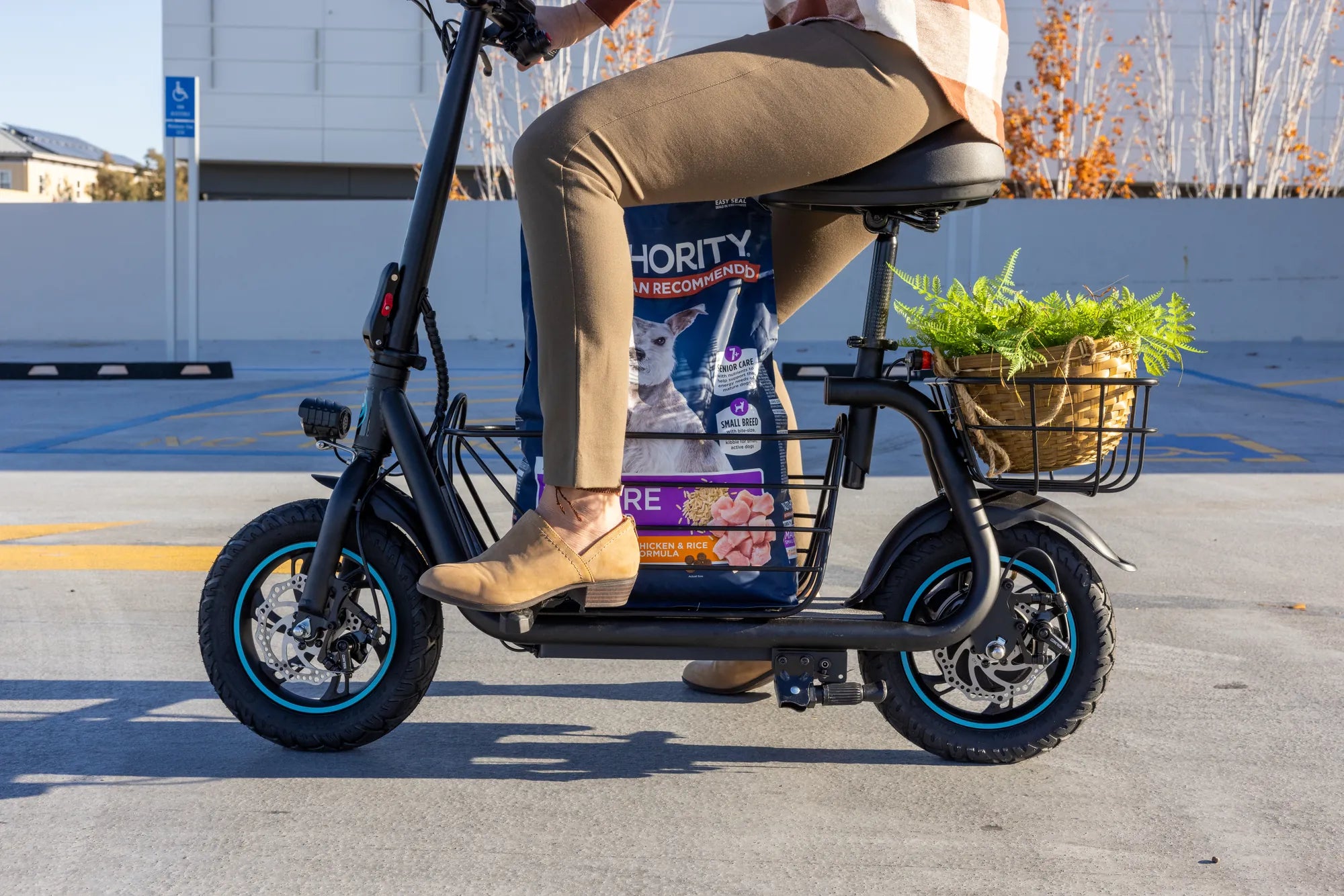
Introduction: Navigating the E-Scooter Legal Landscape
Electric scooters have transformed urban mobility, but their rapid adoption has created a confusing patchwork of laws. The central question for any new or prospective rider is straightforward: Are you allowed to use electric scooters? The answer is never simple. It depends entirely on your city, county, and state. This guide serves as your authoritative resource, cutting through the legal noise to provide clear, actionable information on legality, safety, and responsible riding. We'll equip you with the knowledge to ride confidently and legally, while highlighting how brands like Gyroor prioritize rider education and build compliance into their products from the ground up.
Understanding the Legal Framework: It's All About Location
There is no single, national law governing electric scooters in the United States or most other countries. Legality is determined at the state, provincial, and municipal levels. A scooter legal in one city might be prohibited just across the county line. The first rule of e-scooter ownership is to research your local ordinances before you ride or buy. Ignorance of the law is not a valid defense and can result in fines, impoundment of your scooter, or even misdemeanor charges in some jurisdictions.
Most regulations classify electric scooters as a form of "low-speed electric bicycle" or a unique "motorized scooter" category. This classification dictates where you can ride, what safety equipment is mandatory, and who is allowed to operate them. The regulatory environment is still evolving, with many areas playing catch-up to the technology's popularity. This fluid situation makes staying informed critical for every rider.
Where Are E-Scooters Typically Allowed?
In most legal jurisdictions, electric scooters are permitted in specific types of road infrastructure. The most common legal zones are designated bike lanes and shared-use paths (like multi-use trails). On public roads, they are often allowed on streets with speed limits of 25 or 35 miles per hour or less. This is because e-scooters are designed to mix with bicycle and slower vehicular traffic, not high-speed cars.
Riding on sidewalks is frequently prohibited for safety reasons. Pedestrians, especially those with limited mobility or vision, can be startled or injured by a silent, fast-moving vehicle. Sidewalk bans are among the most common and strictly enforced e-scooter laws. Always assume sidewalk riding is illegal unless local signage explicitly permits it.
Common Legal Restrictions and Requirements
While local laws vary, several core restrictions appear consistently across many regions. These form the baseline of responsible e-scooter use. First, age limits are common, with many cities and states requiring riders to be at least 16 years old. Some require a valid driver's license or learner's permit.
Helmet laws are another major variable, often depending on the rider's age. Speed limits for e-scooters are frequently capped between 15 and 20 mph, even if the scooter is capable of going faster. Most areas explicitly prohibit carrying passengers on a scooter designed for one rider. Understanding these universal themes helps you anticipate the rules you're likely to encounter.
Key Safety Regulations Every Rider Must Know
Safety regulations are often codified into law, making compliance non-negotiable. These rules exist to protect you, pedestrians, and other road users. Adhering to them isn't just about avoiding a ticket; it's about ensuring every ride ends safely. A responsible rider views safety gear and riding practices as essential as the scooter itself.
Manufacturers like Gyroor design scooters with these regulations in mind, but ultimate compliance rests with the rider. Features like built-in speed limiters, lighting systems, and audible bells are only effective when used correctly and within the legal framework. Let's break down the most critical regulated safety aspects.
Helmet Laws: A State-by-State and City-by-City Patchwork
Helmet laws represent the most complex layer of e-scooter regulation. Some states, like California, mandate helmets for all e-scooter riders. Others, like Texas, only require them for riders under a certain age (often 16 or 18). Many major cities impose stricter rules than their surrounding state. For example, a city ordinance may require all riders to wear helmets, even if state law does not.
Data from the Insurance Institute for Highway Safety (IIHS) shows that head injuries are a leading cause of severe e-scooter accident outcomes. Our strong recommendation, regardless of local law, is to always wear a properly fitted bicycle or multi-impact helmet. It is the single most effective piece of safety equipment you can use.
Speed Limits and Power Regulations
Local laws frequently govern both the maximum assisted speed and sometimes the motor wattage of an e-scooter. It is not uncommon for municipalities to set a maximum speed limit of 15 mph on bike paths and 20 mph on streets. Many laws also require e-scooters to be equipped with a speedometer so the rider can maintain compliance.
This is where product design matters. Many Gyroor electric scooters, for instance, feature multiple speed modes (e.g., Eco, Standard, Sport). This allows a rider to select a mode that keeps them under the local speed limit, such as using Eco mode in a crowded park or on a 15 mph-max path. Riding a scooter capable of 25 mph on a path with a 15 mph limit is both illegal and dangerous.
Lighting, Reflectors, and Audible Signals
For night riding and low-visibility conditions, specific equipment is often required by law. This typically includes a front white headlight visible from at least 500 feet and a rear red taillight or reflector. Side reflectors are also commonly mandated to increase visibility from intersections.
An audible signal, like a bell or horn, is another standard legal requirement. It is essential for alerting pedestrians and other cyclists of your presence, which is a key component of defensive riding. Before any night ride, perform a "light check" just as you would with a car, ensuring all required lights are functional and clean.
A Data-Driven Comparison: E-Scooter Laws in Major U.S. Regions
To illustrate the dramatic regional differences, here is a comparative overview of general rules in key areas. This table is a starting point; always verify with your local department of transportation.
| Region/Example Jurisdiction | Helmet Law (Adults) | Sidewalk Riding | Bike Lane Access | Typical Speed Limit | Minimum Age |
|---|---|---|---|---|---|
| West Coast (e.g., Los Angeles, CA) | Required for all | Prohibited | Permitted | 15 mph | 16 |
| East Coast Metro (e.g., New York City, NY) | Required for all | Prohibited | Permitted | 15 mph | 16 |
| State-Level (e.g., Texas State Law) | Required under 18 | Prohibited (unless no bike lane) | Permitted | 20 mph | 16 |
| Florida (State Law) | Required under 16 | Prohibited | Permitted | Not specified (15-20 mph typical locally) | 16 |
| Midwest City (e.g., Chicago, IL) | Required for all | Prohibited | Permitted | 15 mph | 18 |
This snapshot reveals clear patterns: major cities tend to have stricter helmet laws and uniformly ban sidewalk riding. State laws often set a baseline that cities can make more restrictive. The variance in minimum age and speed limits underscores the necessity of localized research.
Gyroor's Commitment to Safe and Compliant Riding
At Gyroor, we believe safety and legality are foundational to the riding experience. Our product development philosophy integrates regulatory compliance and rider protection directly into our engineering and customer support. We don't just sell scooters; we provide a platform for responsible, enjoyable mobility trusted by over 100,000 riders across North America and Europe.
Choosing a scooter from a reputable brand with a focus on compliance is your first step toward legal riding. Brands that cut corners on safety certifications or ignore common regulatory standards put riders at risk of fines and accidents. Our designs are informed by the evolving legal landscape, ensuring features align with common requirements.
Engineering for Safety: UL-Certified Batteries and IPX5 Water-Resistance
Two of the most critical safety features are often invisible: battery certification and water resistance. UL-certified battery packs, a standard feature across the Gyroor lineup, are rigorously tested for safety, stability, and durability over 500+ charge cycles. With growing regulatory scrutiny on lithium-ion battery safety, using a UL-certified scooter is becoming a de facto requirement in many cities and is simply the responsible choice.
Furthermore, an IPX5 water-resistant rating (found on many Gyroor models) means the scooter's electronics are protected from water jets from any direction. This isn't just about riding in the rain; it's about reliability and preventing electrical shorts that could lead to sudden failure on the road. A reliable scooter is a safe, legally compliant scooter.
Riding with Confidence: The 1-Year Warranty and Support
Safe riding requires a vehicle that remains in safe, working order. Gyroor's comprehensive 1-year warranty and accessible U.S.-based customer support represent our commitment to your long-term safety. If a component related to braking, lighting, or structural integrity has a manufacturing defect, we ensure it is repaired or replaced.
This support system is crucial for maintaining compliance. A dim headlight or faulty brake isn't just an inconvenience; it's a violation of equipment laws and a serious hazard. Our warranty provides peace of mind that your investment is protected, helping ensure your scooter meets legal standards for the long haul.
Frequently Asked Questions (FAQ)
Do I need a driver's license or insurance to ride an e-scooter?
Requirements vary. Many states and cities do not require a driver's license for lower-powered e-scooters, though some (like Tennessee) do. Insurance is rarely mandated for privately-owned e-scooters, unlike cars. However, it's wise to check if your renters or homeowners insurance policy offers any coverage for personal electric vehicles. Always verify with your local DMV or transportation authority.
Can I take my e-scooter on public transit or in my car?
This is governed by the transit agency's or bus/train operator's policy, not traffic law. Many urban transit systems allow folded e-scooters on board during non-peak hours, similar to bicycles. For cars, ensure the scooter is securely stored in the trunk or with straps to avoid becoming a projectile in a sudden stop. A compact, folding Gyroor scooter is designed for this kind of multi-modal travel.
What are the penalties for breaking e-scooter laws?
Penalties can range from a warning or a fine (typically $50-$250 for first offenses) to having your scooter impounded. In severe cases, such as reckless riding that causes injury, riders could face misdemeanor charges. Fines are most common for sidewalk riding, riding without a helmet where required, or speeding on bike paths.
How do I find the specific laws for my exact city?
Start with your city's official website and search for "electric scooter ordinance," "micromobility laws," or "traffic code." You can also contact your local police department's non-emergency line or your city's department of transportation. State-level laws can usually be found on your state legislature's website. Reliable third-party apps and advocacy groups like the PeopleForBikes city ratings can also provide summaries.
Are there different laws for rental scooters vs. privately owned ones?
Sometimes. Cities often grant permits to rental companies (like Lime or Bird) that include specific operational rules, such as mandatory geofencing to slow scooters in certain areas or required parking corrals. However, the traffic laws—where you can ride, helmet requirements, speed limits—almost always apply equally to both rental and private scooter riders.
Conclusion: Your Path to Responsible and Legal Riding
The freedom of electric scooter travel comes with the responsibility to know and follow the rules. The core principle is simple: know before you go. Invest time in understanding your local ordinances, prioritize safety gear every single ride, and choose a scooter from a brand that engineers for compliance and durability. Gyroor builds every model with the understanding that a safe rider is a confident, legal rider. We combine UL-certified safety, weather-ready design, and robust support to be your partner in navigating the roads and regulations. Embrace the convenience of personal electric transport, but do so wisely. Check your local laws, strap on your helmet, and enjoy the ride.
Ready to ride with confidence? Explore scooters designed with safety and compliance in mind. Browse the full Gyroor collection at gyroorboard.com.
Can You Bring Electric Scooters on Buses? A Complete Guide
Cheap Electric Scooters for Girls: Affordable and Stylish Rides