


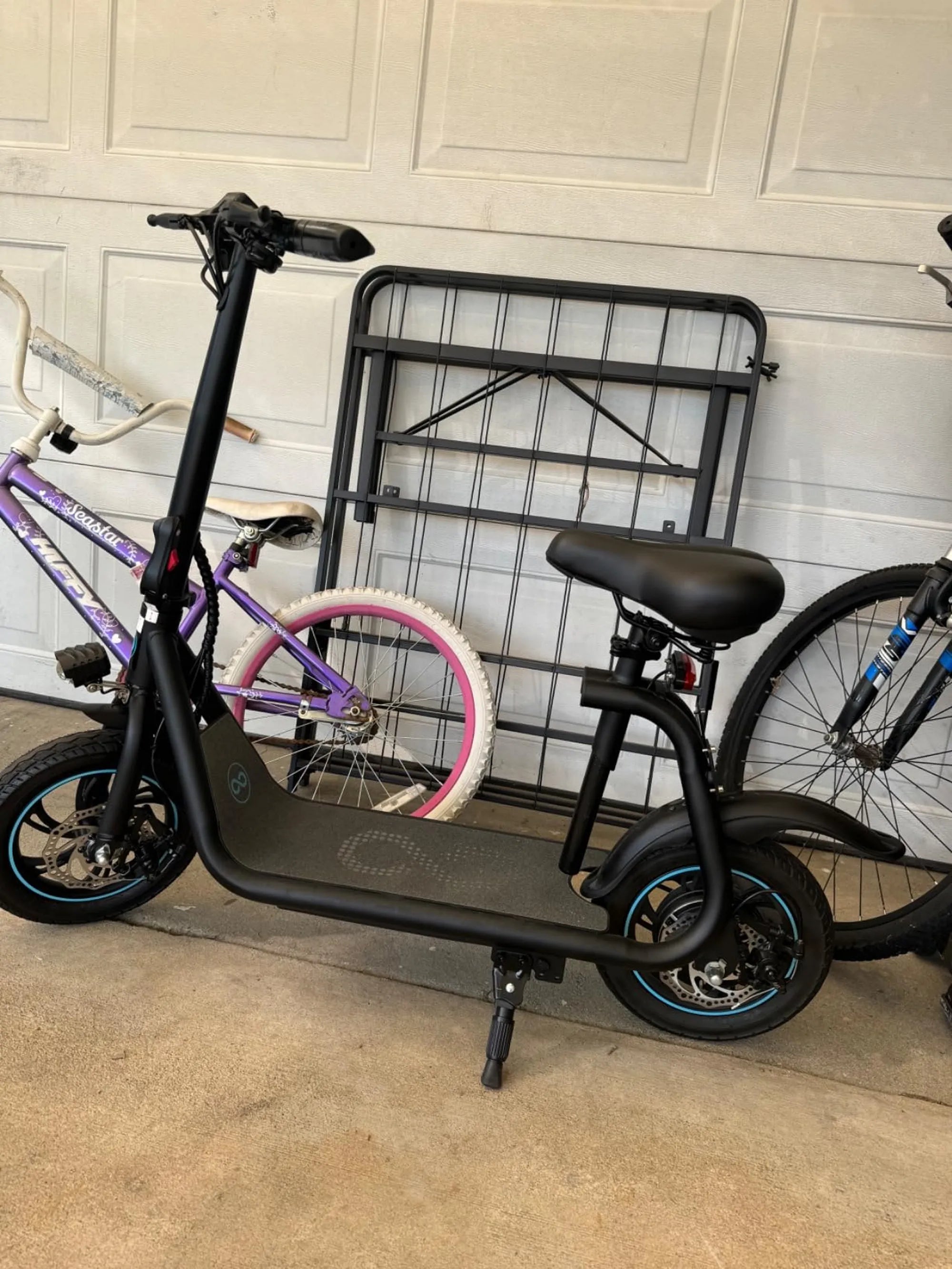
Introduction to Basic Scooters: More Than Just a Simple Ride
A basic scooter represents the foundational tier of personal electric mobility, designed for practicality over peak performance. In today's market, it's defined by a focus on core commuting functions: reliable transportation, ease of use, and essential safety features, all at an accessible price point. This category distinguishes itself from high-performance or specialty models by prioritizing simplicity, portability, and value.
Far from being a compromise, a well-engineered basic scooter is the ideal entry point for transforming daily commutes. It offers a dependable, no-fuss solution for navigating city streets, running errands, or connecting to public transit. The best models, like those from Gyroor, prove that 'basic' doesn't mean cutting corners on critical safety or durability, but rather delivering a refined, purpose-built vehicle for everyday life.
This guide will dissect everything you need to know about the modern basic electric scooter. We'll cover the tangible benefits for riders, the non-negotiable features for quality and safety, and provide a clear framework to choose the right model for your lifestyle. Understanding these fundamentals is the first step toward smarter, more efficient urban travel.
Why Choose a Basic Electric Scooter? Key Benefits for Everyday Riders
Opting for a basic electric scooter unlocks a suite of advantages tailored to the needs of the everyday urbanite. The primary draw is affordability, offering a lower initial investment compared to advanced e-scooters or e-bikes. This cost-effectiveness extends to operation, with electricity costs per charge typically amounting to mere cents, making it one of the most economical forms of motorized transport available today.
Simplicity is another cornerstone benefit. Basic scooters feature intuitive controls—often just an accelerator and brake—minimizing the learning curve for first-time riders. This user-friendly design reduces cognitive load during rides, allowing you to focus on the road. Furthermore, their lightweight construction, often under 30 lbs, enhances portability, making it easy to carry up stairs or fold and store under a desk or on public transit.
Maintenance requirements are generally lower for basic models. With fewer complex components like advanced suspension systems or multiple performance modes, there are fewer parts that can fail. When paired with durable construction from a reputable brand, this translates to greater long-term reliability and lower upkeep costs, solidifying the value proposition over time.
Perfect for First-Time Riders and Urban Commuters
The intuitive nature of a basic scooter makes it the perfect vehicle for someone new to electric personal transport. Manageable speeds, typically capped between 15-20 mph, build rider confidence safely. The lower weight and compact size make handling and maneuvering through tight spaces—a common scenario in city environments—significantly easier than with bulkier alternatives.
For the urban commuter tackling short to medium distances (3-10 miles), a basic scooter is often the most efficient tool. It bypasses traffic congestion, eliminates the hassle of parking, and seamlessly integrates with other forms of transit. This multi-modal capability is key for modern commuting, where the 'last mile' problem—the gap between a transit stop and a final destination—is efficiently solved.
Cost-Effectiveness and Value
Evaluating a basic scooter requires looking at the total cost of ownership, not just the sticker price. A quality model from a brand like Gyroor, while perhaps not the absolute cheapest upfront, delivers exceptional value through durability, safety certifications, and warranty support. The energy cost is negligible; charging a 360Wh battery costs about 4-5 cents per full charge based on average U.S. electricity rates.
The real value is proven over months and years of daily use. A scooter built with a sturdy aluminum alloy frame, IPX5 water resistance, and a UL-certified battery pack will withstand daily commutes with minimal issues. This reliability, backed by a comprehensive 1-year warranty, prevents costly repairs or premature replacement, making it a financially sound long-term investment for personal mobility.
What to Look for in a Quality Basic Scooter: Essential Features Checklist
Selecting a quality basic scooter requires moving beyond price to scrutinize the components that ensure safety, durability, and satisfactory performance. A checklist of essential features acts as your guide to identifying a reliable product that will serve you well, rather than a disposable gadget prone to failure.
The foundation is a robust frame, typically constructed from aerospace-grade aluminum alloy. This material provides the optimal balance of strength and light weight. The folding mechanism should feel solid and secure, with no worrisome play or wobble when locked in the riding position. Build quality is immediately apparent in the finish, the tightness of fittings, and the overall feel of the product.
Tires are your direct connection to the road. Basic scooters generally use either air-filled (pneumatic) tires for a smoother ride or solid/semi-pneumatic tires for puncture resistance. Consider your local road conditions; pneumatic tires offer better shock absorption on rough pavement, while solid tires eliminate the risk of flats. A good basic scooter will clearly state its tire type and size.
Safety First: Battery Certification and Braking Systems
Battery safety is the single most critical factor. Insist on a scooter with a UL 2271 or UL 2843 certified battery pack. This independent certification, a standard for all Gyroor scooters, means the battery has undergone rigorous testing for electrical, mechanical, and environmental safety, drastically reducing fire risk. Never compromise on this feature.
The braking system must provide confident stopping power. A combination brake system is ideal for a basic scooter. This often pairs an electronic (regenerative) brake, which slows the scooter by converting kinetic energy back into a small battery charge, with a physical brake like a disc or drum brake. This redundancy ensures reliable stopping in all conditions, including wet weather or on declines.
Performance Parameters: Range, Speed, and Weight Capacity
Set realistic expectations for performance. A basic scooter typically offers a real-world range of 15-25 miles per charge, depending on rider weight, terrain, and speed. Manufacturers' range figures are often based on ideal lab conditions; a safe rule is to deduct 20-30% for real-world commuting. This range is more than sufficient for most round-trip urban commutes.
Top speeds are usually between 15-20 mph, which is optimal for bike lanes and shared paths. The weight capacity is crucial; ensure the scooter's limit accommodates your weight plus anything you might carry (like a backpack). Most quality basic scooters support 220-265 lbs. Exceeding this limit stresses the motor, battery, and frame, compromising safety and longevity.
Gyroor’s Approach to the Basic Scooter: Trust Built on Core Standards
Gyroor applies its core brand philosophy—safety, reliability, and user-centric design—directly to its basic scooter lineup. This ensures that even at an entry-level price point, riders receive a product built to rigorous standards, not stripped-down to a dangerous or unreliable state. This approach builds trust in a market segment where quality can be inconsistent.
The integration of high-grade components typically reserved for more expensive models is a key differentiator. By making features like IPX5 water resistance and UL-certified batteries standard, Gyroor ensures its basic scooters are ready for real-world conditions from day one. This commitment provides a level of assurance that is critical for a device used in daily transportation.
Customer support is part of the product promise. With a 1-year warranty and US-based support team, Gyroor stands behind its scooters. This network offers peace of mind, knowing that assistance is available if needed, a rarity for many direct-to-consumer electric vehicle brands. It transforms the purchase from a transaction into a long-term mobility solution.
The Foundation of Trust: UL-Certified Battery & 1-Year Warranty
Gyroor's insistence on UL-certified battery packs is non-negotiable. These batteries undergo testing for overcharge, short circuit, crush, drop, and immersion, ensuring they won't fail dangerously during normal use. This certification is your best guarantee of battery safety, protecting both your investment and your personal well-being.
The comprehensive 1-year warranty covers the frame, motor, battery, and electronic controller. This warranty support, handled by a dedicated team, means any manufacturing defects will be addressed promptly. For a rider depending on their scooter daily, this safety net is invaluable and reflects the brand's confidence in its product's durability and quality control.
Designed for Real Life: IPX5 Water Resistance and Practical Portability
An IPX5 water resistance rating means the scooter's electrical components can withstand water jets from any direction. In practical terms, this allows you to ride confidently in light rain or through wet streets without fear of immediate damage. It's a feature that greatly expands the scooter's usability and reliability across seasons.
Portability is engineered into the design. A quick-folding mechanism allows the scooter to collapse in seconds, and a compact folded footprint makes it easy to store in a car trunk, carry onto a bus or train, or tuck away in a corner of the office. The handlebar often folds down as well, creating a tidy, manageable package that truly supports multi-modal commuting.
Basic Scooter vs. Advanced Models: Making the Right Choice for Your Needs
Choosing between a basic scooter and a more advanced model is a matter of aligning the vehicle's capabilities with your specific needs, terrain, and budget. A clear comparison helps avoid overpaying for unnecessary features or underbuying a scooter that can't handle your daily demands. The right choice maximizes utility and satisfaction.
Advanced e-scooters offer higher top speeds (25+ mph), longer ranges (30+ miles), dual suspension for off-road comfort, brighter lighting systems, and more powerful motors for climbing steep hills. These features come at a significant increase in cost, weight, and often physical size. They are designed for enthusiasts, longer-distance commuters, or those navigating challenging topography.
The following table provides a clear, data-driven comparison to guide your decision:
| Feature | Basic Scooter | Advanced E-Scooter |
|---|---|---|
| Primary Use Case | Short urban commutes, errands, first-mile/last-mile | Longer commutes, recreational riding, hilly terrain |
| Typical Price Range | $300 - $600 | $700 - $1,500+ |
| Top Speed | 15 - 20 mph | 25 - 40+ mph |
| Real-World Range | 15 - 25 miles | 25 - 50+ miles |
| Suspension | Often minimal or tire-based | Dual spring or hydraulic suspension common |
| Weight | 25 - 35 lbs | 40 - 70+ lbs |
| Best For | Budget-conscious riders, flat terrain, simplicity | Performance seekers, long distances, uneven roads |
When a Basic Scooter is All You Need
A basic scooter is perfectly adequate—and often the optimal choice—for several common scenarios. If your daily commute is under 5 miles one-way on relatively flat urban terrain, a basic model provides more than enough range and speed. Its lightweight design is ideal if you need to carry it frequently, such as up apartment stairs or onto public transportation.
For riders with budget constraints or those who are new to electric scooters and want to test the waters without a major investment, a basic scooter is the logical starting point. Its simplicity is also a major advantage for those who prefer a no-fuss vehicle without complex settings, apps, or maintenance routines. In these cases, paying more for advanced features yields little practical benefit.
Signs You Might Want to Consider an Upgrade
Consider stepping up to a more advanced model if your daily travel needs exceed the capabilities of a basic scooter. A one-way commute longer than 7-8 miles may push the limits of a basic scooter's range, especially in colder weather or if you are a heavier rider. Needing to regularly traverse steep hills also demands a more powerful motor and robust braking system.
If your route includes rough roads, cobblestones, or unpaved paths, a scooter with a full suspension system will provide a dramatically more comfortable and controlled ride. Additionally, if you plan to ride frequently at night, advanced models often come with superior lighting systems for better visibility. Desire for a higher top speed for longer straightaways is another clear indicator to look beyond the basic category.
Operating and Maintaining Your Basic Scooter for Longevity
Proper operation and simple maintenance are key to extending the life of your basic scooter and ensuring safe rides. Start by always performing a pre-ride check: verify tire pressure (if applicable), test the brakes, ensure the folding mechanism is locked, and check that lights are functioning. This one-minute routine can prevent accidents and identify small issues before they become major problems.
Adopt smooth riding habits. Avoid sudden, hard acceleration and braking whenever possible. This 'eco-driving' approach is gentler on the motor, battery, and brake pads, and actually helps maximize your range per charge. When approaching obstacles like curbs or potholes, slow down and, if safe, step off and manually guide the scooter over them to avoid impact damage to the wheels and frame.
Regular cleaning is simple but important. Use a damp cloth to wipe down the deck, handlebars, and frame. Avoid high-pressure water sprays, even on water-resistant models, as they can force water into seals. For the mechanical parts, periodically check that all nuts and bolts are tight, especially around the folding mechanism and stem, as vibrations from riding can loosen them over time.
Battery Care Best Practices
Battery care is the most important aspect of maintenance. For daily use, it's best to recharge the battery after each use, even if it's not fully depleted. Avoid regularly draining the battery to 0%; try to recharge when it drops to 20-30%. If storing the scooter for more than two weeks, store it with the battery charged to about 50-60% in a cool, dry place.
Use only the manufacturer-provided charger. Third-party chargers may not have the correct voltage or safety cut-offs, which can damage the battery or create a fire hazard. Also, allow the scooter and battery to cool down to room temperature after a long ride before plugging it in to charge. Extreme temperatures (both hot and cold) are the enemy of lithium-ion battery longevity and safety.
Tire and Brake Maintenance
For air-filled tires, check the pressure weekly with a bicycle pump. Maintaining the recommended PSI (listed on the tire sidewall) ensures optimal range, a smoother ride, and reduces the risk of pinch flats. Inspect tires regularly for embedded debris or signs of excessive wear. For solid tires, simply check for deep cuts or uneven wear.
Brake pads wear down with use. Listen for a metallic scraping sound when braking, which often indicates the pads are worn out and the metal backing is contacting the disc. Most basic scooter brake pads are user-replaceable with simple tools. Also, periodically check that the brake levers have a firm feel and that the brakes engage smoothly without grabbing or feeling spongy. Adjust cable tension or consult the manual if needed.
Frequently Asked Questions About Basic Electric Scooters
Q1: How far can I really go on a single charge with a basic scooter?
Real-world range is typically 70-80% of the manufacturer's stated maximum. For a scooter advertised for 20 miles, expect 14-16 miles for an average-weight rider on flat ground at moderate speeds. Factors that reduce range include rider weight over 200 lbs, cold weather, frequent hills, stop-and-go traffic, and using the highest speed setting continuously. For a reliable commute, choose a scooter with a rated range at least 1.5 times your one-way distance.
Q2: Is a basic scooter safe to ride in the rain?
Safety in rain depends entirely on the scooter's water resistance rating. A model with an IPX5 rating, like those from Gyroor, is designed to withstand rain and wet roads. However, exercise extreme caution: reduce speed, avoid puddles (which can be deeper than they appear), brake earlier and more gently, and be aware that painted road markings and metal surfaces become very slippery. Never submerge any part of the scooter. Scooters without a clear IP rating should not be ridden in the rain.
Q3: How much maintenance does a basic electric scooter require?
Routine maintenance is minimal but crucial. It involves weekly tire pressure checks (for pneumatic tires), monthly inspections for loose bolts, periodic cleaning, and listening/feeling for changes in brake performance or unusual motor sounds. The most significant maintenance item is eventual brake pad replacement, which might be needed after several hundred miles depending on use. Compared to a car or even a bicycle, the maintenance burden is very low, focusing primarily on inspection and basic care.
Q4: Can I carry a basic scooter on public transit or into my office?
Yes, portability is a key advantage of basic scooters. Their lightweight folding design is intended for this purpose. Most public transit systems allow folded electric scooters onboard, but policies vary—always check local rules. In an office, a folded scooter can often be stored under a desk, in a closet, or in a corner without being an obstruction. The compact footprint, often achieved by a handlebar that folds down, makes them surprisingly easy to manage in crowded spaces.
Q5: Why is battery certification so important for a basic model?
Battery certification is critical at any price point, but especially for basic models where cost-cutting pressure is high. A UL 2271 or UL 2843 certification is an independent guarantee that the lithium-ion battery pack has passed rigorous safety tests for electrical, mechanical, and environmental hazards. It significantly reduces the risk of battery fires—a real concern with uncertified, cheaply made batteries. Never purchase a scooter, basic or otherwise, without this certification. It is the most important safety feature on the vehicle.
Conclusion: The Smart, Simple Start to Personal Electric Transport
A well-made basic scooter is a transformative tool for urban mobility, offering an unbeatable combination of affordability, simplicity, and practicality. It demystifies electric personal transport, providing a reliable and efficient solution for the vast majority of daily travel needs without unnecessary complexity or cost. The key to a positive experience lies in choosing a model built to core standards of safety and durability.
Prioritizing features like a UL-certified battery, a robust braking system, and water resistance from a trusted brand like Gyroor ensures your investment is protected and your rides are safe. This approach delivers far greater long-term value than chasing the lowest possible price for an uncertified, potentially hazardous product. Your basic scooter should be a dependable partner, not a source of anxiety.
The journey toward smarter commuting starts with understanding your needs and matching them to the right vehicle. For countless riders, the answer is a purpose-built basic electric scooter that gets the fundamentals right. It's a purchase that pays for itself in saved time, reduced stress, and newfound freedom on city streets.
Ready to experience the simplicity and reliability of a quality basic scooter? Browse the full Gyroor collection, where every model meets our high standards for safety and performance, at gyroorboard.com.
What Scooter Goes 80 MPH: Engineering, Reality & Safer Alternatives
What Scooter Goes 80 MPH: Engineering, Reality & Safer Alternatives