



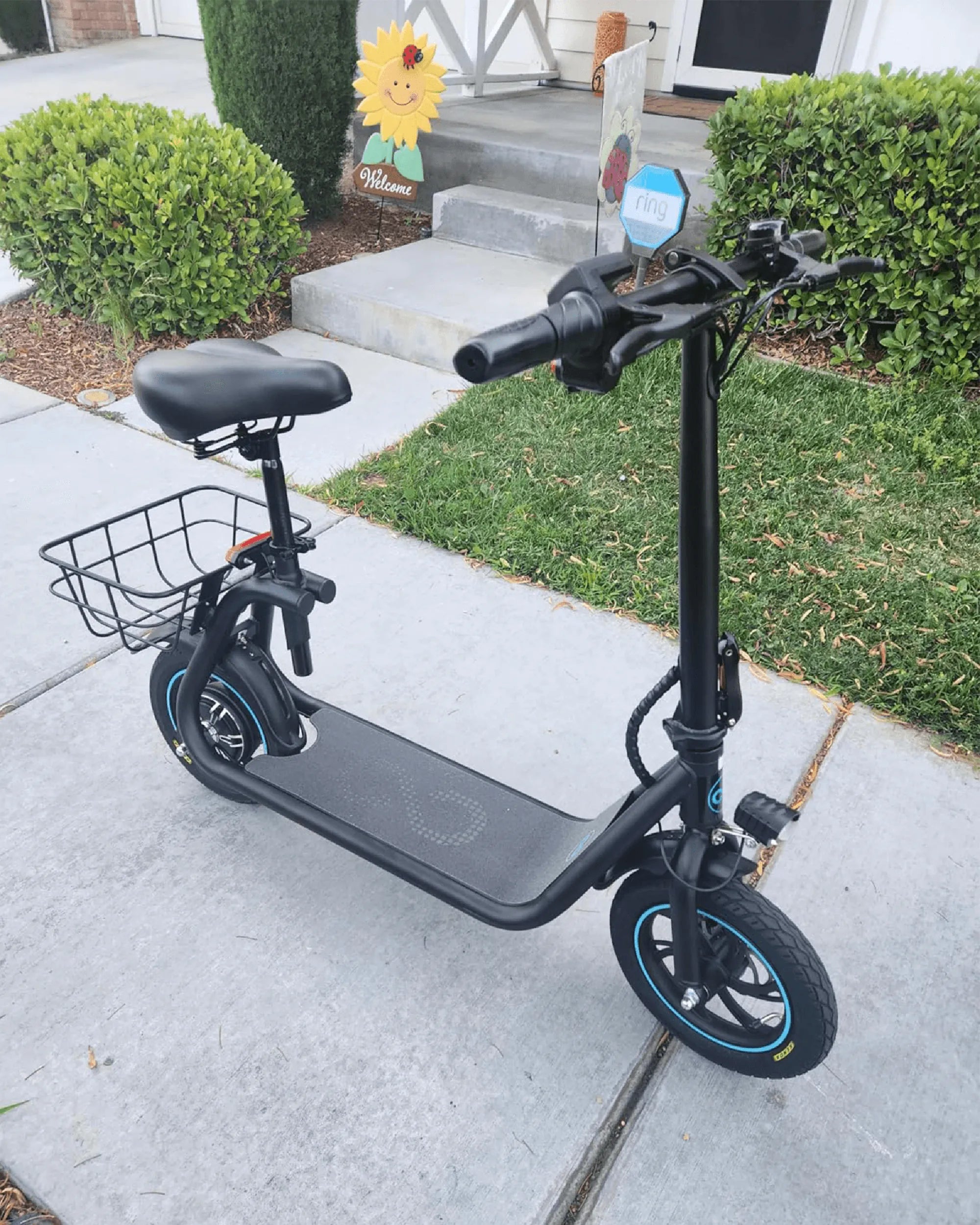
The Rise of Kids' Electric Scooters: A Market Primed for Growth
The personal electric mobility revolution is no longer just for adults. A significant and rapidly expanding segment is emerging: electric scooters designed specifically for children and young teens. This market represents a powerful convergence of parental demand for engaging outdoor activities and technological advancements that enable safe, durable, and fun kid-friendly designs.
For manufacturers, the benefits of electric scooters for kids manufacturers are substantial and multifaceted. It's a sector characterized by recurring purchase cycles, strong brand loyalty potential, and distinct technical advantages compared to the adult commuter market. This article provides a data-driven analysis of this opportunity, outlining the strategic advantages, essential product features, and market positioning required for long-term success.
Understanding this niche is crucial for any brand in the micro-mobility space. We will explore why parents are buying, the inherent benefits of electric scooters for kids manufacturers can leverage, and the non-negotiable safety standards that define the premium segment. Leading brands like Gyroor, trusted by over 100,000 riders, have successfully navigated this space by prioritizing UL-certified safety and robust design.
Understanding the Market Demand: Why Parents Are Investing
The demand for kids' electric scooters is fueled by several interconnected consumer trends. Primarily, parents are actively seeking alternatives to screen-based entertainment, valuing products that encourage outdoor play and physical activity. An electric scooter provides a compelling "tech-forward" incentive to get outside, blending the appeal of digital technology with real-world motion.
Furthermore, these scooters facilitate family mobility and shared experiences. They enable parents on foot or on adult e-bikes to accompany children on neighborhood rides or park visits, turning transportation into a recreational family activity. The scooter is no longer just a toy; it's a tool for family bonding and exploration.
There is also a growing perception of e-scooters as a legitimate hobby or introductory sport for youth. This shifts the purchase from an impulsive toy buy to a more considered investment in a child's development and enjoyment. Parents are looking for products that offer progression, such as adjustable speed settings, to match their child's growing skill and confidence.
Finally, the "cool factor" of personal electric mobility has trickled down to younger demographics. Children see older siblings, parents, or influencers using similar technology and desire their own version. This creates a powerful pull-market effect, where the product's inherent appeal drives significant consumer demand.
Key Strategic Benefits for Manufacturers
Entering or expanding within the kids' electric scooter segment offers manufacturers a suite of compelling strategic advantages. These benefits of electric scooters for kids manufacturers are foundational to building a sustainable and growing business in the broader micro-mobility landscape.
The first major benefit is the potential for a recurring revenue model. Unlike an adult commuter who may purchase one scooter for several years, children outgrow products—both in size and capability. A child may start with a beginner model at age 8, upgrade to a more powerful youth model at 11, and transition to an adult scooter by their mid-teens. This creates a natural, multi-stage repurchase cycle within a single household.
Secondly, this segment fosters early brand loyalty. A positive first experience with a reliable, fun scooter can establish a brand preference that lasts for years. A child who grows up riding a trusted brand is significantly more likely to choose that same brand for their first adult commuter vehicle or e-bike, creating a valuable lifetime customer.
From a production standpoint, kids' models often present lower initial technical and regulatory hurdles. Typical designs feature lower maximum speeds (often capped between 10-15 mph), smaller battery capacities, and less powerful motors than high-performance adult commuters. This can simplify R&D, reduce material costs, and often involves navigating less stringent local vehicle regulations, as they are frequently classified as toys or recreational equipment.
A Recurring Revenue Model with Growth Built-In
The growth trajectory of a child directly maps to product upgrade opportunities. Manufacturers can design product lines with clear progression paths. For instance, a lineup might include a 100W motor scooter for ages 6-9, a 150W model for ages 8-12, and a 250W model for teens.
This strategy not only captures repeat sales but also allows for price stratification. Each upgrade represents a step-up in value and price point. Accessories like upgraded batteries, custom grips, or LED light kits can further enhance revenue throughout the product's lifecycle, turning a single sale into an ongoing relationship.
Expansion of Brand Portfolio and Market Reach
A dedicated kids' line allows a brand to serve the entire family, dramatically increasing household market penetration. A brand like Gyroor can provide a scooter for the parent, an e-bike for the teenager, and a safe electric scooter for the younger child, becoming the household's go-to mobility provider.
This expansion also opens vital new retail channels. Beyond traditional sporting goods and online marketplaces, kids' electric scooters gain access to toy stores, specialty children's recreational shops, and even certain department store sections. This diversified channel strategy reduces market risk and increases brand visibility to a targeted demographic of parents.
Critical Design & Safety Features: The Foundation of Trust
Success in this market is inextricably linked to an uncompromising commitment to safety and age-appropriate design. These features are not just engineering specifications; they are the primary marketing tools for earning parental trust. The benefits of electric scooters for kids manufacturers are fully realized only when the product is perceived as fundamentally safe and durable.
Parents are inherently risk-averse when purchasing for their children. A product that prominently features engineered safety solutions addresses the primary barrier to purchase. This focus transforms the scooter from a perceived liability into a responsible gift that supports adventure and independence.
Manufacturers who cut corners on safety or durability will quickly face reputational damage and high return rates. In contrast, those who lead with safety certifications, robust construction, and clear safety communications build lasting brand equity. This is where premium manufacturers distinguish themselves from disposable, toy-grade competitors.
Engineered Safety: Speed Limiters, Stable Frames, and Reliable Brakes
Programmable speed limiters are the most critical safety feature. Multiple modes (e.g., Beginner: 5 mph, Intermediate: 8 mph, Advanced: 12 mph) allow the scooter to grow with the child's ability, giving parents control. A remote parental control lock, featured on some premium models, adds another layer of security.
The physical design must prioritize stability. This includes a wide, textured deck for secure footing, a low center of gravity, and a wheelbase and handlebar geometry that prevent tipping. Braking systems must be fail-safe, typically combining an electronic brake with a rear fender or disc brake for redundancy. Bright LED headlights and taillights are essential for visibility.
The Paramount Importance of Battery Safety and Certification
For children's products, battery safety is the non-negotiable top priority. The use of UL 2271 or UL 2849 certified battery packs is the industry gold standard and a key differentiator for trusted brands. Gyroor, for example, utilizes UL-certified battery packs tested for over 500 charge cycles in all its models.
This certification means the battery cell, pack, and management system have undergone rigorous testing for electrical, mechanical, and environmental safety, drastically reducing risks of overheating or fire. Marketing this certification prominently is not an option; it's a necessity to meet the expectations of informed, safety-conscious parents.
Durability for Rigorous Use: Build Quality and Warranty
Children's products undergo stress testing in real-world conditions far beyond laboratory specs. Build quality must account for crashes, curb jumps, and all-weather play. Key components include a reinforced aluminum or steel frame, air-filled or honeycomb puncture-proof tires, and water-resistant cabling and connectors (with a rating of at least IPX4, though IPX5 is preferable).
A strong, comprehensible warranty is a powerful signal of quality. A 1-year comprehensive warranty on the scooter, like that offered by Gyroor, directly reduces purchase anxiety. It assures parents that the manufacturer stands behind the product's durability, making the higher initial investment of a premium scooter justifiable.
Competitive Landscape and Market Positioning
The kids' e-scooter market bifurcates clearly into two segments: toy-grade and premium. Understanding this distinction is vital for effective positioning. The benefits of electric scooters for kids manufacturers are most sustainably captured in the premium segment, where value is defined by safety and longevity, not just low cost.
Toy-grade scooters are typically found in big-box stores, have very low price points ($50-$150), and are often powered by low-capacity lead-acid or uncertified lithium batteries. They feature minimal motor power (often under 100W), short ranges (3-5 miles), and plastic-heavy construction with limited or no water resistance. They are essentially disposable items with a short lifespan.
The premium segment, where brands like Gyroor compete, targets parents making a long-term investment. These scooters cost more ($200-$500) but offer robust motors (150W-300W), longer ranges (8-15 miles), UL-certified lithium batteries, full water resistance, and durable metal-frame construction. They are designed to last for years and be passed down to siblings.
Premium vs. Toy-Grade: A Comparative Analysis
| Feature | Toy-Grade Segment | Premium Segment (e.g., Gyroor) |
|---|---|---|
| Target Price | $50 - $150 | $200 - $500 |
| Battery & Safety | Often uncertified Li-ion or lead-acid; higher risk | UL 2271 Certified Li-ion packs; managed BMS |
| Motor Power | 70W - 120W | 150W - 300W |
| Max Range | 3 - 6 miles | 8 - 15+ miles |
| Build Frame | Plastic composites; thin metals | Reinforced aluminum alloy; solid welding |
| Water Resistance | None or minimal | IPX5 or higher rating |
| Warranty | 90 days or less; limited | 1 year comprehensive |
| Consumer | Impulse/price-driven gift | Considered investment for safety/durability |
Building Trust Through Certifications and Parent-Centric Marketing
Marketing for this segment must speak directly to parental concerns, not just child excitement. All messaging should lead with safety credentials: UL certification, IP water resistance ratings, and warranty details. Visuals should show children wearing helmets and protective gear, and content should emphasize parental control features.
Providing detailed, accessible educational content on battery care, riding safety, and maintenance builds trust and positions the brand as an authority. Highlighting real-world testing, quality control processes, and the brand's overall heritage in personal electric mobility (like Gyroor's experience with e-bikes and adult scooters) further validates the kids' product line.
Regulatory Considerations and Age Appropriateness
Navigating the regulatory landscape is a key part of the market opportunity. Generally, electric scooters for children fall under lighter regulations than their adult counterparts, but requirements vary by region. In the United States, they are often regulated at the state or local level, typically classified as "play vehicles" or "toys" with stipulations on where they can be ridden (e.g., not on public roads).
In the European Union, the CE certification for toys (EN 71) and electromagnetic compatibility (EMC) is mandatory. Adherence to these standards is a baseline for market entry. Manufacturers must provide clear age and weight recommendations, typically ranging from 6+ years (for smaller, slower models) up to 14+ years for more powerful youth models.
Standard age/weight guidelines are crucial. A common segmentation is: Ages 6-9 (max weight 120 lbs), Ages 8-12 (max weight 140 lbs), and Ages 12+ (max weight 160 lbs). Exceeding weight limits compromises safety and performance. Clear labeling protects the manufacturer from liability and ensures a positive user experience, reinforcing the product's benefits of electric scooters for kids manufacturers through proper use.
Proactive compliance is a competitive advantage. By designing products that not only meet but exceed regional safety standards, manufacturers future-proof their products against regulatory tightening and build a reputation for responsibility that resonates deeply with the target customer: the parent.
Accessory and Ecosystem Opportunities
The core scooter sale is just the beginning. A thriving accessory ecosystem represents high-margin recurring revenue and enhances safety and enjoyment. This is a significant multiplier on the core benefits of electric scooters for kids manufacturers can achieve.
The most critical accessories are safety gear: branded helmets, knee pads, and elbow pads. Offering these as bundled packages at the point of sale increases the average order value and ensures the child rides safely from day one. Customizable accessories like colored handlebar grips, wheel LED lights, or decorative stickers allow for personalization, which drives emotional attachment to the product.
Replacement parts are a predictable revenue stream. Items like inner tubes (for air-filled tires), brake pads, and charger cables will see wear and require replacement. Making these readily available fosters customer loyalty and discourages brand abandonment when a simple part fails.
Finally, storage and transport solutions, such as compact stands or carrying bags, address practical parental needs. Developing this holistic ecosystem transforms a manufacturer from a scooter seller into a full-service kids' mobility brand, locking in customer loyalty and maximizing lifetime value.
Conclusion: A Responsible and Sustainable Market Opportunity
The kids' electric scooter segment is not a fleeting trend but a substantial and growing pillar of the personal mobility industry. The strategic benefits of electric scooters for kids manufacturers are clear: a recurring customer lifecycle, built-in brand loyalty, and access to new markets and channels. However, long-term leadership in this space is reserved for those who prioritize integrity in design.
Success will belong to manufacturers who view safety not as a cost but as their core product feature, who invest in certified components and durable construction, and who communicate transparently with safety-conscious parents. It is a market where quality begets trust, and trust begets lasting profitability.
For brands ready to meet this demand with rigorous standards, the opportunity is both lucrative and rewarding. By creating products that empower safe, outdoor fun for children, manufacturers build the riders—and customers—of tomorrow.
Explore how a leader in safe, durable personal electric mobility approaches design. Browse the full Gyroor collection, including youth-focused models built with UL-certified batteries and IPX5 water resistance, at gyroorboard.com.
FAQ: Addressing Key Questions
Q1: What are the typical age and weight ranges for kids' e-scooters?
A: Models are typically segmented: Beginner (Ages 6-9, up to 120 lbs), Intermediate (Ages 8-12, up to 140 lbs), and Advanced/Youth (Ages 12+, up to 160+ lbs). Always adhere to the manufacturer's specific limits for safety and performance.
Q2: How do regulations differ from adult models in markets like the US and EU?
A: In most US jurisdictions, kids' models are not considered motor vehicles but "play vehicles," often restricted from public roads and subject to local park/path rules. In the EU, they must carry CE marking as toys (EN 71). Adult models face stricter road-use, lighting, and insurance regulations.
Q3: Why is a UL-certified battery non-negotiable for a children's product?
A: UL certification (UL 2271) involves rigorous testing for electrical, mechanical, and environmental hazards (short-circuit, overcharge, crush, water exposure). For a product used by children, this independent verification is the strongest assurance against battery fire risk and is a primary factor in parental purchasing decisions.
Q4: What are the key accessory opportunities for this market?
A> Essential high-margin accessories include safety gear bundles (helmets, pads), replacement parts (tires, tubes, brake pads), personalization kits (LED lights, grips), and practical items like carrying bags or storage stands. These drive repeat revenue and enhance the user experience.
Q5: What is the main differentiator between a toy-grade and a premium kids' e-scooter?
A: The core differentiators are battery safety certification (UL/CE), build quality (metal frame vs. plastic), and water resistance. Premium scooters use certified batteries, durable materials, and have IPX4+ ratings for real-world use, backed by longer warranties. Toy-grade scooters prioritize low cost, often sacrificing these critical safety and durability features.
Electric Scooters for 400 lbs: The Ultimate Guide to Heavy-Duty Mobility
In the Bike Store There Are Hoverboards and Electric Scooters: Redefining City Travel