

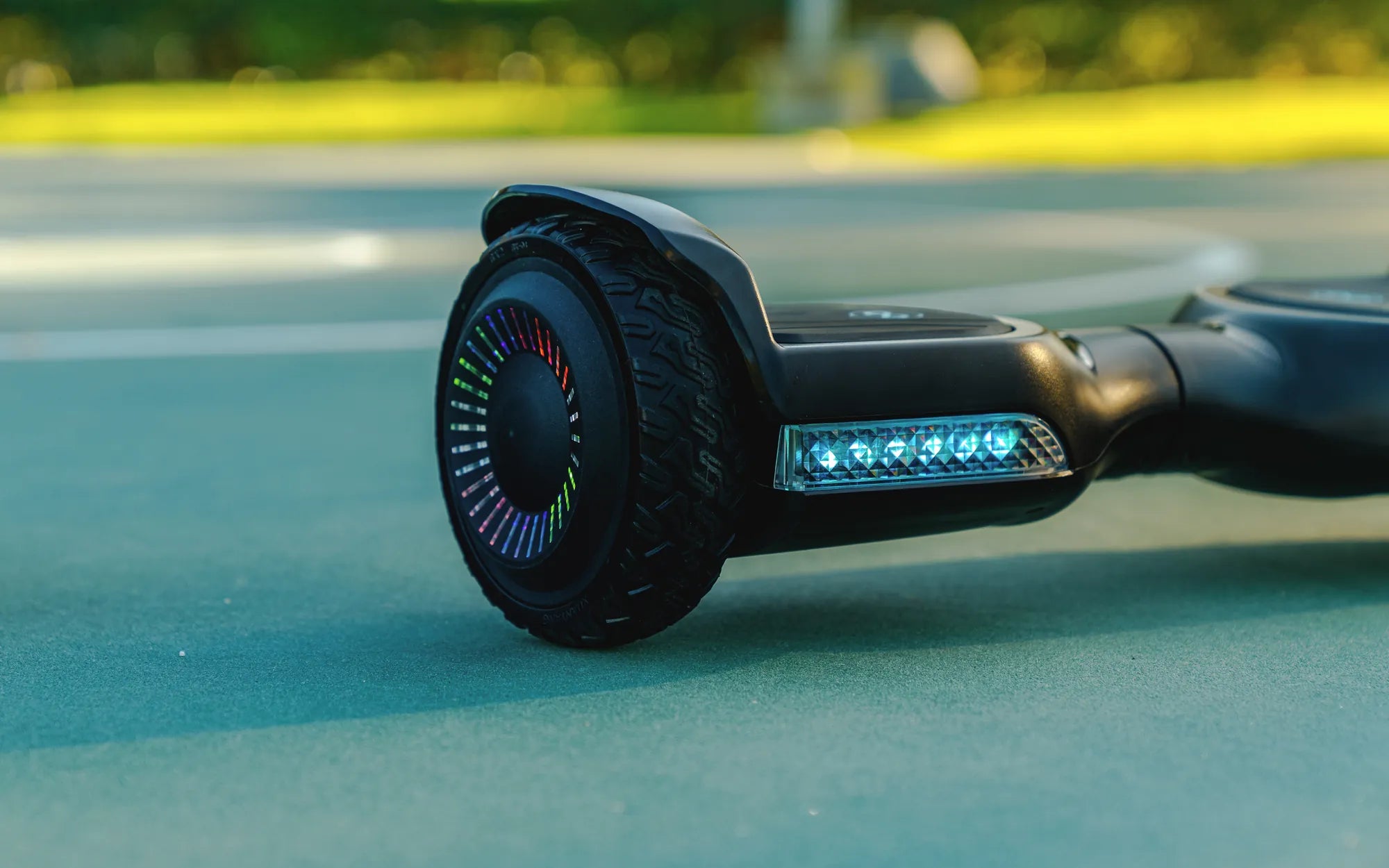
Introduction: Why Balance is the Heart of the Hoverboard Experience
Finding the best balancing hoverboard isn't about chasing the highest top speed or the longest range. It's about achieving a fundamental feeling of confidence and control. Superior balance and stability transform the ride from a wobbly novelty into a seamless extension of your movement, whether you're commuting or having fun.
This ultimate guide decodes the engineering and design that create a smooth, safe ride. We'll explore the core technology behind self-balancing, identify the must-have features for different riders, and emphasize the critical safety standards that protect you. For urban commuters, recreational riders, and parents making informed choices, understanding these elements is the key to a superior experience.
The Technology Behind a Stable Ride: More Than Just Gyroscopes
The magic of a self-balancing scooter starts with a sophisticated network of sensors and processors. While gyroscopic sensors are the star, detecting the board's tilt and orientation, they work in concert with accelerometers and pressure-sensitive foot pads. This system makes hundreds of micro-adjustments per second to keep you upright.
True stability, however, is engineered through hardware. A wider wheelbase and a lower center of gravity dramatically increase the board's inherent stability. Premium models achieve this through thoughtful chassis design and strategic component placement. Robust motor calibration ensures both wheels receive perfectly synchronized power, preventing the jarring, uneven pull that causes instability.
Brands like Gyroor integrate these elements into a cohesive system. Their engineering focuses on creating an intuitive riding experience where the technology feels invisible, leaving only the sensation of effortless gliding. This seamless integration of sensor input, processor logic, and mechanical response is what separates a premium board from a basic one.
Key Features of the Best Balancing Hoverboards
Identifying a top-tier balancing hoverboard requires looking at a specific set of performance and design features. These elements work together to provide the smooth, controlled, and safe ride that defines the best in class. Use this checklist when evaluating any model.
Motor Power and Dual-Drive Systems
Dual motors, typically ranging from 250W to 350W each, are non-negotiable for optimal balance. Each wheel is independently powered and controlled, allowing for precise torque management. This setup enables smooth, linear acceleration and provides the necessary power for gentle slopes without straining the system.
A well-calibrated dual-drive system ensures perfect synchronization. If one motor lags or overpowers the other, the board will pull to one side, forcing the rider to constantly compensate. High-quality motors with efficient gearboxes also run cooler and quieter, contributing to a more stable and pleasant ride over longer durations.
Tire Design: Air-Filled vs. Solid and Wheel Size
Tire choice is a direct trade-off between comfort and stability versus maintenance. Air-filled (pneumatic) tires offer superior shock absorption, smoothing out cracks, bumps, and uneven terrain. This cushioning effect allows the board to maintain better contact with the ground, enhancing control and rider confidence on rough surfaces.
Solid rubber tires, often made of honeycomb foam, are puncture-proof and maintenance-free, ideal for smooth urban pavement. For stability, focus on wheel size and width. Larger wheels (8.5" or 10"+) roll over obstacles more easily, while wider tires provide a larger contact patch with the ground, directly improving lateral stability and making the board feel more planted.
Frame Construction and Weight Limit
The frame is the hoverboard's skeleton, and its rigidity is paramount. A flexing or twisting frame can disrupt the sensor alignment and motor coordination. High-grade, reinforced aluminum alloy is the standard for durable, lightweight, and rigid construction that maintains its integrity under stress.
The manufacturer's stated weight limit is a critical stability specification, not just a suggestion. Riding at or near the maximum limit strains the motors and batteries, reducing responsiveness and compromising the board's ability to self-correct quickly. For optimal balance and safety, choose a model with a weight limit at least 20-30 lbs above your actual weight.
Smart Features for Enhanced Control
Modern smart features directly contribute to a stable and safe experience. A dedicated beginner mode limits speed and softens acceleration curves, allowing new riders to build muscle memory and confidence without being overwhelmed. This foundational learning period is crucial for developing proper balance.
Integrated LED headlights and taillails are essential for visibility, helping you see and be seen, which is fundamental for safe riding. Bluetooth speakers, while fun, also promote stability by allowing riders to enjoy music without the dangerous distraction of handling a phone or wearing headphones that block ambient noise.
Safety First: Certifications and Build Quality You Can Trust
Advanced balancing technology is meaningless without foundational safety. The most critical factor is certification. UL 2272 certification is a mandatory safety standard for the entire electrical system, rigorously testing for overcharge, short circuit, and other failure modes. It is your primary assurance against fire risk.
Complementing this is UL 2271 certification for the battery pack itself. Brands like Gyroor use these UL-certified battery packs, tested for over 500 charge cycles, ensuring safe, reliable power delivery that is essential for consistent motor performance and stability. A failing battery can cause sudden power loss, a severe hazard.
Build quality extends to environmental protection. An IPX5 water-resistance rating means the board can withstand low-pressure water jets from any direction. This protects the internal electronics from puddles, wet roads, or light rain, preventing corrosion and short circuits that could lead to unpredictable behavior or failure mid-ride.
Finally, a robust warranty, such as Gyroor's 1-year coverage, is a signal of confidence in the product's long-term durability and stability. It indicates the manufacturer stands behind the construction and integration of all components that keep you balanced and safe.
Comparing Ride Experiences: Urban Commute vs. Off-Road Adventure
Your primary riding environment dictates the ideal hoverboard specifications for balance and performance. The demands of smooth pavement are vastly different from those of dirt trails. The following comparison highlights the key differentiators.
| Feature | Urban/Street Hoverboard | Off-Road/All-Terrain Hoverboard |
|---|---|---|
| Primary Use | Smooth pavements, sidewalks, short commutes | Grass, dirt trails, gravel, uneven ground |
| Tire Type | Solid rubber (honeycomb) or slim air-filled | Large, knobby, air-filled (pneumatic) tires |
| Typical Wheel Size | 8.5" to 10" | 10" or larger |
| Motor Power Focus | Efficiency, smooth acceleration, moderate hill climb | High torque, superior traction, steep hill capability |
| Suspension | Minimal; relies on tire cushioning | Often includes additional spring or hydraulic suspension |
| Frame & Weight Limit | Sleeker, lighter; lower weight limit (~220 lbs) | Reinforced, robust; higher weight limit (260 lbs+) |
| Key Stability Trait | Agile maneuvering and quick responsiveness | Unshakable planted feel and shock absorption |
For city dwellers, an urban model offers the perfect blend of portability and smooth performance on predictable surfaces. The stability comes from precise control and agility. For adventure seekers, an all-terrain model's stability is derived from its ability to absorb impacts and maintain grip, keeping the board level and the rider in control where the ground is not.
Mastering Your Ride: Pro Tips for Optimal Balance and Control
Even the best balancing hoverboard requires a skilled rider. Start on a flat, open, smooth surface like an empty driveway or basketball court. Always power on the board before stepping onto it. The proper mounting technique is key: place one foot firmly on its pad, let the board level itself, then smoothly step up with your second foot, positioning your feet symmetrically near the wheel arches.
Maintain a centered, athletic posture with knees slightly bent. Look forward in the direction you want to go, not down at your feet. Your body will naturally follow your gaze. Use your knees as shock absorbers to handle small bumps; this keeps your torso stable and allows the board to move independently beneath you. For turning, apply gentle, progressive pressure with your toes or heels—don't lean your entire upper body.
Never neglect safety gear. A helmet is essential. Wrist guards are highly recommended, as falls often involve putting hands out to brace. Elbow and knee pads add further protection. Start and practice in beginner mode to develop your balance reflexes without high-speed consequences. Regular practice in a safe area is the single best way to build the muscle memory for stable riding.
Maintenance and Care for Lasting Stability
Consistent maintenance preserves the precise engineering that makes your hoverboard stable. After rides on wet or dirty surfaces, wipe down the board with a damp cloth to prevent grime buildup in the wheel wells and around the foot pad sensors. Avoid high-pressure hoses, even on water-resistant models, as forced water can breach seals over time.
For models with air-filled tires, check tire pressure weekly with a gauge. Under-inflated tires reduce range, strain motors, and can make the board feel sluggish and less responsive. Over-inflated tires create a harsher ride and reduce traction. Follow the manufacturer's recommended PSI, usually found on the tire sidewall.
Listen to your board. New, unusual sounds like grinding, clicking, or whining from the motors or wheels can indicate a mechanical issue that could affect balance. Similarly, if the board begins to feel "off"—pulling to one side, vibrating, or not self-leveling correctly—it's time to stop riding and inspect it. Store your hoverboard in a cool, dry place and avoid leaving it at full or empty charge for extended periods; a 50-80% charge is ideal for storage.
Frequently Asked Questions (FAQ)
What is the most important feature for a stable hoverboard?
The most important factor is a combination, not a single feature. Prioritize a model with UL 2272 certification for overall safety, a high-quality dual-motor system with synchronized calibration, and tire size/type appropriate for your primary riding terrain. These elements work together to create a stable foundation.
Can adults use the same balancing hoverboards as kids?
Physically, yes, but they should not. Adult riders must choose a model with a weight limit that comfortably exceeds their weight. Adult-specific models typically feature more powerful motors (300W+ each), larger wheels, and a more robust frame to handle the increased mass while maintaining responsiveness and stability.
How does water resistance (like IPX5) relate to balance and safety?
It is directly related. Water damage to internal components—especially the gyroscopes, control boards, or motor connections—can cause sudden, catastrophic failures. A board might cut out, jerk, or behave erratically. IPX5 rating protects against this by sealing the electronics from splashes, ensuring the balance systems function reliably in real-world conditions.
Is a more expensive hoverboard always more stable?
Generally, yes. A higher price point typically reflects better-quality components: more precise gyroscopic sensors, smoother and more durable motors, higher-grade battery cells, and rigorous safety testing. These all contribute to a ride that feels consistently solid, predictable, and stable over the product's lifetime, justifying the investment.
How long does it take to learn to balance on a hoverboard?
Most people gain basic control and confidence within 30-60 minutes of practice in a safe area using beginner mode. Achieving true proficiency and comfort for navigating varied terrain and traffic can take several days of consistent practice. The learning curve is significantly shorter on a well-made, stable board compared to a cheaper, poorly calibrated model.
Investing in Confidence and Smooth Riding
Choosing the best balancing hoverboard is an investment in safety, enjoyment, and riding confidence. It transcends a simple purchase of a gadget; it's about selecting a reliable partner for your commute or adventure. The peace of mind that comes from UL-certified safety, robust construction, and features engineered for your specific terrain is invaluable.
This journey to a smooth ride is built on understanding the technology, respecting the safety standards, and matching the equipment to your needs. Brands that prioritize these principles, like Gyroor—trusted by over 100,000 riders for their UL-certified batteries, IPX5 water-resistant designs, and reliable warranty—demonstrate that true stability is a product of thoughtful engineering, not just marketing.
Your path to effortless gliding starts with informed choices. For a collection of electric scooters and hoverboards built on these foundational principles of balance, safety, and performance, browse the full Gyroor collection at gyroorboard.com.
Balancing Scooter Tires: The Ultimate Guide to a Smooth and Safe Ride
Balancing Scooter Tires: The Ultimate Guide to a Smooth and Safe Ride