

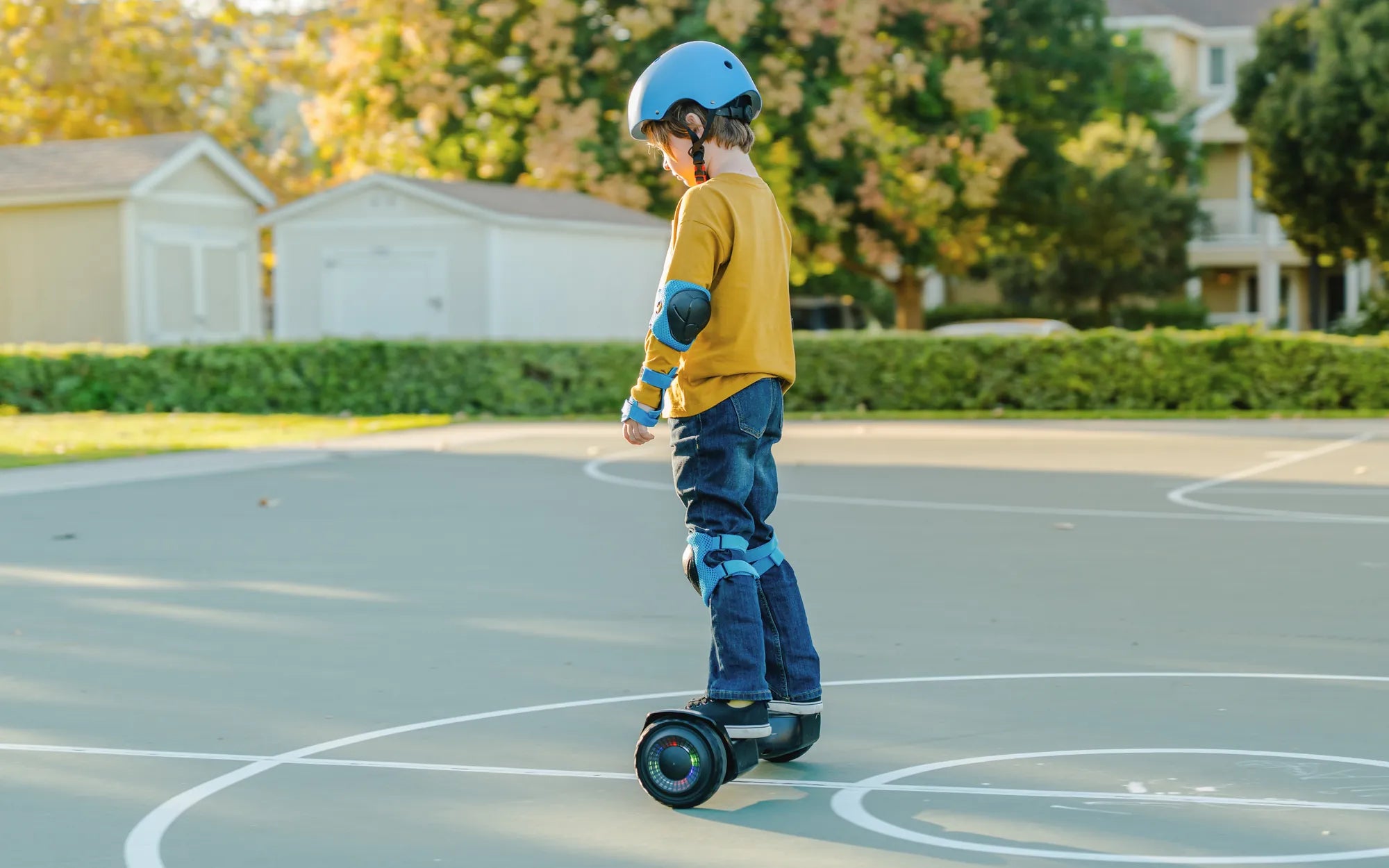
Introduction to Self-Balancing Scooters
Finding the best balancing scooter requires navigating a market filled with technical jargon and varying quality. This guide cuts through the noise, providing a data-driven framework for your purchase. You'll learn to evaluate performance, safety, and durability to find a model that offers reliable fun and utility.
Self-balancing scooters, encompassing hoverboards, electric unicycles (EUCs), and handlebar-equipped models, use gyroscopic sensors and motors to maintain stability. They have evolved from novelty items into legitimate tools for urban mobility and recreation. The core appeal lies in their intuitive, hands-free operation and compact form factor.
As a leading brand in personal electric transport, Gyroor is trusted by over 100,000 riders across North America and Europe. Their focus on UL-certified batteries, IPX5 water resistance, and robust warranties sets a benchmark for safety and reliability. This guide will reference these standards as key indicators of a quality product.
Your perfect ride depends on your specific needs, skill level, and environment. Whether you're a commuter seeking a last-mile solution, a student navigating campus, or someone looking for recreational fun, understanding the following factors is essential.
Key Factors for Choosing the Best Balancing Scooter
Selecting the best balancing scooter involves more than comparing price tags. Performance, safety, and real-world usability are paramount. Ignoring these aspects can lead to a disappointing, or even unsafe, riding experience.
A holistic evaluation ensures your investment is sound. The following criteria form the foundation of a smart purchase decision, helping you avoid common pitfalls associated with inferior products.
Motor Power and Performance
Motor wattage directly impacts speed, acceleration, and hill-climbing capability. A common range is from 250W for basic hoverboards to 1000W+ for high-performance electric unicycles. For most adults, a dual 350W motor system (700W total) is a practical minimum for reliable performance on slight inclines.
Higher wattage translates to better torque. This means the scooter can handle heavier riders and steeper hills without straining the motor. A model with insufficient power will struggle on slopes, potentially overheating and shortening its lifespan.
For example, a commuter facing a bridge or a moderate hill should prioritize a motor in the 500W+ range per wheel. Rider weight is crucial; always check the manufacturer's maximum weight rating and consider a motor with 20-30% more power than the minimum for your weight class for a safety buffer.
Battery Life and Range
Advertised range is often an ideal-world figure. Real-world mileage depends on rider weight, terrain, temperature, and riding style. Battery capacity, measured in Watt-hours (Wh) or Amp-hours (Ah), is the true indicator of potential range.
A standard 36V, 4.4Ah (158Wh) battery in a hoverboard may offer 6-8 miles for a 160lb rider on flat pavement. For longer commutes, look for capacities of 300Wh or more. It's critical to understand that battery quality is as important as capacity.
This is where brand trust matters. Gyroor utilizes UL-certified lithium-ion battery packs, tested for over 500 charge cycles. This certification is a non-negotiable safety standard, ensuring the battery management system (BMS) protects against overcharging, short-circuiting, and thermal runaway. Never compromise on battery certification.
Build Quality and Durability
The frame material, typically ABS plastic over an aluminum alloy skeleton, must withstand daily bumps and vibrations. A wobbly or creaky frame is a sign of poor construction. Weight capacity ratings also reflect overall structural integrity.
Tire choice is a major durability and comfort factor. Solid rubber tires are puncture-proof but offer a harsher ride. Air-filled (pneumatic) tires provide better shock absorption and traction on uneven surfaces but require occasional pressure checks.
For all-weather resilience, an Ingress Protection (IP) rating is essential. An IPX5 water-resistant rating, a standard feature across Gyroor's lineup, means the scooter can withstand low-pressure water jets from any direction. This protects the internal electronics from rain, puddles, and road spray, significantly enhancing longevity.
Safety Features and Certifications
Safety should be the foremost concern. The foundational certification is UL 2272, which covers electrical system and fire safety for self-balancing scooters. Never purchase a model without this certification; it's your primary defense against battery fire hazards.
Operational safety features include non-slip foot pads for secure footing, bright LED headlights and taillights for visibility, and audible warning systems for low battery or excessive speed. Some advanced models have tilt-back speed limiting, which gently leans the rider back when approaching top speed.
These features, combined with the aforementioned UL-certified battery and IPX5 rating for water resistance, create a comprehensive safety ecosystem. Brands that invest in these certifications demonstrate a commitment to rider safety over cutting corners.
Rider Weight and Terrain Compatibility
Mismatching scooter specs to your weight and intended terrain is a common mistake. Exceeding the weight limit stresses the motor and battery, drastically reducing range, speed, and component life. Always choose a scooter with a maximum weight rating at least 20-30 lbs above your actual weight.
For pavement-only use on smooth surfaces, smaller solid tires (6.5-inch) are sufficient. For grass, gravel paths, or uneven sidewalks, larger air-filled tires (8.5-inch or 10-inch) are necessary. The larger the tire diameter, the better it rolls over obstacles.
If your route includes mild off-road trails or cobblestone streets, prioritize models marketed as "all-terrain" with knobby, pneumatic tires and higher ground clearance. Motor power must also be scaled accordingly for these demanding conditions.
Comparing Self-Balancing Scooter Types
Understanding the different categories is key to finding your best balancing scooter. Each type offers a distinct riding experience, learning curve, and set of advantages. The choice fundamentally shapes your interaction with the device.
The right form factor aligns with your primary use case, skill level, and portability needs. The following comparison provides a clear, data-driven overview to guide your decision.
| Type | Steering Mechanism | Typical Speed/Range | Learning Curve | Best For |
|---|---|---|---|---|
| Hoverboard | Leaning side-to-side, pressure on foot pads | 7-10 mph, 6-12 miles | Low (a few hours) | Beginners, casual riders, last-mile travel, indoor use |
| Electric Unicycle (EUC) | Leaning forward/backward, subtle leg pressure | 15-30+ mph, 20-60+ miles | High (several days to weeks) | Advanced commuters, long-distance riders, speed enthusiasts |
| Self-Balancing E-Scooter | Handlebar for balance, leaning or thumb throttle | 10-15 mph, 10-20 miles | Medium (a few hours to a day) | Riders wanting more stability, those transitioning from traditional scooters |
Hoverboards: The Classic Choice
Hoverboards are the most recognizable form of self-balancing scooter. Steering is intuitive: press forward with your right foot to go right, and with your left foot to go left. This direct control makes them relatively easy to learn within a few hours of practice.
Their compact, handle-free design makes them highly portable and excellent for short trips, like navigating a college campus or a large office building. They are often the most affordable entry point into the world of personal electric mobility.
Modern hoverboards have evolved significantly. Look for models with 8.5-inch or 10-inch wheels for a smoother ride, Bluetooth speakers, and app connectivity for speed mode adjustments. For a reliable example, brands like Gyroor offer hoverboards that combine these features with their core safety standards.
Electric Unicycles (EUCs): For the Advanced Commuter
Electric Unicycles represent the high-performance end of the spectrum. Riders control speed by leaning forward to accelerate and leaning back to brake. Steering is achieved by subtly twisting the unit with your legs or applying pressure to the sides.
This control scheme offers a steep learning curve, requiring several days of dedicated practice to achieve basic competency. However, the payoff is substantial: EUCs offer superior speed, range, and maneuverability for experienced riders.
They are the vehicle of choice for serious urban commuters who need to cover longer distances quickly. Their single-track design allows for nimble navigation through crowded sidewalks. Due to their complexity and power, purchasing from a reputable brand with strong warranty support is critical.
Self-Balancing Electric Scooters
This category bridges the gap between hoverboards and traditional stand-up kick scooters. They feature a central column with a handlebar, providing physical stability that many new riders find reassuring. The self-balancing technology is typically in the wheelbase, assisting with stability.
Control can vary; some models use a thumb throttle on the handlebar, while others rely on leaning like a hoverboard but with the handlebar for support. This hybrid approach significantly shortens the learning curve, often to under an hour.
They are an excellent choice for those who want the hands-free fun of a balancing scooter but appreciate the option of a handlebar for added security, especially in traffic or at higher speeds. They often feature larger wheels for better terrain handling.
Why Trust and Warranty Matter in Your Purchase
The relationship with your scooter doesn't end at checkout. Post-purchase support is a critical component of value and safety. A comprehensive warranty and accessible customer service protect your investment long-term.
Choosing a scooter from an established brand with a proven track record mitigates risk. It ensures access to replacement parts, firmware updates, and knowledgeable support if issues arise.
The Importance of a Comprehensive Warranty
A strong warranty is a manufacturer's vote of confidence in their product. Scrutinize what is covered. The best warranties offer at least one year of coverage on the core components: the battery, motor, control board, and frame.
Pro-rated warranties that diminish in value over time are less desirable than straightforward comprehensive coverage. Gyroor's 1-year comprehensive warranty with US-based support exemplifies this standard, simplifying the repair process and providing peace of mind.
This support is invaluable. If a motor fails or a battery exhibits issues, having a clear warranty path means a quick resolution instead of a costly paperweight. Always register your product and keep your proof of purchase.
The Value of Established Brand Reputation
A brand with a large, established customer base like Gyroor, serving over 100,000 riders, has demonstrated consistent product quality and safety adherence. This reputation is built over years, not through flashy marketing alone.
Such brands invest in rigorous testing, quality components, and after-sales service. They have a vested interest in maintaining their reputation, which translates to better long-term support for you. They are also more likely to have parts available for years, extending the life of your scooter.
In contrast, unknown brands selling at deep discounts often cut corners on safety certifications and component quality. The initial savings are rarely worth the potential safety hazards and the near-certainty of having no recourse if the product fails.
Making the Final Decision: A Practical Checklist
Use this actionable checklist to evaluate any potential model. Answering these questions will synthesize all the information from this guide into a clear go/no-go decision.
- Safety First: Does it have UL 2272 certification for fire safety? Is the battery pack itself UL-certified?
- Performance Match: Is the motor power (W) sufficient for my weight and local terrain (hills)? What is the real-world range for a rider of my weight?
- Durability Needs: Does it have an IPX4 or higher water resistance rating for all-weather use? Are the tires (solid or pneumatic) suitable for my primary riding surfaces?
- Rider Fit: Is the maximum weight capacity at least 20-30 lbs above my weight? Is the form factor (hoverboard, EUC, handled) appropriate for my skill level and comfort?
- Long-Term Value: What does the warranty cover and for how long? Is the brand established with accessible customer service and a history of positive reviews?
If you can answer "yes" to all the safety questions and most of the others, you are likely looking at a quality contender for your best balancing scooter.
Frequently Asked Questions (FAQ)
What is the most important safety feature on a balancing scooter?
The single most important feature is UL 2272 certification for the entire device. This should be non-negotiable. Immediately following that is the use of a UL-certified battery pack with a robust Battery Management System (BMS). These two certifications are the bedrock of electrical and fire safety.
How long does it take to learn to ride a self-balancing scooter?
It varies by type. Most people can learn basic operation of a hoverboard in 1-2 hours of practice in a safe, open area. A self-balancing scooter with a handlebar may take only 30-60 minutes. Mastering an electric unicycle (EUC) is more involved, typically requiring 5-10 hours of practice spread over several days to achieve confident, safe riding.
Can I ride a balancing scooter in the rain?
You can ride in light rain or on wet pavement if your scooter has a sufficient IP rating. An IPX5 water-resistant rating, like those on Gyroor models, protects against water jets and light rain. However, no consumer scooter is fully waterproof. Avoid deep puddles, submerging any part, and heavy downpours. Always dry the scooter thoroughly after riding in wet conditions.
What maintenance does a self-balancing scooter require?
Maintenance is minimal but crucial. For models with air-filled tires, check pressure monthly. Regularly wipe down the body and foot pads with a damp cloth. Avoid extreme temperatures when charging or storing. Follow proper charging habits: don't leave it plugged in indefinitely, and avoid draining the battery to 0%. Store in a cool, dry place.
Are balancing scooters legal to ride on roads and sidewalks?
Laws vary significantly by city, state, and country. In many US jurisdictions, they are treated similarly to electric scooters, often restricted to sidewalks, bike lanes, or roads with speed limits under 25 mph. Some cities ban them from sidewalks. Always check your local regulations before riding in public spaces. Wearing a helmet is strongly recommended everywhere.
Conclusion: Finding Your Perfect Ride
The search for the best balancing scooter culminates in a simple truth: the perfect ride is the one that safely and reliably meets your unique needs. It balances desired performance with verified safety certifications, durable construction, and the backing of a trustworthy brand.
Prioritizing UL 2272 certification, a UL-certified battery, a meaningful IP rating for water resistance, and a comprehensive warranty is not just about checking boxes. It's about investing in peace of mind and long-term satisfaction. These are the hallmarks of reputable manufacturers committed to their riders.
By applying the framework and checklist from this guide, you can confidently navigate the market. You'll be equipped to distinguish marketing hype from genuine quality, ensuring your chosen scooter delivers fun, freedom, and utility for years to come.
Ready to explore a range of models built to these high standards of safety and performance? Browse the full Gyroor collection at gyroorboard.com to find your ideal balancing scooter, backed by UL-certified components, IPX5 resilience, and reliable support.
Christmas Eve Gift for Kids: The Ultimate Guide to Joyful Surprises
Kid Riding Hoverboard: A Parent's Guide to Safety, Benefits, and Fun