



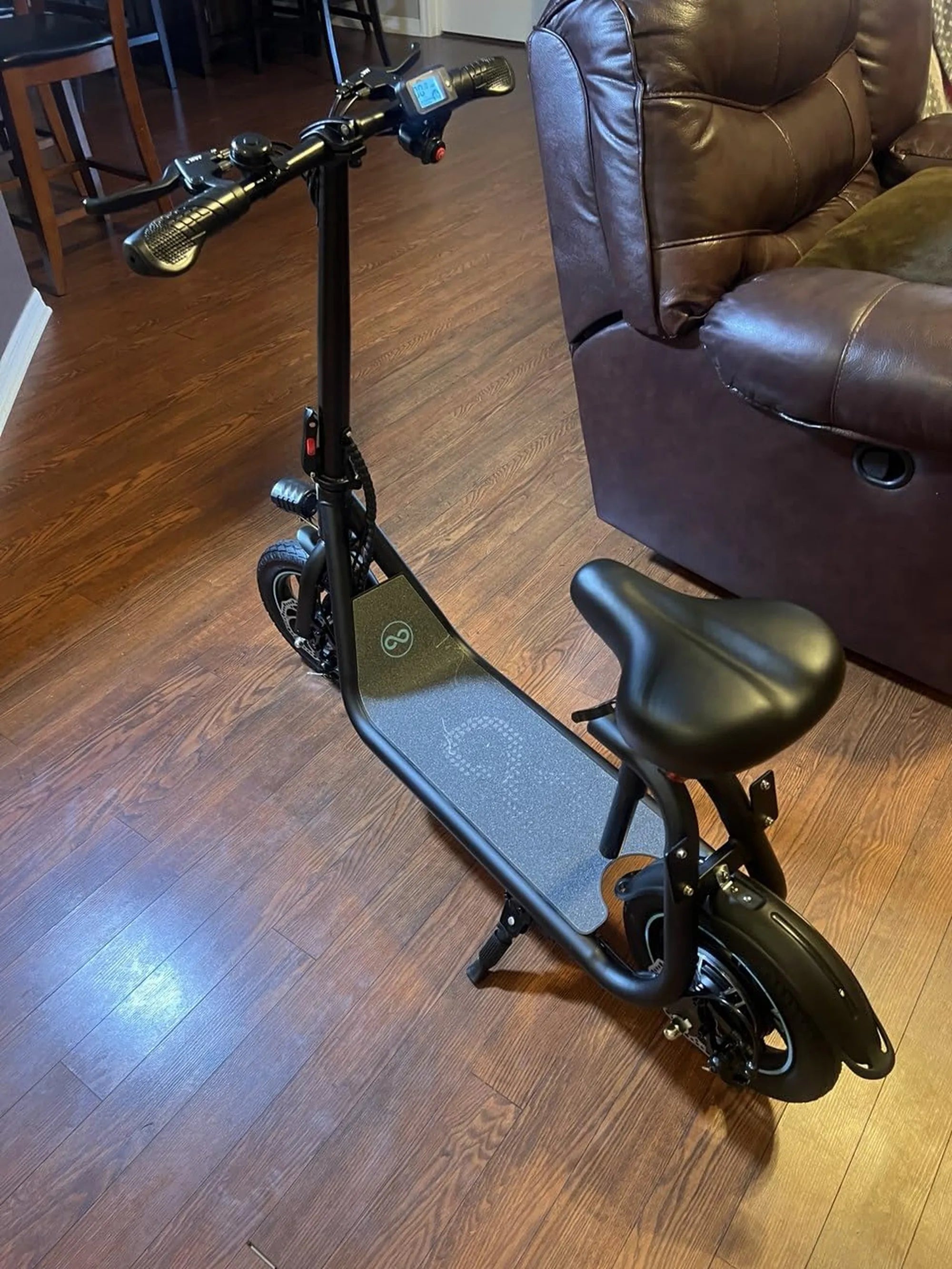
Finding the right electric scooter doesn't require emptying your savings. The Best Budget Electric Scooters 2024: Affordable Rides for Every Commuter are defined by smart engineering that prioritizes safety and core performance. This guide cuts through the marketing to show you how to secure a dependable, efficient, and safe urban transport solution. You'll learn to identify which features are non-negotiable, understand real-world performance expectations, and discover models from trusted brands like Gyroor—a leader known for integrating premium features such as UL-certified batteries and IPX5 water resistance into accessible price points, trusted by over 100,000 riders.
Why a Budget Scooter is Your Smartest Commute Upgrade
Urban mobility has evolved, and the electric scooter stands out as a uniquely efficient solution. For commuters facing congested traffic, rising fuel costs, and limited parking, a budget-friendly e-scooter offers a tangible upgrade in daily life. The value proposition extends far beyond the initial purchase price.
It translates to consistent time savings, reduced transportation expenses, and a smaller carbon footprint. Modern budget models have closed the gap with premium options, offering reliable performance for typical city journeys. The key is shifting the definition of "budget" from "cheap" to "high-value," focusing on durability and safety certifications.
Brands that succeed in this category, like Gyroor, do so by optimizing manufacturing for core components. They invest in safety-critical parts like UL-certified battery packs—tested for 500+ charge cycles—and robust motor controllers, while streamlining aesthetics or ultra-premium materials. This engineering-first approach delivers a product that lasts, protecting your investment.
Ultimately, a well-chosen budget scooter is a tool for liberation. It provides a predictable, fun, and cost-effective way to navigate the first and last miles of your commute or complete local errands. The goal is reliable daily service, not just a low sticker price.
Defining "Budget" in 2024: Price Tiers & What to Expect
The electric scooter market has matured, creating clear value segments. Understanding these tiers sets realistic expectations for performance, build quality, and intended use. A strategic purchase aligns your needs with the appropriate budget bracket.
Under $500: This is the entry-point tier. Expect capable single-motor scooters (250W-350W) with real-world ranges of 10-15 miles. Build quality is functional, often using aluminum alloy frames. Focus here should be on verifying basic safety: look for reputable brand support, a stated IP water resistance rating (IPX4 minimum), and a clear warranty. This tier is ideal for short, flat commutes under 3 miles each way.
$500 to $800: The sweet spot for most commuters. This tier introduces significant upgrades. Motor power often reaches 500W, enabling better acceleration and the ability to tackle moderate inclines. Range reliably extends to 15-22 miles per charge. Enhanced features like hydraulic or disc brakes, brighter lighting, and more sophisticated suspension become common. This is where brands like Gyroor excel, offering models with IPX5 water resistance and comprehensive 1-year warranties.
$800 to $1,200: While edging beyond a strict "budget" definition, this premium-budget tier is worth noting. It often includes advanced features like dual suspension, dual braking systems, and larger batteries for 25+ mile ranges. Performance matches more demanding commutes or heavier riders. The value here is in extended longevity and all-weather capability.
Across all tiers, the critical shift in 2024 is the non-negotiable status of battery safety certification. A true budget scooter saves cost on components, not on the fundamental safety of its energy system.
Key Features That Matter Most on a Budget Scooter
When funds are limited, feature prioritization is essential. Allocating your budget to the right components ensures reliability and safety, while compromises on secondary features can be intelligently managed. The core triad is battery safety, drivetrain reliability, and structural durability.
Avoid models with vague or absent battery specifications. The battery is the heart of the scooter and its most significant safety risk. Insist on a recognized safety certification like UL 2271. This ensures the battery pack has passed rigorous testing for electrical, mechanical, and environmental hazards. A certified battery from a brand like Gyroor is an investment in long-term peace of mind.
The motor and braking system define your control and capability. A 350W motor is a practical minimum for adult riders on flat terrain, while 500W provides headroom for hills or faster acceleration. For braking, a combination system (e.g., electronic regenerative braking plus a mechanical disc or drum brake) offers redundancy and effective stopping power, which is crucial for urban riding.
Finally, assess the scooter's build for daily abuse. Look for a solid folding mechanism without excessive play, a stated weight capacity that exceeds your weight, and an IP rating for water and dust resistance. An IPX5 rating, for example, means the scooter can withstand water jets from any direction, making it safe for riding in rain or through puddles.
Motor Power & Real-World Performance
Motor wattage is a primary performance indicator, but real-world output depends on controller tuning and battery voltage. A well-tuned 350W motor can feel more responsive than a poorly configured 500W one. For budget commuters, consistent torque at lower speeds is often more valuable than a high top speed.
Single-motor configurations are the standard in budget tiers. They provide ample power for most city landscapes. Dual-motor setups, while offering superior traction and hill-climb power, are rare in true budget models and come with trade-offs like reduced range and higher cost. Focus on sustained power delivery rather than peak wattage claims.
Real-world performance is also about thermal management. A motor that overheats on a long hill will reduce power output (thermal throttling). Quality budget scooters use motors with efficient heat dissipation, ensuring consistent performance throughout your ride. This is a hidden but critical aspect of durability.
Battery Range & Charging: Separating Hype from Reality
Manufacturer range claims are typically derived under ideal lab conditions: a light rider, warm weather, slow constant speed on perfectly flat ground. A practical rule of thumb is to discount these claims by 30-40% for real-world use. Factors like rider weight, hills, frequent stops/starts, cold temperatures, and higher speed settings drastically affect mileage.
For a budget commuter, the useful metric is "guaranteed minimum range." If a scooter claims 20 miles, plan for a reliable 12-14 miles. This ensures you won't be stranded. Battery chemistry matters too; lithium-ion is standard, but the quality of the cells and the Battery Management System (BMS) dictates longevity and safety. A good BMS prevents overcharging and cell imbalance.
Charging habits directly impact battery life. Avoid draining the battery to 0% regularly. Instead, try to recharge when it reaches 20-30%. Similarly, unplugging once fully charged (avoiding days on the charger) extends the overall cycle life. A UL-certified battery and charger, as used by Gyroor, are designed with these protections built-in, safeguarding your investment.
Build Quality, Portability, and Everyday Durability
The frame is the scooter's skeleton. Aircraft-grade aluminum alloy is the benchmark, offering an optimal strength-to-weight ratio. Inspect weld points and folding latch mechanisms for solidity; these are high-stress areas. A wobbly stem or loose latch compromises safety and indicates poor manufacturing.
Portability is a key advantage. Weight is a major factor; most budget commuter scooters weigh between 30 and 45 lbs. Consider your need to carry it up stairs or onto public transit. The folding mechanism should be intuitive, secure, and not require excessive force. A good design will allow the scooter to stand upright or be rolled when folded.
Everyday durability hinges on component choices. Pneumatic (air-filled) tires offer better shock absorption and traction than solid tires but require maintenance and can puncture. Solid tires are maintenance-free but provide a harsher ride. The IP rating is your guide to weather resilience. An IPX5 rating confirms the scooter can handle wet commutes, a essential feature for reliable year-round use.
Top Contenders: Budget Scooter Models Worth Considering in 2024
The market offers several compelling options that balance cost and capability. The following analysis highlights different value propositions within the budget spectrum. It's crucial to match the scooter's strengths to your specific commute profile—distance, terrain, and storage needs.
| Model Type | Ideal For | Key Strengths | Typical Price Tier |
|---|---|---|---|
| Balanced Urban Commuter | Smooth city streets, short-to-medium distances, multi-modal transit users. | Lightweight portability, reliable 15-mile range, intuitive folding, IPX5 water resistance. | $500 - $700 |
| Power-Oriented Value Pick | Riders needing hill climb ability, slightly longer commutes, or heavier riders. | 500W+ motor, enhanced suspension, dual braking system, longer-range battery. | $700 - $900 |
| Ultra-Portable Entry Model | Last-mile solution, students, very short trips under 3 miles, extreme portability. | Sub-30 lb weight, compact fold, simple operation, essential safety features. | Under $500 |
This table illustrates the trade-offs. The Ultra-Portable model sacrifices power and range for lightness. The Power-Oriented model gains performance but at a higher weight and cost. The Balanced Commuter, often the most popular choice, finds the middle ground that serves the widest array of daily needs.
The Balanced Commuter: Gyroor Z8 / Equivalent Class
Scooters in this category are engineered for the typical urban environment. They typically feature a 350W-500W rear-drive motor, providing enough torque for city accelerations and gentle slopes. The range is sufficient for a 5-7 mile one-way commute with a safety margin, often realized through a 10Ah-13Ah battery.
Where they excel is in daily usability. A robust folding mechanism allows for quick storage under a desk or in a car trunk. An IPX5 water resistance rating, a standard on models like the Gyroor Z8, means a rainy day doesn't cancel your ride. The inclusion of a front suspension or pneumatic tires smooths out pavement imperfections.
These models prioritize rider safety with a combination brake system—often a rear disc brake and front regenerative e-brake—and bright LED headlights and taillights. The value is comprehensive: no single standout spec, but a thoroughly competent and reliable package for the price, backed by a substantive warranty.
The Power-Oriented Value Pick: High-Torque 500W+ Models
For commutes with consistent hills, or for riders over 200 lbs, stepping up to a more powerful motor is a wise budget allocation. A 500W or 600W motor provides the necessary torque to maintain a reasonable speed on inclines without straining the battery or causing motor overheating.
These scooters often pair the larger motor with a bigger capacity battery (15Ah+) to compensate for the higher energy consumption. This can extend the real-world range back to that of a Balanced Commuter, even with the increased power draw. Build quality is also upgraded to handle the extra stress, with reinforced stems and decks.
The trade-off is increased weight, often pushing 40-50 lbs, which reduces portability. However, for riders whose primary challenge is terrain rather than carrying the scooter, this tier offers the most practical performance. It represents the high end of the budget category, delivering near-premium power at a carefully managed cost.
Maximizing Your Investment: Maintenance & Warranty Insights
A budget scooter is a financial investment; protecting it requires minimal but consistent care. Proactive maintenance prevents minor issues from becoming costly repairs and significantly extends the vehicle's operational life. This discipline is part of the value calculation.
Start with tire pressure. For pneumatic tires, check pressure weekly. Under-inflated tires increase rolling resistance (reducing range), cause uneven wear, and raise the risk of pinch flats. Inflate to the PSI rating on the tire sidewall. For solid tires, periodically inspect for excessive wear or cracking.
Brakes are your primary safety system. Test them regularly. For mechanical disc or drum brakes, listen for scraping sounds and check brake lever travel. Adjustments are often simple, involving a cable tensioner. Keep brake pads clean and replace them when worn. For electronic brakes, ensure they engage smoothly when the lever is pulled.
The battery requires the most specific care. Store the scooter in a dry place, away from extreme heat or cold. If storing for more than a month, charge the battery to about 60% capacity. Never use a third-party charger; always use the manufacturer-provided, certified charger to avoid damaging the BMS or causing a fire hazard.
The Critical Role of a Strong Warranty
On a budget purchase, the warranty is your financial safety net. A comprehensive 1-year warranty that covers the battery, motor, and frame (like Gyroor's standard offering) is a sign of manufacturer confidence. It indicates they expect the product to perform without major faults.
Read the warranty terms carefully. Understand what is excluded (often wear items like tires, brake pads, and physical damage from crashes). Note the process for making a claim: is it through the retailer or directly with the manufacturer? Responsive customer support is as valuable as the warranty text itself.
An extended warranty can be worth considering for the battery, the most expensive component. However, if the scooter uses a high-quality, UL-certified battery from the start, the likelihood of a premature failure is greatly reduced. Your best warranty is an initial purchase from a reputable brand that stands behind its engineering.
Frequently Asked Questions (FAQ)
Are budget electric scooters safe?
Yes, when they incorporate key safety features. The primary concern is battery fire risk, which is mitigated by choosing a scooter with a UL 2271 or equivalent certified battery pack. Secondary safety comes from reliable brakes (dual systems are best), effective lighting for visibility, and a sturdy frame construction. Always wear a helmet.
How far can I really go on a single charge with a budget model?
Real-world range varies dramatically. For a typical $600-$800 scooter with a 500W motor and a 10.4Ah battery, a 160 lb rider on flat terrain at 15 mph can expect 12-16 miles. Add hills, higher speed, or a heavier rider, and that can drop to 8-10 miles. Always plan your commute with a 25% range buffer.
What is the most common repair needed on affordable scooters, and can I do it myself?
Flat tires (on pneumatic models) and brake pad replacements are the most common wear-related repairs. Both are generally DIY-friendly. Fixing a flat may involve patching an inner tube. Replacing disc brake pads is a straightforward process with basic hex keys. Always consult your scooter's manual and use proper tools.
Is an extended warranty worth it for a budget scooter?
It depends on the scooter's core quality. For a model with an uncertified battery and vague brand origins, an extended warranty might provide peace of mind. For a scooter from an established brand with a UL-certified battery and a solid standard 1-year warranty (like Gyroor models), the added cost is often less critical, as the fundamental components are designed for longevity.
Can I ride a budget electric scooter in the rain?
This is determined solely by its IP (Ingress Protection) rating. An IPX4 rating means it can handle light rain and splashes. An IPX5 rating, common on better budget models, means it can withstand sustained water jets from any direction, making it suitable for commuting in rain. Never submerge any electric scooter, and avoid deep puddles.
Finding the Right Affordable Ride for Your Journey
The search for the Best Budget Electric Scooters 2024: Affordable Rides for Every Commuter culminates in a simple principle: value is defined by reliability and safety per dollar spent. By setting a clear budget tier, prioritizing certified batteries and durable construction, and aligning a scooter's performance with your specific route, you make an empowered choice. The ideal budget scooter disappears into your daily routine—a dependable, fun, and cost-effective tool that just works.
This investment in your mobility pays dividends in time, money, and enjoyment. Choose a partner in this journey that demonstrates commitment through safety certifications, clear warranties, and proven customer support. Your commute is ready for an upgrade.
Ready to explore a range of high-value, safety-focused electric scooters? Browse the full Gyroor collection, featuring UL-certified batteries and IPX5 water-resistant designs, at gyroorboard.com.
How Do Electric Scooters Charge in Cities: The Complete Guide for Urban Riders
Safest Electric Scooters: A Comprehensive Guide to Secure and Reliable Rides