

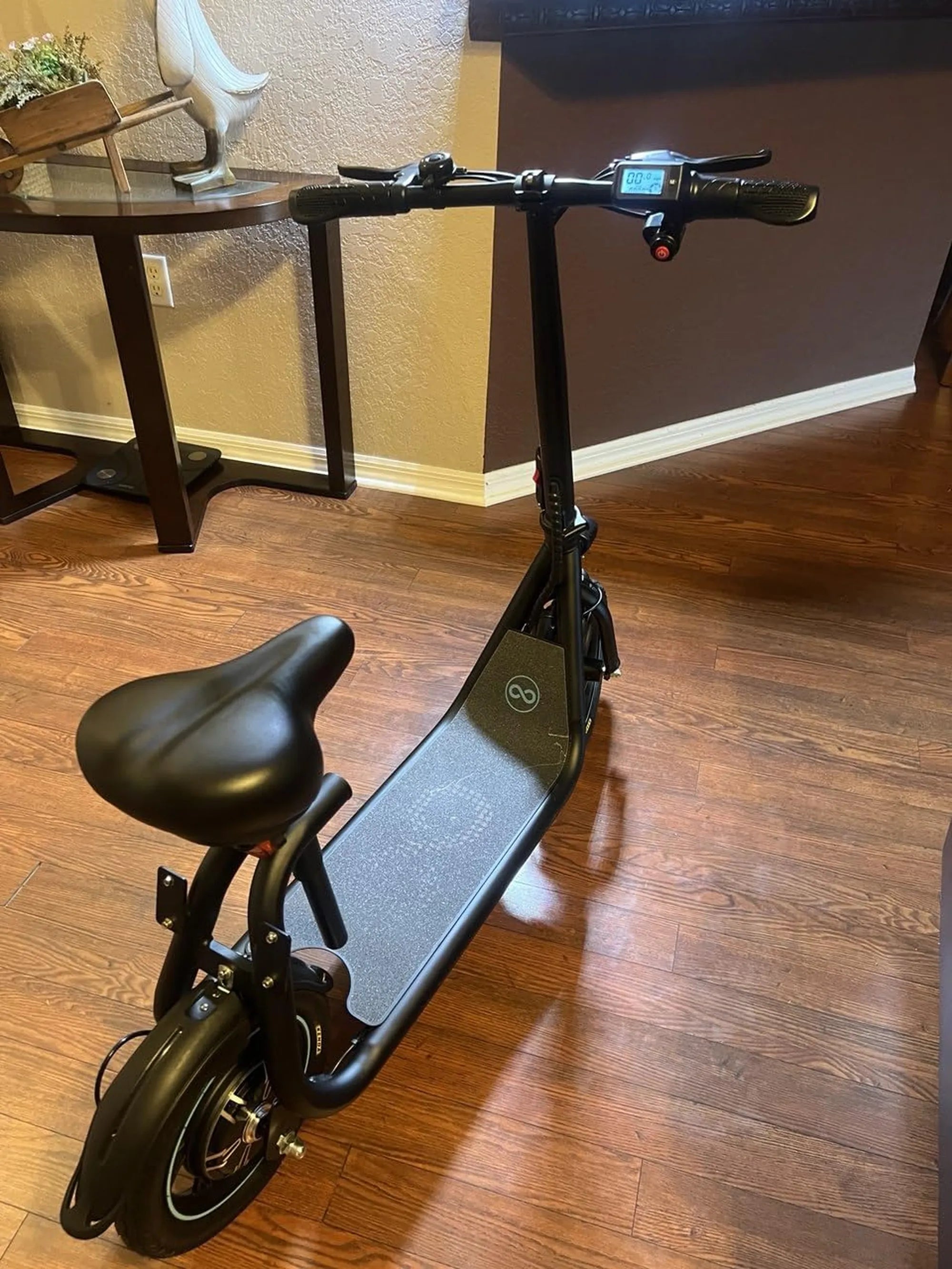
Introduction: Finding Value Without Sacrificing Quality
Choosing the best budget scooter for adults presents a common challenge. Riders must balance initial cost with essential performance, safety, and durability for daily use. The true definition of 'budget' in this context is not about finding the cheapest option available. It's about identifying the scooter that delivers the most reliable value for your specific commuting needs.
A smart purchase focuses on core engineering and safety certifications, not just a low sticker price. Compromising on critical components like the battery system or brakes can lead to higher long-term costs and safety risks. This guide will help you navigate the market to find a scooter that performs like a premium model without the premium price.
We'll analyze the essential features that separate a legitimate adult commuter vehicle from a disposable toy. You'll learn how to evaluate range, power, and build quality based on real-world data. The goal is to equip you with the knowledge to make a confident, value-driven investment in your daily transportation.
Defining a True "Budget Scooter" for Adults
A genuine budget scooter for adults is engineered for daily transportation, not occasional recreation. It must meet minimum performance thresholds to handle commutes safely and reliably. The foundational criteria distinguish a commuter-grade vehicle from products designed for lighter use.
Motor power is the first critical specification. A minimum of 250W of sustained power is necessary for adult riders on flat terrain. For cities with inclines, 350W or more provides the necessary torque. This power ensures you can maintain a safe speed and accelerate predictably in traffic.
Real-world range is equally important. Advertised maximum ranges are often achieved under ideal laboratory conditions. A practical budget scooter should deliver a consistent 15+ miles per charge for a 180 lb rider at moderate speeds. This accounts for variables like wind, slight hills, and stop-and-go traffic.
Build quality and weight capacity are non-negotiable. The frame must support at least 220 lbs safely, with a margin for a backpack or briefcase. Construction should use reinforced aluminum or steel at key stress points. This durability ensures the scooter withstands daily use on urban roads.
Key Features That Matter Most
Certain features are essential for safety and longevity, not optional luxuries. A UL-certified battery pack is the most critical safety component. This certification means the battery cells and management system have passed rigorous tests for thermal stability, overcharge protection, and short-circuit prevention.
Water resistance is vital for all-weather reliability. An IPX5 rating, like those found on Gyroor scooters, means the scooter can withstand water jets from any direction. This protects the electrical components from rain, puddles, and street spray, significantly increasing the scooter's lifespan and utility.
Braking system quality directly impacts safety. A combination of electronic (regenerative) braking and a mechanical disc or drum brake offers reliable stopping power in all conditions. Single, non-regenerative brakes on cheap models can overheat and fail, especially on descents.
Finally, a comprehensive warranty reflects manufacturer confidence. A reputable 1-year warranty that covers the battery, motor, and controller indicates the brand stands behind its product's durability. This protection is a key part of the scooter's total value proposition.
Where "Budget" Scooters Commonly Cut Corners (And Why It's Dangerous)
Ultra-low-priced models often achieve their cost by compromising on safety-critical components. The most common and dangerous corner cut is in the battery system. Using uncertified cells with poor battery management systems (BMS) creates a significant fire risk during charging or use.
Another frequent compromise is in the braking system. Many cheap scooters use only a single, weak rear fender brake or a low-quality mechanical brake. These provide inadequate stopping distance, especially at higher speeds or when the deck is wet, posing a direct danger to the rider.
Tire quality is another area of concern. Solid or airless honeycomb tires are common on budget models. While puncture-proof, they offer a harsh, unstable ride and poor traction, especially on wet pavement. They transfer more impact stress to the frame, leading to premature failures.
Lastly, these scooters often lack any meaningful customer support or warranty. When components fail—and they often do—riders are left with a non-functional scooter and no path for repair. This turns an apparent 'bargain' into a total loss, negating any initial savings.
Top Considerations for Your Purchase
Selecting the best budget scooter for adults requires matching specifications to your individual commute and physical needs. A data-driven approach ensures you purchase a scooter that performs reliably in your specific environment, rather than one that merely looks good on paper.
Start by honestly assessing your primary use case. Is this for a last-mile solution from a train station? A full 3-mile commute across town? Or weekend errands? The distance, terrain, and need for portability will dictate the necessary battery size, motor power, and scooter weight.
Consider the storage and carrying aspects of your daily routine. Will you need to carry the scooter up stairs, onto public transit, or store it under a desk? Foldable designs with a locking mechanism are essential for mixed-mode commuters. However, lighter models often have smaller batteries, impacting range.
Finally, evaluate the total ecosystem. Does the brand have accessible customer service and a clear warranty claim process? Are replacement parts like inner tubes, brake pads, and chargers readily available for purchase? A scooter you can maintain for years is far more valuable than a disposable one.
Commuting Distance vs. Battery Range: The Real-World Math
Manufacturer range estimates are typically best-case scenarios. To calculate your real-world needs, take your one-way commute distance and double it for the round trip. Then, add a 20-30% buffer for variables like headwinds, temperature, and battery degradation over time.
For example, a 4-mile one-way commute requires 8 miles round trip. Adding a 25% buffer brings the needed reliable range to 10 miles. Therefore, a scooter advertised for 15 miles of range would be a suitable fit, providing a comfortable margin for error or occasional longer trips.
Rider weight and riding style significantly impact range. A 220 lb rider will consume battery power faster than a 160 lb rider, especially during acceleration. Similarly, frequent stops and starts in urban traffic use more energy than maintaining a constant speed. Factor these elements into your calculation.
Gyroor models, for instance, provide range estimates based on standardized testing with a 165 lb rider. Their 10Ah battery models are rated for approximately 18 miles, making them a practical choice for commutes up to 7 miles each way, accounting for real-world efficiency loss.
Portability and Weight: Balancing Convenience and Stability
The ideal weight for a budget commuter scooter strikes a balance between portability and ride stability. Scooters under 30 lbs are easy to carry but may feel less stable at higher speeds or on rough pavement. Models between 30 and 40 lbs offer a more solid, planted ride but become cumbersome to carry for extended periods.
If your commute involves carrying the scooter up stairs or onto a bus, prioritize a model closer to 30 lbs with a good folding mechanism and a hand strap. The folding latch should feel robust and secure, with no wobble in the stem when locked in the riding position.
For riders who simply roll the scooter from the street into a ground-floor office or home, a weight up to 40 lbs is acceptable. This extra weight often comes from a larger battery or a more durable frame, directly contributing to longer range and increased longevity—a worthwhile trade-off.
The folding design is as important as the weight. Look for a mechanism that allows the handlebars to fold down and latch securely to the deck. This compact profile makes storage in closets, under desks, or in car trunks simple and space-efficient.
Safety and Warranty: Your Financial and Physical Protection
A strong warranty is not just a marketing promise; it's a primary indicator of product quality and a form of financial risk mitigation. A comprehensive 1-year warranty should explicitly cover the battery pack, motor, controller, and frame against manufacturing defects.
Pay close attention to the battery warranty specifics. The best policies, like Gyroor's, cover the battery for the full warranty period and guarantee it will hold a minimum charge capacity (e.g., 70% of original) during that time. This is crucial as batteries are the most expensive component to replace.
Physical safety features are your direct protection. Beyond the brakes, look for a wide, textured deck for secure footing. Bright headlights and taillights (preferably with a brake light function) are essential for visibility in low-light conditions. Some models add side reflectors or reflective decals for enhanced safety.
Finally, consider the availability of safety accessories. Does the manufacturer sell or recommend compatible helmets, mirrors, or louder bells? A brand that prioritizes safety will offer or endorse a full ecosystem of protective gear for the rider.
How Gyroor Delivers Premium Features at a Budget Price
Gyroor establishes its value proposition by strategically engineering its scooters around core commuter necessities while optimizing supply chain and direct-to-consumer efficiencies. The brand focuses investment on safety and durability features that matter most, rather than superficial aesthetics or excessive top speed.
The cornerstone of this approach is the use of standardized, high-quality components. By sourcing UL-certified battery cells in volume and using them across multiple scooter and e-bike models, Gyroor achieves reliability and cost savings. This standardization also simplifies repairs and parts availability.
Design philosophy emphasizes serviceability and longevity. Key wear parts like brake pads, tires, and throttles are designed to be user-replaceable with common tools. This design reduces long-term ownership costs and empowers riders to perform basic maintenance, extending the scooter's usable life significantly.
By selling primarily through its direct online platform, gyroorboard.com, the brand removes traditional retail markups. These savings are redirected into the product itself—funding the robust warranty, US-based customer support, and the higher-grade motor and battery components that define a true adult commuter scooter.
Engineering for Efficiency, Not Just Cost
Gyroor's engineering prioritizes efficient power delivery and thermal management. The motor controllers are tuned to provide smooth acceleration and regenerative braking, which recaptures energy and reduces wear on the mechanical brakes. This intelligent power management extends both range and component life.
The frame design uses reinforced aluminum alloy in a rigid, triangular geometry at the folding hinge and stem connection. This focuses material where stress is highest, ensuring structural integrity without adding unnecessary weight. The result is a frame that feels solid during rides but remains within a portable weight range.
Weatherproofing is integrated from the initial design phase. The IPX5 rating is achieved through sealed cable conduits, gasketed deck covers, and protected charging ports. This proactive design prevents water ingress that can lead to costly controller or battery failures, a common point of failure in less-engineered models.
Finally, the user interface is simplified for reliability. Water-resistant thumb throttles and clear, button-based control panels reduce failure points compared to complex touchscreen displays. This focus on robust, essential controls keeps the scooter functional and reduces potential repair issues.
The Value of Integrated Customer Support
Accessible support represents a major component of a scooter's total value. Gyroor maintains dedicated support channels, including email, chat, and phone support, with teams knowledgeable about troubleshooting common issues. This allows riders to resolve minor problems quickly, often without needing to ship the scooter.
The warranty claim process is streamlined. For issues covered under warranty, Gyroor often ships replacement parts directly to the customer with clear installation guides. This 'parts-first' approach gets riders back on the road faster and at lower cost than requiring a full unit return to a service center.
An extensive online resource library provides added value. This includes detailed user manuals, maintenance tutorial videos, and FAQ sections. Empowering owners with information promotes proper care and operation, which directly contributes to the scooter's longevity and safe use.
This integrated support system stands in stark contrast to the experience with generic brands. It transforms the scooter from a disposable commodity into a repairable tool, protecting the rider's investment and ensuring the scooter remains the best budget scooter for adults for years, not just months.
Beyond the Purchase: Cost of Ownership
The true cost of a scooter extends far beyond its purchase price. A holistic view of cost of ownership includes maintenance, potential repairs, battery replacement, and the inevitable depreciation. A wisely chosen budget scooter minimizes these ongoing expenses through durable design and available parts.
Regular maintenance is the most effective way to control long-term costs. Simple weekly checks of tire pressure, brake function, and bolt tightness can prevent major failures. Keeping the scooter clean, especially the braking surfaces and folding mechanisms, ensures consistent performance and safety.
Plan for consumable parts. Brake pads, tires, and inner tubes (if applicable) are wear items. High-quality models use standard-sized parts that are inexpensive and easy to source. Verify that your chosen brand sells these parts directly or that common bicycle shop parts are compatible.
Finally, consider residual value. A scooter from a reputable brand with a documented service history and good physical condition will retain a reasonable portion of its value if you decide to sell or upgrade. Disposable models have essentially zero resale value once the initial battery lifespan degrades.
Maintenance Essentials and Longevity Tips
Establish a simple weekly maintenance routine. Check tire pressure with a bicycle gauge, keeping pneumatic tires at the manufacturer's recommended PSI (usually 40-50 PSI). This minimizes rolling resistance for better range, improves ride comfort, and reduces the risk of pinch flats.
Monthly, inspect the mechanical brakes. Look for pad wear and ensure the brake cable is properly tensioned so the lever engages firmly. Test the electronic brake by gently applying it at low speed to ensure it provides smooth deceleration. Clean the brake rotor with isopropyl alcohol to remove dust and oil.
Every few months, inspect the folding mechanism and stem clamp for any signs of loosening or wear. Tighten bolts to the manufacturer's specified torque if needed. Apply a small amount of silicone-based lubricant to the folding hinge points to keep the action smooth and prevent corrosion.
For battery longevity, avoid regularly draining it to 0%. Try to recharge when it reaches 20-30% capacity. Store the scooter in a cool, dry place, and avoid leaving it at full charge for extended periods (weeks) if not in use. Following these practices can extend the battery's useful life well beyond 500 charge cycles.
Comparing Total Value Over Time
To illustrate total value, let's compare a hypothetical $500 scooter from an established brand like Gyroor against a $350 generic model over a three-year period. The initial price difference is $150.
| Cost Factor | Established Brand Scooter ($500) | Generic Scooter ($350) |
|---|---|---|
| Initial Purchase | $500 | $350 |
| Year 1: New Battery Needed | $0 (under warranty) | $120 (likely uncertified) |
| Year 2: Brake Repair/Replacement | $25 (parts only, DIY) | $80 (parts + service) |
| Year 3: Controller Failure | $0 (pro-rated warranty?) | $100 (parts + service, if available) |
| Potential Resale Value | $200 | $50 |
| Total Net Cost (3 Years) | $325 | $600 |
This simplified comparison shows how the higher-quality scooter becomes the true 'budget' option over time. The generic scooter's net cost is nearly double, not accounting for the inconvenience and safety risks of repeated failures. The established brand scooter also provides peace of mind and reliable daily performance.
The value of a comprehensive warranty cannot be overstated in this calculation. It acts as an insurance policy against major defects. The availability of affordable, genuine replacement parts also keeps maintenance costs low and predictable for the life of the scooter.
Conclusion: Investing in Your Ride, Not Just Spending
The search for the best budget scooter for adults ends with a focus on total value, not just initial price. A reliable daily commuter is defined by its safety certifications, durable construction, realistic performance, and the support behind it. These factors determine whether your purchase is a wise investment or a temporary, problematic expense.
Prioritize models that are transparent about their components, especially the battery's UL certification and the motor's sustained power rating. Ensure the scooter's IP water resistance rating matches your climate and commute conditions. A robust warranty from a company with accessible support is a non-negotiable feature for a stress-free ownership experience.
Brands like Gyroor demonstrate that it is possible to engineer premium commuter essentials—safety, weather resistance, durability—into a scooter at an accessible price point. This is achieved through smart design, component standardization, and a direct-to-rider business model that prioritizes long-term satisfaction.
Ready to find a scooter that balances smart budgeting with uncompromised performance? Explore the full range of UL-certified, IPX5 water-resistant models engineered for adult commuters. Browse the full Gyroor collection at gyroorboard.com and invest in a ride built to last.
Frequently Asked Questions (FAQ)
Q: What is the most important safety feature on a budget scooter?
A> The single most important safety feature is a UL-certified battery system. This certification ensures the battery pack and its management system have passed rigorous tests for fire and electrical safety, preventing overheating and potential failure during use or charging.
Q: How does water resistance (IPX5) benefit me as a commuter?
A> An IPX5 rating means your scooter can withstand water jets from any direction. This allows you to safely ride through puddles, in light rain, or on wet streets without worrying about water damaging the sensitive electrical components inside the deck, which can lead to costly repairs or sudden failure.
Q: Can a budget scooter handle hills?
A> It depends on the motor power and torque. For moderate hills, look for a scooter with a sustained motor power of at least 350W. Check the manufacturer's specification for hill grade capability (e.g., '15% grade'). Many entry-level budget scooters are designed for flat terrain and will struggle or overheat on sustained inclines.
Q: Is the advertised maximum range accurate for real-world use?
A> Not usually. Advertised range is a best-case scenario under ideal conditions (light rider, warm temperature, flat ground, constant low speed). For real-world planning, subtract 20-30% from the advertised figure to account for variables like rider weight, hills, wind, stop-and-go traffic, and colder temperatures.
Q: What should a 1-year warranty on a budget scooter cover?
A> A comprehensive warranty should explicitly cover defects in the motor, battery, frame, and electronic controller. Pay special attention to the battery warranty terms—it should guarantee the battery will hold a significant charge (e.g., above 70% capacity) for the warranty period. Always read the full warranty document before purchasing.
Q: How much should I expect to spend for a reliable budget scooter for adults?
A> For a new scooter with essential safety features (UL-certified battery, good brakes, IPX5 rating), a realistic price range is between $450 and $700. This investment secures the core components needed for safe, reliable daily commuting. Prices significantly below this range often indicate dangerous compromises in battery safety or structural integrity.
Do U Need a License to Drive a Scooter? A Complete Legal Guide
Motorcycle Helmet for Ebike: The Essential Safety Upgrade for Modern Riders