


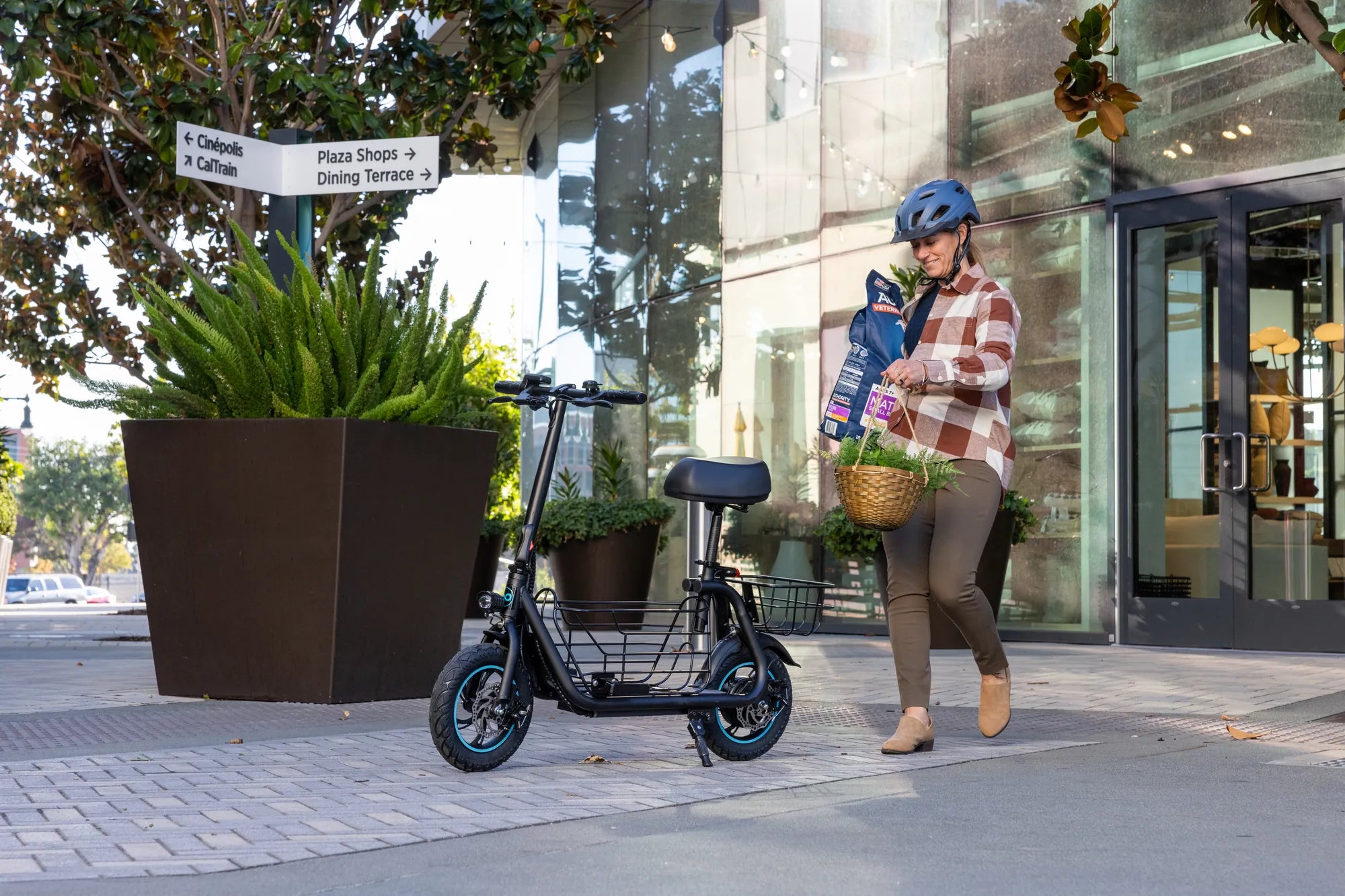
Choosing the wrong electric scooter can turn your daily commute from a liberation into a liability. This guide cuts through the marketing to deliver the data you need. We'll analyze the key 2025 features—battery safety, real-world range, and all-weather durability—that separate reliable urban transporters from short-lived gadgets. For over 100,000 riders, Gyroor has set the standard with UL-certified batteries and IPX5 water-resistant designs, proving that a true commuter scooter is built for the daily grind. This is your ultimate resource for selecting from the best commuter electric scooters 2025 has to offer.
Navigating Your 2025 Urban Commute
The urban mobility landscape is evolving rapidly, with congestion and sustainability concerns pushing personal electric transport into the mainstream. A commuter scooter is no longer a novelty; it's a practical tool for efficiency. The right model seamlessly integrates into your life, bridging the gap between home, transit, and office without the hassles of traffic or parking.
This shift demands vehicles engineered for reliability, not just speed. Riders need assurance that their scooter will perform consistently through puddles, over imperfect pavement, and on the hottest or coldest days. The market has responded with advanced features, but safety and durability must be the foundation of any purchase decision.
As a leader trusted across North America and Europe, Gyroor's philosophy centers on this daily reliability. With a focus on certified safety components and robust construction, their models exemplify the shift from recreational toy to essential commuter vehicle. This guide will use these critical benchmarks to evaluate what makes a scooter truly fit for purpose in 2025.
Understanding your specific route, distance, and storage options is the first step. The following sections will equip you with the knowledge to match your urban journey with the perfect electric scooter, ensuring your investment enhances your commute for years to come.
What Makes a Great Commuter Scooter? Key 2025 Features
Evaluating commuter electric scooters requires moving beyond headline top speeds. The best models balance a suite of features that address real-world urban challenges. Performance must be consistent, safety non-negotiable, and durability built-in. These core pillars define a scooter's ability to serve as dependable daily transportation.
Key specifications interact in practice. A lightweight scooter aids portability but may compromise ride stability. A massive battery extends range but adds significant weight. The optimal choice finds harmony between these factors based on individual needs. Let's dissect the essential categories.
Range & Battery Reliability: Getting There and Back
Advertised range is a best-case scenario, often tested under ideal laboratory conditions. Real-world range is affected by rider weight, hills, frequent stops and starts, temperature, and tire pressure. For a reliable commute, your scooter's minimum realistic range should be at least double your one-way distance to account for battery degradation over time and unforeseen detours.
Battery quality and safety are paramount. Lithium-ion batteries power these scooters, and their construction dictates safety and longevity. Insist on UL-certified battery packs, which have undergone rigorous independent testing for electrical, mechanical, and environmental safety. This certification, a standard for all Gyroor models, mitigates fire risk and ensures quality cells are used.
Battery management systems (BMS) are the unsung heroes. A good BMS protects against overcharging, deep discharge, short circuits, and temperature extremes. It ensures balanced charging across cells, which is critical for maintaining the battery's health over its entire lifecycle, typically 500+ charge cycles for quality units.
Consider charging logistics. Where will you plug in? Does the scooter have a removable battery for convenient charging at your desk? These practical considerations often outweigh a slight range advantage on paper.
Portability & Weight: From Subway to Staircase
For many urban riders, a commute is multimodal—scooter to train, then a short ride to the office. Portability becomes critical. Total weight is the primary factor, with commuter models typically falling between 30 and 45 pounds. Lighter scooters (under 35 lbs.) are easier to carry up stairs or onto a bus.
The folding mechanism must be intuitive, quick, and secure. A good design allows for one-handed operation and locks firmly in both the folded and unfolded positions. The folded dimensions determine whether it will fit under a desk, in a closet, or in a crowded luggage rack.
Carrying weight isn't the only concern. The distribution of weight when folded matters. A well-balanced scooter is easier to lug for short distances. Some models feature a built-in grab handle or a design that allows it to be rolled like suitcase when folded, greatly enhancing portability.
Remember, portability often involves trade-offs. Ultra-light frames may use smaller batteries or less robust components. The goal is to find the sturdiest scooter that still falls within your personal weight and size tolerance for daily handling.
Ride Quality & Safety: Conquering City Streets
City streets are fraught with cracks, potholes, and debris. Ride quality directly impacts safety and fatigue. Wheel size and type are the first line of defense. Larger wheels (9-10 inches) roll over obstacles more easily than smaller ones. Pneumatic (air-filled) tires provide superior shock absorption and traction compared to solid tires, which can feel jarring and slip on wet surfaces.
Suspension systems complement good tires. A front or dual suspension absorbs impacts from uneven pavement, keeping the rider stable and in control. This control is crucial for maintaining a safe trajectory when encountering unexpected road imperfections.
Braking performance is non-negotiable. A combination braking system is ideal. Electronic (regenerative) brakes help slow the scooter and recharge the battery slightly, while a physical brake (disc or drum) provides reliable, consistent stopping power in all conditions, especially wet weather. Short, predictable stopping distances are essential.
Visibility is a critical safety feature. A bright front headlight, a brake-activated rear light, and side reflectors are mandatory for dawn, dusk, or night riding. Some advanced models add turn signals and deck lighting to increase rider visibility to surrounding traffic.
Durability & Weather Resistance: Built for Daily Grind
A commuter scooter is an investment that must withstand daily use. Build quality starts with the frame material—typically aluminum alloy for a blend of strength and lightness. Check weld points and hinge mechanisms for solid construction; these are high-stress areas.
Weather resistance is quantified by the IP (Ingress Protection) rating. An IPX5 rating means the scooter is protected against water jets from any direction, making it safe to ride in rain and through puddles. This is a key feature for Gyroor commuter models, ensuring a sudden downpour doesn't end your ride or damage electronics.
Component durability matters. The deck should have a grippy, wear-resistant surface. The throttle and brake levers should feel solid, not loose or plasticky. Wiring should be internally routed and protected. These details indicate a product built for longevity, not just a quick sale.
Regular maintenance is easier on a well-built scooter. Accessible tire valves, standard bolt sizes, and available replacement parts extend the vehicle's life. A robust design anticipates the need for upkeep after hundreds of miles of urban travel.
Top Commuter Electric Scooter Considerations for 2025
With core features understood, we can categorize scooters by primary use-case. The "best" scooter is the one that aligns perfectly with your specific commute. These categories help narrow the field by prioritizing the features that matter most for different urban journeys.
Matching your scooter to your route profile prevents disappointment. A long-distance rider will be frustrated by an ultra-portable's limited range, while a subway commuter will resent lugging a heavy long-range model. Let's explore the dominant archetypes for 2025.
The All-Rounder: Best for Most Urban Commuters
This category represents the sweet spot for the average urbanite. It balances capability, portability, and price. An all-rounder typically offers a real-world range of 18-22 miles, a top speed of around 18-20 mph, and a weight between 33-38 pounds. This covers most one-way commutes under 10 miles with a safety margin.
Comfort is key. Expect features like 9-inch pneumatic tires, a front suspension, and a wide, stable deck. Braking will be reliable, often a dual system combining electronic and disc brakes. These features make the twice-daily ride over variable surfaces tolerable and safe.
Portability remains feasible. The folding mechanism should be simple and secure, with folded dimensions that allow for storage in a compact apartment or under an office desk. It's the scooter you can reliably use five days a week without it becoming a burden.
Brands like Gyroor excel here by layering essential commuter features—IPX5 rating, UL-certified battery, reliable motor—into this balanced package. This ensures the scooter isn't just capable on day one, but remains dependable through seasons of use.
The Long-Distance Champion: For Extended City Travel
For riders with longer commutes or those who want to run multiple errands without range anxiety, this category is essential. These scooters prioritize battery capacity above all else, often delivering 30+ miles of real-world range. They accomplish this with larger, higher-voltage battery packs, which inevitably increase weight, often pushing 45-55 pounds.
Performance usually gets a boost. Motors are more powerful (500W+ continuous), providing better acceleration and hill-climbing ability to maintain speed over longer distances. Top speeds may approach or exceed 25 mph, though local regulations should always be observed.
The trade-off is significant weight and reduced portability. Carrying these scooters up stairs is a major effort. They are best for point-to-point commutes where the scooter can be rolled into a secure ground-floor storage area at both ends of the journey.
Durability is even more critical given the extended use. Look for reinforced frames, high-quality bearings, and premium braking systems. The investment is higher, but the payoff is a vehicle that can truly replace a car or transit for substantial urban travel.
The Ultra-Portable: For Last-Mile & Multi-Modal Trips
This scooter is designed for seamless integration with public transit. The primary goal is minimal weight and a compact fold, often sacrificing some performance. Weights are typically under 30 pounds, with some models as light as 22-25 pounds. Folded, they resemble a piece of carry-on luggage.
To achieve this, compromises are made. Range is often limited to 10-15 real-world miles, sufficient for first/last-mile connections. Wheels are usually smaller (8 inches) and may be solid to avoid flats, impacting ride comfort. Top speeds are modest, around 15-18 mph.
The folding mechanism is the star. The best designs are effortless and allow the scooter to be rolled on its wheels when folded or carried like a briefcase. This makes navigating crowded train stations and bus aisles manageable.
Despite their size, safety cannot be ignored. Reliable brakes, good lighting, and a sturdy latch are mandatory. Even a last-mile scooter must inspire confidence during its shorter, but equally demanding, urban rides.
Data-Driven Comparison: Commuter Scooter Specifications at a Glance
This table provides a snapshot of how different scooter types compare across key metrics. It includes hypothetical Gyroor models that exemplify each category, contrasted with generic competitor profiles. Use it to quickly align specifications with your priorities.
| Model Type | Top Speed | Real-World Range | Weight | Key Feature | Best For |
|---|---|---|---|---|---|
| Gyroor SwiftFold (Ultra-Portable) | 16 mph | 12 miles | 26 lbs | One-Second Fold, Carry Handle | Train/Bus Commuters, Apartment Dwellers |
| Generic Ultra-Portable | 15 mph | 10 miles | 28 lbs | Compact Design | Short Trips, Multi-Modal Travel |
| Gyroor CityPro (All-Rounder) | 19 mph | 20 miles | 36 lbs | IPX5, UL Battery, Front Suspension | Most Urban Commutes (5-10 mi) |
| Generic All-Rounder | 20 mph | 18 miles | 38 lbs | Pneumatic Tires | Balanced Performance & Portability |
| Gyroor RangeMaster (Long-Distance) | 22 mph | 32 miles | 48 lbs | Dual Battery Option, Dual Suspension | Long Commutes, Car Replacement |
| Generic Long-Distance | 25 mph | 28 miles | 52 lbs | Large Battery, Powerful Motor | Riders Needing Maximum Range |
Note: Real-world range is a conservative estimate based on a 165 lb rider in mixed urban conditions. Features like Gyroor's UL-certified battery and IPX5 rating provide intrinsic safety and durability value that enhances long-term reliability and peace of mind, factors not fully captured in raw specifications.
Beyond the Scooter: Essential Gear & Commuting Tips
Your scooter is the vehicle, but you are the operator. A safe and efficient commute requires the right gear and knowledge. This ecosystem approach transforms riding from a simple activity into a reliable daily ritual.
Investing in quality accessories is as important as choosing the scooter itself. They protect you, secure your investment, and make the experience more enjoyable. Combined with smart practices, they ensure every journey is as smooth as the first.
Safety Gear is Non-Negotiable
A helmet is the most critical piece of safety equipment. Choose a certified bicycle or multi-impact helmet that fits snugly. For higher-speed scooters, consider a full-face mountain bike helmet for added facial protection. This single item dramatically reduces the risk of severe head injury.
Visibility saves lives. Wear reflective clothing or add reflective strips to your backpack and helmet. Consider a high-visibility vest for night riding. Active lighting, such as a helmet-mounted light or wearable LED armbands, makes you more noticeable to drivers from all angles.
Protect your extremities. Padded cycling gloves improve grip and protect your hands in a fall. Durable, closed-toe shoes provide proper footing. For those riding in cooler climates or at higher speeds, protective eyewear or clear glasses shield your eyes from wind, debris, and insects.
Think of safety gear as your personal insurance policy. It's a small investment that empowers you to ride with greater confidence, knowing you've mitigated the risks inherent to sharing the road with larger vehicles.
Smart Riding Practices for the City
Know and obey local laws. Regulations for e-scooters vary widely regarding where you can ride (bike lanes vs. roads vs. sidewalks), speed limits, helmet requirements, and minimum age. Ignorance isn't an excuse and can result in fines or confiscation.
Adopt a defensive riding mindset. Assume drivers do not see you. Avoid blind spots. Signal your intentions clearly with hand signals. Maintain a safe distance from parked cars to avoid "dooring" incidents. Scan the road surface ahead for hazards like potholes, grates, and gravel.
Plan your route strategically. Use bike lane maps and apps to find the safest, smoothest paths. A slightly longer route on protected infrastructure is always preferable to a direct route on a busy, potholed street. Test your commute on a weekend when traffic is lighter.
Secure your scooter. Use a high-quality, hardened steel U-lock or heavy-duty chain lock to secure the frame (not just the wheel) to a fixed, immovable object. If possible, bring it inside. Registering your scooter with a service or engraving it can aid recovery if stolen.
Frequently Asked Questions (FAQ)
Q: How far can I really expect to go on a single charge?
A: A realistic estimate is 65-75% of the manufacturer's advertised range, which is usually derived under optimal test conditions. For a 20-mile advertised range, plan for 13-15 miles in real-world use with stops, starts, hills, and your body weight. Always choose a scooter whose realistic range exceeds your longest typical round-trip.
Q: Are electric scooters safe in the rain? What does IPX5 mean?
A: Scooters with a sufficient IP rating are safe for wet conditions. IPX5 specifically means the scooter's electrical components are protected against low-pressure water jets from any direction. This makes it suitable for riding in rain and through puddles. Never submerge any scooter, and avoid deep standing water. Gyroor models with IPX5 rating are designed for all-weather commuting.
Q: What kind of maintenance does an e-scooter require?
A: Regular maintenance is simple but crucial. Weekly, check tire pressure (for pneumatic tires), test brake function, and ensure all lights work. Monthly, inspect for loose bolts or parts, clean the deck and wheels, and check tire tread for wear. Annually, have a professional inspect the brake pads, bearings, and internal wiring if possible. Proper care extends lifespan significantly.
Q: Is the 1-year warranty comprehensive? What does it cover?
A> A strong warranty, like Gyroor's 1-year standard warranty, is a mark of confidence. It typically covers defects in materials and workmanship for the frame, motor, battery, and controller. Crucially, it should explicitly cover the battery pack. Always read the warranty terms to understand what is included (parts, labor) and the process for claims. It is your protection against premature component failure.
Q: How do I store my scooter safely at home and at work?
A> At home, store in a dry, temperate area away from extreme heat or cold. If charging, do so on a non-flammable surface and never block exits. At work, seek a secure location like a locked office, designated storage closet, or secure bike room. If storing in a common area, always use a lock. Folding the scooter minimizes its footprint and makes storage easier.
Your 2025 Commute, Redefined
The search for the best commuter electric scooters 2025 will present is ultimately about freedom and efficiency. It's about reclaiming time lost in traffic, reducing your carbon footprint, and injecting a sense of enjoyment into your daily routine. The right scooter is a reliable partner that empowers your urban life.
This guide has emphasized that core reliability stems from certified safety features and robust construction. Prioritizing a UL-certified battery and a true weather-resistant rating like IPX5 isn't about buying premium features; it's about investing in fundamental peace of mind. These are the benchmarks that separate durable transportation tools from disposable gadgets.
Your perfect match depends on honestly assessing your route, carrying needs, and local environment. Whether you're a last-mile connector, a mid-range commuter, or a long-distance traveler, there is a scooter engineered for your journey. Let the data on range, weight, and durability guide you, not just marketing claims.
Gyroor has built its reputation with over 100,000 riders by focusing on these principles—delivering UL-certified safety, IPX5 durability, and a reliable 1-year warranty in models designed for the real world. Your commute is ready for an upgrade. Browse the full Gyroor collection at gyroorboard.com and find the electric scooter engineered to meet the demands of your city life, mile after reliable mile.
How Are Electric Scooters Charged: The Complete Power Guide
Are Electric Scooters Legal in the Netherlands? A Complete Guide