



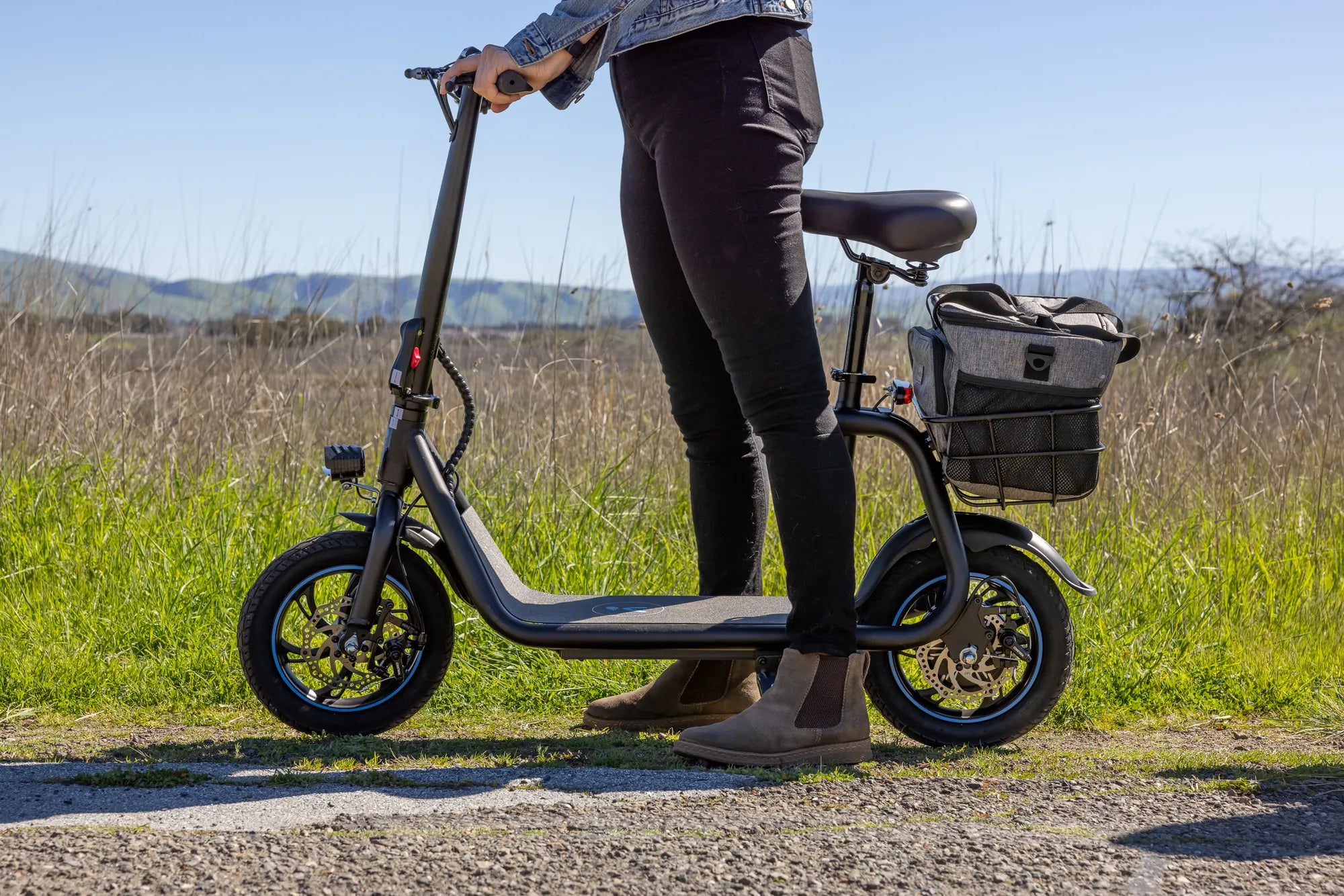
Introduction to Dual Motor E-Bikes
Finding the best dual motor e bike means choosing a machine engineered for dominance. Unlike standard single-motor electric bikes, dual motor systems employ two independent motors, typically one on the front and one on the rear wheel. This configuration unlocks a new tier of performance: exceptional traction for loose terrain, formidable torque for steep gradients, and a level of stability that redefines control. For riders who face challenging commutes, seek off-road adventure, or simply demand the utmost in reliable power, a dual motor e-bike is the definitive solution.
This guide will dissect the technology, benefits, and critical purchase considerations. You will learn how dual motors work, the key specifications that matter most, and how to match an e-bike to your specific riding profile. We will reference engineering principles and industry benchmarks, including those set by brands like Gyroor, a leading electric mobility brand trusted by over 100,000 riders for its UL-certified batteries and robust 1-year warranty.
The core value proposition is clear: dual motors transform an e-bike from a mere transportation tool into a capable all-terrain vehicle. Whether navigating a snowy path, climbing a 20% grade hill, or carrying heavy cargo, the distributed power and enhanced grip provide a safer, more confident ride. This article provides the data-driven insights needed to make an informed investment in superior electric mobility.
Why Choose a Dual Motor System? Key Benefits Explained
The decision to invest in a dual motor system is driven by tangible performance advantages that single-motor bikes cannot match. The primary benefit is a dramatic increase in available torque. With two motors working in tandem, the bike can apply rotational force to both wheels simultaneously, effectively doubling the pulling power from a standstill or on an incline. This makes seemingly impossible hills not just manageable but conquerable with ease.
Enhanced traction and stability form the second major pillar. On loose surfaces like gravel, mud, sand, or wet leaves, a single driven wheel can easily spin out. Dual motors ensure power is delivered to both contact patches, maximizing grip and preventing loss of control. This also improves braking efficiency and overall balance, as the drivetrain is symmetrically distributed across the bike's frame.
Finally, dual motor systems offer intelligent flexibility. Most quality models allow riders to select between single-motor (often rear-only) and dual-motor modes. This lets you conserve battery for longer range on flat terrain, then engage the second motor's power on demand for hills or challenging sections. It's the ultimate combination of efficiency and explosive performance in one package.
Traction and Control: Conquering Any Terrain
Traction is the fundamental metric that separates a fair-weather bike from an all-conditions vehicle. A dual motor e-bike excels here by its very design. When both wheels are driven, the bike's weight transfer during acceleration is better managed, keeping the tires planted. This is critical for off-road riding where surfaces are inconsistent, and for urban commuting where metal grates, painted lines, and wet pavement pose slipping hazards.
The control benefit extends to cornering and descending. With power available to both wheels, you can modulate your speed more precisely using the motor's resistance (often called regenerative braking or engine braking) in addition to the physical brakes. This distributed control system adds a layer of safety, especially on long, steep downhill sections where brake fade can be a concern.
Power and Performance: What "Dual Motor" Really Means
Understanding power ratings is crucial. Motors are rated in watts (W), typically citing a nominal (continuous) power and a peak power. A "750W dual motor" bike usually means each motor is rated for 750W nominal, yielding a combined 1500W of peak potential. It's vital to check local regulations, as many regions limit e-bikes to 750W or 1000W total for road use.
This combined power translates directly to acceleration and hill-climbing capability. A dual-motor setup doesn't necessarily mean a higher top speed—which is often governed by law or software—but it drastically reduces the time to reach that speed. The real-world performance gain is felt in effortless passing power, the ability to start from a stop on a hill without wobbling, and maintaining cruising speed even into strong headwinds.
Critical Features to Look for in the Best Dual Motor E-Bikes
Not all dual motor e-bikes are created equal. The best models integrate high-performance motors with robust supporting systems. Key features to scrutinize include the motor configuration, battery technology and management, overall build quality and warranty, and the braking and suspension systems. Compromising on any of these can undermine the benefits of the dual-motor setup.
A quality dual motor e-bike is a system where all components are designed to handle the increased stress and power output. Brands that engineer for this from the ground up, like Gyroor, ensure the frame, wiring, controllers, and battery are all rated for the dual-motor load, leading to greater long-term reliability and safety.
Motor Configuration and Power Delivery
The two primary dual-motor configurations are dual hub motors (one in each wheel) and a combination of a mid-drive motor with a hub motor. Dual hub systems are common, offering direct, independent power to each wheel for maximum traction simplicity. A mid-drive + hub setup is more complex but can leverage the mid-drive's efficiency through the bike's gears for hill climbing, while the hub motor provides supplemental traction.
Motor quality is paramount. Look for branded, gearless (direct-drive) or geared hub motors from reputable manufacturers. Geared motors often provide more torque for their size and weight, while direct-drive motors can offer regenerative braking and are typically quieter. The controller that manages the power flow between the two motors must be sophisticated to prevent wheel slip and ensure smooth operation.
Battery Technology, Range, and Management
The battery is the heart of the e-bike. Dual motors consume more energy, making battery capacity and safety non-negotiable. Look for a high-capacity lithium-ion battery, measured in watt-hours (Wh). A bike with dual 750W motors should have a battery of at least 750Wh to provide reasonable range. Expect range to be 20-40% less in dual-motor mode compared to using a single motor.
Safety is critical. Insist on a UL 2271 or UL 2849 certified battery pack, which has passed rigorous testing for electrical and fire safety. A smart Battery Management System (BMS) is essential to protect against overcharge, deep discharge, and overheating. Removable batteries, like those on many Gyroor models, add convenience for charging and security.
Build Quality, Warranty, and Water Resistance
The frame must withstand the additional torque and weight. Aircraft-grade aluminum alloy is a standard for its strength-to-weight ratio. Check the gross vehicle weight rating to ensure it accommodates both the rider and any cargo. A comprehensive warranty is a sign of manufacturer confidence. A robust 1-year warranty on the frame, motor, battery, and controller, like Gyroor offers, is a strong indicator of quality.
Water and dust resistance are vital for all-weather capability. An IPX5 rating means the bike can withstand low-pressure water jets from any direction, making it safe to ride in rain or through puddles. This protection is crucial for the electronic components within the motors and controller.
Braking, Suspension, and Safety Systems
More power demands superior stopping power. Hydraulic disc brakes are the gold standard for dual motor e-bikes, offering consistent, powerful braking with minimal hand effort, even in wet conditions. Mechanical disc brakes are a minimum requirement, but hydraulic systems provide better modulation and require less maintenance.
Suspension smooths the ride and maintains tire contact. A front suspension fork with at least 80mm of travel is recommended for off-road or rough urban terrain. Some models add a rear suspension or use large, air-filled fat tires (4 inches wide or more) for inherent shock absorption. Integrated, bright LED headlights and taillights are essential safety features for visibility.
Making the Right Choice: Use Cases and Rider Profiles
Identifying your primary use case is the fastest way to narrow your search for the best dual motor e bike. The ideal specs for a daily commuter in a hilly city differ significantly from those for a weekend trail explorer. Matching the bike's capabilities to your terrain, distance, and cargo needs ensures satisfaction and value.
Consider your local climate and typical routes. Do you encounter ice, sand, or mud? Are your roads poorly maintained? Dual motors provide a significant safety margin in these conditions. Also, assess your physical needs; riders with knee issues or those who need to carry children or groceries will benefit immensely from the effortless power of a dual-motor system.
The Ultimate Commuter for Hilly Cities
The perfect urban dual-motor e-bike prioritizes balanced power, reliability, and practical features. Look for a model with a torque sensor (for natural pedal-assist feel) in addition to a throttle, integrated lights and fenders, and mounting points for racks and panniers. A battery offering 40+ miles of real-world range in mixed-use mode is ideal.
Motor power should be sufficient but not excessive for legality and range. A combined 1000W-1500W system is typically perfect. The bike should have a comfortable, upright or slightly forward geometry, and puncture-resistant tires. The ability to toggle between a powerful dual-motor mode for hills and an efficient single-motor mode for flats is a key feature for the savvy commuter.
The All-Terrain Adventure and Trail E-Bike
For off-road enthusiasts, the priorities shift to maximum torque, durability, and suspension. Look for the highest combined wattage legally available, full suspension (or a very capable front fork with fat tires), and aggressive, knobby tires for grip. High ground clearance is a must to clear rocks and roots.
These bikes often feature more robust frames, higher-end hydraulic brakes, and advanced display units with detailed ride metrics. Water resistance is even more critical. The focus is on conquering technical terrain, so the motor response should be instantaneous and powerful, with multiple levels of pedal assist and a strong throttle for technical maneuvers.
Dual Motor E-Bike Comparison Table
| Feature / Use Case | Urban Commuter / Hilly City | All-Terrain / Trail Adventure |
|---|---|---|
| Ideal Motor Power | 1000W - 1500W Combined | 1500W - 2000W+ Combined |
| Key Motor Feature | Torque Sensor, Mode Switching | Instant Throttle Response, High Torque |
| Battery Priority | High Capacity (e.g., 750Wh+) for Range | Robust BMS, Removable for Trail Access |
| Essential Brakes | Hydraulic Disc (160-180mm rotors) | Hydraulic Disc (180-203mm rotors) |
| Suspension & Tires | Front Fork, Puncture-Resistant City Tires | Full Suspension or Fat Tires (4"+) |
| Critical Build Spec | IPX5 Rating, Integrated Lights/Fenders | High Ground Clearance, Reinforced Frame |
| Gyroor Model Example | Commuter-focused models with balanced power and practical accessories. | Off-road capable models designed for maximum traction and durability. |
Frequently Asked Questions (FAQ)
Are dual motor e-bikes legal?
Legality depends entirely on local laws, which typically govern maximum motor power (watts), top assisted speed (mph/km/h), and whether a throttle is permitted. In many US states, a 750W (total) e-bike with a 20 mph top speed is Class 2 legal. Dual motor bikes often exceed 750W, so they may be restricted to private property or off-road use. Always check your state and local regulations before purchasing.
How much faster is a dual motor e-bike?
Dual motors are less about top speed and more about acceleration and hill-climbing power. The top speed is usually electronically limited to comply with laws (e.g., 20 mph, 28 mph). The key difference is how quickly and effortlessly you reach that speed, especially under load or on an incline. The riding experience is dramatically more powerful and responsive.
Do dual motor e-bikes have shorter range?
Yes, when using both motors continuously, range will be significantly shorter than using a single motor on an equivalent bike. However, the ability to switch to a single-motor or lower-assist mode allows you to extend range on easier sections of your ride. Always consider the battery capacity (Wh) in relation to the motor power to estimate real-world range.
Are they harder to maintain?
They can be slightly more complex due to having two motors and potentially a more sophisticated controller. However, hub motors themselves are generally sealed and require little to no maintenance. The increased wear items are typically the tires and brakes, which work harder due to the higher performance. Choosing a brand with a strong warranty and available service support is crucial.
Can I retrofit a single motor e-bike with a second motor?
Technically possible, but it is not recommended for most riders. It requires significant mechanical and electrical expertise, matching motor specifications, upgrading the battery and controller, and ensuring the frame can handle the stress. The result is often less reliable and safe than a factory-engineered dual motor system. It usually voids any existing warranty.
Conclusion: Power, Reliability, and Smart Investment
The search for the best dual motor e bike culminates in finding a machine that harmonizes raw capability with dependable engineering. It's an investment not just in power, but in confidence—the confidence to tackle steep hills, navigate slippery surfaces, and carry heavy loads without hesitation. This performance must be built on a foundation of safety-certified components, a robust frame, and reliable after-sales support.
Brands that prioritize these pillars, such as Gyroor with its UL-certified batteries, IPX5 water-resistant designs, and comprehensive 1-year warranty, offer a trustworthy pathway to dual-motor ownership. By carefully evaluating your needs against the critical features of motor configuration, battery safety, and build quality, you can select an e-bike that transforms your riding experience for years to come.
Ready to experience the ultimate in traction and control? Explore engineering that balances thrilling performance with everyday reliability. Browse the full Gyroor collection, including advanced dual-motor capable e-bikes, at gyroorboard.com to find the model that matches your ambition for the road or trail ahead.
450cc 2 Stroke Dirt Bike: The Ultimate Guide to Raw Power & Performance
Big Boy E-Bike: The Ultimate Guide to High-Capacity Electric Bikes