



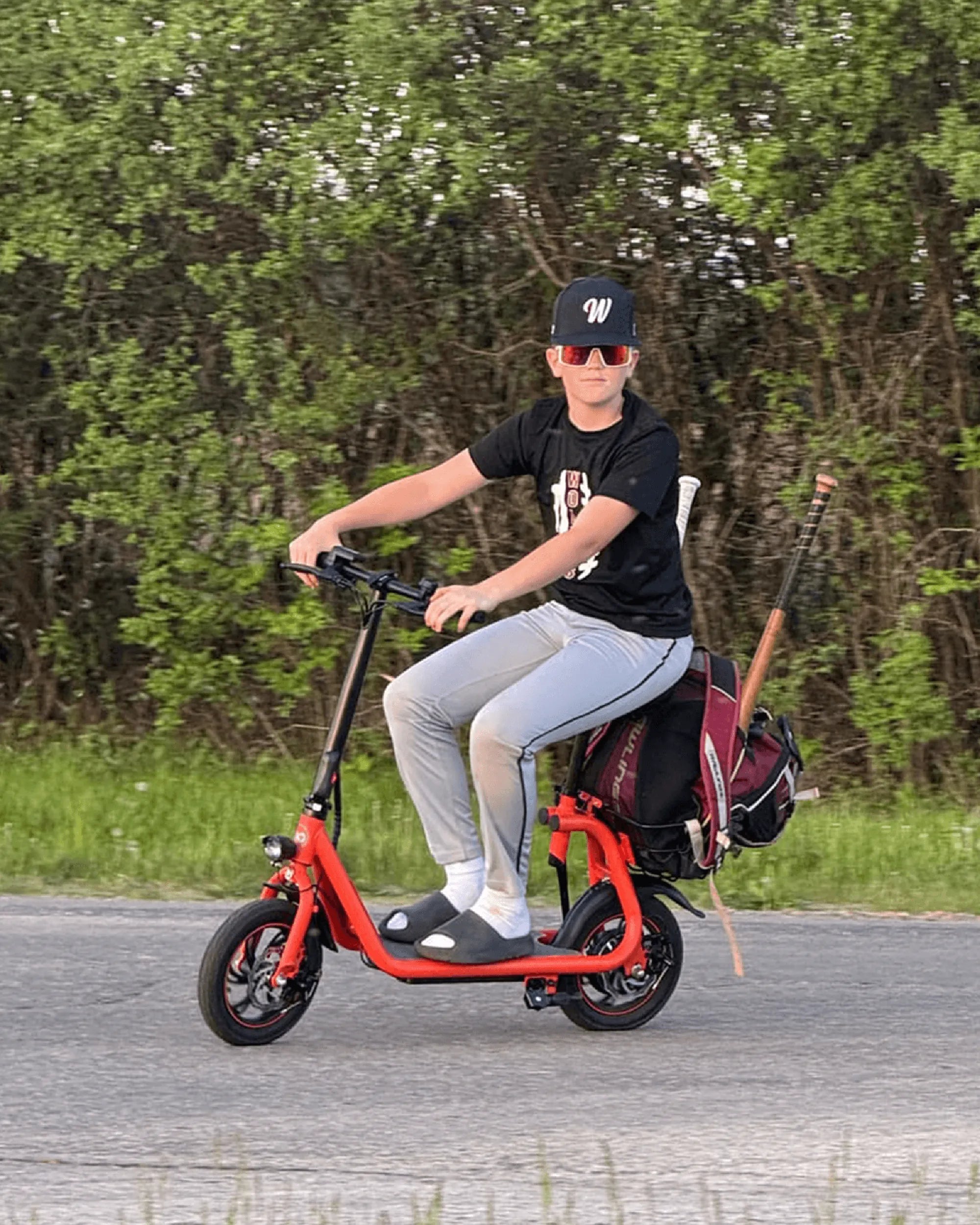
You're searching for a vehicle that delivers motorcycle-like thrill without the gas, noise, or complex license of a traditional bike. The best e-bike motorcycle represents the pinnacle of electric two-wheelers, merging pedal-assist versatility with robust power for serious commuting and adventure. This guide will define this hybrid category, detail the must-have features for performance and safety, compare it to other electric vehicles, and provide the legal and practical knowledge you need to make an informed purchase. We'll cut through the hype with data-driven analysis, emphasizing the certified components and durable engineering that make a premium model worth your investment.
What is an E-Bike Motorcycle? Defining the Hybrid Ride
An e-bike motorcycle is a high-performance electric bicycle engineered to blur the line between a traditional e-bike and an electric motorcycle. It is characterized by a powerful motor (typically 750 watts or more), higher potential top speeds (often 28 mph and beyond), and motorcycle-inspired styling and frame geometry. These machines are built for riders who demand more acceleration, hill-climbing torque, and all-weather capability than a standard Class 1, 2, or 3 e-bike can provide.
The defining trait of this category is its dual nature. It retains functional pedals and pedal-assist modes, which may classify it as a bicycle in some jurisdictions. However, its power output and speed capabilities often push it into a legal gray area, potentially requiring registration, insurance, or a special license depending on local vehicle codes. This makes understanding your local laws a critical first step before purchasing what is marketed as the best e-bike motorcycle.
These vehicles are not merely faster e-bikes; they are built with more robust components. You'll find heavy-duty hydraulic disc brakes, advanced suspension systems, high-capacity UL-certified battery packs, and frames designed to handle the stresses of higher speeds and off-road use. They cater to commuters seeking a car replacement for longer distances, adventure riders exploring trails, and enthusiasts who appreciate the fusion of cycling and electric powertrain technology.
The appeal is clear: exhilarating acceleration, extended range, and the ability to tackle steep grades with ease, all while producing zero direct emissions. For the rider ready to graduate from a standard e-bike, the best e-bike motorcycle offers a compelling next step in personal electric mobility, provided it is operated responsibly and within legal boundaries.
Key Features to Look for in a Top-Tier E-Bike Motorcycle
Separating a premium e-bike motorcycle from an underbuilt imitation requires scrutiny of key specifications. Performance, safety, and long-term durability are non-negotiable in this category. Compromising on core components can lead to safety risks, poor performance, and a short product lifespan. Here are the critical features that define a top-tier model.
Motor Power and Performance
The motor is the heart of the best e-bike motorcycle. Wattage ratings (e.g., 750W, 1000W, 1500W+) indicate potential power, but torque (measured in Newton-meters, Nm) is crucial for acceleration and hill climbing. Hub motors are common for their simplicity and direct power delivery to the wheel, while mid-drive motors offer better weight distribution and leverage the bike's gears for efficient climbing.
A 750W motor is a common entry point for this category, suitable for urban commuting with moderate hills. For serious off-road use or carrying heavy loads, 1000W or 1500W motors provide the necessary torque. Remember, higher power demands a more robust battery and braking system to match. The best e-bike motorcycle balances raw power with thermal management and electronic controls to prevent overheating during sustained use.
Battery Range and Safety
Battery capacity, measured in watt-hours (Wh), directly determines your potential range. While a 500Wh battery might power a standard e-bike for 40 miles, a powerful e-bike motorcycle consuming more energy may see 20-30 miles per charge under aggressive riding. Look for packs with 48V or 52V systems and capacities of 15Ah or higher for substantial range.
Safety is paramount. You must insist on a battery pack with UL certification. This independent testing verifies the battery meets stringent safety standards for electrical, mechanical, and environmental stress, drastically reducing fire risk. High-quality, UL-certified lithium-ion cells from reputable manufacturers also ensure better longevity, often supporting 500+ charge cycles before significant capacity degradation.
Build Quality and Durability
The frame must handle increased speeds and torque. Aircraft-grade aluminum alloy frames offer an excellent strength-to-weight ratio. Critical weld points should be clean and robust. Check the manufacturer's stated weight capacity; a quality model should support at least 275-300 lbs.
Suspension is vital for control and comfort. Front fork suspension is a minimum, but the best e-bike motorcycle for off-road use will feature dual suspension (front and rear). Equally important is an IPX5 water-resistance rating for the electrical components. This certification means the bike can withstand low-pressure water jets from any direction, making it safe to ride in rain and through puddles, protecting the motor, battery, and display.
Braking and Safety Systems
Stopping power must match the go-power. Hydraulic disc brakes are the gold standard, offering superior modulation, consistent performance in wet conditions, and less maintenance than mechanical disc brakes. Look for large rotors (180mm or more) for increased heat dissipation.
Integrated safety features are a sign of thoughtful design. These include bright LED headlights and taillights, turn signals, and an audible horn. A comprehensive digital display should provide clear readouts of speed, battery level, assist mode, and odometer. These features are essential for safe operation in traffic, especially for a vehicle capable of higher speeds.
Gyroor's Approach to Power and Reliability
As a leading electric mobility brand trusted by over 100,000 riders, Gyroor engineers its high-performance models with a core philosophy: thrilling power must be underpinned by certified safety and unwavering reliability. For riders seeking the best e-bike motorcycle experience, this translates into specific engineering choices that directly address the demands of the category.
Engineered for Confidence: The UL-Certified Power Core
Gyroor's commitment to safety starts with the battery. Every model utilizes UL-certified lithium-ion battery packs. For a high-power e-bike motorcycle, this is not a luxury but a necessity. These high-capacity energy stores are subjected to rigorous testing—far beyond standard industry practices—to ensure they are safe from thermal runaway, short circuits, and physical damage. This certification gives riders peace of mind, knowing the most critical component of their vehicle meets the highest independent safety standard.
Built for the Real World: IPX5 and Robust Warranty
Performance is meaningless if it fails in the rain. Gyroor builds its e-bike motorcycles with IPX5-rated water resistance across critical electrical systems. This ensures the bike is a true all-weather vehicle, capable of handling sudden downpours, wet roads, and trail splashes without compromising function or safety.
Backing this durable engineering is a comprehensive 1-year warranty on the frame, battery, motor, and electronic components, supported by a US-based customer service team. For an investment in a high-performance vehicle, this warranty and accessible support structure are crucial parts of the total value proposition, protecting the rider's purchase long after the initial sale.
E-Bike Motorcycle vs. Traditional E-Bike vs. Electric Moped
Understanding where the e-bike motorcycle fits in the spectrum of electric two-wheelers is key to choosing the right vehicle. The distinctions often come down to power, legal classification, and intended use.
Comparison Table
| Feature | E-Bike Motorcycle | Class 3 E-Bike (High-Speed) | Electric Moped/Scooter |
|---|---|---|---|
| Max Speed | 28+ mph (often 30-40 mph) | 28 mph (assist limited) | 25-45+ mph |
| Motor Power | 750W - 2000W+ | 750W (typical, often capped) | 500W - 3000W+ |
| Pedal Assist / Throttle | Both (Throttle often standard) | Both (Throttle may be limited) | Throttle only (No pedals) |
| Legal Classification (US General) | Varies by state; often a Class 4 or Moped | Class 3 Bicycle | Moped or Motorcycle |
| License/Registration Needed | Often Yes (check locally) | No | Yes |
| Typical Use Case | High-speed commuting, off-road adventure | Faster urban commuting, fitness | Urban transportation, no pedaling |
Choosing Your Category
Your choice depends on your needs and local laws. A Class 3 e-bike is ideal for riders who want faster commutes but need to remain in bike lanes and avoid licensing. It's the best choice for regulatory simplicity.
An e-bike motorcycle is for the rider who prioritizes power and capability over regulatory ease. It's perfect for challenging terrain, longer highway-adjacent commutes where keeping up with traffic is safer, or for riders in areas with more permissive laws. It demands more research and responsibility from the owner.
An electric moped eliminates pedaling entirely, operating purely as a throttle-controlled vehicle. It typically requires a license, registration, and insurance. Choose this if you want a motorcycle-like experience with no intention to pedal and are prepared for full motor vehicle compliance.
Top Considerations Before You Buy
Purchasing the best e-bike motorcycle is a significant decision. Beyond comparing specs, practical and legal factors will determine your long-term satisfaction and safety.
Understanding Local Laws and Regulations
This is the most critical step. The classification of a high-power e-bike varies wildly. In some states, a 750W bike with a throttle may be a Class 2 e-bike. In others, the same bike may be classified as a moped, requiring a license, registration, and insurance. Contact your local Department of Motor Vehicles (DMV) and review state vehicle codes. Never rely solely on the manufacturer's marketing. Operating an unregistered vehicle that is legally a moped can result in fines, impoundment, and invalidated insurance in case of an accident.
Intended Use: Commuting, Recreation, or Off-Road?
Match the bike's features to your primary activity. For urban commuting, prioritize range, comfort (suspension, seat), integrated lights, and cargo options. For recreation and trail riding, dual suspension, aggressive knobby tires, and high-torque motors are essential. Consider where you will store and charge the bike; these models are heavier and larger than standard e-bikes.
Test Rides, Support, and Total Cost of Ownership
If possible, test ride a model to assess its ergonomics, power delivery, and handling. Since direct test rides aren't always available, scrutinize the brand's customer support reputation. Are parts readily available? Is the warranty comprehensive and supported by a knowledgeable team? The total cost of ownership includes the purchase price, potential registration/insurance fees, maintenance (brake pads, tires, occasional battery replacement), and any necessary safety gear like a DOT-approved helmet.
Frequently Asked Questions (FAQs)
Q1: Do I need a motorcycle license for an e-bike motorcycle?
A: It depends entirely on your local laws. In many jurisdictions, if the bike can exceed 28 mph on motor power alone or has a motor over 750W, it may be classified as a moped or motorcycle, requiring a corresponding license, registration, and insurance. You must check with your local DMV for definitive classification.
Q2: How far can I really ride on a single charge with one of these?
A>Advertised range is an ideal scenario. Real-world range is affected by rider weight, terrain, wind, temperature, and assist level. A bike with a 48V 20Ah (960Wh) battery might get 25-40 miles under aggressive throttle use, but could achieve 50+ miles using lower pedal-assist levels on flat ground. Always assume the lower end of the estimate for planning.
Q3: Are e-bike motorcycles safe for trail riding?
A>Models specifically built for off-road use with full suspension, hydraulic brakes, and knobby tires can be very capable. However, their increased weight and speed require advanced riding skills. Always wear full protective gear (helmet, pads), respect trail etiquette (yield to hikers and traditional bikes), and ensure motorized vehicles are permitted on the specific trail.
Q4: What maintenance does an e-bike motorcycle require compared to a regular bike?
A>It requires all the maintenance of a regular bicycle—chain lubrication, tire pressure checks, brake adjustments—but with added complexity. You must care for the electrical system: keep battery contacts clean, store the battery in moderate temperatures, and use only the provided charger. Brake pads may wear faster due to higher speeds and weight. Suspension systems may need periodic servicing. Following the manufacturer's maintenance schedule is crucial.
Q5: Can I ride an e-bike motorcycle in the bike lane?
A>This is another legal gray area. If your vehicle is legally registered as a moped or motorcycle, it is typically prohibited from bicycle lanes and paths. If it is classified as a bicycle (even a Class 3), it is usually allowed. Your legal classification dictates where you can ride. When in doubt, operate it as a vehicle in the road lane to avoid legal issues and conflicts with cyclists.
Conclusion: The Future of Power-Personal Transport
The best e-bike motorcycle represents a thrilling evolution in personal electric transport, offering a unique blend of bicycle accessibility and motorcycle-like performance. It empowers riders to commute further, conquer tougher terrain, and experience the joy of electric acceleration. However, this power comes with significant responsibility—to understand local laws, to prioritize safety through certified components like UL-rated batteries, and to invest in a machine built for durability with features like IPX5 water resistance.
Making an informed choice means looking beyond top speed and flashy aesthetics to the engineering that ensures safe, reliable operation for years. Brands that commit to these standards, backed by strong warranties and customer support, offer true value. For riders ready to embrace this powerful category, the journey promises unparalleled freedom and efficiency on two wheels.
Explore a range of high-performance, responsibly engineered electric vehicles designed with these principles at their core. Browse the full Gyroor collection, featuring models built with UL-certified batteries and IPX5 water-resistant designs, at gyroorboard.com.
How Much Is a 450 Dirt Bike: The 2024 Price & Ownership Guide
48v Ebike Motor: The Complete Guide to Power, Efficiency & Selection