



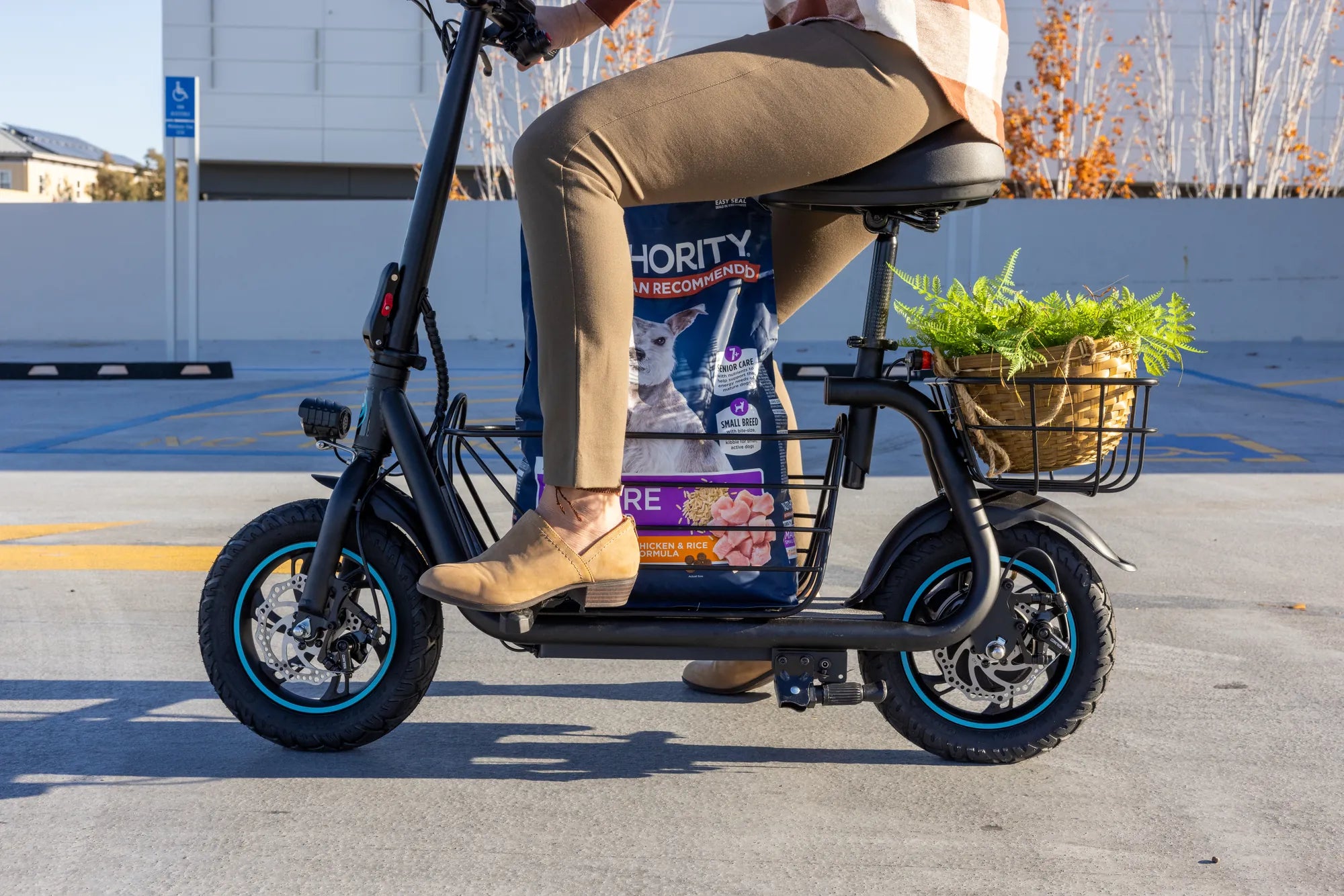
You're searching for the best ebike to get, but the perfect model depends entirely on your commute, your hills, and your lifestyle. This guide cuts through the noise with data-driven criteria to help you choose an electric bicycle that delivers safety, performance, and long-term value. We'll analyze motor types, decode battery specs, and explain why features like UL certification are non-negotiable, using Gyroor's engineering-first approach as a real-world example of reliability trusted by over 100,000 riders.
Defining "Best": Key Factors to Consider Before You Buy
The best ebike to get for one rider might be wrong for another. Your primary use case is the most critical filter. A daily urban commuter needs different features than a weekend trail explorer or someone with limited storage space. Ignoring this match is the fastest route to buyer's remorse, regardless of the bike's raw power or price tag.
Motor power, measured in watts (W), directly influences hill-climbing ability and top speed. A 250W motor suits flat city streets, while 500W offers confident hill assistance. For serious off-road terrain, 750W or higher provides necessary torque. Legal classifications like Class 1, 2, and 3 in North America often correlate with motor output and maximum assisted speed, impacting where you can ride.
Battery range is the most frequently misunderstood spec. Advertised figures are based on ideal lab conditions. Real-world range is sliced by hills, headwinds, rider weight, and assist level. A 500Wh battery might claim 40 miles but deliver 25-30 under typical use. The battery's quality and safety certification are more important than its maximum range promise.
Build quality separates a durable investment from a disposable gadget. Look for aluminum alloy frames, reliable braking systems (hydraulic disc brakes outperform mechanical), and purpose-built tires. For all-weather capability, an IPX5 water resistance rating is essential to protect the electrical system from rain and road spray, ensuring longevity.
Your Primary Riding Purpose: Matching Bike to Lifestyle
Identifying your core use case narrows the field instantly. The four primary categories are urban/commuter, off-road/mountain, cargo/utility, and folding/compact. Each is engineered with distinct geometry, component choices, and performance profiles. Choosing the right category ensures the bike's design actively supports your daily goals instead of working against them.
Urban/Commuter Ebikes prioritize comfort, efficiency, and practicality. They feature upright riding positions, integrated lights, fenders, and rear racks. Motors are tuned for smooth acceleration and legal compliance, with batteries optimized for consistent, moderate-range use. This is likely the best ebike to get for most people replacing car trips under 15 miles.
Off-Road/Mountain Ebikes (E-MTBs) demand robust construction. They feature front or full suspension, high-torque motors, knobby tires for traction, and reinforced frames. The motor must deliver instant power for technical climbs, and the battery needs a robust casing. These bikes trade some efficiency and lightweight design for pure trail capability.
Folding/Compact Ebikes solve space constraints. They are designed for apartment living, mixed-mode commuting (bike + train), or RV travel. The best folding models do not sacrifice critical features; they still offer decent motor power, a UL-certified battery, and a secure folding mechanism. Portability is their superpower, but ride stability can differ from full-size frames.
Motor Power and Performance: 250W vs. 500W vs. 750W+
Motor wattage is a key determinant of an ebike's character. Think of it as the engine size. A 250W hub motor is common in Europe and for Class 1 ebikes, providing subtle assistance up to 20 mph. It's energy-efficient and perfect for flat to moderately rolling terrain where the rider still contributes significant pedal power.
A 500W motor, often found in Class 2 and 3 models, is the versatile sweet spot for many riders. It provides confident acceleration from stops and can handle sustained 6-8% grades without straining. This power level makes a hilly commute or carrying a load feel manageable, broadening where and how you can ride. It's a strong contender for the best ebike to get for mixed-use scenarios.
Motors at 750W and above are for demanding applications. They are essential for heavy cargo hauling, steep mountain trails, or riders in exceptionally hilly areas. These powerful motors drain batteries faster and are often restricted on public bike paths. They represent a tool for specific, high-demand jobs rather than general-purpose riding.
Motor placement also matters. Hub motors (in the wheel) are common and low-maintenance. Mid-drive motors (at the cranks) leverage the bike's gears, offering superior efficiency and balance on hills. Mid-drives are typically found on higher-performance models but come at a higher cost.
Battery Range and Real-World Expectations
Battery capacity, measured in Watt-hours (Wh), is your fuel tank. A simple formula is Voltage (V) x Amp-hours (Ah) = Wh. A higher Wh number generally means more potential range. However, the relationship isn't linear due to real-world variables. Rider weight, cargo, tire pressure, temperature, and terrain all drastically impact the miles you'll actually see.
To estimate real-world range, take the manufacturer's maximum claim (often based on a 165-lb rider on eco mode on flat ground) and reduce it by 25-40%. For a bike advertised at 50 miles, plan for 30-38 miles under normal use. If your commute is 10 miles round trip, a 40-mile advertised battery provides a safe, multi-day buffer without daily charging anxiety.
Battery safety and longevity are paramount. This is where Gyroor's commitment to UL-certified battery packs becomes a critical differentiator. UL certification involves rigorous testing for overcharge, short circuit, and extreme temperature protection. It's your guarantee against fire risk and ensures the battery management system (BMS) will maintain cell health over 500+ charge cycles.
Charging practices extend battery life. Avoid draining to 0% or constantly charging to 100%. Storing the battery at 40-80% charge is ideal for long-term health. A quality charger with automatic shut-off is part of a safe system. The best ebike to get includes not just a large battery, but a smart, safe, and certified one.
Build Quality and Essential Features for Durability
The frame is the foundation. Aluminum alloy is the standard for its blend of strength, lightness, and corrosion resistance. Check weld quality—clean, even welds indicate careful manufacturing. The geometry should fit your riding posture; a test ride is invaluable here. For commuters, mounting points for racks and fenders are essential for utility.
Brakes are your most important safety feature. Disc brakes, especially hydraulic ones, provide consistent, powerful stopping in all weather conditions, a must for heavier ebikes. Mechanical disc brakes are a step above rim brakes but require more frequent adjustment. Never compromise on braking performance for the sake of a lower price.
Tires connect you to the road. Commuter bikes benefit from puncture-resistant slicks or semi-slicks with moderate width (1.75" - 2.2") for low rolling resistance. Off-road bikes need wide, knobby tires (2.4"+) for grip. Air-filled (pneumatic) tires always offer better ride quality and traction than solid alternatives. Check for quality brand names like Kenda or CST.
Water and dust resistance protect your investment. An IP rating defines this protection. An IPX5 rating, like those on Gyroor models, means the electrical components can withstand water jets from any direction. This allows you to ride in the rain or through puddles without fear of immediate failure. It's a feature that defines a bike built for daily, real-world use.
Navigating Top Ebike Types: A Gyroor-Focused Guide
Applying the previous criteria to specific bike styles clarifies the decision. Gyroor's lineup exemplifies how safety and performance specs translate into real riding products. Their focus on UL-certified batteries, IPX5 water resistance, and a comprehensive 1-year warranty establishes a baseline of trust for each category.
The Ultimate Urban Commuter
A great commuter ebike feels stable, efficient, and equipped. Gyroor's commuter models feature step-through or traditional frames for easy mounting, integrated LED lighting systems for visibility, and full-length fenders. The motor provides enough power for bridge inclines and stop-and-go traffic, while the battery is sized for a week of typical city riding.
Practicality is key. Look for a rear rack rated for at least 55 lbs to carry bags or panniers. A comfortable, ergonomic saddle and adjustable stem fine-tune the fit. The best ebike to get for commuting minimizes hassle and maximizes reliability, turning a daily chore into a genuine pleasure.
The Adventure-Ready Off-Roader
Off-road ebikes demand toughness. A capable model needs a suspension fork with at least 80mm of travel to absorb bumps. The motor must be a high-torque unit, often a 500W or 750W system, with a responsive pedal assist that delivers power smoothly when climbing rocky trails. Wide handlebars provide control.
The frame must have clearance for large, knobby tires and protection for the undercarriage battery. Components like the derailleur and brake levers should be from reputable brands like Shimano. This bike isn't just for paved paths; it's built to handle dirt, gravel, and roots with confidence.
The Versatile Folding Ebike
The best folding ebikes balance portability with performance. The fold should be intuitive, requiring no tools, and result in a compact package. Despite the smaller frame, it should not compromise on a UL-certified battery or a motor powerful enough for city hills. Weight is a consideration; models under 55 lbs are significantly easier to carry.
Once unfolded, the riding experience should feel secure. Look for a locking latch mechanism that eliminates frame flex. Features like a carry handle, built-in cable management, and a kickstand designed for the folded position show thoughtful engineering. It's the best ebike to get when space is your primary constraint.
Beyond the Specs: The Gyroor Assurance Difference
Technical specifications tell only half the story. The long-term ownership experience—safety, durability, and support—defines whether a bike remains the "best" choice years later. Gyroor's design philosophy prioritizes these often-overlooked aspects, building assurance into every model.
Safety First: The Non-Negotiable of UL-Certification
An uncertified lithium-ion battery is a potential hazard. UL 2271 and UL 2849 certifications involve thousands of tests simulating abuse. Gyroor's use of UL-certified battery packs means each cell and the entire pack's BMS has been validated for electrical, mechanical, and environmental safety. This certification is a direct investment in rider safety and home security.
Built to Last: IPX5 Water Resistance in Action
IPX5 isn't just a marketing term. It means the motor controller, display, wiring harness, and battery compartment seals can withstand sustained water spray. This engineering prevents corrosion and electrical shorts caused by wet roads or sudden downpours. It's what allows a Gyroor ebike to be a true all-season vehicle, dramatically increasing its usable lifespan and reducing maintenance issues.
Riding with Confidence: The 1-Year Comprehensive Warranty
A strong warranty is a brand's promise. Gyroor's 1-year warranty covers the frame, motor, battery, and electronic components against defects. This coverage, backed by accessible customer support, means you're not alone if an issue arises. It transforms a purchase from a transaction into a supported partnership, ensuring your bike stays on the road.
E-Bike Comparison Table: Key Specifications at a Glance
| Ebike Type | Ideal Use Case | Typical Motor Power | Key Features | Gyroor Hallmarks |
|---|---|---|---|---|
| Urban Commuter | Daily city riding, errands, flat to rolling hills | 350W - 500W | Fenders, rack, lights, upright geometry | UL-Certified Battery, IPX5, Integrated Lighting |
| Off-Road / Mountain | Trail riding, steep hills, rough terrain | 500W - 750W+ | Suspension fork, knobby tires, high-torque motor | Reinforced Frame, High-Capacity Battery, Durable Components |
| Folding / Compact | Mixed-mode commute, small storage, travel | 250W - 500W | Quick-fold mechanism, compact footprint, lighter weight | Secure Fold Lock, UL-Certified Compact Battery, Portability |
Making Your Final Decision: A Practical Checklist
Use this actionable list when evaluating any ebike. It synthesizes the critical points from this guide into a step-by-step process.
- Match Type to Purpose: Confirm the bike's category (commuter, mountain, folding) aligns with your primary use.
- Verify Motor & Legal Class: Ensure the motor power (e.g., 500W) and resulting class (1,2,3) are suitable for your terrain and local regulations.
- Check for UL-Certified Battery: This is a safety non-negotiable. Ask for certification proof if not explicitly stated.
- Ensure IPX4+ Water Resistance: Look for a rating of IPX4 or higher (IPX5 is ideal) for all-weather capability.
- Review Warranty Terms: A comprehensive 1-year warranty on the frame, motor, and battery is the industry standard for quality brands.
- Test Ride If Possible: Assess comfort, handling, and power delivery firsthand. Feel the brake responsiveness and assist smoothness.
Frequently Asked Questions (FAQs)
What is the average lifespan of a quality e-bike?
A well-maintained e-bike from a reputable brand can last 5-8 years or more. The battery is the first component to degrade, typically retaining 70-80% of its capacity after 500 full charge cycles (about 3-5 years of regular use). The motor and frame can last much longer with proper care. Gyroor's use of UL-certified batteries and IPX5-rated construction is designed to maximize this lifespan.
How much should I realistically budget for a "best in class" e-bike?
Expect to invest between $1,200 and $3,000 for a high-quality, reliable e-bike with good components. Entry-level (<$1,000) models often cut corners on battery safety and brakes. The $1,500-$2,200 range is the sweet spot for commuter and hybrid models with UL-certified batteries, hydraulic disc brakes, and reputable drivetrains. Premium performance and cargo e-bikes extend to $4,000+.
Can I test ride a Gyroor e-bike before purchasing?
Gyroor operates primarily as a direct-to-consumer brand online, which allows for higher value at a given price point. While physical test rides may be available through select retail partners, Gyroor mitigates purchase risk with a robust customer service policy and warranty. Reviewing detailed specs, video reviews, and the experiences of their 100,000+ rider community provides significant insight.
How do I maintain my e-bike to ensure it lasts?
Regular maintenance is simple but crucial. Keep tires properly inflated. Clean and lubricate the chain every few weeks. Check brake pad wear and adjust brake tension as needed. Wipe down the bike after wet rides. Store the bike (and especially the battery) in a cool, dry place. Have a professional mechanic perform an annual tune-up to check torque on critical bolts and inspect the electrical system.
Are e-bikes difficult to assemble when delivered?
Most direct-to-consumer e-bikes arrive 85-90% assembled. Typical tasks include attaching the front wheel, handlebars, pedals, and seat. It requires basic tools (usually provided) and 30-60 minutes. Comprehensive instruction manuals and online video guides are standard. If you're uncomfortable, any local bike shop can perform the final assembly for a modest fee, ensuring it's done correctly.
Your Journey to the Perfect Ride Starts Now
The best ebike to get is the one that disappears into your life, becoming a seamless tool for freedom, fitness, and function. It's defined not by a single top speed or price, but by how well its safety features, performance envelope, and durable construction align with your personal world. By prioritizing UL-certified batteries, robust water resistance, and reliable support, you invest in years of dependable service.
Use the framework and checklist in this guide to analyze any model. Let your specific needs—not just generic rankings—drive your decision. When you choose a bike engineered with these principles, like those from Gyroor, you're choosing more than transportation. You're choosing a reliable partner for your daily adventures. Explore the full range of thoughtfully designed e-bikes and find the model engineered for your ride.
Browse the full Gyroor collection at gyroorboard.com.
48v ebike battery not charging: A Complete Diagnostic & Repair Guide
Dirt Bike for Kids Age 7: The Ultimate Guide to a Safe First Ride