



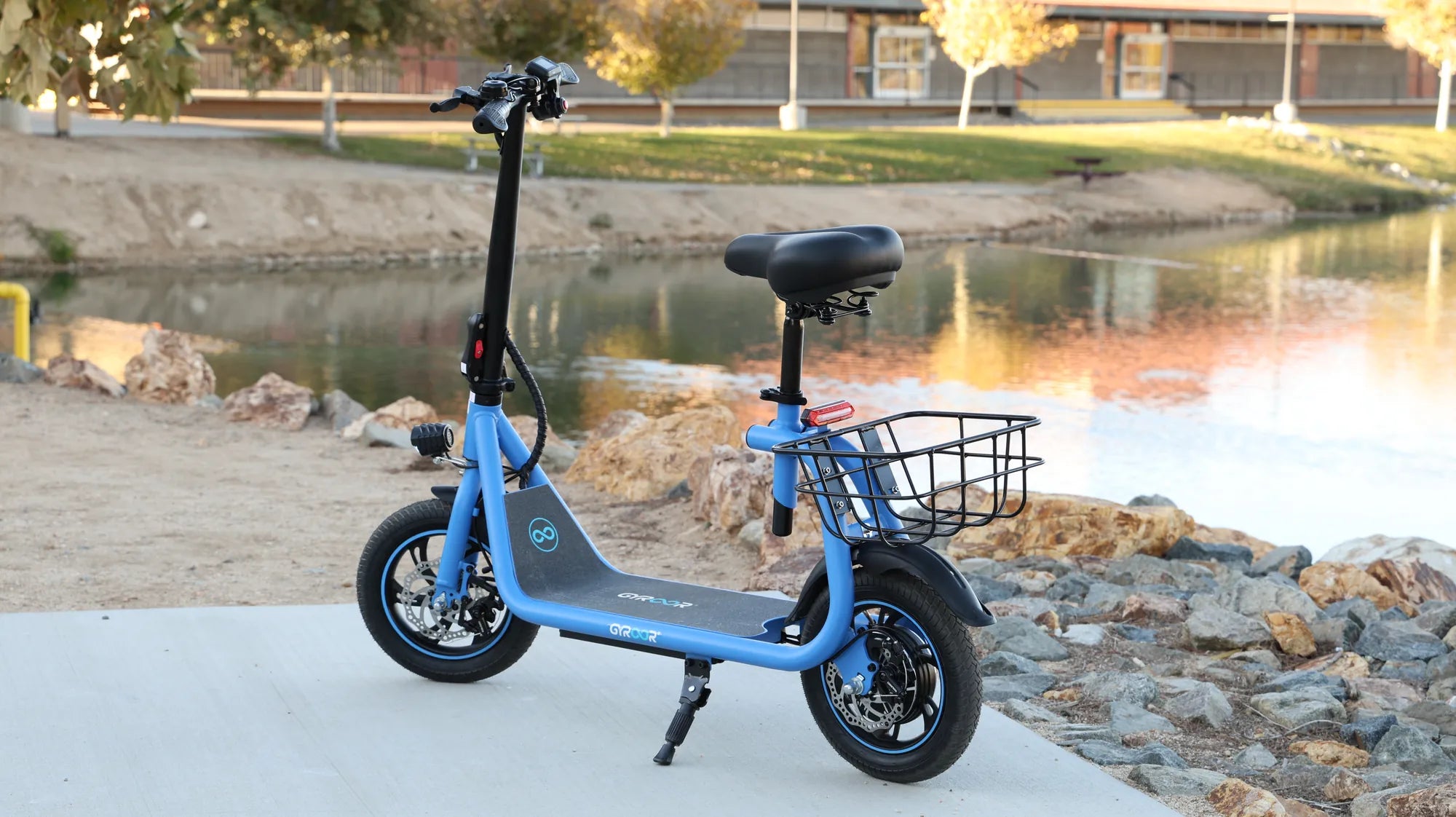
Finding Your Perfect Ride Without Breaking the Bank
The search for the best ebike under 300 is a quest for smart value in the world of electric mobility. At this price point, you won't find high-performance carbon fiber frames or 80-mile ranges, but you can secure a dependable machine for light commuting, casual neighborhood rides, and errands. The key is managing expectations while refusing to compromise on fundamental safety and build quality.
This guide is designed to cut through the noise of online marketplaces filled with unbranded, potentially risky options. We will define the realistic performance envelope of a sub-$300 electric bike, outline the critical features that ensure longevity, and explain why choosing a reputable brand is your most important decision. Brands like Gyroor, a leader in personal electric transport trusted by over 100,000 riders, prove that safety and reliability can be engineered into accessible price points.
Your goal should be an informed purchase that balances cost with core functionality. By the end of this analysis, you'll know exactly what to look for, what to avoid, and how to identify the best ebike under 300 that offers genuine value and peace of mind for your daily adventures.
What to Realistically Expect from an E-Bike Under $300
Entering the sub-$300 category requires a clear understanding of the typical specifications and inherent trade-offs. The primary cost-saving measures affect the motor, battery, and ancillary components. You are shopping in the realm of entry-level, purpose-built electric bicycles designed for specific, light-duty use cases.
The motor will almost certainly be a rear hub motor, with power ratings typically between 250W and 350W. This provides adequate assist for flat to moderately inclined terrain but will struggle on steep hills. Top assisted speeds will generally cap at 15-20 mph, adhering to common Class 1 or Class 2 e-bike regulations. Pedal-assist modes will be basic, often with 3-5 levels, and a throttle (usually twist or thumb) is common for getting started from a stop.
Battery capacity is the most significant limitation. Expect a 36V or 48V battery with 7.8Ah to 10Ah ratings, translating to a real-world range of 15-25 miles per charge under ideal conditions (light rider, flat terrain, moderate pedal assist). Charging times are typically 4-6 hours. The frame will be constructed from durable but heavy aluminum or high-tensile steel, contributing to a total bike weight of 45-65 pounds.
Key Features to Prioritize for Safety and Longevity
Even on a tight budget, certain features are non-negotiable for your safety and the product's durability. Compromising here can lead to premature failure or hazardous situations.
Battery Certification: This is paramount. Insist on a battery pack with UL (Underwriters Laboratories), CE, or RoHS certification. These standards ensure the battery has passed rigorous tests for electrical safety, stability, and durability. Gyroor, for instance, equips all its models with UL-certified battery packs tested for over 500 charge cycles, a critical benchmark for a budget e-bike's long-term viability.
Braking System: Mechanical disc brakes are the preferred minimum standard. They offer superior stopping power and performance in wet conditions compared to traditional rim brakes. Look for branded brake components where possible.
Build Quality & Water Resistance: Examine the weld points on the frame and fork for consistency. A degree of water resistance is crucial for real-world use. An IPX5 rating, like that found on Gyroor e-bikes, means the electrical components are protected against low-pressure water jets from any direction, safeguarding your investment against rain and puddles.
Navigating Your Options: Types of Affordable E-Bikes
The sub-$300 market is primarily populated by a few distinct styles, each suited to different rider needs. Understanding these categories helps you align your purchase with your primary use case.
Compact Folding E-Bikes: This is perhaps the most common type found at this price. They feature a collapsible frame, making them ideal for multi-modal commuters who need to store their bike in an apartment, office, or on public transit. They are perfect for last-mile commuting solutions. The folding mechanism is a potential point of wear, so its sturdiness should be carefully evaluated.
Minimalist Commuter Models: These e-bikes resemble traditional city bikes with a step-through or diamond frame. They often come with basic accessories like a rear rack or fenders. They are best for casual rides on paved pathways, light grocery runs, and short commutes on flat terrain. Their simplicity can be an advantage, with fewer complex parts to maintain.
Cruiser-Style E-Bikes: Some models feature a relaxed, upright riding position with swept-back handlebars. These prioritize comfort over speed or agility and are excellent for leisurely rides on boardwalks, in parks, or around quiet neighborhoods. The wide, comfortable seat is a hallmark of this style.
The Gyroor Value Proposition: Trust Where It Matters Most
When your budget is constrained, the brand behind the product becomes your primary safety net. Gyroor's approach to the affordable e-bike segment demonstrates how a reputable manufacturer delivers value through engineering integrity and customer support, not just a low price tag.
The core of this value is safety-first engineering. By standardizing UL-certified batteries across its lineup, Gyroor addresses the single greatest concern with budget electric vehicles: fire risk. This certification is not merely a marketing claim but a verifiable investment in quality cell sourcing and pack construction. Furthermore, the IPX5 water-resistant design ensures that a sudden rain shower doesn't end your ride—or your e-bike's life.
Beyond the hardware, Gyroor supports its products with a comprehensive 1-year warranty covering the motor, battery, controller, and frame. This warranty is backed by accessible, US-based customer service. For a rider investing in their first or a secondary e-bike, this support structure transforms a disposable purchase into a reliable asset. With a track record of over 100,000 riders globally, the brand's 4.5/5 average customer rating speaks to consistent satisfaction and trust.
Side-by-Side: What You Sacrifice vs. What You Secure
The difference between a generic online find and a brand-backed model like Gyroor becomes stark when you compare the details. The following table illustrates the tangible trade-offs.
| Feature | Typical Generic $250 E-Bike | Gyroor Model (Near $300) |
|---|---|---|
| Battery | Unbranded, no stated certification | UL-Certified, 500+ cycle tested |
| Water Resistance | Not specified or rated | IPX5 Rated Design |
| Warranty & Support | 30-day return, vague or no warranty | 1-Year Comprehensive Warranty, US Support |
| Frame Build | Basic welding, heavier materials | Reinforced welding, durable aluminum alloy |
| Brakes | Basic mechanical discs or rim brakes | Reliable mechanical disc brakes |
| Long-Term Value | High risk of early failure, no support | Designed for durability, backed by service |
This comparison shows that spending slightly more, or waiting for a strategic sale, can move you from a risky commodity to a supported product. The best ebike under 300 isn't necessarily the absolute cheapest; it's the one that offers the most reliable performance per dollar over its expected lifespan.
Smart Shopping Tips for the Budget-Conscious Rider
Armed with knowledge of what to look for, your shopping strategy must be equally sharp. Follow these practical steps to navigate sales channels and identify the right deal.
First, always purchase from reputable retailers or the brand's official website. While third-party marketplaces can have deals, they also host many unknown sellers. Check the seller's ratings and reviews meticulously. Look for detailed customer photos and comments about battery life, motor performance, and assembly.
Second, understand the complete cost of ownership. Does the price include shipping? Are there import duties? What is the return policy and who pays for return shipping if the product is defective? A slightly higher upfront cost with free shipping and a clear return window is often better than a rock-bottom price with hidden fees.
Third, time your purchase. The best ebike under 300 from a quality brand is often found during major sales events like Black Friday, Cyber Monday, or end-of-season clearances. Signing up for brand newsletters, like Gyroor's, can give you early access to these promotions.
Frequently Asked Questions (FAQ)
Q1: Is an e-bike under $300 actually safe to ride?
A: It can be, but safety is directly tied to component quality. The critical factor is the battery. An e-bike with a UL, CE, or RoHS certified battery from a known brand like Gyroor is designed with safety standards in mind. Avoid any e-bike with an uncertified, no-name battery pack, as this poses a significant fire risk.
Q2: How far can I realistically ride on one charge?
A: For most e-bikes in this category, expect a range of 15-25 miles. This depends heavily on rider weight, terrain, wind, and the level of pedal assist used. Using the throttle exclusively will drain the battery much faster. For consistent longer commutes, planning for access to a charging point is essential.
Q3: Can it handle hills?
A>Moderate hills, yes; steep inclines, with difficulty. A 250W-350W motor provides assist but has limits. You will need to contribute significant pedal power on hills steeper than a 10% grade. For very hilly areas, a more powerful (and expensive) e-bike is a better long-term investment.
Q4: What kind of maintenance should I expect?
A>Routine maintenance mirrors that of a traditional bicycle: keeping tires properly inflated, checking and adjusting brake pads, ensuring all bolts are tight, and keeping the chain clean and lubricated. The electrical system requires little maintenance beyond keeping connections dry and storing the battery in a cool, dry place.
Q5: Are these e-bikes difficult to assemble?
A>Most arrive 85-90% assembled. You typically need to attach the front wheel, handlebars, pedals, and seat. Basic tools are included. Brands with good documentation, like Gyroor, provide clear instructions and video guides. If you're uncomfortable, a local bike shop can complete assembly for a small fee, which is a worthwhile investment for safety.
Investing in Value, Not Just Price
The journey to find the best ebike under 300 is ultimately about value engineering. It requires accepting compromises on range and power while steadfastly refusing to compromise on safety, core durability, and post-purchase support. A trustworthy brand transforms an affordable e-bike from a short-term novelty into a legitimate tool for daily transportation and recreation.
By prioritizing certified batteries, decent brakes, water-resistant design, and a solid warranty, you protect your investment and your well-being. The Gyroor model of integrating UL-certified components and reliable customer service into accessible price points sets a benchmark for what budget-conscious riders should demand from the market. Your perfect ride is one that starts reliably, carries you safely, and is backed by a company that stands behind its product.
Ready to explore e-bikes that blend affordability with proven reliability? Discover models built with safety and durability as the foundation. Browse the full Gyroor collection at gyroorboard.com and find an electric bike that delivers true value for your adventure.
52v 25ah ebike battery: The Ultimate Power and Range Solution
High Performance Mobility Scooter: The Ultimate Guide to Power, Range, and Freedom