



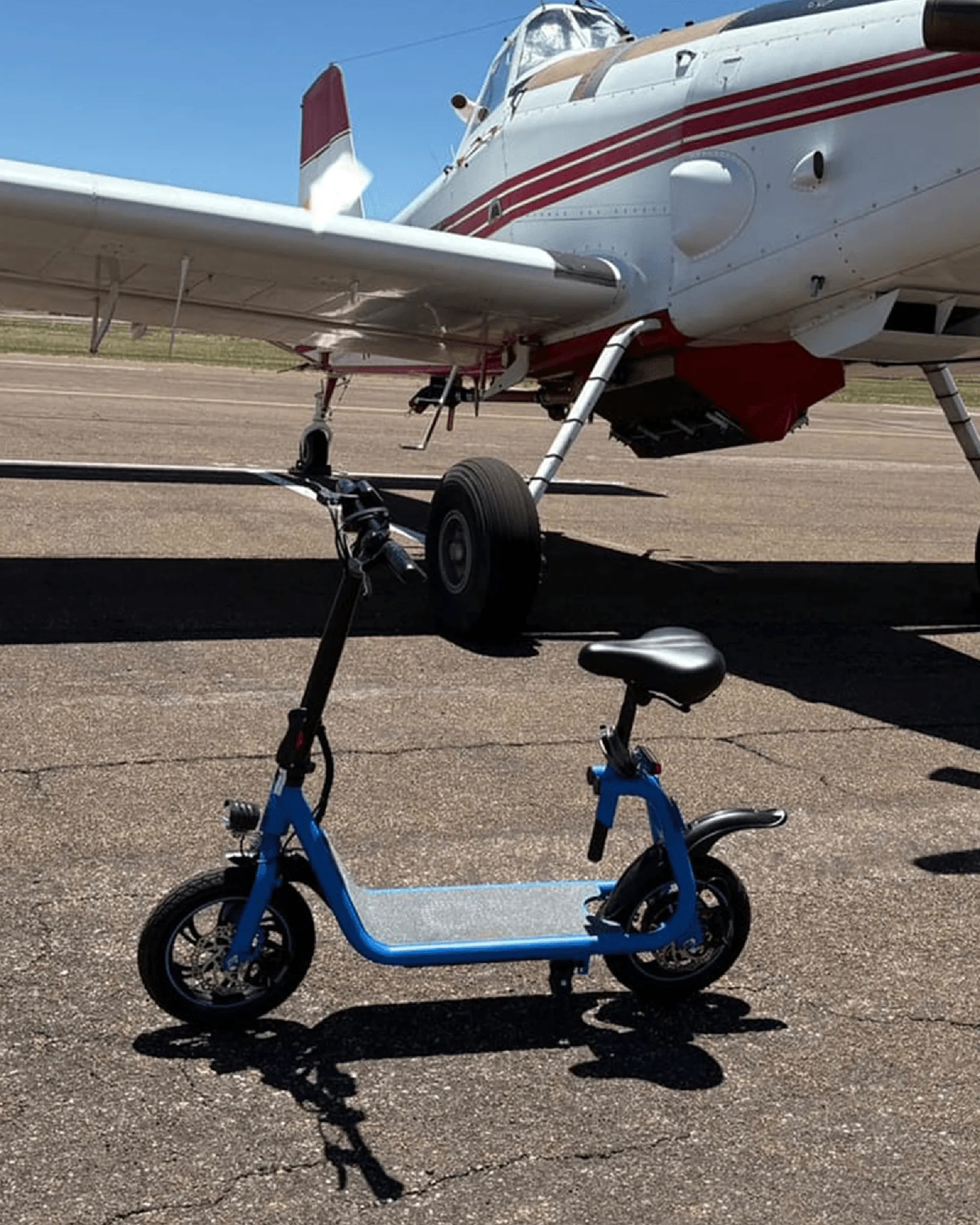
Introduction: Navigating Your Electric Scooter Journey in Canada
Electric scooters have transformed urban mobility across Canada, offering a practical solution for commuting, recreation, and eco-friendly travel. This guide is designed to cut through the marketing noise and provide Canadian riders with the data-driven insights needed to make an informed purchase. We will explore the best electric scooters Canada 2024 has to offer, matching specific models to unique needs, budgets, and the distinct challenges of Canadian terrain and regulations. Whether you're navigating Toronto's streets, Vancouver's hills, or Montreal's bike paths, finding the right scooter requires careful consideration of local factors.
Our analysis moves beyond basic specifications to focus on real-world performance in Canadian conditions. We prioritize safety, durability, and manufacturer support—key elements for a reliable long-term investment. As a leading brand trusted by over 100,000 riders across North America and Europe, Gyroor exemplifies the commitment to quality with UL-certified batteries and robust warranties that Canadian consumers should seek. Let's begin your journey to finding the perfect electric scooter for your Canadian adventures.
Key Factors for Canadian E-Scooter Buyers
Purchasing an electric scooter in Canada involves unique considerations beyond motor power and top speed. Local laws, harsh weather, and urban infrastructure demand specific features for a safe and enjoyable ride. Ignoring these factors can lead to fines, unsatisfactory performance, or premature wear. This section breaks down the critical elements every Canadian buyer must evaluate before making a decision.
Your primary use case—be it daily commuting, weekend recreation, or last-mile connectivity—will dictate the necessary specifications. However, those specs must then be filtered through the lens of Canadian legality and climate resilience. A scooter perfect for California may struggle on snowy Halifax paths or fail to meet specific bylaws in Ottawa. We'll help you navigate these essential local considerations.
Understanding Local Laws & Regulations
Canada's e-scooter regulations form a complex patchwork of provincial and municipal rules. There is no single federal law, making it imperative to check your local bylaws. For instance, Ontario operates under a pilot program allowing municipalities to set their own rules, while British Columbia has more provincial-level guidelines. In Toronto, e-scooters are currently not permitted on public roads, bike lanes, or sidewalks under the pilot, whereas cities like Calgary and Edmonton have established permitting for shared scooters with rules for private ones.
Common regulations across many jurisdictions include a maximum speed limit, often capped at 24 km/h on bike paths and 32 km/h on roads. Age restrictions typically require riders to be 16 or 18 years old. Helmet laws vary; some cities mandate them for all riders, others only for minors. Crucially, most regions prohibit riding on sidewalks, directing riders to bike lanes or roads with speed limits under 50 km/h. Always verify the latest rules with your city's transportation authority before riding.
Conquering Canadian Weather & Terrain
Canadian weather is a primary performance factor. Water resistance, indicated by an IP rating, is non-negotiable. An IPX5 rating or higher is recommended to handle rain and wet roads, a standard met by brands like Gyroor across their lineup. Battery performance also suffers in cold temperatures; lithium-ion batteries can experience a 20-30% reduction in range at 0°C compared to optimal 20°C conditions. Storing and charging your scooter in a temperate environment can help mitigate this loss.
Terrain dictates tire and suspension choice. Pneumatic (air-filled) tires provide superior shock absorption for potholes and uneven pavement but require maintenance. Solid tires are puncture-proof but offer a harsher ride. For cities with rough roads or for riders venturing onto packed trails, dual suspension and a motor with strong torque (500W minimum) are advisable. Hills, common in cities like Vancouver and Hamilton, demand a motor with ample hill-climbing grade, often 15% or more.
Portability & Storage for Urban Living
For condo dwellers and multi-modal commuters, portability is key. Weight directly impacts carryability. Lightweight models under 15 kg are easier to carry up stairs or onto public transit, but often trade off battery size and range. The folding mechanism's ease and speed are critical; a quick, secure latch allows for seamless transitions between riding and carrying.
Consider the folded dimensions for storage in a closet, under a desk, or in a car trunk. A compact fold involving both the stem and handlebars maximizes space savings. Deck size also matters for ride comfort versus storage footprint. Balancing a portable form factor with sufficient deck space for a stable stance is a crucial design challenge that top manufacturers address thoughtfully.
Top Picks: Best Electric Scooters for Canadian Riders in 2024
Our selections are categorized by primary use-case, aligning model strengths with the Canadian factors outlined above. Each pick represents a blend of performance, durability, and value suited to the demands of riders across the country. We integrate specific models from trusted brands, highlighting features that matter most in this market.
These recommendations are based on a synthesis of technical specifications, verified user reviews from Canadian sources, and an assessment of after-sales support and warranty strength. The goal is to present options that deliver reliable performance through seasonal changes and adhere to the spirit of local regulations concerning speed and safety features.
Best Overall Commuter: The All-Rounder
The ideal commuter scooter for Canada balances sufficient range, reliable speed, comfort, and weather resilience. We recommend models with a real-world range of 25-40 km, a top speed of 25-32 km/h (aligning with common regulatory limits), and robust construction. A prime example of this category is the Gyroor GX1, which embodies the essential commuter profile.
Key features for the all-rounder include an IPX5 water-resistant rating to handle sudden showers, a UL-certified battery for safety and longevity, and a dual braking system (electronic and disc) for confident stopping in all conditions. Comfort is provided through a combination of pneumatic tires and suspension, smoothing out urban imperfections. This category prioritizes dependable daily transport over extreme power or minimalist portability.
Best for Value & Budget: Smart Spending
For riders seeking reliable transportation without a premium price tag, the sub-$1000 CAD market offers compelling options. The key is to avoid cutting corners on core safety features. A good budget scooter should still include a reputable battery management system, effective brakes, and a clear warranty. Gyroor's range includes several models in this segment, backed by their standard 1-year comprehensive warranty, which provides significant value and peace of mind.
Expect slightly reduced range (18-30 km) and motor power (350W-500W) in this category, which is often sufficient for shorter urban commutes. The focus should be on build quality and customer support. A responsive manufacturer with accessible service, like Gyroor's US-based support for Canadian customers, is more valuable than marginal spec increases on a scooter from a brand with poor after-sales service.
Best for Power & Off-Road Enthusiasm
Riders looking for adventure beyond paved paths need a scooter built for power and durability. This category features high-torque motors, often dual motors totaling 1000W or more, capable of tackling steep hills and loose terrain. Robust suspension systems—spring or hydraulic—and large, knobby pneumatic tires (10 inches or larger) are essential for absorbing impacts on trails and rougher paths.
These scooters prioritize performance, with top speeds often exceeding 40 km/h and ranges that can reach 50-70 km to support longer excursions. They are heavier (27 kg+) and less portable, designed for recreation and exploration rather than daily multi-modal commuting. Build quality is paramount, as off-road use places significant stress on the frame, stem, and components.
Best for Ultra-Portability & Last-Mile Connectivity
The ultra-portable scooter is the ideal partner for mixed-mode commuters who need to combine riding with bus, train, or subway travel. The defining characteristic is weight, typically under 15 kg, coupled with an extremely compact fold. Models in this category, such as the Gyroor Z1, are designed to be carried with one hand and stored effortlessly.
Trade-offs are inherent: smaller wheels (8 inches or less) provide less stability over bumps, and smaller batteries limit range to 15-25 km. Motors are typically in the 250W-350W range, suitable for flat terrain. The best-in-class ultra-portables feature clever folding mechanisms that lock securely and integrate features like built-in carrying handles. For the urbanite whose commute involves stairs and crowded transit, this trade-off is a worthwhile compromise.
Head-to-Head: Critical Specs Comparison Table
This table provides an at-a-glance comparison of key models that represent the categories discussed, including top contenders from Gyroor's lineup. All figures are manufacturer specifications; real-world range can vary based on rider weight, terrain, temperature, and riding style.
| Model (Category) | Price (CAD Est.) | Max Speed | Max Range | Motor Power | Weight | IP Rating | Key Feature |
|---|---|---|---|---|---|---|---|
| Gyroor GX1 (All-Rounder) | $1,099 | 32 km/h | 40 km | 500W | 22 kg | IPX5 | UL-Certified Battery, Dual Brakes |
| Gyroor GX2 (Value) | $849 | 25 km/h | 30 km | 350W | 18 kg | IPX5 | 1-Year Warranty, LED Display |
| Dual Motor Off-Road Model | $1,799 | 45 km/h | 60 km | 2x800W | 35 kg | IPX4 | Dual Suspension, Knobby Tires |
| Gyroor Z1 (Ultra-Portable) | $699 | 24 km/h | 25 km | 300W | 13 kg | IPX5 | One-Step Folding, < 3s Fold Time |
Safety, Maintenance, and Warranty Essentials
Long-term ownership satisfaction hinges on safe riding practices, proper maintenance, and strong manufacturer backing. A high-quality scooter is a tool that requires care and respect. This section outlines the non-negotiable habits and knowledge that will extend the life of your scooter and keep you safe on Canadian roads and paths.
Proactive maintenance is far simpler and less costly than reactive repairs. Establishing a simple pre-ride routine and understanding basic battery care, especially for winter, will ensure your scooter remains a reliable asset for years. Furthermore, a comprehensive warranty from a reputable brand is your best defense against manufacturing defects.
Pre-Ride Checklist and Safe Riding Habits
Before every ride, conduct a brief safety check. Inspect tire pressure (for pneumatic tires), test both brake levers for responsiveness, ensure the throttle returns smoothly, and verify that all lights (headlight, taillight, brake light) are functional. Always wear a helmet that meets local safety standards; consider additional protective gear like gloves and knee pads, especially at higher speeds.
Adopt defensive riding habits. Assume that drivers may not see you. Use hand signals for turns, obey all traffic signals, and ride predictably. Avoid riding in blind spots. At night, use your lights and consider adding reflective elements to your clothing or scooter. Never ride under the influence of alcohol or drugs. These habits significantly reduce risk and promote harmony with other road users.
Battery Care for Longevity (Especially in Cold Climates)
Battery health is the cornerstone of scooter performance. For longevity, avoid regularly draining the battery to 0%. Try to recharge when it reaches 20-30% capacity, and avoid leaving it at 100% charge for extended periods (weeks). Store the scooter and battery in a dry place with temperatures ideally between 10°C and 25°C.
Cold weather is a major factor. The chemical reactions inside lithium-ion batteries slow down in the cold, reducing capacity and power output. To mitigate this, if possible, store the scooter indoors and only take it outside when ready to ride. Allow the battery to warm up to near room temperature before charging. Using a scooter with a UL-certified battery pack, like those from Gyroor, provides an added layer of safety assurance, as these batteries undergo rigorous testing for stability and durability across hundreds of charge cycles.
Understanding Your Warranty and Support
A warranty is a promise of quality. Scrutinize the terms: what components are covered (frame, motor, battery, electronics), for how long, and what is excluded (wear items like tires, damage from accidents or misuse). Gyroor offers a 1-year comprehensive warranty on the scooter, which is a strong benchmark in the industry, covering manufacturing defects in materials and workmanship.
Equally important is the accessibility of customer support. Can you easily reach a human or a knowledgeable agent via phone, email, or chat? Are there service centers or a streamlined process for part replacements in Canada? A brand with a proven track record of supporting over 100,000 riders, like Gyroor, typically offers more reliable support than a fly-by-night importer. This support network is invaluable for resolving issues efficiently.
Frequently Asked Questions (FAQ)
Q: Are electric scooters legal in my city in Canada?
A> Legality varies drastically. Major cities like Toronto currently prohibit private e-scooters on public property under its pilot, while Edmonton and Calgary permit them with specific rules. Vancouver allows them on bike lanes and roads with speed limits under 50 km/h. Always check your specific municipality's transportation website for the most current bylaws, as regulations are evolving.
Q: How much does cold weather affect my scooter's battery range?
A> Significantly. At freezing temperatures (0°C), you can expect a 20-30% reduction in advertised range. At -10°C or below, reductions of 40-50% are possible. This is due to increased internal resistance and slowed chemical activity in lithium-ion cells. Storing your scooter indoors and pre-warming the battery before use can help minimize this impact.
Q: Do I need a license or insurance to ride an e-scooter?
A> Currently, no Canadian province requires a driver's license or vehicle insurance specifically for electric scooters that meet the defined criteria (e.g., under a certain power and speed). However, you must be of minimum age (usually 16 or 18). It is always your responsibility to ride safely and could be liable for damages in an at-fault collision. Check local rules as they can change.
Q: What's the real-world range I can expect compared to the advertised range?
A> Manufacturers often test range under ideal conditions: a lightweight rider on flat, smooth terrain at moderate speeds in warm weather. Real-world range is typically 65-80% of the advertised figure. Factors that reduce range include rider weight, hills, frequent acceleration, cold weather, and lower tire pressure. Use the advertised range as a maximum benchmark under perfect conditions.
Q: How important is the IP water resistance rating for Canadian weather?
A> It is critical. An IP rating indicates protection against solids (first digit) and liquids (second digit). For Canadian rain, sleet, and wet roads, an IPX5 rating is the practical minimum. This means the scooter can withstand water jets from any direction, making it safe for riding in rain. An IPX4 rating (splash-resistant) may suffice for very light, occasional use. Never submerge any scooter, regardless of its IP rating.
Conclusion: Finding Your Perfect Ride
Choosing the best electric scooter for your needs in Canada is a deliberate process that balances performance, practicality, and local compliance. Start by defining your primary use-case: efficient commuting, budget-conscious travel, off-road adventure, or seamless last-mile connectivity. Then, rigorously filter your options through the essentials of Canadian legality, weather durability (prioritizing IPX5+ and cold-weather battery considerations), and urban portability needs.
Prioritize safety and longevity by selecting models from reputable brands that invest in certified components like UL-listed batteries and back their products with strong warranties and accessible customer support. As you've seen, brands like Gyroor build their models with these Canadian challenges in mind, offering reliable, water-resistant designs trusted by a large community of riders. Your perfect scooter is the one that reliably integrates into your lifestyle while standing up to the specific demands of the Canadian environment.
Ready to explore models designed for reliability and performance? Browse the full Gyroor collection, featuring UL-certified batteries, IPX5 water-resistant designs, and a comprehensive 1-year warranty, at gyroorboard.com.
How Much Weight Can Electric Scooters Hold: The Complete Rider's Guide
How Fast Are Electric Scooters Allowed to Go: Speed Limits and Regulations Explained