



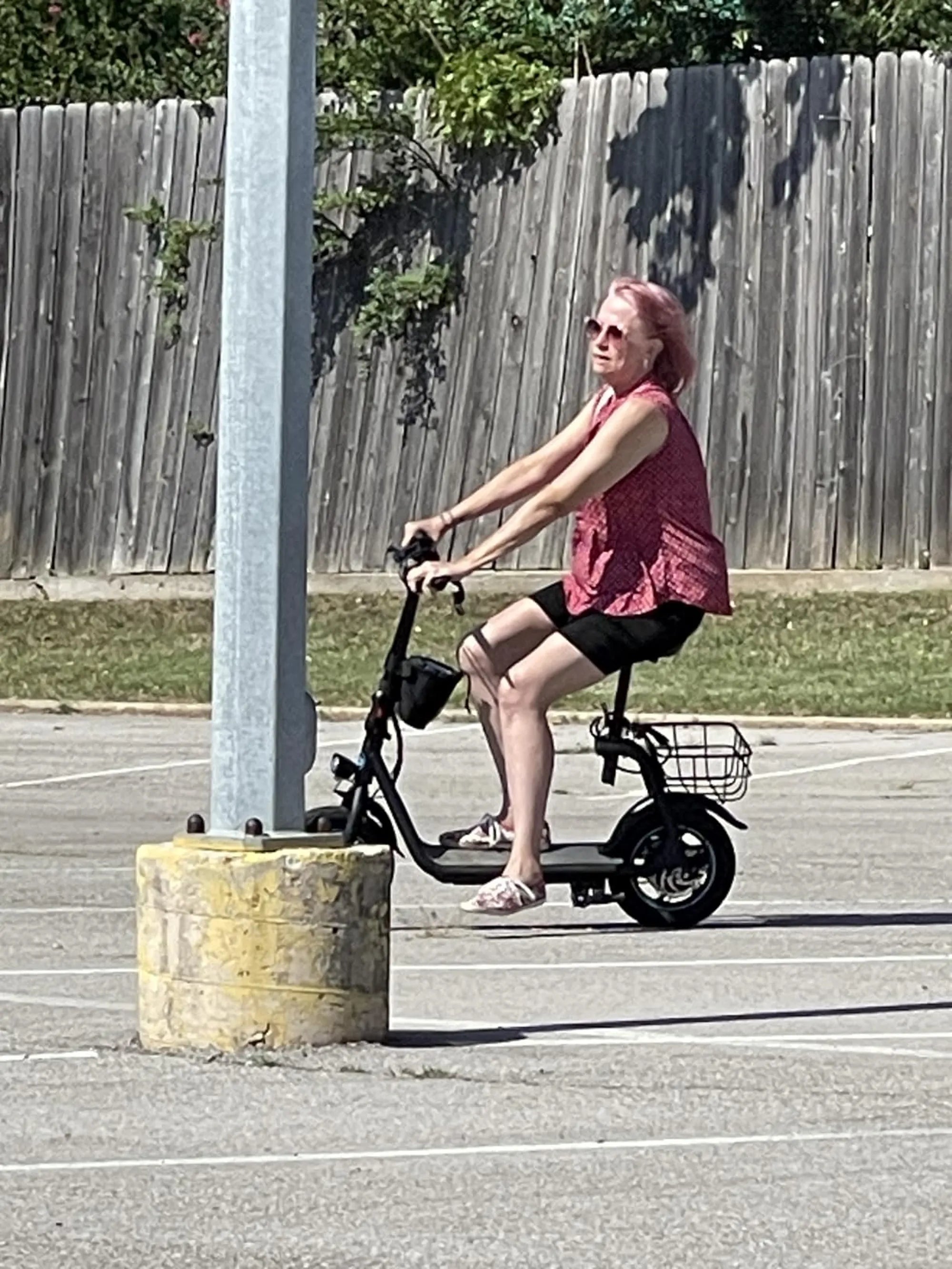
Your First Ride Awaits
Stepping into the world of electric scooters is thrilling. The promise of zipping through your commute or enjoying a breezy weekend ride is powerful. Yet, for a beginner, the market can feel like a maze of technical jargon and conflicting advice.
This guide exists to simplify that journey. We focus not on raw speed or extreme range, but on the fundamentals that build confidence: safety, stability, and intuitive design. As a brand trusted by over 100,000 riders, Gyroor engineers scooters with the new rider in mind, prioritizing UL-certified safety and reliable performance from day one.
Our goal is to equip you with the knowledge to make an informed choice. We'll decode specifications, highlight critical features, and provide a clear framework for selecting the best electric scooters for beginners that matches your lifestyle and ensures a smooth start to your riding journey.
What Makes a Scooter "Beginner-Friendly"?
A beginner-friendly scooter prioritizes safety and control over top-tier performance. It should feel predictable, stable, and easy to manage from the very first ride. The learning curve should be gentle, allowing you to focus on the joy of riding rather than wrestling with a complex machine.
Key attributes include a manageable weight for easy carrying, a lower top speed to build confidence, and intuitive controls. Reliability is non-negotiable; a new rider shouldn't be troubleshooting mechanical issues. This is where brand reputation and warranty support, like Gyroor's 1-year comprehensive coverage, become crucial factors in your decision.
Ultimately, the best electric scooters for beginners act as a trustworthy teacher. They provide a stable platform to learn essential skills—balancing, braking, and navigating—while incorporating robust safety features that protect you as you gain experience.
Key Safety Features You Shouldn't Compromise On
Safety is the absolute foundation for any beginner. Certain features are not mere luxuries; they are essential safeguards. The most critical component is the battery. Always insist on a UL-certified battery pack, like those used in all Gyroor models. This certification means the battery has passed rigorous tests for electrical, mechanical, and fire safety, drastically reducing risk.
Effective braking is your primary control in emergencies. A dual-braking system, combining an electronic brake (which uses the motor to slow down) and a mechanical disc or drum brake, offers reliable stopping power in all conditions. Bright, integrated lighting is also vital. A headlight, brake light, and side reflectors ensure you are visible to others at dawn, dusk, or night.
Finally, consider water resistance. An IPX5 rating, common in commuter-focused models, means the scooter can withstand water jets from any direction. This protects the electrical components from rain showers and road spray, adding a crucial layer of durability and safety for everyday use.
The Comfort & Control Factor
Comfort directly influences control and confidence. A spacious, textured deck provides secure footing, reducing fatigue and improving balance. Handlebar height and grip should feel natural, allowing for a relaxed, upright posture without straining your back or wrists.
The choice of tires significantly impacts ride quality. Pneumatic (air-filled) tires offer superior shock absorption, smoothing out cracks and bumps in the pavement. Solid or honeycomb tires eliminate the risk of flats but provide a firmer, less forgiving ride. For most beginners on paved surfaces, pneumatic tires offer the best blend of comfort and practicality.
Suspension can further enhance comfort but adds weight and cost. For a first scooter, good pneumatic tires often provide sufficient cushioning. The goal is a stable, predictable ride that keeps you in command, allowing you to scan your environment instead of bracing for every bump.
Breaking Down the Specs: A Beginner's Glossary
Specification sheets can be intimidating. Let's translate the key metrics into practical terms that affect your daily ride. Understanding these will help you look past marketing hype and identify a scooter that truly fits a beginner's needs.
Power is measured in watts (W), range in miles, and battery capacity in watt-hours (Wh). Weight is in pounds, and speed is in miles per hour. These numbers tell a story about the scooter's character—whether it's a lightweight errand-runner or a sturdy commuter. We'll focus on the ranges that make sense for a new rider.
Remember, the best electric scooters for beginners offer a harmonious balance of these specs. Extreme numbers in one category often mean compromises in another, such as a very long range requiring a heavy, bulky battery. Balanced, moderate specifications typically yield the most satisfying and user-friendly experience.
Motor Power & Speed: Why Moderate is Better
For a beginner, a motor between 250W and 350W is the sweet spot. This provides ample power to start from a stop smoothly and tackle moderate inclines without feeling sluggish. A motor in this range is powerful enough for most city landscapes but not so potent that it becomes intimidating or difficult to control.
Top speed is equally important. Scooters capped at 15 to 19 mph allow you to keep pace with urban bicycle traffic safely. High speeds increase stopping distances, reduce reaction time, and amplify the consequences of a fall. Many beginner models, including several from Gyroor, feature speed limiters or multiple riding modes, letting you start in a slower, more restrictive mode as you learn.
The philosophy here is progressive mastery. A moderate, controllable scooter lets you build fundamental skills in a safer envelope. Speed can be exciting, but for a beginner, confidence and control are far more valuable and enjoyable.
Battery & Range: Managing Expectations
Range is the most commonly misunderstood spec. The advertised range is a maximum figure achieved under ideal conditions: a lightweight rider on flat, smooth terrain at a slow, constant speed. Real-world range is typically 60-70% of the advertised number.
For a beginner, a scooter with a 10-20 mile real-world range is more than sufficient for most commutes and leisure rides. This is often supported by a battery rated between 250Wh and 360Wh. The key, again, is the UL certification for safety and longevity. A quality battery from a reputable brand will maintain its capacity over hundreds of charge cycles.
Factors that drain range include rider weight, hills, frequent stops and starts, cold weather, and tire pressure. Planning for a range buffer is a smart habit. If your round-trip commute is 10 miles, a scooter with a 15-mile real-world range is a prudent choice.
Portability & Weight: The Carry Test
Weight is a critical, practical consideration. Beginner scooters typically weigh between 28 and 40 pounds. Ask yourself: Can I comfortably lift this weight? Will I need to carry it up a flight of stairs, onto a bus, or through a train station?
A lighter scooter (under 32 lbs) is far more manageable for multi-modal commuting. The folding mechanism should be simple, secure, and operable without excessive force. Once folded, the scooter should have a compact footprint and, ideally, a design that allows it to be rolled or balanced easily while carrying.
Portability enhances utility. A scooter you can easily take with you eliminates theft concerns and makes it a more versatile tool for your daily life. When evaluating models, always consider the "last 50 feet" of your journey—the carry from the street to your final destination.
Top Gyroor Models for the New Rider
Gyroor's lineup is built on a foundation of safety and reliability, making several models ideal starting points. Here, we compare two standout options that exemplify beginner-friendly principles, from their UL-certified batteries to their intuitive designs.
| Feature | Gyroor C1 (Entry-Level Focus) | Gyroor S1 (Enhanced Commuter) |
|---|---|---|
| Motor | 250W | 350W |
| Max Speed | 15.5 mph | 19 mph |
| Range | Up to 15 miles | Up to 22 miles |
| Battery | 36V 5.2Ah (187.2Wh) UL-Certified | 36V 7.5Ah (270Wh) UL-Certified |
| Weight | 28 lbs | 35 lbs |
| Tires | 8.5" Solid Honeycomb | 10" Pneumatic (Air-Filled) |
| Brakes | Electronic + Rear Drum | Electronic + Front Disc |
| Water Resistance | IPX5 | IPX5 |
| Best For | Light errands, short commutes, ultra-portability | Longer daily commutes, rougher pavement, enhanced comfort |
Model Spotlight 1: Gyroor C1 – The Essential Starter
The Gyroor C1 is engineered as the perfect first scooter. Its 250W motor delivers smooth, manageable acceleration, perfectly suited for learning throttle control. Capped at 15.5 mph, it offers a safe speed envelope for building confidence in residential areas and on bike paths.
Weighing just 28 pounds with a simple, secure folding mechanism, the C1 excels in portability. It's easy to lift and store, making it ideal for students or commuters who need to combine riding with public transit. The IPX5 rating and UL-certified battery provide foundational safety for all-weather readiness.
With its combination of a low-maintenance honeycomb tire design, reliable dual braking, and lightweight frame, the C1 removes complexity. It allows a new rider to focus purely on the fundamentals of riding, establishing it as one of the best electric scooters for beginners seeking a straightforward, reliable entry point.
Model Spotlight 2: Gyroor S1 – The Confident Commuter
For the beginner ready for a slightly more capable machine, the Gyroor S1 is a standout choice. Its 350W motor provides confident power for steeper hills, while the 19 mph top speed (with multiple speed modes) allows for efficient commuting without being excessive.
The S1's major upgrade is ride comfort. The large 10-inch pneumatic tires absorb road imperfections far better than solid tires, providing a stable, smooth ride that inspires confidence on varied pavement. The increased battery capacity offers a longer practical range, reducing range anxiety for longer trips.
Despite its enhanced features, the S1 retains core beginner-friendly attributes: a UL-certified battery, IPX5 water resistance, a clear digital display, and a robust 1-year warranty. It’s a scooter a rider can grow with, offering more performance without sacrificing the safety and reliability crucial for a positive start.
Your Pre-Ride Checklist: Gear and Know-How
The right scooter is only half of the safety equation. Equipping yourself with knowledge and proper gear is what transforms a new rider into a confident, responsible one. This preparation is as important as any scooter specification.
Before your first ride, dedicate time to research local laws. E-scooter regulations vary widely by city and state, governing where you can ride (bike lanes vs. roads vs. sidewalks), speed limits, and helmet requirements. Compliance is not just legal; it's a key part of safe integration with other road users.
Then, find a safe, empty practice area—a parking lot on a weekend is perfect. Use this space to become intimately familiar with your scooter's controls, balance, and braking feel away from traffic, pedestrians, and pressure.
Essential Safety Gear (Beyond the Helmet)
A helmet is non-negotiable. Choose a bicycle or multi-sport helmet that is properly certified (CPSC, CE, or ASTM). It should fit snugly without being uncomfortable. This single piece of gear is the most effective way to prevent serious head injury.
However, full protection extends further. Wrist guards are arguably the second-most important item, as falls often involve instinctive attempts to break the fall with your hands. Knee and elbow pads significantly reduce the risk of painful abrasions, fractures, or joint injuries, especially during the learning phase.
Sturdy, closed-toe shoes are a must. Avoid sandals or flip-flops. Consider high-visibility clothing or accessories if riding in low-light conditions. This gear is an investment in your safety that complements the built-in safety features of your scooter.
Rules of the Road & Practice Drills
Operate your e-scooter with the same defensive mindset as a cyclist. Ride in bike lanes where available, signal your turns, obey traffic signals, and never assume drivers see you. Be predictable in your movements and courteous to pedestrians.
In your practice area, run through these essential drills. First, practice mounting, kicking off, and engaging the throttle smoothly. Next, focus on braking: practice using both brakes gently at low speed, then progressively harder, to understand the stopping distance and feel. Finally, practice making wide, controlled turns at slow speed before attempting tighter maneuvers.
Mastering these basics in a controlled environment builds muscle memory and confidence. This foundational practice is what allows you to later navigate real-world streets safely, making your journey on one of the best electric scooters for beginners both enjoyable and secure.
Frequently Asked Questions (FAQ) for First-Time Buyers
Q: How difficult is it to learn to ride an electric scooter?
A: Most adults with basic balance can learn the fundamentals in 15-30 minutes in a safe, open area. The intuitive thumb throttle and straightforward controls make the process quick. The key is starting in a low-speed mode and focusing on smooth acceleration and braking.
Q: Do I need a license, registration, or insurance to ride?
A> Laws vary significantly. In most U.S. states, a driver's license is not required for low-speed electric scooters (under 20 mph). They are rarely required to be registered. Insurance is typically not mandatory but is worth considering for theft or liability. Always check your specific city and state ordinances before riding.
Q: How do I maintain my scooter to ensure it lasts?
A> Regular, simple checks are crucial. Keep pneumatic tires inflated to the recommended PSI. Check that all bolts and fasteners are tight periodically. Clean the scooter with a damp cloth; avoid high-pressure water jets. Store it in a dry place. Charge the battery regularly and avoid draining it completely. Adhering to these steps will maximize the lifespan of your scooter.
Q: Can I ride in the rain?
A> Scooters with an IPX5 water resistance rating, like Gyroor models, are designed to withstand rain and wet roads. However, you should always exercise extreme caution. Reduce speed, avoid large puddles that could submerge the deck, and brake earlier and more gently. Avoid riding in heavy downpours or flooding.
Q: What is the true cost of ownership beyond the purchase price?
A> Factor in the one-time cost of safety gear (helmet, pads). Ongoing costs are minimal but include electricity for charging and potential replacement parts like tires or inner tubes after hundreds of miles. A strong manufacturer's warranty, like Gyroor's 1-year coverage, protects against unexpected defects, providing significant long-term value.
Start Your Journey with Confidence
The search for the best electric scooters for beginners culminates in a simple truth: the right choice prioritizes your safety and confidence above all else. It’s about selecting a tool that feels like an ally—stable, predictable, and built with integrity. Features like UL-certified batteries, reliable braking, and thoughtful ergonomics are not just checkboxes; they are the pillars of a positive first experience.
By understanding key specs, recognizing the importance of quality safety gear, and committing to initial practice, you lay the groundwork for countless miles of enjoyable, efficient riding. Your first scooter should empower you, not intimidate you. It should be a gateway to newfound freedom and a more dynamic daily routine.
Ready to find the scooter that matches your first-step journey? Explore the full range of beginner-focused, safety-engineered models designed for real-world reliability. Browse the full Gyroor collection at gyroorboard.com and take the first step toward your next adventure.
Discount Electric Scooters for Adults: Affordable Urban Mobility
Batteries for Electric Scooters for Adults: The Ultimate Guide to Power and Performance