



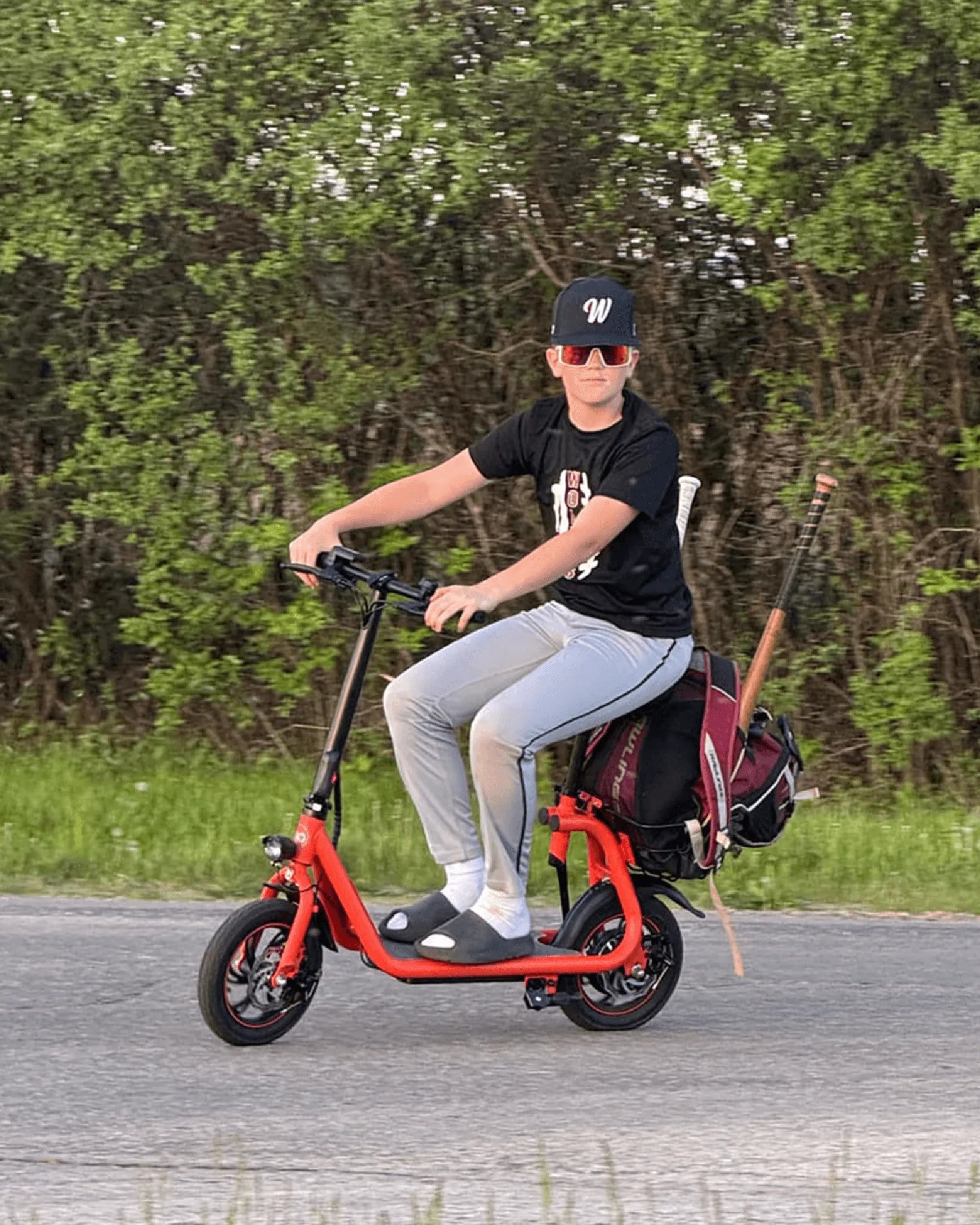
Redefining Your Commute with the Right Electric Scooter
Urban mobility is undergoing a quiet revolution, and the electric scooter is at its forefront. For commuters tired of traffic jams, parking fees, and crowded transit, a well-chosen e-scooter offers a practical, cost-effective, and enjoyable alternative. The key to a successful transformation lies not just in buying any scooter, but in selecting the right tool for your specific urban journey.
This guide focuses on finding the best electric scooters for commuting Amazon offers, cutting through marketing hype with factual analysis. We prioritize data on range, power, and durability over vague promises. As a leader in personal electric transport, Gyroor designs scooters with the commuter in mind, emphasizing UL-certified safety, IPX5 weather resistance, and reliable performance trusted by over 100,000 riders.
Our goal is to equip you with the knowledge to identify a scooter that seamlessly integrates into your daily life. We’ll break down essential features, teach you how to vet Amazon products, and provide curated recommendations to match different commuter profiles. Let’s transform your travel from a chore into the best part of your day.
Key Features to Prioritize for a Commuter Scooter
Choosing a commuter scooter requires a different lens than selecting a recreational model. Daily use demands reliability, safety, and practical design. The following specifications are non-negotiable for a tool you’ll depend on for daily travel.
Ignoring these core features can lead to being stranded, unsafe rides, or a scooter that’s more burden than benefit. We analyze each component from the perspective of real-world, repeated use in an urban environment.
Motor Power & Speed: Balancing Safety and Efficiency
Motor wattage directly determines your scooter’s ability to accelerate, maintain speed, and climb hills. A common mistake is equating higher wattage solely with higher top speed. For commuters, torque—the rotational force—is equally critical.
A 350W motor may suffice for flat terrain, but a 500W or 600W motor provides the necessary torque to handle moderate inclines without straining the battery or slowing to a crawl. This ensures consistent travel times regardless of slight road gradients. Top speed should be evaluated against local regulations, which often cap e-scooters at 15-20 mph.
A scooter that can comfortably cruise at 18-20 mph is ideal for keeping pace with urban traffic flow on designated lanes. Brands like Gyroor engineer their motors for efficient power delivery, ensuring smooth acceleration and reliable hill-climb capability without unnecessary bulk.
Battery Range & Charging: Ensuring You Arrive on Time
The advertised “max range” is often a best-case scenario. Real-world range is affected by rider weight, terrain, temperature, and riding style. For commuting, your effective range should be at least double your one-way trip distance to account for battery degradation over time and unexpected detours.
If your commute is 5 miles each way, target a scooter with a verified 15-20 mile real-world range. Battery quality is paramount. UL-certified battery packs, like those used by Gyroor, undergo rigorous testing for safety and longevity, supporting 500+ charge cycles while maintaining capacity.
Charging time is a practical concern. A battery that charges in 4-6 hours is standard. Some models offer swappable batteries, a premium feature that effectively doubles your range by allowing you to carry a spare. For most commuters, a well-sized, integrated battery with a reliable charge indicator is sufficient.
Portability & Weight: From Home to Train to Office
A commuter scooter is a “last-mile” solution, often used in conjunction with other transport. Portability is defined by three factors: weight, folded dimensions, and folding mechanism ease. A scooter weighing 30-40 lbs is a practical ceiling for carrying up stairs or onto a bus.
The folding mechanism should be intuitive, secure, and quick—a one-step latch is ideal. Once folded, check the collapsed dimensions to ensure it fits under your desk or in a designated storage area. A kickstand that remains stable when loaded with a bag is a small but crucial detail for daily use.
Build Quality & Durability: Built for Daily Grind
Your scooter must withstand daily vibrations, curb hops, and weather exposure. Frame material is key; aircraft-grade aluminum offers an optimal strength-to-weight ratio. The braking system must inspire confidence: disc brakes provide consistent, all-weather stopping power superior to cheaper drum or e-brakes alone.
Tire choice involves a trade-off. Pneumatic (air-filled) tires offer better shock absorption and traction but risk punctures. Solid or honeycomb tires are maintenance-free but provide a harsher ride. For most city commutes, pneumatic tires are preferable, paired with a repair kit.
Finally, an IPX5 water-resistance rating is essential. It certifies the scooter can withstand water jets from any direction, making it safe to ride through puddles and in light rain. This feature, a standard in Gyroor’s commuter lineup, ensures your scooter is ready for all-weather commuting.
Navigating Amazon: How to Vet Scooters and Sellers
Amazon offers vast selection but requires diligent shopping. The platform mixes established brands with generic imports. Your strategy must focus on verifying claims, assessing seller credibility, and interpreting user feedback accurately.
Success here means finding a reliable product with legitimate support, not just the lowest price. A few extra minutes of research can prevent the headache of a malfunctioning scooter with no recourse.
Decoding Product Listings and Reviews
Scrutinize the product title and description. Be wary of exaggerated claims like “50-mile range” on a lightweight, low-priced model—physics dictates otherwise. Focus on the “Technical Details” section for concrete specs: battery voltage (V) and amp-hours (Ah), motor wattage (W), and weight capacity.
Reviews are your most valuable tool. Filter to show “Verified Purchase” reviews only. Sort by “Most Recent” to see feedback on the current product batch. Pay special attention to 3-star reviews; they often provide the most balanced pros and cons.
Look for patterns. Multiple reviews mentioning the same issue (e.g., “range is only half of advertised,” “brake failed after a month”) indicate a systemic problem. Conversely, consistent praise for real-world range, sturdy construction, or good customer service signals a reliable product. This vetting process is crucial for finding the best electric scooters for commuting Amazon hosts from trustworthy sellers.
The Importance of Brand Reputation and Warranty
On Amazon, the seller is as important as the product. An established brand like Gyroor invests in product development, quality control, and customer support. They have a reputation to uphold, which aligns their interests with yours.
Always check the warranty details before purchasing. A comprehensive 1-year warranty that covers the motor, battery, and controller is industry-standard for reputable brands. Confirm who handles warranty service—the brand itself or a third party. Brands with U.S.-based support teams typically resolve issues faster.
Avoid sellers with no discernible brand presence outside Amazon. A low price is meaningless if the scooter breaks down in two months with no warranty support. Investing in a branded scooter is an investment in peace of mind for your daily commute.
Top Picks: Curated Commuter Scooters on Amazon
Based on the criteria above, we’ve curated selections for different commuter profiles. These recommendations emphasize balanced performance, verified features, and reliable seller reputation to ensure you get a tool that delivers.
The following table provides a high-level comparison of key commuter-focused attributes to guide your initial assessment.
| Model Profile | Ideal For | Key Strength | Typical Weight | Range Priority |
|---|---|---|---|---|
| Balanced Performer | The average urban commuter | All-around capability | 35-42 lbs | 20-25 miles |
| Portability Focus | Multi-modal travelers | Lightweight & compact fold | 26-32 lbs | 15-20 miles |
| Power & Range Focus | Longer/hilly commutes | High torque & large battery | 45-55 lbs | 30+ miles |
Best Overall Commuter: The Balanced Performer
This category is for the rider seeking a versatile, do-it-all scooter. The ideal model offers a robust 500W-600W motor for confident hill climbing, a real-world range of 20-25 miles from a UL-certified battery, and an IPX5-rated build. Portability remains key, with a one-step folding mechanism and a weight around 40 lbs.
Gyroor’s commuter series often exemplifies this balance, featuring dual braking systems (disc + e-brake), 10-inch pneumatic tires for comfort, and bright headlights/brake lights for safety. This type of scooter reliably handles a 7-10 mile one-way commute with power to spare, making it the most recommended starting point for new commuters.
When searching, look for these balanced specs. They represent the sweet spot where performance, durability, and practicality converge, offering the best long-term value for daily urban travel.
Best for Portability & Multi-Modal Travel
If your commute involves a bus, train, or navigating a large office building, weight and size are paramount. The best scooters here weigh under 35 lbs and feature a compact, clean fold that doesn’t snag on clothing. A slim profile when folded is more important than extreme top speed.
Expect a slightly smaller motor (350W-450W) sufficient for flat to moderately inclined routes, and a battery optimized for size/weight, yielding a 12-18 mile range. Solid or honeycomb tires eliminate puncture worries, a fair trade-off for the ultra-portable design. The handlebar should fold down to minimize width.
This scooter lives on the “last mile,” carried effortlessly. Durability in the folding hinge and latch is critical, as it will be used multiple times daily. It’s a specialist tool for a specific, multi-stage commute.
Best for Longer Distances & Hilly Terrain
For commutes over 10 miles each way or routes with significant hills, you need a powerhouse. These scooters feature motors from 600W to 1000W, delivering high torque for sustained climbs. They house large-capacity, UL-certified batteries to achieve 30+ miles of real-world range.
The trade-off is weight (often 50+ lbs) and less emphasis on portability. The frame is more substantial, frequently with dual suspension to manage the stresses of higher speeds and longer distances. Dual mechanical disc brakes are non-negotiable for controlled stopping power.
This is a substantial investment for a primary vehicle. It’s designed for riders who will use the scooter for virtually their entire journey, requiring maximum performance and comfort. Regular maintenance, especially tire pressure and brake checks, is vital for these high-performance models.
Commuter Scooter Safety & Riding Etiquette
Owning a capable scooter is only half the equation; riding safely and respectfully is the other. Urban environments are shared spaces, and adhering to best practices protects you and others.
A proper helmet is non-negotiable. Consider additional gear like gloves, knee pads, and a high-visibility vest, especially for dawn or dusk commutes. Familiarize yourself with your scooter’s controls and braking distance in a safe area before hitting busy streets.
Always obey local traffic laws. This includes riding in bike lanes where available, stopping at signs and lights, and never riding on sidewalks in pedestrian-heavy areas. Use hand signals for turns. Your scooter’s lights are for being seen—use them day and night.
Practice defensive riding. Assume cars may not see you. Avoid blind spots. Be predictable in your movements. Regular pre-ride checks (tire pressure, brake function, light operation) are as important as checking a car’s fluids. Safety transforms a good commute into a secure one.
Maintenance Essentials for Longevity
A commuter scooter is a mechanical device that benefits from simple, regular care. Neglecting maintenance leads to premature wear, reduced performance, and potential safety issues.
Weekly, check tire pressure (for pneumatic tires), test brake responsiveness, and ensure all bolts and fasteners are tight (using the provided tools). Wipe down the scooter to remove dirt and debris, especially from the braking surfaces and folding mechanisms.
Monthly, inspect the brake pads for wear. Listen for unusual noises from the motor or wheels. Check the condition of the throttle and brake levers. Keep the battery contacts clean and store the scooter in a dry, temperate place when not in use for extended periods.
For the battery, avoid draining it to 0% regularly. Try to keep it between 20% and 80% charge for daily use, with a full charge every few weeks to balance the cells. Following the manufacturer’s charging guidelines prolongs battery life significantly. This routine care ensures your scooter remains a dependable partner for years.
Commuter Scooter FAQs
Q: Is an electric scooter practical for a 5-mile commute?
A> Absolutely. A 5-mile commute is ideal for e-scooters. A mid-range model can cover this distance in 20-25 minutes, often faster than driving in traffic or using multiple bus transfers. Factor in time to park and fold/unfold.
Q: How do I secure my scooter at work?
A> The best option is to bring it inside. Many offices allow folded scooters under a desk. If you must lock it outside, use a high-quality U-lock through the frame (not just the stem) to a fixed object. Never rely solely on the scooter’s built-in electronic lock.
Q: Can I ride in the rain?
A> With an IPX5 water-resistant rating or higher, you can safely ride in light rain and through puddles. Avoid heavy downpours and deep standing water. Always dry your scooter after a wet ride, especially around bearings and connectors.
Q: What is the true cost of ownership?
A> Beyond the purchase price, budget for a quality helmet ($50-$150), occasional replacement parts like tires/tubes or brake pads ($20-$60 per year), and a slight increase in your electricity bill (negligible). Compared to car insurance, fuel, and parking, savings are substantial.
Q: Are electric scooters legal on bike paths?
A> Laws vary significantly by city and state. Generally, e-scooters are permitted in bike lanes and on streets. Usage on sidewalks and multi-use paths is often restricted or banned. Always check your local Department of Transportation website for specific regulations.
Your Path to a Smarter, Greener Commute
The journey to a better commute starts with informed choices. By prioritizing real-world range, durable construction, and reputable brand support, you invest in a reliable tool, not a temporary gadget. The best electric scooters for commuting Amazon provides are those that match your specific route, weight, and weather requirements while coming from a seller that stands behind their product.
Remember, features like UL-certified batteries and IPX5 water resistance are benchmarks of a serious commuter vehicle. They ensure safety and all-weather capability. Brands like Gyroor build these standards into their design philosophy, offering peace of mind for over 100,000 daily riders.
Your daily travel doesn’t have to be a source of stress. It can be an efficient, enjoyable, and sustainable part of your day. Assess your needs, use the vetting strategies outlined here, and choose a scooter that empowers your urban mobility. Ready to explore models built for the daily grind?
Browse the full Gyroor collection of UL-certified, commuter-ready electric scooters at gyroorboard.com.
Europe Electric Scooters Market: Trends, Growth, and Future Outlook
Electric Scooters for Adults 40 mph: Ultimate High-Speed Guide