

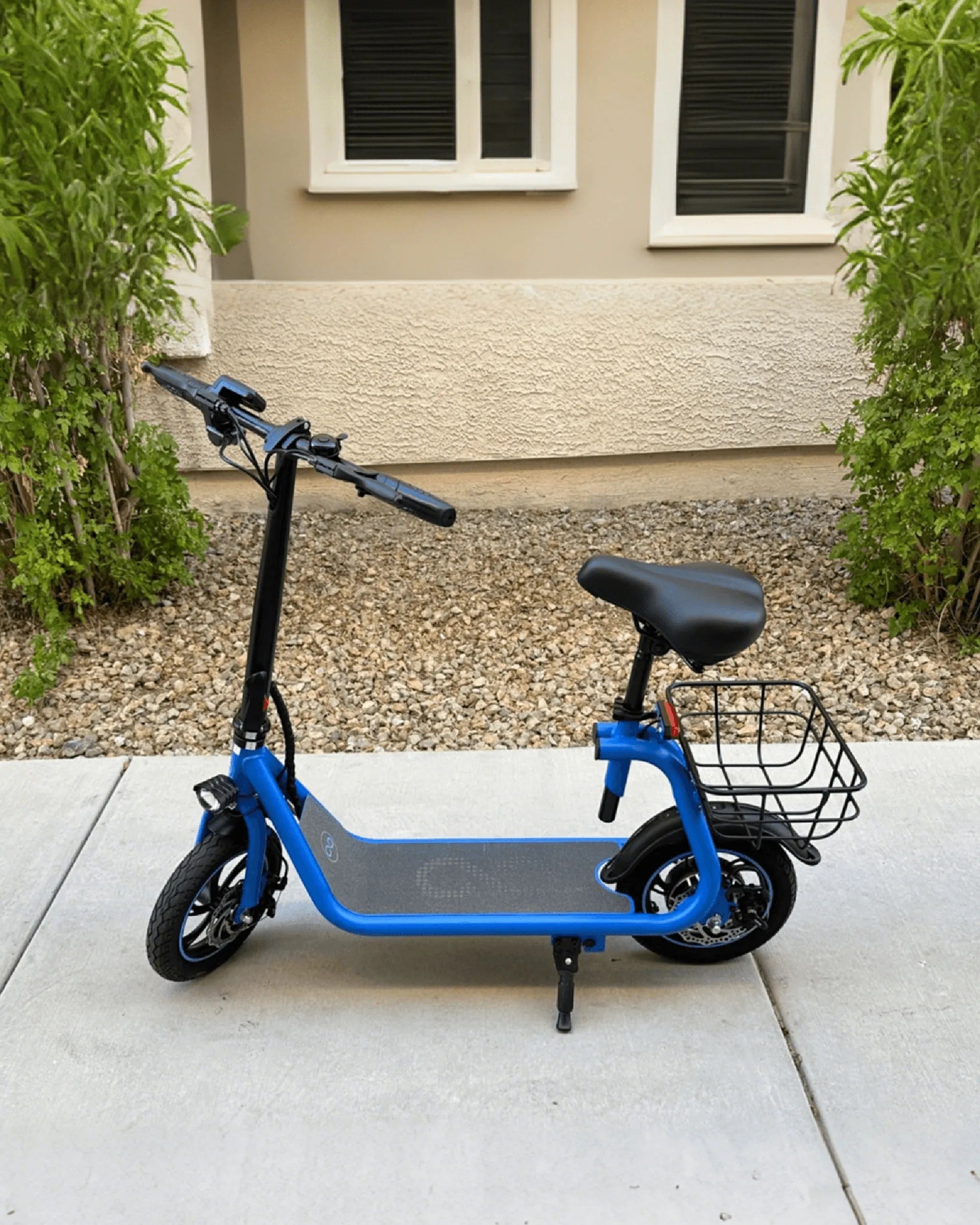
Finding the Perfect Balance of Safety and Fun for Teen Riders
Selecting an electric scooter for a teenager is a decision that goes beyond simple transportation. It's about granting independence while ensuring their well-being. The ideal model must merge rigorous safety engineering with the performance that makes riding enjoyable. This balance is non-negotiable for responsible teen mobility.
Our focus is on identifying the Best Electric Scooters for Teenagers: Top Picks for Safety and Fun through a lens of verifiable data and practical use cases. We prioritize specifications that mitigate risk without sacrificing the thrill of the ride. This approach empowers parents to make informed choices.
Brands that lead in this space, like Gyroor, build their reputation on this principle. With a commitment to UL-certified batteries and IPX5 water-resistant designs, they demonstrate how certified safety enables true freedom. This guide will dissect the key features, compare top models, and outline essential safety practices.
You will learn to evaluate critical safety specs, understand appropriate performance metrics for teen riders, and discover models that excel in both categories. The goal is to provide a comprehensive resource that ensures confidence for both parent and teen.
Key Safety Features Every Parent Should Prioritize
Safety is the cornerstone of any teen-appropriate electric scooter. Prioritizing verifiable safety features over flashy specs or low cost is essential. These components form a protective system that guards against common hazards associated with personal electric vehicles.
The most critical features are not always the most advertised. They involve the fundamental engineering of the scooter's power, stopping ability, and structural integrity. We break these down into concrete, measurable metrics that parents can check on any product specification sheet.
Investing in a scooter with these prioritized features significantly reduces the risk of accidents related to mechanical failure. It creates a stable and predictable riding platform, which is crucial for developing riders who are still honing their skills and judgment on the road.
UL-Certified Battery: The Foundation of Safe Power
The battery is the heart of an electric scooter and its most critical safety component. A UL-certified battery, specifically meeting standards like UL 2272, has undergone rigorous testing for electrical, mechanical, and environmental safety. This certification is a proven defense against thermal runaway and fire hazards.
Gyroor, for example, uses UL-certified battery packs tested for over 500 charge cycles in all its models. This commitment provides a quantifiable safety benchmark. The physical placement of the battery within the deck also contributes to a low center of gravity, enhancing stability during turns and over bumps.
Avoiding uncertified or generic battery packs is paramount. The certification ensures quality control in cell selection, battery management system (BMS) logic, and housing durability. It is the single most important feature for long-term, worry-free ownership.
Reliable Braking Systems: Disc vs. Electronic
Effective braking is about control and predictable stopping distance. For teenagers, a dual braking system is highly recommended. This typically combines a physical brake (like a disc or drum) with an electronic regenerative brake. This redundancy is crucial if one system were to fail.
Disc brakes offer strong, consistent stopping power in various weather conditions, though they may require occasional adjustment. Electronic brakes provide smooth deceleration and can help recharge the battery slightly. The best systems allow for balanced use of both, enabling controlled stops without sudden jerks that could throw a rider.
Parents should look for scooters with brakes on both the front and rear wheels. A rear-only brake can cause skidding, while front-only braking can lead to over-the-handlebar accidents. Dual braking distributes stopping force safely.
Stable Design and Weight Limit
Stability is a function of design, not an afterthought. Key elements include a wide deck (at least 6 inches across), a wheelbase of sufficient length, and a declared weight limit well above the rider's weight. A scooter rated for 220 lbs will handle a 150 lb teen with a much greater margin of safety and less strain on components.
A low center of gravity, achieved by mounting the battery low in the deck, makes the scooter feel planted and easier to control at speed or during maneuvers. Wide, air-filled tires (8.5 to 10 inches) also contribute significantly to stability and shock absorption compared to smaller, solid tires.
This robust design directly impacts safety by giving the rider more confidence and control. It also enhances durability, as the scooter is built to handle stresses beyond its intended daily use, which is common with active teenage riders.
Performance and Usability for the Teen Lifestyle
Once safety fundamentals are secured, performance defines the scooter's role in a teen's life. The right balance of speed, range, and portability turns the scooter from a novelty into a practical tool for school, socializing, and exploration. Performance should enable fun without encouraging recklessness.
Understanding a teen's typical travel radius and terrain is key. A scooter built for short park paths differs from one needed for a 3-mile commute to school. The specifications should match real-world needs to ensure the scooter is used and valued, not abandoned after a week.
Usability features like folding mechanisms, app connectivity, and lighting are not just conveniences; they enhance safety and integration into daily routines. A scooter that is easy to carry and store is more likely to be brought inside for secure charging.
Optimal Speed and Range for Daily Needs
For most teenagers, a maximum speed of 15-20 mph is a sensible limit. It is fast enough to feel exhilarating and cover ground efficiently but slow enough to manage reaction times. Many reputable models offer speed modes, allowing parents to set a beginner limit (e.g., 10 mph) that can be increased as skills and responsibility grow.
Real-world range is more important than theoretical maximums. A scooter offering 10-20 miles per charge covers most teen activities. Consider that range decreases with rider weight, hills, and frequent acceleration. Choosing a scooter with a 20-mile rating for a 10-mile daily need provides a comfortable buffer.
This balance ensures the scooter is practical for commutes without promoting long, unsupervised rides. It also aligns with the battery's health, as regular full discharge cycles can shorten its lifespan compared to partial charges.
Portability and Weight: Getting to School and Back
A scooter's weight directly impacts its utility. A model weighing 30-40 lbs is a practical compromise between sturdy construction and portability. Most teens can manage this weight for short carries, such as up a few stairs or onto a school bus. Lightweight aluminum alloys are commonly used to achieve this.
A reliable, single-lever folding mechanism is essential. It should lock securely in both the open and closed positions. Once folded, the scooter should have a balanced carry point or be compact enough to tuck under a desk. This feature transforms the scooter from a vehicle into a portable asset.
Neglecting portability can lead to the scooter being left in unsafe locations or simply not used for trips that involve multi-modal transport. The easier it is to manage, the more versatile it becomes.
Durability and Weather Resistance
Teenagers are not always gentle. A scooter needs a robust frame, secure bolt connections, and components that can withstand the occasional curb bump or rough pavement. Look for construction that feels solid, without excessive flex in the stem or deck.
Weather resistance is a critical safety and durability feature. An IPX5 rating, like those found on Gyroor scooters, means the scooter can withstand water jets from any direction. This protects the electrical systems from light rain, wet roads, and accidental splashes, preventing short circuits and corrosion.
This durability ensures the scooter remains a reliable and safe vehicle over time. It protects the investment and reduces the likelihood of being stranded due to a weather-related malfunction.
Top Recommended Models for Teenagers (2024)
Based on the criteria of certified safety, appropriate performance, and durable construction, the following models stand out as top picks. They represent different points on the spectrum of the Best Electric Scooters for Teenagers: Top Picks for Safety and Fun, catering to varied priorities and budgets.
Each model has been evaluated for its safety credentials, real-world usability, and value. The table below provides a clear, data-driven comparison of their key specifications to aid in decision-making.
| Model | Max Speed | Max Range | Weight | Brake System | Key Safety/Feature |
|---|---|---|---|---|---|
| Gyroor F1 Pro | 18.6 mph | 18.6 miles | 37.5 lbs | Front Disc + Rear E-ABS | UL-Certified Battery, IPX5, 3 Speed Modes |
| Gyroor H30 | 15.5 mph | 12.4 miles | 28.7 lbs | Dual Electronic Braking | Lightweight Commuter, UL-Certified, Folding Handlebar |
| All-Rounder Pick | 19 mph | 20 miles | 41 lbs | Dual Mechanical Drum | 10" Air Tires, Wide Deck, High Weight Capacity |
The Confident Commuter: Gyroor F1 Pro
This model excels for teens with longer commutes or those seeking a more robust ride. Its combination of a UL-certified battery, IPX5 rating, and dual braking system (front disc + rear electronic) covers all critical safety bases. The 18.6-mile range provides ample distance for daily use.
- Max Speed: 18.6 mph
- Max Range: 18.6 miles
- Weight: 37.5 lbs
- Brake Type: Front Disc + Rear E-ABS
- Special Features: UL-Certified Battery, IPX5 Water Resistance, 3 Speed Modes, App Connectivity for Speed Limiting.
The F1 Pro's sturdy build and larger deck offer stability, while the three speed modes allow parents to restrict top speed initially. It represents a premium choice where safety and performance are equally prioritized.
The Agile Urbanite: Gyroor H30
Ideal for the teen who needs a supremely portable scooter for mixed commutes (e.g., scooter to bus). At under 29 lbs, it is one of the lightest full-featured scooters with a UL-certified battery. Its simplified dual electronic braking system is effective for its speed class.
- Max Speed: 15.5 mph
- Max Range: 12.4 miles
- Weight: 28.7 lbs
- Brake Type: Dual Electronic Braking
- Special Features: UL-Certified Battery, Folding Handlebar & Stem, One-Step Folding, Integrated Carry Handle.
The H30’s standout feature is its exceptional portability with a full folding mechanism. It sacrifices some range and brake type for incredible ease of carry, making it perfect for locker storage or apartment living.
Essential Riding Gear and Safety Practices
The safest scooter is only as safe as the rider using it. Comprehensive protection requires combining a well-engineered vehicle with proper gear and educated riding habits. This holistic approach is the only way to ensure true safety on the road.
Parents and teens should view this as a shared responsibility. Establishing clear rules and equipping the rider properly are acts of care that enable greater freedom. These practices instill a mindset of responsibility that extends beyond scooter riding.
Non-Negotiable Protective Gear
Every ride must begin with the right gear. This is not optional, especially for teenagers who are more prone to risk-taking and are still developing coordination. The core protective ensemble serves as a critical last line of defense.
- Helmet: A CPSC-certified bicycle or multi-impact helmet is mandatory. It must fit snugly and be replaced after any significant impact.
- Knee and Elbow Pads: These protect the joints most vulnerable in a fall. Look for hard-shell caps with secure straps.
- High-Visibility Elements: A reflective vest, ankle bands, or clothing with reflective strips are crucial for dawn, dusk, or night riding. The scooter's lights are not enough to make the rider fully visible from all angles.
Making gear a non-negotiable part of the routine from day one establishes it as an integral part of the riding experience, not an inconvenience.
Rules of the Road and Parent-Teen Agreements
Formalizing expectations prevents misunderstandings and promotes safe behavior. A written or verbal “scooter contract” can be an effective tool. It should cover where, when, and how the scooter can be used.
Key rules should include: always obeying local traffic laws (riding in the bike lane where available, following traffic signals); never riding with headphones or earbuds; avoiding sidewalks where prohibited; and establishing a clear check-in protocol for longer rides. Setting a curfew for scooter use is also wise.
Discussing the consequences of rule-breaking beforehand removes emotion from future enforcement. This collaborative approach teaches responsible ownership and decision-making.
Maintenance, Warranty, and Long-Term Value
Owning an electric scooter is a commitment to maintenance. Proactive care ensures ongoing safety, performance, and longevity. Understanding the warranty and support structure of the brand you choose is a key part of protecting your investment.
A strong warranty is a signal of the manufacturer's confidence in their product. It provides peace of mind against defects in materials or workmanship. Brands that stand behind their products with clear, accessible support are inherently more trustworthy.
The Importance of a Strong Warranty and Support
A comprehensive warranty typically covers the frame, motor, and battery for a defined period. Gyroor, for instance, offers a reliable 1-year warranty with US-based customer support, which is a significant trust signal for a product in this category. It demonstrates a commitment to the product's lifecycle.
Before purchasing, read the warranty terms carefully. Understand what is covered, the process for making a claim, and whether labor costs are included. A brand with a responsive support team can save immense time and frustration if an issue arises.
This support structure is part of the product's value. It ensures that your investment is protected and that the scooter can be repaired by experts using genuine parts, maintaining its safety integrity.
Simple Maintenance Checks for Teens
Teaching a teen basic maintenance fosters responsibility and ensures they can identify potential problems. A simple monthly checklist can be performed in under 10 minutes.
- Tire Pressure: Check and inflate air-filled tires to the PSI listed on the tire sidewall. Proper inflation prevents flats and improves range and stability.
- Brake Function: Test brakes before each ride. Listen for grinding noises (disc brakes) and ensure levers stop the wheel firmly without touching the handlebar.
- Bolt and Folding Mechanism Check: Visually inspect and ensure all visible bolts, especially on the stem and folding joints, are tight. Check that folding latches lock securely.
- Battery Care: Avoid leaving the scooter at full charge or fully depleted for extended periods. Store in a cool, dry place. Clean the charging port with a dry cloth.
Empowering teens with this knowledge makes them active participants in their own safety and extends the life of the scooter.
Frequently Asked Questions (FAQs)
Q1: What is the legal riding age for e-scooters in my area?
A: Laws vary significantly by city, county, and state. Most common regulations set a minimum age of 14-16 years. Always check your local Department of Transportation or city ordinances website for the most current rules regarding helmet requirements, sidewalk riding, and age limits before purchasing.
Q2: How can I limit the scooter's speed for a beginner?
A: Many quality scooters, including Gyroor models, feature multiple speed modes accessible via the display or a companion smartphone app. You can set the scooter to a beginner mode (often capped at 9-10 mph) using a PIN code in the app, preventing the teen from unlocking higher speeds without your permission.
Q3: Is the battery replaceable, and how long does it last?
A: Yes, batteries in reputable scooters are replaceable modules. A well-maintained UL-certified battery, like those from Gyroor tested for 500+ cycles, typically retains good capacity for 2-3 years of regular use. You can purchase a replacement battery from the manufacturer when performance noticeably declines.
Q4: What should I do if the scooter gets wet?
A: For scooters with an IPX5 rating, light rain and wet roads are fine. After riding in wet conditions, wipe the scooter down with a dry cloth, paying attention to the deck and stem. Never submerge the scooter or charge it while it is wet. Allow it to fully air dry before the next charge or storage.
Q5: Are electric scooters safe for riding at night?
A: Safety at night requires extra precautions. The scooter must have bright front and rear lights (most models do). The rider must wear additional reflective gear (vest, bands). Even with these, it's generally safer to limit night riding to well-lit, familiar areas and to instill a strict curfew for scooter use after dark.
Empowering Teens with Responsible Mobility
Choosing one of the Best Electric Scooters for Teenagers: Top Picks for Safety and Fun is an investment in a teen's independence and development. The process underscores a vital lesson: true freedom is built on a foundation of responsibility. By prioritizing UL-certified batteries, reliable braking, and durable construction, you enable the fun without the underlying worry.
This journey doesn't end with the purchase. It continues with equipping your teen with quality protective gear, establishing clear safety rules, and teaching simple maintenance. When you select a brand known for its commitment to these principles—like Gyroor, with its certified safety features and robust warranty—you gain a partner in that responsibility.
The result is more than just a vehicle; it's a tool for building confidence, teaching accountability, and creating joyful memories. It provides a safe outlet for exploration and a practical solution for daily travel. The right scooter, used correctly, opens up a world of opportunity while keeping safety firmly in the driver's seat.
Ready to explore models that put safety and performance first? Browse the full Gyroor collection at gyroorboard.com to find the perfect scooter that matches your teen's needs and your peace of mind.
Electric Scooters for Heavy Adults: The Ultimate Guide to Safe and Powerful Rides
Electric Scooters for Children: A Safe and Fun Way to Ride