

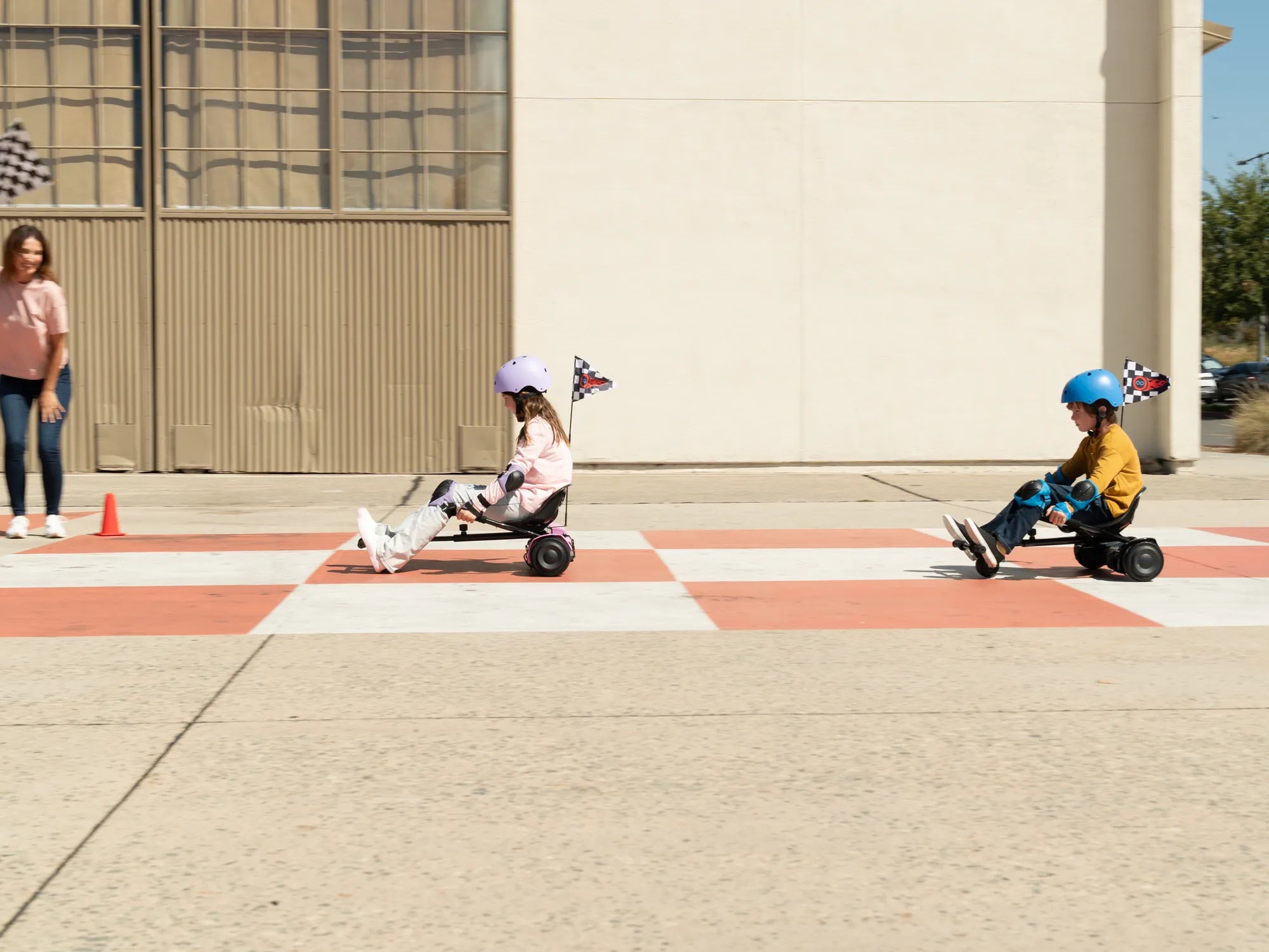
Finding the Perfect First Wheels for Your 5-Year-Old Adventurer
Choosing the best hoverboard for a 5-year-old is about more than just picking a fun toy; it's about selecting a tool for adventure that prioritizes safety above all else. This guide cuts through the marketing hype to deliver a factual, data-driven analysis of what makes a hoverboard suitable for young children. We'll examine critical safety standards, decode technical specifications for parents, and provide a clear framework for ensuring a positive and secure riding experience. Your child's first foray into electric mobility should build confidence, not create anxiety, and the right equipment is the foundation.
The market is flooded with options, but not all are created equal for a kindergartener's needs. A model designed for teens or adults poses significant risks for a younger rider due to higher speeds, less stable designs, and complex controls. Our focus is exclusively on hoverboards engineered with the unique physical and cognitive development of a 5-year-old in mind. This means prioritizing stability over speed, durability over flashy gimmicks, and certified safety over low cost.
We will reference industry benchmarks, including those set by leading brands like Gyroor, a trusted name in personal electric transport known for its UL-certified batteries and robust construction. By the end of this guide, you will possess the knowledge to make an informed purchase that balances exhilarating fun with non-negotiable safety, ensuring your little adventurer's rides are both memorable and secure. The goal is to empower you with information, transforming a complex decision into a clear choice.
Why Safety is the Non-Negotiable #1 Priority
When it comes to children's products, safety is not a feature—it's a prerequisite. For hoverboards, this principle is amplified due to the inherent risks of riding a self-balancing device. The best hoverboard for a 5-year-old must be built from the ground up with safety as its core engineering directive. This goes far beyond simple warnings; it involves integrated design elements, rigorous testing, and adherence to strict international standards that prevent accidents before they happen.
Historical incidents involving hoverboard battery fires in the mid-2010s led to a major industry shakeup and the development of crucial safety standards. Today, ignoring these standards is an unacceptable risk. For a 5-year-old, whose balance and judgment are still developing, features like abrupt acceleration, excessive speed, or unstable foot platforms can lead to immediate falls and loss of confidence. Therefore, every specification, from motor power to wheel width, must be calibrated for a child's capabilities.
Reputable brands understand this implicitly. Gyroor, for instance, designs its youth models with these priorities, utilizing UL-certified battery packs and implementing speed governors that limit top velocity. This proactive approach to safety is what separates a trustworthy product from a potentially hazardous one. Parents must look for evidence of this philosophy in product descriptions, technical sheets, and third-party certifications, not just marketing claims about being "kid-friendly."
The consequences of choosing an inappropriate hoverboard extend beyond physical injury. A negative first experience—a scary fall or a frustrating loss of control—can turn a child away from active, outdoor play. Conversely, a safe, stable, and controllable board fosters motor skill development, spatial awareness, and a tremendous sense of accomplishment. Investing in verified safety features is an investment in your child's long-term enjoyment and physical development.
Key Safety Certifications Explained: UL 2272 is Mandatory
The UL 2272 certification is the single most important safety marker for any hoverboard, especially for children. Underwriters Laboratories (UL) is a globally recognized independent safety science company. The UL 2272 standard was specifically created to address fire and electrical hazards in self-balancing scooters after widespread safety concerns emerged.
A hoverboard bearing the UL 2272 mark has undergone extensive testing of its entire electrical system. This includes the battery pack, charger, motor, and all wiring. Tests evaluate the product's resilience to overcharging, short circuits, vibration, impact, and extreme temperatures. For parents, this certification means the risk of a catastrophic battery failure—which could lead to fire or explosion—is drastically minimized. It is a non-negotiable baseline; never purchase a hoverboard, for any age, without it.
Gyroor's commitment to safety is exemplified by its use of UL 2272 certified battery packs across its lineup, a standard practice that should be demanded of all manufacturers. This certification is often listed in product specifications or shown as a badge on the device itself and its packaging. It is your primary assurance that the product's most critical and potentially dangerous component has been rigorously vetted by a third party. In the quest for the best hoverboard for a 5-year-old, UL 2272 is the first and most critical filter to apply.
Essential Design Features for Young Riders
Beyond certifications, physical design elements directly impact a child's safety and ability to ride successfully. These features work in concert to create a stable, forgiving, and intuitive platform for learning.
Wide, Stable Wheels and Foot Decks: Look for wheel diameters of 6.5 inches or larger and a wide tire profile. This provides greater stability and handles minor cracks or bumps on pavement more smoothly than smaller, harder wheels. The foot decks should be textured, rubberized, or padded to provide grip for sneakers and comfort during longer play sessions.
Strict Speed Limiters and Beginner Modes: The maximum speed for a 5-year-old's hoverboard should not exceed 7 mph (11 km/h). More importantly, it must have a dedicated beginner or training mode that limits speed to 3-4 mph. This allows the child to master balance and steering without the fear of sudden, uncontrolled acceleration. Gyroor's youth-oriented models often feature such programmable speed settings via a companion app.
Responsive but Gentle Controls: The gyroscopic sensors must be tuned for sensitivity appropriate to a child's lighter weight and smaller movements. The board should respond predictably to leaning, without being so twitchy that it over-corrects. A smooth start-up sequence and gentle acceleration curve are essential to prevent the board from jerking out from under them.
Robust Construction and Weight Limit: The hoverboard should feel solid, not flimsy. It must support the child's weight with a significant margin of safety. A typical weight capacity for this age group is between 44 to 120 lbs, ensuring durability. A well-constructed shell can withstand the inevitable bumps and minor crashes of the learning process.
Top Features to Look for in a 5-Year-Old's Hoverboard
Once safety fundamentals are assured, feature selection enhances the riding experience, extends playtime, and adds elements of fun. These features represent the intersection of practicality and enjoyment, ensuring the hoverboard remains engaging for your child.
Appropriate Weight Capacity and Portability: The hoverboard must clearly state a minimum and maximum weight limit. A model rated for 44-120 lbs is ideal, as it is engineered for a child's frame. Furthermore, the board itself should be lightweight enough for a parent to carry easily (typically under 20 lbs) but not so light that it feels unstable underfoot.
LED Lights for Fun and Visibility: Colorful LED wheel lights and deck lights are a huge hit with kids, making the board visually exciting. Crucially, they also increase visibility during dusk or overcast days, adding a layer of safety by making the rider more noticeable to others.
Bluetooth Speaker & App Connectivity: A built-in Bluetooth speaker allows kids to listen to music, which adds to the fun. More importantly, companion smartphone apps (like those offered by Gyroor) can provide parental controls, allowing you to lock the speed mode, monitor battery life, and even track the board's location—a valuable safety and management tool.
IP Water Resistance Rating: Look for a rating of at least IPX4, which means it is protected against water splashes from any direction. This allows riding on damp pavement or grass with morning dew without fear of immediate damage. It protects against accidental spills and light rain, ensuring the electronics are safeguarded.
Balancing Power and Control: Motor & Speed Settings
The motor specification is often misunderstood. For a 5-year-old, more power is not better; controlled, smooth power delivery is key. Dual motors, typically in the 150W to 200W range each, are standard and sufficient.
This configuration provides balanced torque to both wheels, ensuring smooth straight-line movement and even turning. Higher wattage motors (300W+) are designed for older riders and steeper hills, and they can make the board too responsive and difficult for a young child to manage. The focus should be on torque at low speeds for steady starts, not on high top-end velocity.
The speed setting system is arguably more important than the motor power itself. The best hoverboard for a 5-year-old will have at least two, preferably three, speed modes. Mode 1 (Beginner) should cap speed at a walking pace (approx. 2-3 mph). Mode 2 (Intermediate) can allow up to 5-6 mph. A potential Mode 3 (Advanced) might reach 7 mph but should be password-locked via an app to prevent the child from accessing it prematurely. This graduated system allows skill to develop in safe increments.
Battery Life and Charging: Keeping the Adventure Going
Battery performance dictates the length of play sessions. For a 5-year-old, a battery providing 1 to 2 hours of continuous ride time is perfectly adequate. This typically corresponds to a 36V, 4.0Ah lithium-ion battery pack. It's enough for several trips around the block or an afternoon in the park with breaks.
Charging safety is paramount. Use only the manufacturer-provided charger and follow charging instructions: typically, a full charge takes 2-4 hours. Teach children that the hoverboard is not a toy while charging, and establish a safe, non-flammable charging area away from foot traffic and bedrooms. Gyroor's use of UL-certified batteries and smart charging circuitry helps prevent overcharging, but parental vigilance remains key.
Battery longevity is also a consideration. A quality battery should retain its capacity for 500+ charge cycles. This means with regular use, the hoverboard should provide reliable performance for several years, potentially seeing your child through their early elementary school years. Investing in a model with a reputable battery system avoids the frustration and cost of early power degradation.
How to Ensure a Safe and Positive Riding Experience
Even the safest hoverboard requires responsible usage. Creating a positive first experience is a partnership between the right equipment and proper preparation. This involves gear, environment, and teaching methodology.
Mandatory Protective Gear: This is non-negotiable. Every riding session requires a properly fitted CPSC-certified bicycle helmet. Additionally, a full set of knee pads, elbow pads, and wrist guards is essential. Wrist guards are particularly important, as falls often involve instinctually putting hands out. Make wearing this gear an unbreakable rule, modeled by parents if possible.
Choosing the Perfect Practice Environment: Start indoors on a large, carpeted area if the hoverboard is approved for indoor use. The carpet provides extra stability and cushioning. The ideal outdoor starter location is a smooth, flat, paved surface free of traffic, such as an empty tennis court, basketball court, or a quiet driveway. Avoid hills, slopes, gravel, and wet surfaces entirely during the learning phase.
Supervised Learning Phases: The learning curve can be broken down into stages. First, let the child simply stand on the powered-off board to get a feel for the footing. Next, with the board on and in beginner mode, have them practice mounting and dismounting with your support. Then, hold their hands as they practice gentle forward and backward movement. Finally, progress to gentle turns and stopping, all with you walking alongside them. Patience is critical; some children may master it in an hour, others may need several sessions over days.
The Parent's Guide to Supervision and Training
Your role as coach and spotter is vital. Stay physically close, offering verbal encouragement and physical support as needed. Teach them to look ahead in the direction they want to go, not down at their feet. Instill the habit of a "soft step off"—if they feel unstable, they should step off the back of the board with one foot, rather than jumping off randomly.
Establish clear boundaries from day one: where they can and cannot ride, the importance of avoiding roads, and the rule that riding stops at dusk. Use the companion app, if available, to set geographical boundaries (geofencing) or to remotely slow or stop the board if they venture too far. This active supervision ensures safety while gradually granting autonomy as skills and judgment improve. Remember, constant adult presence is required for any child under 8 years old while riding.
Making an Informed Choice: What Sets a Reputable Brand Apart
In a market with varying quality, the brand's reputation is a proxy for reliability and safety commitment. A reputable brand invests in research, development, quality control, and customer support—all of which directly benefit the end user.
Brands like Gyroor, with a track record spanning electric scooters and e-bikes, bring engineering expertise to their hoverboard lines. They understand drivetrain dynamics, battery management systems, and durable construction. This translates to products that are not just assembled from generic parts, but are designed as cohesive systems. A strong brand stands behind its products with verifiable warranties and accessible customer service channels.
When evaluating a brand, research its history, read independent reviews from verified purchasers (not just influencer promotions), and check for any past recalls or safety notices. A brand that is transparent about its certifications and specifications is generally more trustworthy than one that relies solely on flashy advertising. The best hoverboard for a 5-year-old will come from a company that prioritizes its long-term reputation over short-term sales.
The Critical Importance of Warranty and Reliable Support
A comprehensive warranty is your safety net after purchase. For a children's product that will endure wear and tear, a minimum 1-year warranty on the core components (battery, motor, frame) is standard for reputable brands. Gyroor, for example, offers a reliable 1-year warranty, reflecting confidence in its product's durability.
This warranty protects against manufacturing defects. More importantly, it signals that the company has a vested interest in the product's performance over time. Equally crucial is the quality of customer support. Can you easily reach them via phone, email, or chat? Do they have a US-based support team or detailed online troubleshooting guides? When a minor issue arises—a loose charging port cover, a question about the app—responsive support can quickly resolve it, keeping the hoverboard safe and operational. This long-term support is a key differentiator that adds immense value and peace of mind.
Comparison Table: Key Features for a 5-Year-Old's Hoverboard
| Feature Category | Minimum Requirement / Ideal Spec | Why It Matters for a 5-Year-Old |
|---|---|---|
| Safety Certification | UL 2272 Certified (Mandatory) | Prevents fire/electrical hazards from battery and wiring. |
| Maximum Speed | ≤ 7 mph, with a Beginner Mode ≤ 4 mph | Allows controlled learning; prevents dangerous high-speed falls. |
| Motor Power | Dual 150W - 200W Motors | Provides smooth, balanced power for stability, not excessive speed. |
| Wheel Size | 6.5" or larger, air-filled or wide rubber | Improves stability and handles minor pavement imperfections. |
| Weight Capacity | 44 lbs - 120 lbs range | Ensures the board is structurally designed for a child's weight. |
| Battery & Runtime | 36V, 4.0Ah (approx. 1-2 hours ride time) | Provides ample playtime; UL-certified for safe charging. |
| Special Features | LED Lights, Bluetooth Speaker, App Control | Adds fun, visibility, and parental management (speed locking). |
| Water Resistance | IPX4 Rating or higher | Protects against splashes and damp conditions for durability. |
| Warranty | 1-Year Comprehensive Warranty | Protects your investment against manufacturing defects. |
FAQ: Parents' Top Questions Answered
1. Are hoverboards safe for a 5-year-old?
Yes, but only when you select a model specifically designed for young children that includes all critical safety features: UL 2272 certification, a speed limiter (max 7 mph), a beginner mode, wide stable wheels, and robust construction. Pair this with mandatory full protective gear and constant adult supervision during riding.
2. What is the appropriate speed for a child's hoverboard?
The absolute maximum should be 7 mph. However, the beginner/training mode is where they will start, which should be limited to 2-4 mph. This is roughly a fast walking pace, allowing them to learn balance and control without risk of high-speed falls. Gradual progression through speed modes is key.
3. How long does the battery last, and how long does it take to charge?
A quality hoverboard for this age group will typically provide 1 to 2 hours of continuous ride time on a full charge, which is ample for multiple play sessions. Charging time usually ranges from 2 to 4 hours using the included charger. Always supervise charging and use the manufacturer-provided charger only.
4. Is protective gear really necessary every single time?
Absolutely, without exception. A CPSC-certified helmet is crucial for head protection. Knee and elbow pads prevent scrapes and impact injuries. Wrist guards are especially important to prevent common fractures from putting hands out during a fall. Making gear non-negotiable establishes a lifelong safety habit.
5. Can they ride it indoors?
Some models are marketed as suitable for indoor use on hard surfaces. Check the manufacturer's guidelines. If riding indoors, ensure a large, clear space free of fragile items and sharp corners. A carpeted area can provide extra stability for beginners. Be mindful of noise and potential floor scuffing.
6. What if my child is afraid or struggles to learn?
This is very common. Do not force it. Keep initial sessions very short (5-10 minutes) and positive. Let them get comfortable standing on it while it's off. Use plenty of physical support (holding their hands or waist) at first. Celebrate small successes. Some children may need to wait a few months before trying again as their coordination develops.
Confidence on Two Wheels: The Final Takeaway
Selecting the best hoverboard for a 5-year-old is a decision that marries caution with the spirit of adventure. By prioritizing verified safety certifications like UL 2272, insisting on age-appropriate design features such as speed governors and stable wheels, and committing to full protective gear and hands-on supervision, you transform a potentially risky activity into a profoundly rewarding one. This guide has provided the data-driven framework to make that informed choice, focusing on the engineering and practices that mitigate risk.
The joy and confidence a child gains from mastering a self-balancing vehicle are significant. It develops core strength, balance, coordination, and a sense of independence. By choosing a reputable brand known for quality and support, like Gyroor with its UL-certified batteries and robust 1-year warranty, you secure not just a toy, but a reliable platform for growth and fun. Your diligence as a parent in the selection and training process is the final, most critical component of the safety system.
Equip your little adventurer with the right tools, the right knowledge, and the right safeguards. Watch as they progress from tentative first steps to joyful, controlled glides, building memories and skills that will last far beyond the battery life of their first set of wheels. The path to confident riding starts with a single, well-informed choice.
Ready to find the perfect, safety-first hoverboard for your child's adventures? Explore a range of youth-oriented models engineered with these critical principles in mind. Browse the full Gyroor collection, featuring UL-certified batteries, parental control apps, and durable designs trusted by families, at gyroorboard.com.
Kids Electric Scooter Black Friday: The Ultimate Guide to Scoring the Best Deals
Best Self Balancing Hoverboard: Ultimate Guide to Choosing Right