



Forget smooth sidewalks. The true frontier for personal electric vehicles lies beyond the pavement, on dirt trails, grassy hills, and gravel paths. This guide is for the adventure seeker ready to explore uncharted ground. Choosing the best hoverboard off road requires understanding specific engineering that separates rugged terrain masters from basic commuter models. We'll dissect the critical features—from motor torque to tire technology—and provide a comprehensive framework for selection, safety, and performance. You'll learn what makes a hoverboard truly off-road capable, how to ride it safely on challenging surfaces, and what to look for in a reliable brand like Gyroor, trusted by over 100,000 riders for its UL-certified safety and robust design.
What Makes a Hoverboard Truly "Off-Road" Capable? Key Features Explained
An off-road hoverboard isn't just a standard model with knobby stickers. It's a purpose-built machine engineered for instability, impact, and traction loss. The core differentiators lie in its powertrain, suspension system, and environmental protection. These features work in concert to provide the control and durability needed for adventure riding.
Standard hoverboards often utilize small, solid rubber tires and lower-wattage motors suitable for flat, hard surfaces. In contrast, a true off-road model must generate significant torque to climb, utilize air-filled tires for shock absorption, and be sealed against dust and water. Without these elements, attempting off-road travel is inefficient, unsafe, and will quickly damage the board.
The investment in a properly engineered best hoverboard off road pays dividends in longevity and performance. Components are stressed more on rough terrain, so build quality and certified parts are non-negotiable. Brands that prioritize this, like Gyroor with its UL-certified battery packs and IPX5 water resistance, design for these conditions from the ground up.
Tire Technology: Air-Filled vs. Solid Rubber
The tires are your first and most critical point of contact with the terrain. For off-road use, air-filled (pneumatic) tires are overwhelmingly superior to solid rubber. Pneumatic tires, typically 8.5 inches or larger in diameter, provide essential shock absorption. They compress over roots and rocks, smoothing the ride and reducing stress on the board's frame and internal components.
Traction is another key advantage. Pneumatic tires can be fitted with deep, aggressive tread patterns that bite into loose dirt, gravel, and grass. This dispersion of tread blocks prevents the board from slipping sideways or losing forward momentum. Solid rubber tires, common on street models, offer no give and minimal tread, leading to a jarring ride and poor grip on anything but pavement.
Maintenance involves periodic checks of tire pressure, but this is a minor trade-off for the massive performance and comfort gain. Properly inflated off-road tires provide a stable, confident ride that allows you to focus on the trail ahead, not every bump beneath you.
Motor Power and Climbing Ability
Motor power dictates your hoverboard's ability to conquer inclines and power through resistance. For off-road use, look for a combined dual-motor wattage of at least 700W, with 800W or more being ideal. This wattage translates directly to torque—the rotational force that gets you moving from a standstill and pushes you up a slope.
Climbing ability is typically measured in degrees of incline. A capable off-road hoverboard should handle slopes of 25° to 30°. This requires not just raw power but also sophisticated gyroscopes and control algorithms to maintain balance and apply power evenly to each wheel on uneven ground. A weak motor will strain, overheat, or simply stop on a moderate hill, ending your adventure prematurely.
Dual motors also enhance control. On a loose surface, independent wheel control helps correct slips and provides stability. The robust motors in a true off-road board are built with better heat dissipation to handle the sustained load of trail riding, unlike smaller motors designed for short, flat commutes.
Battery Life, Range, and Durability
Off-road riding consumes battery power faster than street cruising. Overcoming resistance from grass, dirt, and inclines requires more energy. Therefore, battery capacity, measured in Watt-hours (Wh), must be substantial. Look for a battery rated for a real-world off-road range of 10-15 miles per charge.
Durability and safety are paramount. A lithium-ion battery pack undergoing the constant vibration of trail riding must be exceptionally well-built. This is where certification matters. UL-certified battery packs, like those used in Gyroor models, undergo rigorous testing for over 500 charge cycles, thermal stability, and impact resistance. They are the benchmark for safety, drastically reducing any risk of malfunction.
Battery management systems (BMS) are also crucial. A good BMS protects against overcharging, deep discharge, and short circuits, ensuring the battery's longevity. For the adventure seeker, a reliable, high-capacity, certified battery isn't just a feature; it's the component that ensures you have the power to explore and, more importantly, return.
Top Terrain Challenges and How Your Hoverboard Handles Them
Understanding theory is one thing; knowing how your board will perform on actual terrain is another. A capable off-road hoverboard transforms challenging surfaces into enjoyable pathways. Its design directly addresses the specific physics of loose, soft, and uneven ground.
Each type of terrain presents a unique test. Gravel asks for traction and stability, grass demands torque and power, and hills require sustained output and balance. The integration of the features discussed earlier—large pneumatic tires, high-torque motors, and a robust frame—is what allows a single device to meet all these challenges effectively.
Riding on these surfaces also highlights the importance of rider skill and proper safety gear. The board provides the capability, but the rider must provide respect for the terrain and an understanding of the machine's limits. This synergy is key to a successful off-road experience.
Gravel Paths and Dirt Trails
Gravel and packed dirt are the introductory off-road terrains. The primary challenge is loose surface traction and stability. The deep treads on pneumatic tires dig into the gravel, finding purchase to propel you forward without spinning out. The tire's flexibility allows it to conform to the uneven surface, maintaining contact and control.
On dirt trails with minor ruts or roots, the shock absorption of air-filled tires is invaluable. It prevents the jarring impacts that could throw off your balance or damage the board. The gyroscopic sensors in a quality hoverboard make constant micro-adjustments to wheel speed, helping you stay upright even if one wheel hits a slippery patch.
Speed management is crucial here. Maintaining a moderate, controlled pace allows the board's systems to react and gives you time to adjust your stance. A sudden acceleration on loose gravel can cause a loss of rear traction.
Grass, Hills, and Moderate Inclines
Grass, especially if slightly damp or long, creates significant rolling resistance. It's like riding through a constant, soft drag. This is where motor torque proves its worth. High-wattage dual motors deliver the consistent power needed to maintain momentum without bogging down.
Climbing hills on grass or dirt is the ultimate test of an off-road hoverboard's powertrain. The board must deliver maximum torque while the gyroscopes work overtime to keep the platform level as the incline changes. A board rated for a 30° climb can handle most moderate hill challenges you'll encounter in parks or on trails.
Descending requires equal caution. Regenerative braking, a feature on most models, helps control speed on the way down by converting momentum back into a small amount of battery charge. Leaning back gently engages this brake. Never descend a steep hill straight on; instead, ride at a slight diagonal (traversing) to control your speed.
Navigating Wet Conditions and Water Resistance
Off-road adventures often encounter morning dew, damp grass, or puddles. Water resistance is therefore a critical, non-negotiable feature. An IP rating defines this protection. For off-road use, a minimum of IPX4 (splash resistance from any direction) is acceptable, but IPX5 (protected against low-pressure water jets) is the recommended standard for true peace of mind.
An IPX5-rated hoverboard, like those in the Gyroor off-road lineup, has sealed compartments for the battery, control board, and motors. This allows you to safely ride through puddles, on wet grass, or in light rain without worrying about short circuits or corrosion. It protects the heart of the board from the elements you're most likely to meet off the pavement.
It's vital to distinguish water resistance from waterproofing. No recreational hoverboard is fully submersible. After riding in wet conditions, a quick wipe-down is advised to remove mud and debris from the tires and frame, ensuring longevity and preventing buildup in moving parts.
Safety and Preparedness: Gear and Riding Tips for Off-Road Adventures
The increased capability of an off-road hoverboard comes with increased responsibility. The terrain is less predictable, and falls can happen. Prioritizing safety transforms a potentially risky activity into a confidently managed adventure. Your gear and preparation are as important as the board's specifications.
A proper mindset is the first piece of safety equipment. Off-road riding requires more active engagement than casual street cruising. You must scan the terrain ahead, plan your path, and be prepared to dismount if you encounter an obstacle beyond the board's or your skill's capability. Overconfidence is a common precursor to accidents.
Familiarize yourself with your board in a safe, open, flat grassy area before tackling trails. Practice sudden stops, gentle turns, and getting on/off on uneven ground. This builds muscle memory and confidence, making you a more competent rider when the terrain gets challenging.
Essential Protective Gear
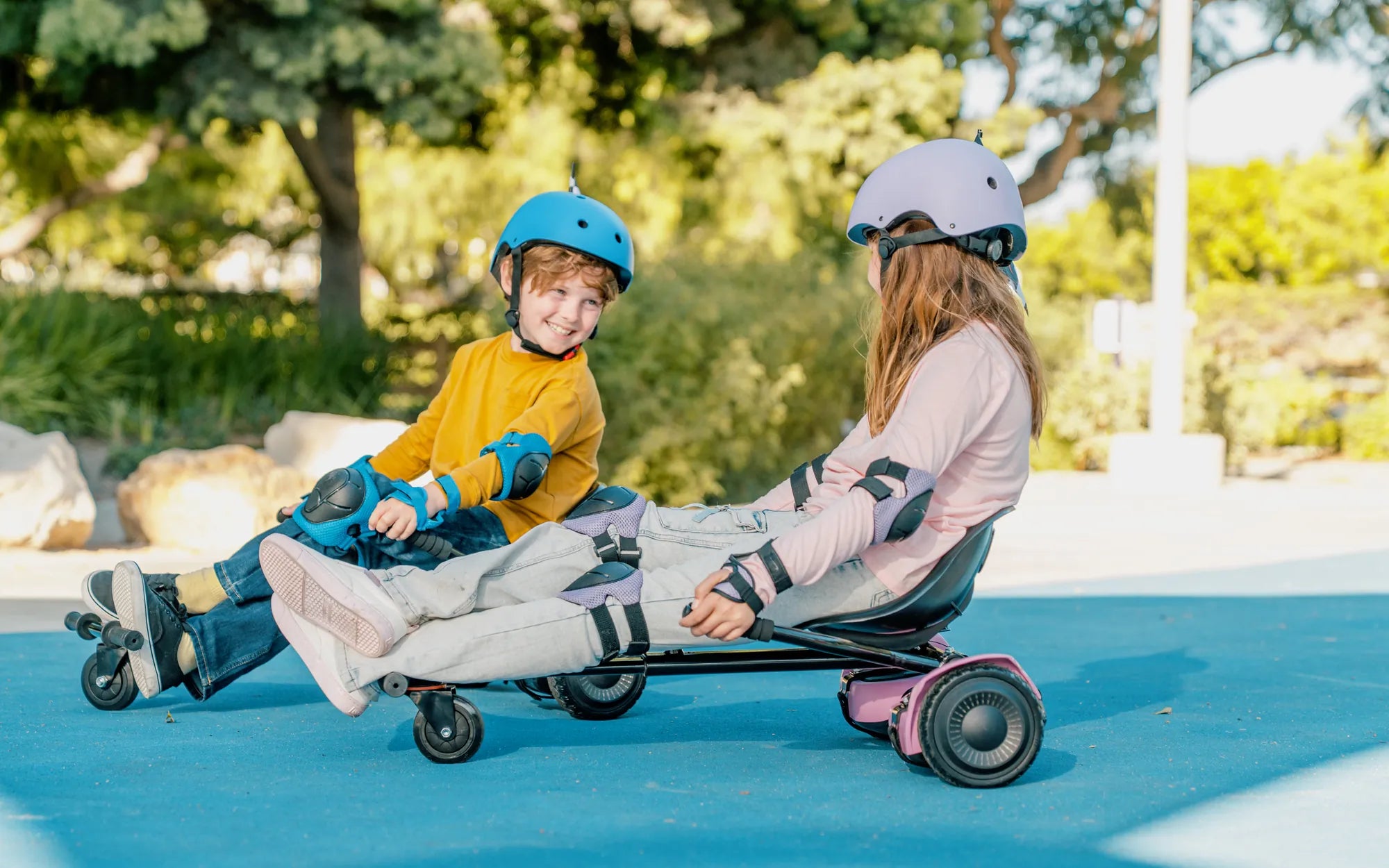
Never ride off-road without proper protection. The minimum gear should be considered mandatory, not optional.
- Helmet: A certified bicycle or multi-sport helmet is essential. For more aggressive trail riding, a full-face mountain biking helmet offers superior protection for the jaw and face.
- Wrist Guards: The most common injury in hoverboard falls is a wrist fracture. Wrist guards are the single most effective piece of protective gear to prevent serious injury.
- Knee and Elbow Pads: These protect joints from impacts with rocks, roots, and the ground. Look for hard-shell pads with secure straps that won't slip during a fall.
- Sturdy Footwear: Wear closed-toe shoes with flat, grippy soles. Hiking shoes or skate shoes provide good ankle support and a stable platform for controlling the board.
This gear may seem like overkill to a new rider, but it provides critical protection that allows you to push your limits safely and recover quickly from minor slips.
Pre-Ride Checklist and Maintenance
A two-minute pre-ride check can prevent most mechanical failures and ensure a safe outing. Make this a ritual before every adventure.
- Tire Pressure: Check that pneumatic tires are firm and properly inflated according to the manufacturer's PSI recommendation. Soft tires reduce range and control.
- Battery Charge: Ensure the battery has enough charge for your planned ride, plus a safety margin. Never drain a lithium battery to 0%.
- Frame and Body: Visually inspect the board for any new cracks, loose parts, or damage from the previous ride. Ensure the foot pads are clean and dry.
- Post-Ride Care: After riding, especially on muddy or wet terrain, wipe down the board with a damp cloth. Check for and remove debris stuck in the tire treads or wheel wells. Store the board in a cool, dry place.
Regular maintenance, like checking for loose screws and ensuring charging ports are clean, extends the life of your investment. A well-maintained best hoverboard off road is a reliable partner for years of exploration.
Choosing Your Adventure Partner: A Buyer's Considerations Checklist
With the knowledge of features and safety, you can now make an informed decision. Use this checklist to evaluate models and find the perfect match for your adventure style and budget. Prioritize the features that matter most for your intended use.
| Consideration | Minimum Recommendation | Ideal/Advanced Spec | Why It Matters |
|---|---|---|---|
| Motor Power | 700W (combined) | 800W+ (combined) | Determines torque for hills & rough terrain. |
| Tire Type & Size | 8.5" Pneumatic | 10"+ Pneumatic, Knobby Tread | Provides shock absorption and off-road traction. |
| Battery & Range | UL-certified, 10 mi off-road | UL-certified, 15+ mi off-road | Ensures safety, longevity, and adequate adventure range. |
| Water Resistance | IPX4 | IPX5 or higher | Protects electronics from puddles, wet grass, and light rain. |
| Weight Limit | 220 lbs (100 kg) | 265 lbs (120 kg) or more | Ensures the board can safely support rider and gear. |
| Warranty & Support | 1-year limited | 1-year comprehensive with responsive support | Protects your investment against manufacturing defects. |
Beyond specs, consider the brand's reputation for quality and customer service. A brand like Gyroor, with a track record of over 100,000 riders and a focus on certified safety components, offers inherent value through reliability and peace of mind. Read reviews focused on durability and long-term performance, not just unboxing impressions.
Your skill level is also a factor. If you're new to hoverboards entirely, consider practicing extensively on a standard model before investing in a high-powered off-road version. However, if your goal is solely off-road exploration, starting with a capable but user-friendly off-road model is a valid approach—just commit to the learning curve in a safe environment.
Frequently Asked Questions (FAQ) About Off-Road Hoverboards
Q: Can off-road hoverboards get wet?
A: It depends on the IP rating. Models with an IPX5 rating, like many from Gyroor, are protected against low-pressure water jets from any direction. This means they can safely handle puddles, wet grass, and light rain. They are not submersible and should not be ridden through deep standing water.
Q: How steep a hill can an off-road hoverboard climb?
A: A capable off-road hoverboard with 800W+ of combined motor power can typically climb slopes of 25° to 30°. The actual performance can be affected by the rider's weight, tire traction, and surface conditions (e.g., wet grass vs. dry dirt). Always check the manufacturer's stated incline rating.
Q: Are off-road hoverboards legal on public hiking or biking trails?
A> Laws vary drastically by country, state, and even local municipality. Many public trails classify motorized vehicles separately. Always check the specific regulations for the trail or park you plan to visit. Generally, they are acceptable on private property and in some public parks, but rarely on dedicated wilderness hiking trails.
Q: How does maintenance differ from street hoverboards?
A: Off-road models require more frequent attention to tires (pressure checks, debris removal) and cleaning after muddy or wet rides. The mechanical components are under greater stress, so periodic checks for loose screws and frame integrity are important. The core electrical maintenance—caring for the UL-certified battery by avoiding extreme discharges—remains the same.
Q: What is the realistic range I can expect on off-road terrain?
A> Expect the range to be 60-70% of the manufacturer's stated "optimal condition" range, which is usually based on smooth pavement. If a board claims 18 miles on pavement, a realistic off-road range on mixed trails and grass is 11-13 miles. Factors like constant hill climbing, rider weight, and temperature will further affect this.
Conclusion: Your Path to Uncharted Ground Starts Here
The freedom to leave the pavement behind represents a significant evolution in personal electric mobility. A true off-road hoverboard is a key to that freedom, but it must be chosen with care and used with respect. By prioritizing certified battery safety, robust motor power, genuine pneumatic tires, and proper water resistance, you invest in more than a toy—you invest in a reliable adventure vehicle.
The data and guidelines provided here empower you to cut through marketing claims and identify machines built for performance, not just appearance. The thrill of exploring a dirt trail, crossing a grassy field, or mastering a gentle slope is unparalleled, offering a unique blend of technology, sport, and connection with the outdoors.
Ready to start your journey? Begin with a brand that embodies these principles of safety and durability. Explore the rugged, IPX5-rated off-road models from Gyroor, engineered with UL-certified batteries and built to handle the adventure you seek. Your trail awaits. Browse the full Gyroor collection at gyroorboard.com to find your perfect off-road companion.
10 Inch Self Balancing Scooter: The Ultimate Guide to Modern Urban Mobility
Price Electric Scooter for Kids 12 Years: A Complete Buying Guide