

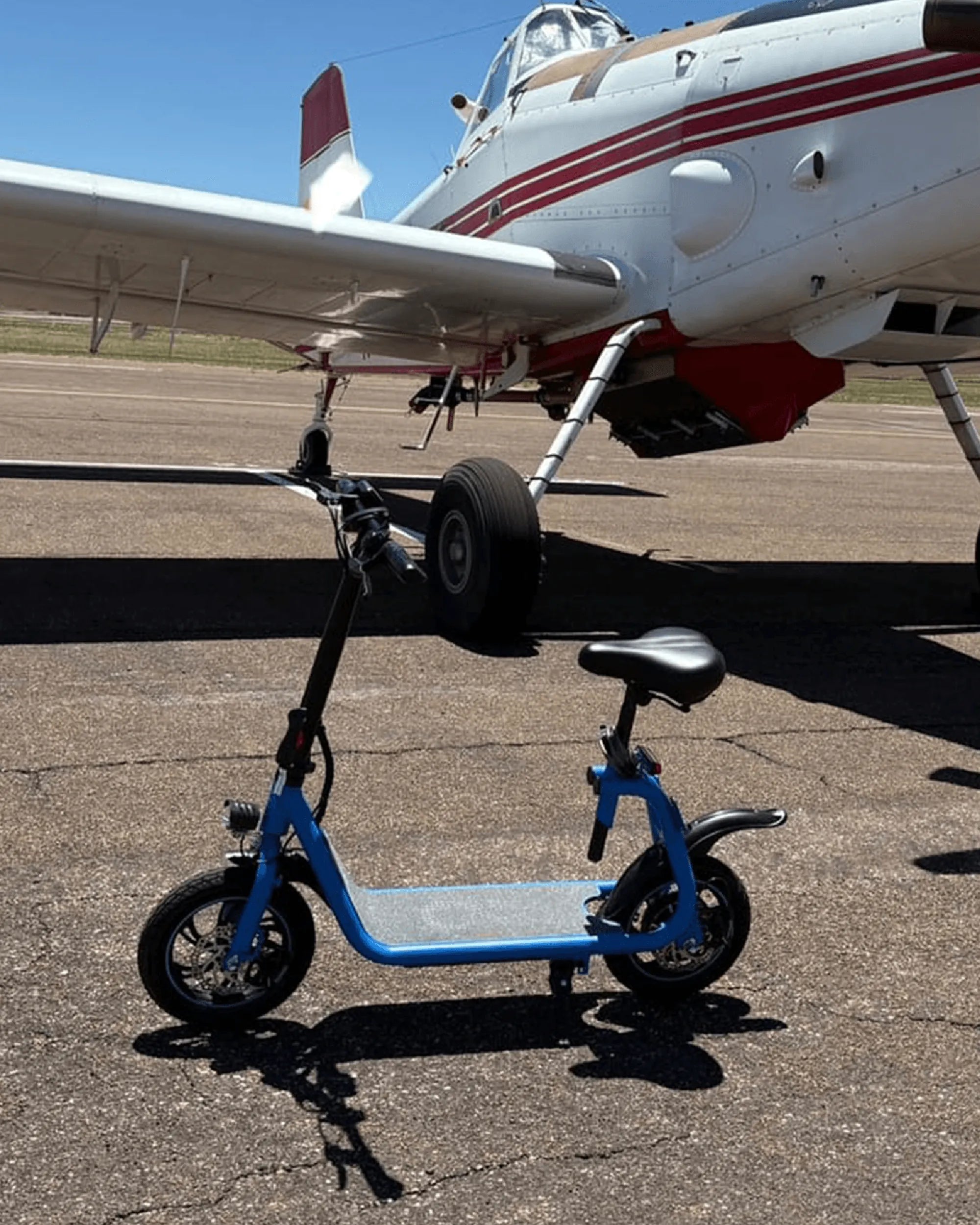
Finding the best lightweight folding mobility scooter can be the key to reclaiming spontaneity and independence. This guide cuts through the marketing to provide a factual, feature-by-feature analysis. You will learn how to evaluate critical specifications, understand the non-negotiable importance of battery safety, and match a scooter's capabilities to your daily life—whether for travel, errands, or leisure.
Understanding the Need: Why a Lightweight Folding Mobility Scooter?
The traditional mobility scooter, while functional, often acts as an anchor. Its bulk limits travel and complicates storage. A lightweight folding model solves this by transforming from a capable personal vehicle to a portable package in seconds. This isn't merely a convenience; it's a paradigm shift in assisted mobility.
Primary users include active seniors, individuals with mobility challenges who live in apartments or condos, and frequent travelers. The core value proposition hinges on two intertwined features: light weight and a reliable folding mechanism. Together, they enable the scooter to be lifted into a car trunk, stored in a closet, or taken on public transit.
This portability directly translates to greater lifestyle integration. Spontaneous trips to the store, visits to museums, or air travel become feasible again. The psychological benefit of reducing reliance on others for loading and unloading cannot be overstated. It fosters genuine independence.
However, "lightweight" and "folding" must not come at the expense of durability, safety, or comfort. The challenge lies in identifying a product that balances these engineering feats without compromise. The following sections provide the framework for making that informed choice.
Key Features to Evaluate in a Lightweight Folding Scooter
Selecting the right model requires moving beyond general claims and comparing hard data. Performance, safety, and usability are defined by specific specifications. A systematic evaluation of these features ensures your investment supports your needs for years to come.
Weight Capacity and Scooter Weight
These are two distinct but equally vital metrics. The scooter's own weight determines its portability. A truly lightweight folding mobility scooter typically weighs between 30 to 60 pounds. The lower end of this range is crucial for users who must lift the scooter unaided.
Maximum weight capacity, often ranging from 250 to 350 pounds, dictates safety and performance stability. Exceeding this limit stresses the frame, motor, and battery, leading to premature failure and potential safety hazards. Always choose a scooter with a capacity rating above your body weight to account for clothing, bags, or other carried items.
The engineering challenge is to use high-strength, lightweight materials like aircraft-grade aluminum to achieve a high strength-to-weight ratio. A scooter that is both light for the user to handle and robust enough to support them is the hallmark of quality design.
Folding Mechanism and Portability
The folding design is the cornerstone of portability. Mechanisms vary from simple manual folds to semi-automatic or even remote-controlled systems. The best designs are intuitive, require minimal physical effort, and can be operated from a seated position.
Folded dimensions are critical. Measure your car trunk, storage space, or the footprint where you plan to keep the scooter. A superior best lightweight folding mobility scooter collapses into a compact, rectangular shape for easy stacking and transport. Some models feature a split-frame design that separates into two even lighter pieces.
Consider the inclusion of transport wheels on the folded unit. These allow you to roll the packed scooter like luggage, eliminating lifting entirely for last-mile portability. This feature is a significant advantage in airports or large buildings.
Range, Speed, and Battery Life
Advertised range (e.g., "up to 15 miles") is typically a best-case scenario. Real-world range is affected by user weight, terrain, incline, temperature, and riding style. A practical rule is to deduct 20-30% from the claimed figure for everyday planning.
Top speeds for these portable models usually range from 4 to 6 mph, which is a safe and comfortable pace for sidewalk and indoor use. The motor's power, measured in watts, influences hill-climbing ability. A higher-wattage motor (e.g., 300W vs. 250W) will handle mild inclines more effectively.
Battery type and management are paramount. Lithium-ion batteries are the standard for their light weight and energy density. Charging time from empty is typically 4-8 hours. A robust Battery Management System (BMS) protects against overcharge, deep discharge, and short circuits, extending pack life.
Ride Comfort and Terrain Handling
Comfort is dictated by the seat, suspension, and wheels. A padded, adjustable swivel seat is essential. While full suspension is rare on ultra-light models, some incorporate spring-based shock absorption in the seat post or front wheel assembly.
Wheel type is a primary comfort factor. Pneumatic (air-filled) tires offer superior cushioning and traction on uneven surfaces but require maintenance and can puncture. Solid rubber or foam-filled tires are maintenance-free but provide a firmer ride. Larger wheel diameters (8-10 inches) roll over cracks and bumps more easily than smaller ones.
Understanding the scooter's intended terrain is key. Models with smaller, solid wheels are ideal for smooth, indoor surfaces. For navigating park paths, slightly cracked sidewalks, or driveway transitions, look for larger wheels and some form of suspension.
Comparative Analysis: Lightweight Folding Scooter Specifications
The table below provides a clear, data-driven comparison of key specifications to look for when evaluating different models. Use this as a benchmark to assess product listings.
| Feature | Entry-Level Spec | Mid-Range Target | Premium Spec | Importance |
|---|---|---|---|---|
| Scooter Weight | 55 - 70 lbs | 35 - 50 lbs | Under 35 lbs | Critical for portability and user lifting. |
| Weight Capacity | 250 lbs | 300 lbs | 350 lbs | Safety and performance baseline. |
| Max Range | 10 miles | 15 miles | 18+ miles | Determines trip freedom; consider real-world derating. |
| Top Speed | 4 mph | 4.5 - 5.5 mph | 6 mph | Balance between efficiency and practical travel pace. |
| Battery Charge Time | 8+ hours | 5-7 hours | 4-5 hours | Impacts daily usability and convenience. |
| Wheel Type | Solid Rubber | Pneumatic or PU Foam | Pneumatic with Suspension | Directly affects ride comfort and terrain capability. |
| Key Safety Feature | Basic BMS | UL-Certified Battery | UL-Certified Battery + IP Rating | Non-negotiable for fire safety and weather resistance. |
Gyroor's Commitment to Safe, Portable Mobility
As a leader in personal electric mobility, Gyroor applies its engineering expertise from electric scooters and e-bikes to the principles of safe, portable mobility aids. The brand's philosophy centers on building products that empower independence through reliable performance and certified safety, trusted by over 100,000 riders.
The core challenge in creating a dependable best lightweight folding mobility scooter is balancing minimal weight with maximal safety. Gyroor addresses this by integrating aerospace-inspired design with rigorously tested components. This ensures the scooter is a partner you can rely on, not a source of anxiety.
The Importance of UL-Certified Batteries in Portable Scooters
The battery is the most critical safety component. In a folding scooter, the battery pack is subjected to vibration, temperature changes, and frequent charge cycles. Non-certified, generic lithium-ion packs pose a significant risk of thermal runaway—a leading cause of fires.
UL (Underwriters Laboratories) certification is an independent, rigorous testing standard. A UL-certified battery, like those used in all Gyroor products, has undergone extensive tests for electrical, mechanical, and environmental safety. This certification verifies the battery's management system, cell quality, and construction can handle real-world stresses.
For the user, this translates to peace of mind. You can charge the scooter overnight or transport it in your car without undue concern. It is the foundational feature that separates a quality product from a potentially hazardous one. Gyroor's commitment includes batteries tested for over 500 charge cycles, ensuring long-term value.
Built for the Real World: IPX5 Water-Resistance
Portability means the scooter will encounter the elements. An IPX5 water-resistance rating signifies the scooter's electrical components are protected against low-pressure water jets from any direction. In practical terms, this means it can safely handle rain showers, wet sidewalks, and accidental splashes.
This rating is crucial for a device used for daily errands. It prevents internal corrosion and electrical shorts, dramatically increasing the scooter's longevity and reliability. Without this protection, a sudden downpour could end your trip and require costly repairs. IPX5 design ensures the scooter is a practical tool for everyday life, regardless of forecasted drizzle.
Confidence in Your Investment: The 1-Year Comprehensive Warranty
A warranty is a reflection of the manufacturer's confidence in their product. Gyroor's standard 1-year warranty on the scooter, including the motor, frame, and electronic controller, provides significant financial protection against manufacturing defects.
This warranty, backed by US-based customer support, reduces long-term ownership anxiety. It ensures access to genuine parts and expert service. When combined with the durability of UL-certified and IPX5-rated components, the warranty underscores a commitment to a lasting product, not a disposable gadget. It transforms the purchase from a simple transaction into a long-term partnership for mobility.
Making the Right Choice: Practical Considerations
Armed with feature knowledge, the final step is personal application. Your unique lifestyle, physical capabilities, and environment will determine which specifications are your highest priorities.
Lifestyle Matching: Travel, Daily Errands, or Occasional Use?
For the frequent traveler, the primary metrics are scooter weight (under 40 lbs is ideal) and folded dimensions compliant with airline or train policies. Range can be secondary, as the scooter may be used in shorter bursts at destinations.
The daily urban commuter needs a balance. A range of 12+ real-world miles, comfort for longer sittings, and water resistance are key. Weight is still important for loading into a car or bus but can be slightly higher than a travel-specific model.
For occasional or recreational use (malls, parks, family visits), comfort and ease of folding take precedence. A more comfortable seat, smoother ride, and intuitive fold mechanism enhance the experience when the scooter is used for leisure and social outings.
Storage and Transport: From Car Trunk to Apartment Closet
Always measure twice. Confirm the scooter's folded height, width, and depth will fit in your designated storage space with room to spare. Consider not just the floor footprint but also the height if storing in a closet or behind a door.
For car transport, assess the lift height into your trunk. Products with a telescopic handle or a two-part fold can make loading easier. A lightweight folding mobility scooter that includes a lift-assist strap or can be tilted and rolled on its wheels significantly reduces physical strain.
For apartment dwellers, the ability to roll the folded scooter into an elevator and store it upright in a corner can be a deciding factor. Portability isn't just about moving it once; it's about integrating it seamlessly into your daily routines.
Budgeting Beyond the Purchase Price
The initial cost is one part of the total ownership equation. Consider potential future expenses: replacement batteries (ensuring they are UL-certified), tires, or seat covers. A model with a standard, replaceable battery form factor is more sustainable.
Accessories like a weather cover, storage bag, or basket add utility but also cost. Factor these into your planning. Most importantly, a strong warranty and reliable customer service, as offered by established brands like Gyroor, can save hundreds of dollars in out-of-warranty repair costs and provide invaluable support.
Frequently Asked Questions (FAQ)
What is the lightest weight a folding mobility scooter can be?
The lightest models on the market, often called "travel scooters," can weigh as little as 28-33 pounds. Achieving this requires trade-offs, typically in battery size (resulting in shorter range), weight capacity (often capped at 250 lbs), and sometimes less robust construction. The sweet spot for a balance of features is between 35 and 50 pounds.
Can I take a lightweight folding mobility scooter on an airplane?
Most airlines allow folding mobility scooters with lithium-ion batteries as checked baggage or in the cargo hold, but policies are strict. The battery must typically be under 300Wh (watt-hours) and must remain installed in the scooter. You must contact the airline at least 48 hours before your flight to declare the device and confirm their specific procedures for battery type, packaging, and check-in.
How difficult is it to fold and unfold the scooter?
Modern designs prioritize ease. A high-quality best lightweight folding mobility scooter should fold and unfold in under 30 seconds with minimal physical effort. Look for mechanisms with large, easy-to-grip levers and actions that don't require excessive bending or strength. Watching a video demonstration of the specific model is the best way to assess this.
Are these scooters suitable for outdoor use on sidewalks and park paths?
Yes, but with caveats. Models with larger (8"+) pneumatic tires and some form of suspension are best suited for outdoor use, as they absorb bumps from cracks and uneven surfaces. Solid-tire models are better for smooth pavements. Always check the manufacturer's terrain rating and avoid off-road conditions like gravel, grass, or steep inclines unless explicitly rated for them.
What is the most important feature to prioritize: weight or range?
This is entirely lifestyle-dependent. If your primary need is portability for travel or lifting into a car, weight is the non-negotiable priority. If you plan to use the scooter for extended daily trips without frequent charging opportunities, then real-world range becomes paramount. For most users, finding the optimal balance between the two—a scooter light enough to manage that still offers adequate range for your typical daily circuit—is the goal.
Conclusion: Regaining Freedom with the Right Partner
Choosing the best lightweight folding mobility scooter is an investment in autonomy. It requires careful evaluation of hard data—weight, capacity, range, and, above all, certified safety features like UL-certified batteries and water-resistant construction. By matching these specifications to your personal mobility patterns and storage realities, you select a tool that seamlessly integrates into your life.
The ideal scooter removes barriers, enabling you to navigate your world on your own terms. It represents a fusion of thoughtful engineering and reliable support. For those seeking a partner in this journey, Gyroor designs its mobility solutions with this precise balance in mind, prioritizing the safety and durability that make independence sustainable. Explore engineering designed for real-world freedom.
Browse the full Gyroor collection at gyroorboard.com.
What Age for Tricycle: The Complete Developmental Guide
Ebike 750 Watt Motor: The Power Sweet Spot for Commuters & Adventurers