


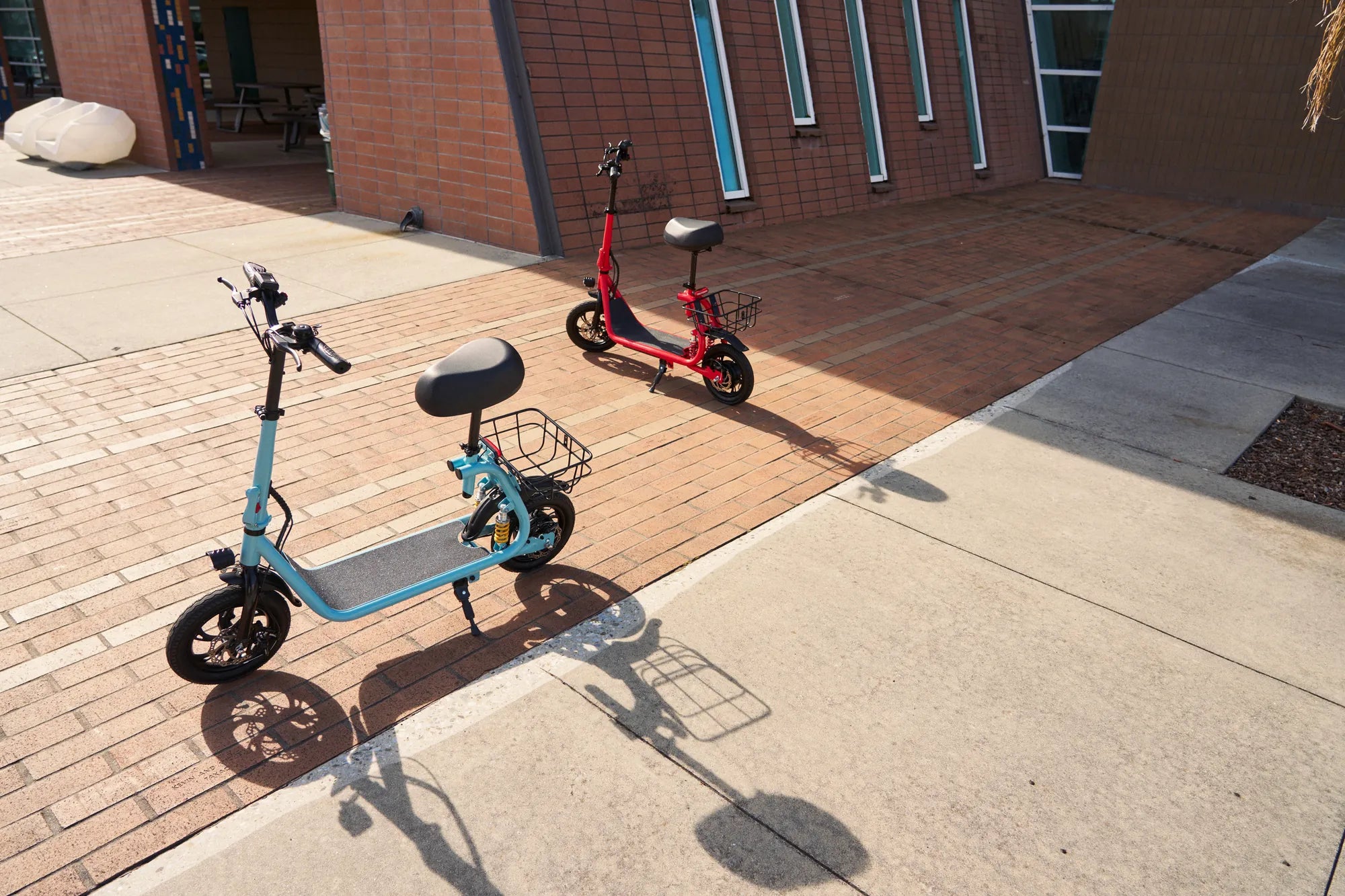
Navigating crowded city streets and bridging the last-mile gap requires a smart transportation solution. The best mini e bike offers a powerful answer, combining the freedom of cycling with electric assist in a portable, efficient package. This guide will dissect the critical features, performance metrics, and safety considerations that define top-tier models. You'll learn how to evaluate motor power, battery safety, and build quality to find a reliable companion for your daily travels, with insights into how brands like Gyroor prioritize certified components and rider trust.
The Rise of the Mini E-Bike for Modern Mobility
Urban transportation is evolving rapidly. Traffic congestion, parking scarcity, and environmental concerns are driving the adoption of personal electric vehicles. Within this landscape, the mini e-bike has emerged as a uniquely practical tool.
These compact electric bicycles are engineered for the multi-modal commuter. They are designed to be carried onto trains, stored under a desk, or tossed in a car trunk with ease. Their electric assist makes commuting sweat-free and hills manageable, expanding the range of practical cycling.
The popularity surge is backed by tangible user benefits. Riders report significant savings on fuel and public transit costs. Furthermore, the flexibility they offer—avoiding traffic jams and fixed schedules—is invaluable in dynamic urban environments.
Brands like Gyroor have entered this space with a focus on foundational safety and reliability. Trusted by over 100,000 riders, their approach centers on UL-certified battery technology and robust warranties, setting a benchmark for what consumers should expect from the best mini e bike.
What Defines a "Mini" E-Bike? Key Specifications
A mini e-bike is distinct from its full-sized counterparts and other electric micro-mobility options. The primary differentiators are size, weight, and often, a folding mechanism. Understanding these core specs is the first step in making an informed choice.
Typically, a mini e-bike features smaller wheels, usually in the 12-inch to 16-inch diameter range. This reduces the overall footprint and weight. The frame is crafted from lightweight aluminum alloy, with most quality models weighing between 30 and 50 pounds.
A defining feature is the integrated folding system. The best designs allow the bike to fold at the frame and handlebar stem in seconds, without requiring tools. Folded dimensions are crucial; ideal models compact to a size manageable for carrying, roughly resembling a large suitcase.
Motor Power and Performance Expectations
The heart of any e-bike is its motor. For mini e-bikes, hub motors rated between 250W and 500W are standard. A 350W motor is a common sweet spot, providing ample power for most urban terrains while often complying with local speed regulations for electric bicycles.
This power translates to a top assisted speed of 15-20 mph (24-32 km/h), depending on regional classifications (Class 1, 2, or 3). Torque is equally important, as it determines hill-climbing ability. A quality 350W motor should handle moderate inclines of 10-15% gradient without requiring excessive pedaling effort from the rider.
Performance is also governed by the pedal-assist system (PAS) and throttle. Most models offer multiple levels of assist (e.g., 3-5 levels), allowing riders to customize battery usage and exercise input. A thumb or twist throttle provides an option for pure electric power, useful for starting from a stop or tackling steep sections.
Top Considerations When Choosing the Best Mini E Bike
Selecting the right model requires balancing several interconnected factors. A checklist focusing on real-world use, not just marketing claims, will lead to a satisfying long-term purchase.
First, assess your primary use case. Is it for a short commute to the train station? Running errands under 5 miles? Or a longer 10-mile daily round trip? Your answer will directly dictate the necessary battery range, motor power, and comfort features.
Second, consider your storage and carrying logistics. Measure the space where you'll store the bike at home and work. If you need to carry it up stairs or onto a bus, the folded dimensions and weight become paramount. A lighter model with a comfortable carry handle can make a daily difference.
Finally, research the brand's reputation for customer support and warranty service. A comprehensive warranty, like Gyroor's 1-year coverage, signals confidence in product durability. Accessible customer service for troubleshooting is invaluable for a technical product like an e-bike.
Battery Life and Range: Interpreting the Numbers
Advertised range is the most commonly misunderstood specification. A claim of "25-mile range" is a best-case scenario under ideal conditions: a light rider on flat ground using minimal pedal assist.
A more reliable metric is the battery's capacity, measured in Watt-hours (Wh). You can calculate this by multiplying the voltage (V) by the amp-hour (Ah) rating (e.g., 36V x 10Ah = 360Wh). A higher Wh number generally indicates a longer potential range, all else being equal.
Real-world range is affected by rider weight, terrain, wind, temperature, and assist level. For accurate planning, assume a real-world efficiency of 15-20 Wh per mile. A 360Wh battery, therefore, will likely deliver 18-24 miles of range for an average rider. For a reliable daily commute, choose a battery that offers at least a 50% buffer above your longest regular trip.
Build Quality, Durability, and Weather Resistance
The frame is the skeleton of your e-bike. A robust, welded aluminum alloy frame is essential for safety and longevity. Inspect the folding mechanism critically; it should feel solid, use high-quality latches or locks, and have no noticeable wobble when unfolded and ridden.
Component quality matters. Look for reputable brake brands (e.g., mechanical or hydraulic disc brakes), durable tires, and a well-integrated display. These components endure daily stress and are key to safe operation.
Weather resistance is non-negotiable for a vehicle used daily. An Ingress Protection (IP) rating details dust and water resistance. An IPX5 rating, as found on Gyroor models, means the bike can withstand water jets from any direction, making it safe to ride in rain and through puddles. This protects the motor, battery, and electronics from premature failure.
The Gyroor Advantage: Engineering Trust into Compact Rides
In a market with varying quality standards, Gyroor's philosophy centers on building rider trust through certified engineering and transparent support. This approach directly addresses common pain points for mini e-bike owners.
The brand's product development focuses on the integration of safety from the ground up. This is most evident in their power systems and structural design. By prioritizing these aspects, they aim to deliver a product that is not just functional but fundamentally secure for daily reliance.
With a community of over 100,000 riders, feedback loops have informed durable designs and user-friendly features. This practical experience is reflected in models that balance performance with everyday practicality, from commutes to casual rides.
Safety First: The Critical Role of UL-Certified Batteries
The battery is the single most critical safety component in any e-bike. UL 2271 certification is an independent, rigorous testing standard for lithium-ion battery packs used in light electric vehicles.
A UL-certified battery, like those used across Gyroor's lineup, has undergone extensive testing for electrical, mechanical, and environmental safety. This includes tests for overcharge, short circuit, crush, impact, and water exposure. This certification significantly mitigates the risk of thermal runaway and fire.
When searching for the best mini e bike, a UL-certified battery should be a non-negotiable criterion. It is a clear indicator that the manufacturer invests in component-level safety, protecting both your investment and your well-being.
Built to Last: IPX5 Protection and Warranty Peace of Mind
Durability is defined by how a product handles the real world. An IPX5 water-resistance rating ensures the e-bike's electrical components are sealed against rain and road spray. This capability prevents corrosion, electrical shorts, and motor damage, directly extending the vehicle's lifespan and reducing maintenance costs.
A strong warranty is a brand's promise. Gyroor's 1-year comprehensive warranty on the bike, coupled with a 6-month warranty on the battery, provides tangible long-term security. It demonstrates a commitment to standing behind the product's quality.
This combination of built-in protection (IPX5) and post-purchase support (warranty) lowers the total cost of ownership. It reduces the likelihood of costly out-of-warranty repairs and ensures support is available if needed, offering true peace of mind for the daily commuter.
Mini E-Bike vs. Alternatives: A Comparative Analysis
Choosing the right electric vehicle means understanding where a mini e-bike excels compared to other popular options. The table below provides a clear, data-driven comparison.
| Feature | Mini E-Bike | Standard E-Bike | Electric Scooter |
|---|---|---|---|
| Primary Use | Multi-modal commuting, last-mile solution | Longer recreational rides, dedicated commutes | Very short trips, ultra-portability |
| Portability | High (Folds, 30-50 lbs) | Low (Full-size, 45-70 lbs) | Very High (Folds, 25-40 lbs) |
| Storage Footprint | Small (Folded) | Large (Requires bike rack/space) | Very Small (Folded) |
| Ride Comfort | Good (Bicycle seat & posture) | Excellent (Full suspension options) | Fair (Standing, small wheels) |
| Typical Range | 15-30 miles | 20-60+ miles | 10-25 miles |
| Stability | Good (Larger wheels than scooters) | Excellent | Moderate (Small wheels) |
| Regulation | Class 1/2/3 E-Bike laws | Class 1/2/3 E-Bike laws | Local scooter/e-scooter laws vary |
The mini e-bike's strength lies in its hybrid nature. It offers superior portability and storage over a standard e-bike, making it ideal for those who combine cycling with transit or have limited apartment space. Conversely, it provides a more comfortable, stable, and longer-range ride compared to a standing electric scooter, thanks to its seated position and slightly larger wheels.
Rider Scenarios: Matching the Best Mini E Bike to Your Life
The ideal model varies dramatically based on individual needs. Analyzing common rider profiles highlights how different features take priority.
The Urban Apartment Dweller: For someone living in a walk-up apartment or a small condo, weight and folded size are paramount. A model under 40 pounds with a simple, one-step fold is crucial. Battery removal for charging inside is also a highly desirable feature.
The Multi-Modal Commuter: This rider combines bike, train, and bus. Here, a quick-fold mechanism (under 10 seconds) and a compact, non-greasy fold are essential to avoid holding up transit. Reliability is key, as a failure strands them mid-commute. A brand with strong warranty support, like Gyroor, is a wise choice.
The Campus or Corporate Park User: Navigating large campuses or business parks requires a balance of comfort and portability. Slightly larger wheels (16") can improve ride smoothness over paved pathways. A secure locking mechanism for the fold is also important for quick stops.
The Errand Runner: For grocery trips or local shopping, cargo capacity matters. Look for models with a rear rack or the ability to attach panniers. A sturdy kickstand and a walk-assist mode (which helps you walk the bike while powered) are incredibly useful features.
Maintenance and Safety Tips for Long-Term Ownership
Proper care ensures your mini e-bike remains the best mini e bike you own for years. A simple, regular maintenance routine prevents major issues.
Battery Care: Avoid fully draining the battery. Try to recharge when it reaches 20-30% capacity. Store the bike and battery in a cool, dry place, away from extreme temperatures. Use only the manufacturer-provided charger.
Mechanical Checks: Regularly inspect tire pressure; under-inflated tires increase rolling resistance and reduce range. Check that all bolts, especially around the folding joints, are tight. Test brake function before every ride and have pads replaced when worn.
Cleaning: After riding in wet conditions, wipe the bike down with a damp cloth. Avoid high-pressure water sprays directly on the display, motor, or battery contacts, even on water-resistant models.
Riding Safety: Always wear a helmet. Use front and rear lights, even during the day. Be predictable in traffic, use hand signals, and assume drivers may not see you. Obey local traffic laws pertaining to e-bikes, including speed limits and where they are permitted to ride.
Frequently Asked Questions About Mini E-Bikes
Do I need a license, registration, or insurance for a mini e-bike?
In most regions of the United States and Canada, a mini e-bike that meets the definition of a "low-speed electric bicycle" (max 20 mph motor-assisted speed, 750W motor or less) does not require a license, registration, or insurance. However, laws vary by state, province, and municipality. Always check your local regulations before riding.
How far can I realistically go on a single charge?
Real-world range is typically 60-80% of the advertised maximum. For accurate planning, use the battery's Watt-hour (Wh) rating. Divide this number by 20 to get a conservative mileage estimate (e.g., 360Wh / 20 = 18 miles). Factors like hills, headwinds, rider weight, and using the throttle heavily will reduce this number.
Are mini e-bikes safe to ride in city traffic?
With proper caution, they are as safe as any bicycle. Their smaller size can be an advantage in agility but may make you less visible. Essential safety practices include wearing a helmet, using bright lights, wearing reflective clothing, obeying traffic laws, and riding defensively. Choose a model with responsive brakes (disc brakes are ideal) for quick stops.
Can a mini e-bike handle hills?
Yes, but capability varies. A model with a 350W or 500W motor and adequate torque will handle moderate hills (up to 15% grade) effectively, especially if you assist by pedaling. For very hilly areas, prioritize a higher-wattage motor (500W+) and consider gearing if the model has multiple speeds.
What is the maintenance like compared to a regular bike?
Maintenance is similar but with a few extra considerations. You must care for the battery and electrical system (keeping connections dry and clean). The motor itself is largely maintenance-free. You will still need to maintain tire pressure, brakes, chain (if present), and folding mechanisms. Annual check-ups at a shop familiar with e-bikes are recommended.
How long does the battery last before it needs replacement?
A quality lithium-ion battery, like a UL-certified pack, is typically rated for 500-800 full charge cycles. A "cycle" is one full discharge and recharge. With partial daily charging, this can translate to 3-5 years of regular use before you notice a significant reduction in capacity (e.g., range dropping below 70% of original). Proper charging habits greatly extend lifespan.
Finding Your Perfect Compact Commuting Companion
The journey to finding the best mini e bike culminates in aligning engineering with personal need. It's not about the single highest spec, but the harmonious balance of portability, dependable power, and unwavering safety. A model that folds effortlessly but feels solid on the road, offers sufficient range for your day, and is built to withstand the elements represents a smart investment in your daily freedom.
Prioritizing certified safety components, particularly UL-listed batteries, and a robust build quality from a reputable brand is non-negotiable. These elements ensure your vehicle is a reliable partner, not a source of concern. The peace of mind from a comprehensive warranty and water-resistant design translates directly into long-term value and riding enjoyment.
Assess your commute, storage logistics, and local terrain against the features outlined here. Whether you're a train commuter, an apartment dweller, or a weekend explorer, there is a mini e-bike engineered for your scenario. By choosing a model that excels in the areas critical to your life, you unlock a new level of efficient, enjoyable urban mobility.
Ready to explore models that embody these principles of safety, durability, and performance? Browse the full Gyroor collection at gyroorboard.com to see how trusted engineering powers the ultimate compact commute.
1000cc Fastest Dirt Bike: Engineering, Speed & Ultimate Riders Guide
Ebike Headlight with Horn: The Ultimate Safety Upgrade for Modern Riders