



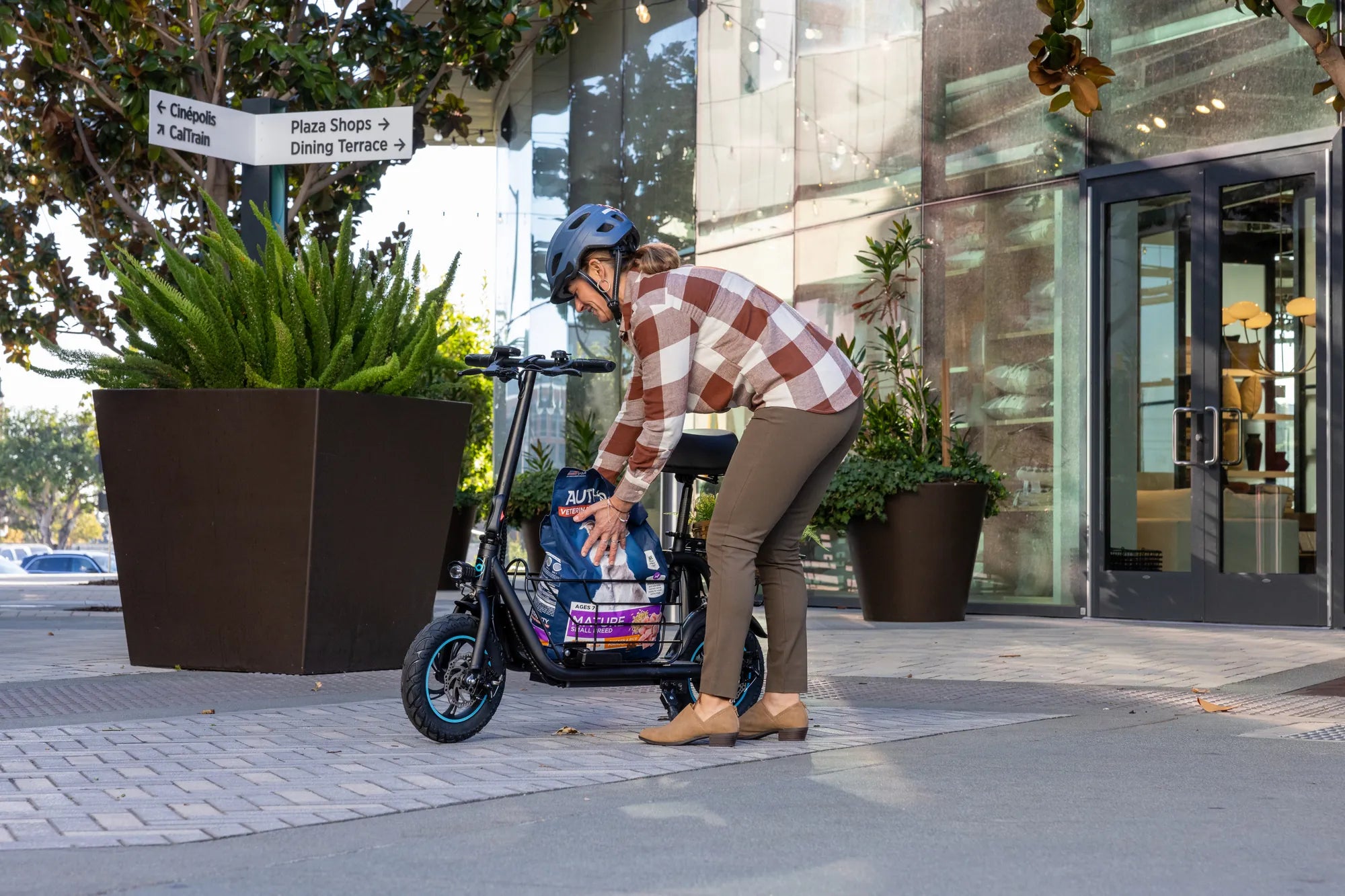
Redefining Mobility: The Portable Scooter Advantage for Seniors
Finding the best portable scooter for seniors is about unlocking a new chapter of independence and active living. These compact electric vehicles are engineered to bridge short distances effortlessly, transforming routine errands, park visits, and social outings from daunting tasks into enjoyable journeys. For seniors, the right scooter isn't just a product; it's a tool for maintaining autonomy, reducing physical strain, and engaging more fully with the community.
This guide moves beyond simple product listings to provide a foundational understanding of what makes a scooter truly senior-friendly. The core thesis is that the optimal choice seamlessly blends uncompromising safety with effortless convenience. We will dissect the critical features—from UL-certified batteries to intuitive folding mechanisms—that separate reliable, long-term mobility solutions from temporary gadgets.
You will learn how to interpret technical specifications through the lens of daily senior use. We will compare scooter types for different use cases, from quick grocery trips to leisurely neighborhood tours. The goal is to equip you with the knowledge to select a scooter that offers not just transportation, but also peace of mind and renewed freedom.
By the end, you will understand why the best portable scooter for seniors prioritizes certified safety systems, stable engineering, and accessible customer support above all else. This decision impacts daily quality of life, making an informed, evidence-based selection paramount.
Essential Anatomy of a Senior-Friendly Portable Scooter
Not all portable scooters are created equal, especially when the user's safety and comfort are the highest priorities. A senior-friendly model is defined by a specific set of design principles that prioritize stability, intuitive operation, and manageable weight. These features work in concert to create a confident and enjoyable riding experience.
The foundation is a stable platform. This begins with a sufficiently wide deck that allows the rider to place their feet comfortably without feeling cramped. A longer wheelbase—the distance between the front and rear axles—contributes significantly to stability at low speeds and during braking, reducing the pitch-forward sensation that can cause anxiety.
Wheel size and type are critical for ride comfort. Larger wheels, typically 8.5 inches or more in diameter, handle sidewalk cracks and minor imperfections more smoothly than smaller ones. Pneumatic (air-filled) tires offer superior shock absorption compared to solid rubber tires, making them ideal for uneven urban surfaces, though they require occasional air checks.
Finally, the overall weight distribution and a low center of gravity are engineering must-haves. Batteries and motors mounted low in the deck keep the scooter planted, enhancing control during turns and stops. This holistic approach to stability is the first and most important filter when searching for the best portable scooter for seniors.
Stability and Ride Comfort: The Non-Negotiables
For a senior rider, stability translates directly to confidence. A wobbly or jarring ride can quickly deter use, defeating the scooter's purpose. Therefore, evaluating a model's comfort and stability features is a non-negotiable step in the selection process.
A key component is the suspension system. While not all portable scooters have full suspension, models equipped with front spring or dual suspension systems dramatically improve comfort on imperfect pavement. They absorb impacts from cracks, seams, and gentle slopes, providing a smoother ride that is easier on the joints and spine.
The deck surface material is another subtle yet important factor. A textured, anti-slip deck coating ensures the rider's feet remain securely planted, even in damp conditions. This is a crucial safety feature that prevents accidental slips during acceleration or braking, contributing to overall ride security.
Handlebar ergonomics also play a role in stability and control. Adjustable handlebar heights allow the scooter to be tailored to the rider's posture, preventing hunching or overreaching. Grips should be comfortable and provide a secure hold without requiring excessive grip strength, which can be tiring over longer periods.
Intuitive Controls and Integrated Safety Systems
The control scheme of a scooter must be immediately understandable and easy to operate. Complicated interfaces or sensitive controls can lead to rider error. For seniors, simplicity and reliability in the cockpit are paramount for safe operation.
The throttle is the primary control. A thumb-operated throttle lever is generally considered the most intuitive and stable option. It allows for precise, graduated speed control with minimal hand movement. Some models offer a finger-trigger throttle, but the thumb lever often provides better leverage and control feedback, making it a preferred choice for the best portable scooter for seniors.
Braking systems must be both effective and predictable. A combination of electronic braking (which uses the motor to slow down) and a mechanical disc or drum brake provides redundant stopping power. Electronic braking is smooth and regenerative, often feeding a small amount of energy back into the battery, while the physical brake offers definitive, final stopping power, essential for safety on inclines.
Visibility is a critical safety feature. A bright LED headlight (ideally 2W or brighter) and a rear brake light/taillight are essential for being seen in low-light conditions. Additional safety features like side reflectors, an electronic horn or bell, and even turn signals on advanced models further enhance situational awareness for both the rider and those around them.
The Portability Equation: Folding Mechanisms and Weight
Portability is a defining characteristic, but its meaning varies. For a senior or a caregiver, true portability means a scooter that can be folded quickly, without complex steps, and lifted or maneuvered when folded with minimal strain.
The folding mechanism is the heart of portability. The best systems use a one-click or latch-release design that allows the scooter to fold at the stem and/or deck in a single, fluid motion. Automatic folding mechanisms, while less common, offer the ultimate in convenience, collapsing the scooter at the press of a button—a significant advantage for those with limited hand strength or mobility.
Weight is the other half of the equation. A truly portable scooter for seniors typically weighs between 30 to 45 pounds. While lighter models exist, they often sacrifice battery capacity or stability. The key is to find a balance where the weight is manageable, often aided by a design that includes a built-in carry handle or, even better, retractable trolley wheels.
Trolley wheels allow the folded scooter to be rolled like compact luggage, eliminating the need to lift it entirely. This feature is a game-changer for loading the scooter into a car trunk or navigating through a store or doctor's office. When evaluating, the folded dimensions are as important as the weight; a compact, rectangular package is easier to store than an awkward, irregular shape.
Why UL-Certified Batteries Are a Non-Negotiable Safety Standard
For senior riders, trust in the scooter's power system is not a feature—it's a foundational requirement. The battery is the most critical safety component, and UL (Underwriters Laboratories) certification represents the highest standard of consumer battery safety.
A UL-certified battery pack has undergone rigorous independent testing for electrical, mechanical, and fire safety. These tests simulate extreme conditions, including overcharging, short-circuiting, and physical damage, to ensure the battery's management systems will contain any failure. This certification is crucial for preventing thermal runaway, a dangerous chain reaction that can lead to fire.
Given that seniors may charge their scooters overnight or leave them plugged in for extended periods, this failsafe protection is indispensable. It provides peace of mind that the charging process is monitored and controlled by intelligent systems. Brands like Gyroor commit to this standard, using UL-certified battery packs tested for over 500 charge cycles in all their models, ensuring both safety and long-term performance.
Beyond safety, a quality battery dictates practical range. Lithium-ion batteries are the standard for their high energy density and longevity. When a manufacturer uses certified, high-grade cells, it not only guarantees safety but also ensures the scooter will deliver consistent range over its lifespan, preventing the frustration of rapidly diminishing capacity.
Water Resistance and Real-World Durability
A scooter is an outdoor mobility tool, and it must be prepared for real-world conditions. An unexpected drizzle or a puddle on a path shouldn't end a trip or damage the scooter. This is where a clear water-resistance rating becomes a key indicator of durability and reliability.
The IP (Ingress Protection) rating specifies a product's defense against solids and liquids. For electric scooters, an IPX5 rating is a strong benchmark for water resistance. The "X" means it isn't rated for dust ingress specifically, but the "5" signifies it can withstand water jets from a nozzle (6.3mm) from any direction without harmful effects.
In practical terms, an IPX5-rated scooter is protected against splashes from wet roads, puddles, and light to moderate rain. This allows seniors to use their scooters with confidence during daily errands without constantly worrying about the weather. It also speaks to the overall build quality; a scooter engineered to seal out water is also likely to be well-assembled with attention to detail.
This durability extends the scooter's usable life and reduces maintenance concerns. A rider can focus on their journey, not on avoiding every damp patch on the sidewalk. For a demographic that values reliability, this engineered resilience is a critical component of a trustworthy mobility solution.
Comparison Framework: Key Specifications to Evaluate
Making an informed choice requires comparing models based on standardized criteria. The following table breaks down the key specifications for evaluating the best portable scooter for seniors, translating technical data into practical implications for the rider.
| Specification | Why It Matters for Seniors | Ideal Range/Target |
|---|---|---|
| Weight Capacity | Must support rider weight plus any carried items (purse, groceries) with a safety margin. | 280 lbs minimum; 300+ lbs provides a comfort buffer. |
| Max Range | Determines how far you can travel on a single charge. Real-world range is typically 65-75% of the max. | 15-20 miles (advertised) for versatile daily use. |
| Motor Power | Affects acceleration and hill-climbing ability. A more powerful motor handles gentle inclines more easily. | 300W to 500W continuous power for balanced performance. |
| Scooter Weight | Critical for portability. Determines how easy it is to lift into a car or carry when folded. | 30-42 lbs for a balance of stability and manageability. |
| Wheel Size & Type | Larger, pneumatic tires offer a smoother ride over cracks and bumps. | 8.5" or 10" pneumatic (air-filled) tires. |
| Battery Certification | The primary safety benchmark. Ensures protection against electrical and fire hazards. | UL 2271 or UL 2843 certification is essential. |
| Water Resistance | Protects the scooter's electronics from rain and road splashes, ensuring reliability. | IPX4 (splash-proof) minimum; IPX5 (water jet resistant) is superior. |
| Warranty Length | Indicates the manufacturer's confidence and protects your investment. | 1-year comprehensive warranty covering major components. |
Using this framework allows for an apples-to-apples comparison. It shifts the focus from marketing claims to tangible, safety-focused metrics. For instance, a slightly heavier scooter with a UL-certified battery and IPX5 rating is almost always a wiser choice than a lighter model lacking these certifications.
Warranty and Support: The Foundation of Long-Term Peace of Mind
The relationship with the manufacturer begins after the purchase. A strong warranty and accessible customer support are not just perks; they are essential components of a senior's mobility solution, ensuring that any issues are resolved quickly and without hassle.
A comprehensive warranty should cover the core components that are expensive to repair or replace: the battery, motor, controller, and frame. A standard of 1 year of coverage is a strong indicator of quality. Some brands offer extended warranties for the battery specifically, acknowledging its importance and cost. This protection safeguards your investment and provides a clear recourse if a manufacturing defect arises.
Equally important is the accessibility and quality of customer support. Look for brands that provide multiple channels (phone, email, live chat) and have support teams based in your region. North America-based support, for example, typically means faster response times and easier communication for riders in the U.S. and Canada. This is crucial for troubleshooting, ordering replacement parts, or getting repair advice.
For seniors and their families, this support structure minimizes downtime and frustration. Knowing that help is readily available from a company that stands behind its product, like Gyroor with its reliable 1-year warranty and track record of serving over 100,000 riders, adds an invaluable layer of security to the ownership experience.
FAQs: Your Portable Scooter Questions, Answered
Q: How difficult is it to fold and lift a portable scooter?
A: The difficulty varies by model. The best portable scooter for seniors features a one-click folding mechanism that requires minimal force and dexterity. The key is to practice the folding process a few times when you first get the scooter. For lifting, look for models around 35-40 lbs with an integrated carry handle. The ultimate solution is a scooter with retractable trolley wheels, allowing you to roll it when folded instead of lifting it entirely.
Q: Are these scooters safe to use on slightly uneven sidewalks?
A> Yes, but the scooter's design dictates how safe and comfortable it will be. Models with larger wheels (8.5" or more), pneumatic tires, and a front suspension system are specifically engineered to handle cracks, seams, and gentle slopes commonly found on sidewalks. Always reduce speed when approaching an unknown surface and avoid large potholes or gravel.
Q: What is the most important safety feature I should look for?
A> Without question, a UL-certified battery pack is the most critical safety feature. It is your guarantee against electrical and fire hazards. Following that, an effective dual-braking system (electronic + mechanical) and bright, always-on lighting (headlight and taillight) are essential for operational safety. These features form the non-negotiable safety core of the best portable scooter for seniors.
Q: How do I maintain the battery for long life?
A> Proper battery care is simple but vital. Avoid letting the battery fully discharge. Try to recharge it after each use or when it drops to about 20-30% capacity. Use only the manufacturer-provided charger. Store the scooter in a cool, dry place, and avoid leaving it in extreme heat or cold for prolonged periods. For long-term storage (over a month), charge the battery to about 60% before storing.
Q: Can I take a portable scooter on public transportation or in a car?
A> Portability is designed for this purpose. Most public transit systems allow folded electric scooters on board, but policies vary, so always check locally. For cars, a folded scooter with manageable weight and compact dimensions should fit easily in most trunks or back seats. Trolley wheels make transporting it from your home to the vehicle much simpler.
Empowering Independence with an Informed Decision
Selecting the best portable scooter for a senior is a decision that directly impacts independence, safety, and joy. The optimal choice is not defined by a single flashy feature but by a harmonious integration of certified safety, stable engineering, effortless portability, and dependable support. It is a product that earns trust through its design and backing.
This journey begins with non-negotiable standards: UL-certification for the battery, a water-resistant build for all-weather reliability, and a warranty that offers real protection. From there, prioritize the human-centered design elements—a stable deck, intuitive controls, a smooth ride, and a folding system that doesn't require a manual to operate.
The data-driven framework provided here gives you the tools to cut through marketing noise and evaluate scooters on the criteria that truly matter for long-term, worry-free use. By focusing on these foundations, you are investing in more than a vehicle; you are investing in sustained freedom, confidence, and an active lifestyle.
For a range of models that embody these principles—featuring UL-certified batteries, IPX5 water-resistant designs, and a commitment to reliability backed by a 1-year warranty—explore the engineering and safety-focused collections from trusted brands. Discover how the right tool can redefine daily mobility. Browse the full Gyroor collection at gyroorboard.com to find a scooter built to support an independent life.
Long Distance Mobility Scooter: Your Ultimate Guide to Freedom and Range
Offroad Balance Bike: The Ultimate Guide to Building Trail Confidence