


Introduction: Finding the Perfect Ride for Your 10-Year-Old
Your 10-year-old is ready for more independence and adventure, and a great scooter can be the perfect vehicle for that growth. The search for the best scooter for kids 10 years old, however, goes beyond just picking a fun color. It centers on a critical balance: providing the thrill of speed and freedom while embedding layers of safety and control for your peace of mind.
At this age, children have developed better coordination and judgment than younger kids, but they still require boundaries. The ideal scooter must be durable enough to handle their energetic use, yet have governed performance to match their skill level. This guide cuts through the marketing hype. We provide a factual, specification-focused framework to help you make an informed decision, ensuring the scooter you choose supports both safety and joy.
We will reference engineering and safety standards, such as UL certification for batteries and IP ratings for water resistance, which are non-negotiable for quality. As a leading electric scooter and e-bike brand trusted by over 100,000 riders across North America and Europe, Gyroor designs with these family-focused priorities in mind, emphasizing UL-certified batteries, robust construction, and reliable 1-year warranties.
Key Factors to Consider When Choosing a Scooter for a 10-Year-Old
Selecting a scooter is an exercise in matching specifications to your child's physical development and your safety requirements. This checklist transforms a potentially overwhelming decision into a clear, logical process. Focus on these core technical and safety aspects first.
The build quality directly correlates with safety and longevity. A scooter designed for a 10-year-old must accommodate their current size and weight while offering a margin for growth over the next few years. Performance features like speed and brakes must be adjustable and reliable, not just maximum outputs on a spec sheet.
Terrain handling is another crucial factor. The wheels and suspension system determine where your child can ride safely and comfortably. By evaluating these elements systematically, you invest in a product that will deliver consistent performance and withstand the test of time and rough-and-tumble use.
Weight Limit & Build Quality
The manufacturer's stated maximum weight limit is the most critical safety specification. For a typical 10-year-old, whose weight can range from 60 to 90 pounds, the scooter must have a significant buffer. Look for a weight limit of at least 120-150 pounds. This excess capacity ensures the frame, axles, and deck can handle dynamic stresses without fatigue or failure.
Build quality materials are paramount. The frame should be constructed from reinforced or aircraft-grade aluminum, which offers an excellent strength-to-weight ratio. This material is both lightweight for portability and incredibly durable against impacts and bending. Avoid plastic-heavy frames in critical stress areas, as they are prone to cracking under the rigorous use of an active child.
A sturdy deck with a textured, anti-slip surface is essential for maintaining foot placement during turns and over bumps. The folding mechanism, if present, should feel solid and lock securely without play. A well-built scooter from a reputable brand might cost more upfront but prevents safety issues and replacements down the line.
Speed Settings & Parental Controls
Speed is exciting but must be managed. For a 10-year-old, a maximum speed of 10-15 mph is generally appropriate. More important than top speed is the availability of beginner or eco modes that cap speed lower, often around 7-8 mph, for learning and controlled environments. This allows the child to build confidence gradually.
Parental controls are the key to managing this progression. The best systems go beyond a simple key. Look for scooters with PIN-code locks or companion app connectivity. These features allow you to physically limit the top speed and sometimes even acceleration profiles remotely. This ensures your child cannot override the settings without your knowledge.
Gradual acceleration, sometimes called a "smooth start" feature, is also vital. It prevents the scooter from jerking forward when the throttle is engaged, which can cause a loss of balance for a new rider. These controls transform the scooter from a static toy into an adaptive tool that grows with your child's abilities.
Wheel Size & Terrain Handling
Wheel size and type dramatically affect stability, comfort, and where the scooter can be ridden. For a 10-year-old, larger wheels (8.5 inches in diameter or more) are superior. They roll over cracks, pebbles, and minor pavement imperfections more easily than smaller wheels, providing a stable and confident ride.
Pneumatic (air-filled) tires offer the best shock absorption and traction, especially on uneven surfaces like asphalt or packed dirt paths. They provide a much smoother ride than solid rubber tires, reducing vibration transmitted to the rider and the scooter's components. Some models feature hybrid tires with a honeycomb interior, which are puncture-proof but offer less cushioning than true pneumatics.
Suspension systems, often a combination of front spring and rear shock absorption, further enhance comfort and control on rough terrain. While not strictly necessary for perfect pavement, suspension is a valuable feature for real-world use on suburban sidewalks and driveways, making the ride safer and more enjoyable.
Braking System Safety
A reliable, easy-to-control braking system is non-negotiable. For young riders, the ideal setup is a dual-brake system that provides redundancy and different stopping feels. The most effective combination is a disc brake (usually on the rear wheel) paired with an electronic (regenerative) brake.
A disc brake offers strong, consistent mechanical stopping power, controlled by a hand lever. It performs reliably in all conditions, including wet weather. The electronic brake, often activated by a second hand lever or by engaging a brake button on the throttle, uses the motor to slow the scooter down and can help recharge the battery slightly.
This dual system teaches responsible braking. The child can use the smoother electronic brake for gradual slowing and the disc brake for more urgent stops. Avoid scooters that rely solely on a foot fender brake or a weak rear mudguard brake, as these can be less effective, especially at higher speeds or on inclines.
Why Safety Certifications and Warranty Matter (The Gyroor Advantage)
Beyond the physical specifications, true safety and value are embedded in the certifications a scooter holds and the warranty that backs it. These are the hallmarks of a reputable manufacturer that stands behind its engineering. They are your assurance against hidden risks and unexpected failures.
For parents, these are not just technical jargon but direct indicators of product integrity and company accountability. A brand that invests in independent safety testing and offers a comprehensive warranty is demonstrating confidence in its product's durability and a commitment to its customers' long-term satisfaction.
The Importance of a UL-Certified Battery
The battery is the heart of an electric scooter and its most critical safety component. A UL 2271 or UL 2849 certification means the battery pack and its electrical system have undergone rigorous independent testing by Underwriters Laboratories for safety risks like fire, electrical shock, and mechanical hazards.
This certification involves stress tests far beyond normal use, including overcharging, short-circuiting, and exposure to extreme temperatures. Brands like Gyroor use these UL-certified battery packs, which are tested for 500+ charge cycles, ensuring not only safety but also long-term performance and capacity retention. Never compromise on this certification; it is the primary defense against hazardous battery failures.
Water Resistance for Real-World Use
Kids ride in the real world, which includes damp grass, morning dew, and unexpected puddles. A water resistance rating, indicated by an IP (Ingress Protection) code, tells you how well the scooter's electronics are sealed. An IPX5 rating, common on quality scooters, means the unit is protected against water jets from any direction.
In practical terms, an IPX5-rated scooter like those from Gyroor can safely handle riding through puddles, light rain, and wet pavement. It prevents water from seeping into the deck and damaging the battery, motor controller, or wiring. This protection extends the scooter's lifespan, maintains its reliability, and prevents malfunctions that could lead to a sudden stop or loss of control.
The Value of a Comprehensive Warranty
A strong warranty is a safety net for your investment. A 1-year warranty that covers the motor, battery, controller, and frame against manufacturing defects is the industry standard for reputable brands. It signals that the company expects its product to perform reliably under normal use.
Look for clear warranty terms and accessible customer support, preferably based in your region (like North America for US and Canadian customers). This ensures that if an issue arises, you can get timely help with troubleshooting, parts, or service. A warranty is not just a piece of paper; it is a commitment to product quality and customer peace of mind for the long haul.
Top Scooter Features for Fun and Practicality
Once safety fundamentals are assured, features that enhance the riding experience and daily practicality come into focus. These elements contribute significantly to how much your child will use and enjoy the scooter, and how easily it integrates into your family's routine.
Fun features like lighting can make evening rides magical, while practical aspects like portability determine whether the scooter goes on family trips or becomes a hassle to store. Battery life dictates the scope of adventures, and intuitive controls ensure the fun isn't interrupted by complexity.
Portability and Weight
A scooter for a 10-year-old should be manageable for them to carry short distances, such as up porch steps or into a garage. A weight under 30 pounds is a good target. The folding mechanism is crucial for portability. A secure, one-step folding design that locks the stem to the deck allows for compact storage in a closet or car trunk.
The folded dimensions should be checked to ensure it fits in your vehicle's storage space. Some models feature a collapsible handlebar as well, making the package even smaller. Easy portability means the scooter is more likely to be taken on outings, to friends' houses, or on vacation, maximizing its use and value.
Battery Life and Range
Battery capacity, measured in watt-hours (Wh) or often listed as voltage and amp-hours (e.g., 36V 7.5Ah), determines range. For neighborhood use, a realistic range of 10-15 miles per charge is typically ample. It allows for extended play without constant range anxiety.
Consider the charging time (usually 4-6 hours for a full charge) and teach your child good habits: avoid depleting the battery completely and store the scooter in a cool, dry place. A removable battery is a premium feature that adds convenience, allowing you to charge the battery indoors without bringing the entire scooter inside.
Lighting and Visibility
Front and rear LED lights are essential safety features, not just accessories. A bright headlight illuminates the path ahead in low-light conditions, while a taillight (preferably a brake light that brightens when braking) makes your child visible to others from behind.
Additional visibility features like reflective stickers on the deck or fender, and even colorful deck under-lighting, significantly increase side visibility. For any riding near dusk or in shaded areas, these lighting systems are critical for preventing accidents and should be a standard expectation on any quality scooter.
Parent's Guide: Setting Rules and Safety Gear
The safest scooter is only one part of the equation. Establishing clear rules and equipping your child with proper safety gear are parental responsibilities that complete the safety ecosystem. This framework empowers your child to enjoy their freedom within understood and enforced boundaries.
Consistency is key. Rules should be simple, non-negotiable, and explained in the context of safety. The gear must be worn every single time, without exception. This discipline, established early, creates lifelong habits of responsible riding.
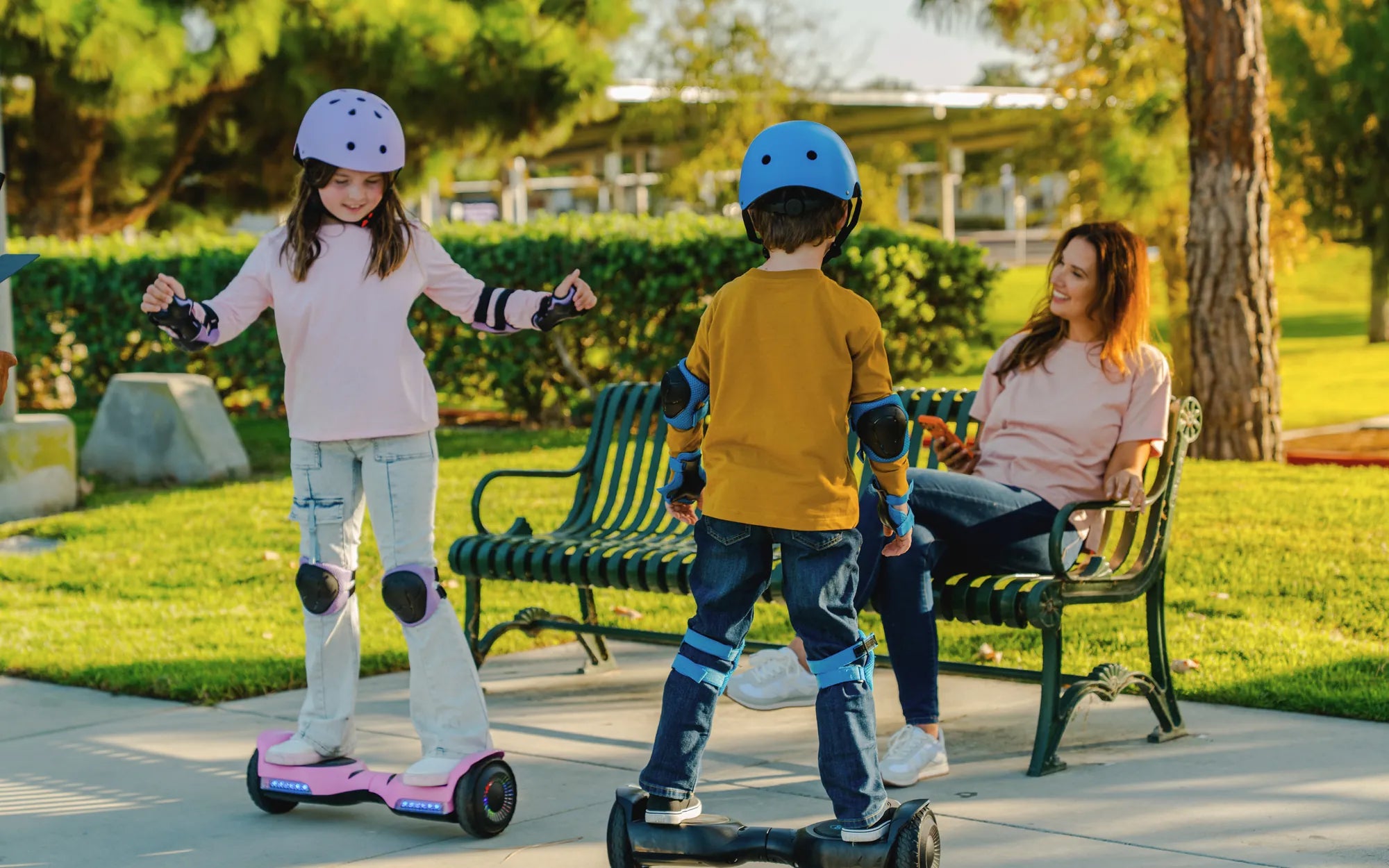
Start with the absolute essentials: a CPSC-certified bicycle helmet that fits snugly. This certification ensures it meets the federal safety standard for impact protection. Elbow and knee pads are also crucial, as falls often result in scrapes and impacts to joints. Sturdy, closed-toe shoes (never sandals or flip-flops) and riding gloves can protect hands during a fall.
Implement a pre-ride checklist with your child: 1) Helmet and pads on. 2) Check tire pressure. 3) Test both brakes. 4) Ensure the folding mechanism (if used) is locked. 5) Check that lights are working if riding near dusk. This ritual builds responsibility.
Establish clear riding rules. Start with: Always wear the full safety kit. Ride on sidewalks or paved paths, not on roads. No riding after dark until older and more experienced. Respect pedestrians by slowing down and giving the right-of-way. No passengers. Start in the slowest speed mode in a safe, open area like an empty parking lot or driveway.
Comparison: Scooter Types for the 10-Year-Old Rider
Different designs cater to different primary use cases. The table below compares key characteristics to help match a scooter type to your child's typical riding environment and your priorities.
| Feature / Type | Urban/Commuter Style | Off-Road/All-Terrain Style | Ultra-Portable/Folding Style |
|---|---|---|---|
| Primary Use | Paved sidewalks, smooth bike paths | Grass, dirt trails, gravel, rougher pavement | Mixed use with emphasis on easy carry & storage |
| Wheel Type | Solid or airless honeycomb (8.5-10") | Large pneumatic tires (10"+) with deep tread | Smaller solid wheels (8" or less) |
| Suspension | Often front spring only or minimal | Full suspension (front fork + rear shock) | Minimal to none |
| Weight & Portability | Moderate (25-35 lbs), usually folds | Heavier (35+ lbs), may not fold compactly | Lightweight (under 25 lbs), folds very compactly |
| Ideal For | Daily neighborhood cruising, smooth surfaces | Adventurous kids with access to varied terrain | Families who need to transport/store easily, primarily on pavement |
Frequently Asked Questions (FAQs)
Q: Is a scooter or an electric bike better for a 10-year-old?
A: For most 10-year-olds, an electric scooter is generally the recommended first powered vehicle. Scooters offer a lower center of gravity and a standing position that many children find more intuitive for balance. They are typically lighter, more portable, and have a smaller footprint, making them easier to maneuver and store. An electric bike requires more advanced balancing, braking, and steering coordination at higher potential speeds, and may be better suited as a next-step vehicle after scooter mastery.
Q: How do I maintain my child's electric scooter to ensure its longevity?
A: Regular, simple maintenance is key. First, keep the scooter clean and dry; wipe it down after riding on wet surfaces. Check and maintain proper tire pressure monthly if it has pneumatic tires. Regularly inspect the brakes for wear and ensure they engage smoothly. Avoid leaving the battery fully depleted for long periods; charge it after use if below 20%. Store the scooter in a cool, dry place away from direct sunlight or extreme cold. Tighten any bolts or fasteners if they become loose.
Q: Are Gyroor scooters suitable for beginner riders?
A: Absolutely. Many Gyroor models are designed with beginner-friendly features perfect for a 10-year-old's first electric scooter. These include speed limiters that allow parents to set a low maximum speed (e.g., 7.5 mph), smooth start technology to prevent jerky acceleration, and multiple speed modes for gradual progression. The robust build quality using materials like reinforced aluminum can also withstand the learning-curve bumps and minor falls that are part of the process.
Q: What is the realistic lifespan of a good kids' electric scooter?
A: With proper care and maintenance, a quality electric scooter from a reputable brand can last 2-4 years of regular use by a child. The primary factor is the battery, which is rated for a certain number of charge cycles (e.g., 500+). After this, battery capacity will diminish. The mechanical parts (frame, wheels, brakes) on a well-built scooter can last much longer. The lifespan is extended significantly by following charging best practices, avoiding water damage, and performing basic maintenance.
Q: Can my 10-year-old ride their scooter to school?
A: This depends entirely on local laws, school district policies, the safety of the route, and your child's maturity and skill. First, check your city or town's ordinances regarding electric scooters on sidewalks and bike lanes. Then, contact the school directly, as many prohibit them on campus for safety and liability reasons. If permitted, the route must be safe, practiced together multiple times, and the child must demonstrate excellent control, rule-following, and consistency with safety gear. For most 10-year-olds, school riding is an advanced privilege, not a right.
Conclusion: Investing in Confidence and Joy
Choosing the best scooter for kids 10 years old is an investment in your child's growing independence and your family's shared adventures. The right choice seamlessly blends enforced safety—through governed speed, robust brakes, and critical certifications—with the pure, unleashed fun of zooming down the sidewalk. It’s a tool that builds confidence, coordination, and responsibility.
By prioritizing a scooter with a UL-certified battery, a solid warranty, and features that match your child's environment, you purchase more than a toy. You secure peace of mind, knowing the product is engineered for real-world use and backed by a company that stands behind its safety claims. This allows you to relax and enjoy watching your child explore their world with a big smile.
The journey starts with informed decisions. Equip your young adventurer with a ride that is as safe as it is thrilling, and create memories that will last far longer than the battery charge. For a range of family-tested electric scooters built with these exacting safety and performance standards, browse the full Gyroor collection designed for young riders at gyroorboard.com.
Christmas Gift for Kids Girl: Top Ideas to Delight Her This Holiday Season
Christmas Gift for Kids Girl: Top Ideas to Delight Her This Holiday Season