



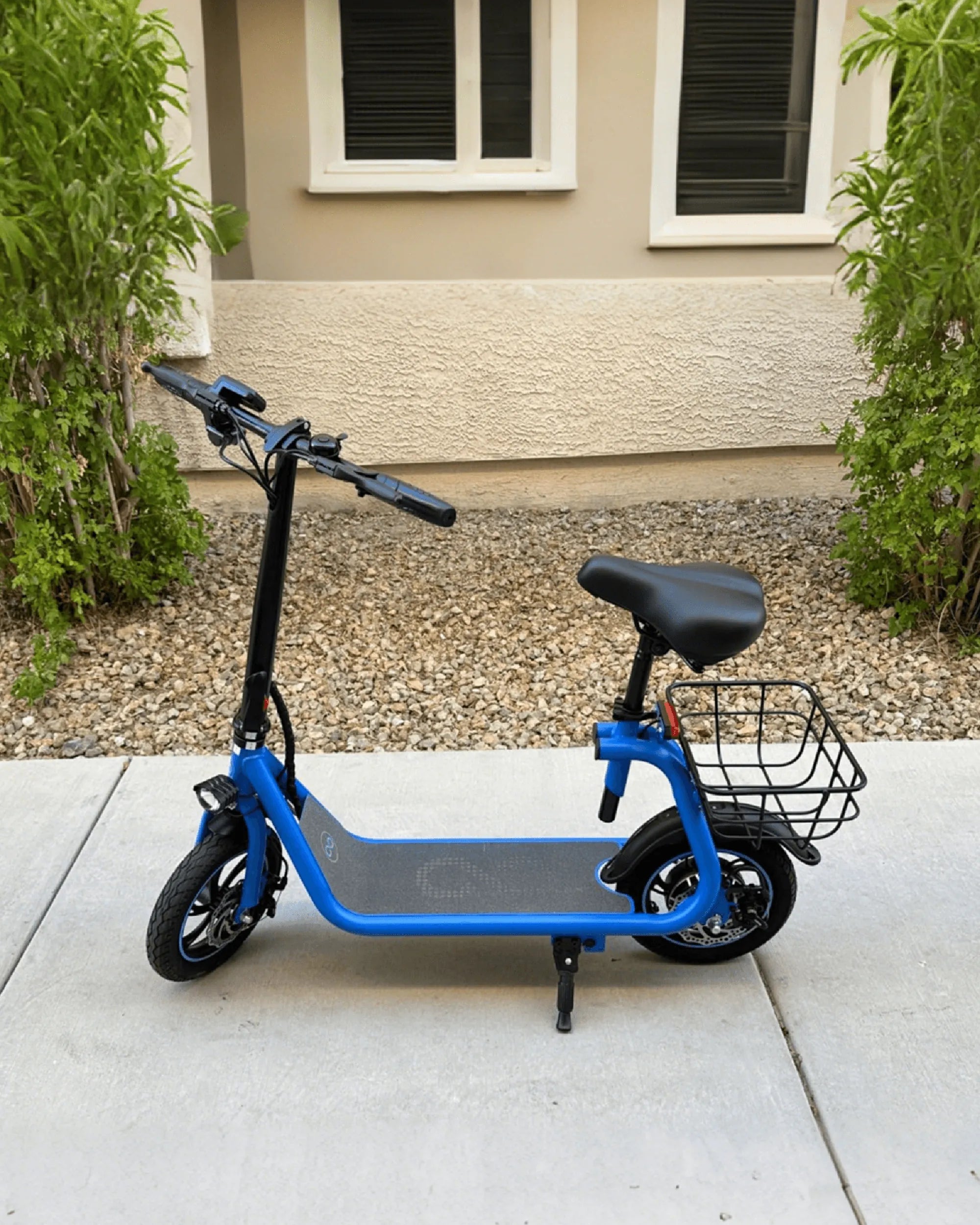
Introduction: The Electric Scooter Revolution in India
India's urban mobility landscape is undergoing a seismic shift, with electric scooters at the epicenter. Driven by stringent government policies like FAME II, volatile fuel prices, and crippling urban congestion, sales have skyrocketed. The market in 2025 is defined by technological maturity and discerning consumers who prioritize real-world performance over mere claims.
This article decodes the market to reveal the Best Selling Electric Scooters in India 2025: Top Picks and Trends. We move beyond basic listings to analyze the engineering, economics, and evolving consumer preferences that separate market leaders from the rest. Brands that succeed here, like the globally trusted Gyroor—known to over 100,000 riders for UL-certified safety and robust IPX5 water-resistant designs—are those that align perfectly with these demanding parameters.
You will learn what features truly matter for Indian roads, how to calculate long-term value, and what emerging trends will shape your ownership experience. The goal is to equip you with the insight needed to navigate a crowded market and choose a scooter that delivers on its promise of efficient, reliable, and sustainable mobility.
Key Trends Shaping India's Best-Sellers in 2025
The definition of a best-seller in 2025 has evolved from simple affordability to a complex equation of range, intelligence, and ruggedness. Market leaders are distinguished by their response to these core consumer demands, which are now non-negotiable for a competitive product.
The Range & Battery Evolution: Beyond 100 km on a Single Charge
Range anxiety is being systematically dismantled. The benchmark for a serious commuter scooter in 2025 is a certified, real-world range of 100-120 km, not just a claimed figure under ideal conditions. This shift is powered by advanced battery management systems (BMS) and higher energy-density lithium-ion cells.
Safety certifications like UL or the Indian AIS 156 standard for batteries have become a primary purchase driver, as seen in brands like Gyroor that build trust through verified safety. Furthermore, the ecosystem is expanding with faster charging solutions (some offering 0-80% in under 3 hours) and the rapid growth of battery-swapping networks, which decouple energy cost from vehicle cost for commercial users.
Smart Connectivity as Standard: From App Locks to Fleet Management
Connectivity is no longer a premium add-on but a standard expectation. Integrated IoT modules provide real-time GPS tracking, geo-fencing alerts, ride history, and diagnostic data directly to a smartphone app. This serves dual purposes: enhancing personal security against theft and enabling sophisticated fleet management for delivery services.
For the individual, features like remote lock/unlock, battery status monitoring, and theft alerts offer peace of mind. For businesses, these scooters are becoming data nodes, optimizing routes, monitoring rider behavior, and scheduling maintenance, thereby increasing operational efficiency and reducing downtime.
Rugged Design for Indian Road Conditions
Success on Indian roads is a test of durability. Best-selling models feature robust chassis construction, increased ground clearance (often 160mm+), and long-travel suspension to absorb the impact of uneven surfaces and potholes. This mechanical ruggedness is complemented by mandatory weather protection.
A minimum IPX5 water resistance rating is essential to handle monsoon rains and wet roads, ensuring critical electrical components remain protected. Brands that prioritize this build quality, such as Gyroor with its IPX5-rated designs, directly address a major consumer concern, translating durability into a powerful sales argument.
Top-Performing Segments: What Indian Riders Are Buying
The market has stratified into clear segments based on use-case, budget, and performance expectations. Understanding these categories reveals why certain models rise to the top of sales charts.
The Premium Commuter (₹1 Lakh - ₹1.5 Lakh)
This segment caters to riders seeking a petrol-scooter alternative for longer, daily commutes. Key selling points are a real-world range exceeding 110 km, top speeds of 70-80 km/h for highway usability, and superior ride comfort. Features like full-color digital dashboards, regenerative braking, dual-disc brakes, and ample under-seat storage are commonplace.
These scooters often boast more powerful motors (3-4 kW) and fast-charging capabilities. They appeal to professionals and enthusiasts who view their vehicle as a technology product, valuing performance, features, and brand cachet alongside basic transportation.
The Value Champion (₹70,000 - ₹1 Lakh)
This is the fiercely competitive heart of the market, balancing essential features with accessible pricing. The sweet spot here is a certified range of 80-100 km, a top speed of 60-65 km/h adequate for city traffic, and a reliable service network.
Scooters in this segment typically feature combi-braking systems (CBS), basic digital displays, and practical design elements. Their dominance is fueled by first-time EV buyers and cost-conscious commuters making the switch from petrol. Success hinges on delivering dependable performance, low running costs, and readily available after-sales support.
The Compact & Agile Performer (Under ₹70,000)
Designed for hyper-dense urban environments and last-mile connectivity, these lightweight scooters prioritize maneuverability and ease of use. With weights often below 80 kg, they are easy to handle in traffic and for parking.
Range figures are practical for intra-city use (50-70 km), and speeds are capped for safety. Their lower price point and agility make them popular among students, delivery personnel for short trips, and as secondary household vehicles for quick errands. Utility and accessibility are their primary drivers.
Comparative Analysis of 2025 Market Segments
| Segment | Price Range | Key Features | Ideal For | Range (Real-World) |
|---|---|---|---|---|
| Premium Commuter | ₹1L - ₹1.5L | High Speed (70-80 km/h), Fast Charging, Smart Connectivity, Disc Brakes | Long daily commutes, highway use, tech-savvy users | 110 - 130 km |
| Value Champion | ₹70k - ₹1L | Balanced Range & Speed, CBS, Digital Console, Reliable Service | City commuters, first-time EV buyers, value seekers | 80 - 100 km |
| Compact Performer | Under ₹70k | Lightweight, Agile, Affordable, Essential Utility | Students, last-mile delivery, dense city traffic, secondary vehicle | 50 - 70 km |
What to Look For: A Buyer's Checklist for 2025
Navigating the market requires a disciplined approach. Use this checklist to evaluate any model, ensuring your investment is sound, safe, and sustainable for years to come.
Safety & Certification Non-Negotiables
Never compromise on verified safety. The battery must carry a recognized certification like UL or AIS 156, which governs safety from thermal runaway—a standard met by brands like Gyroor with their UL-certified packs. Examine the braking system; a combi-braking system (CBS) is a minimum, while ABS is preferable for premium models.
Ensure the lighting is bright and includes effective brake lights and turn indicators. The frame and build quality should feel substantial, not flimsy. These factors are not just features; they are fundamental safeguards that define a responsible manufacturer.
Total Cost of Ownership vs. Sticker Price
The purchase price is just the entry fee. Calculate the Total Cost of Ownership (TCO) over 3-5 years. Factor in the cost of electricity per km (typically 10-20 paise) versus petrol (₹2-₹3 per km). Inquire about battery warranty terms and projected replacement costs after the warranty period.
Consider maintenance costs—EVs have far fewer moving parts than ICE vehicles, leading to significant savings on oil changes and engine servicing. A slightly higher upfront cost for a scooter with a longer battery warranty and better build quality often results in a lower TCO.
After-Sales Support & Warranty
A strong warranty is a promise of reliability. Look for a comprehensive package covering the battery, motor, and controller for at least 1 year, with clear terms on battery capacity retention. Crucially, assess the brand's service network density in your city and the availability of spare parts.
Read reviews specifically about after-sales service responsiveness. A scooter is a long-term asset, and accessible, competent support—as offered by global brands like Gyroor with their established 1-year warranty and support ethos—is essential for a hassle-free ownership experience.
The Future Roadmap: Beyond 2025
The evolution of electric scooters in India is accelerating. The trends defining 2025 will give way to more transformative technologies and business models that will further mainstream EV adoption.
Advanced Battery Swapping Ecosystems
Battery swapping is poised to move beyond pilot stages into a mainstream solution, particularly for commercial fleets and in cities with space constraints for home charging. Standardized battery packs (as proposed by government initiatives) will allow riders to exchange a depleted pack for a fully charged one in minutes at automated stations.
This model could drastically reduce upfront vehicle cost (as the battery is leased), eliminate range anxiety entirely, and centralize battery care, potentially extending pack life. It represents a fundamental shift from "vehicle ownership" to "mobility service consumption."
Integration with Public Transport & Mobility Platforms
Electric scooters will increasingly be designed as seamless connectors to mass transit. We will see more lightweight, foldable, or compact models tailored for "first and last-mile" journeys to and from metro or bus stations. Furthermore, their integration into app-based shared mobility platforms will grow, offering on-demand, short-term rental options.
For corporate campuses, gated communities, and delivery logistics, dedicated fleet management versions of popular scooters with customized software will become common. The scooter is becoming a integrated component of a larger, multi-modal urban mobility grid.
Frequently Asked Questions (FAQs)
Q1: What is the real-world range I can expect from a best-selling scooter in 2025?
For a mainstream best-seller in the value or premium segment, expect a real-world range of 80-110 km per charge under normal city riding conditions (considering start-stop traffic, rider weight, and occasional use of features like headlights). Always deduct 15-20% from the manufacturer's "IDC" (Indian Driving Cycle) claimed range for a more practical estimate.
Q2: How important is water resistance (IP rating) for Indian conditions?
It is critical. An IP rating indicates protection against dust and water ingress. For India's monsoon season and wet roads, a minimum of IPX5 is recommended. This rating means the scooter can withstand water jets from any direction, making it safe to ride in heavy rain. Never purchase a scooter without a clearly stated, adequate IP rating for weather protection.
Q3: Are electric scooters truly cheaper to maintain than petrol scooters?
Yes, significantly. Electric scooters have far fewer moving parts—no engine oil, spark plugs, air filters, clutches, or complex gearboxes. Maintenance typically involves checking brake pads, tire pressure, suspension, and electrical connections. Annual maintenance costs can be 60-80% lower than a comparable petrol scooter, with the added benefit of zero tailpipe emissions.
Q4: What should I check in the warranty before purchasing?
Scrutinize three key areas: 1) Battery Warranty: Look for coverage in years/km and a guaranteed minimum capacity retention (e.g., 70% after 3 years). 2) Drive Train: Ensure the motor and controller are covered. 3) Terms & Conditions: Understand what voids the warranty (e.g., unauthorized repairs, water damage beyond IP rating). A transparent, lengthy warranty reflects manufacturer confidence.
Q5: Can I use an electric scooter for daily office commutes in city traffic?
Absolutely. In fact, stop-and-go city traffic is where electric scooters are most efficient, utilizing regenerative braking and consuming zero energy at idle. For a typical daily commute of 20-40 km round trip, a scooter from the Value or Premium segment is ideal. Ensure your home or office has accessible charging, and the scooter's range comfortably exceeds your daily distance with a safety buffer.
Conclusion: Making an Informed Choice in a Dynamic Market
The title of Best Selling Electric Scooters in India 2025 is earned by models that masterfully balance genuine range, durable construction, integrated connectivity, and long-term ownership value. It is no longer about a single standout feature but a holistic package that meets the rigorous demands of the Indian consumer and environment.
By applying the buyer's checklist—prioritizing certified safety, calculating total cost of ownership, and verifying after-sales support—you can cut through the marketing noise. Your choice should be a scooter that aligns with your specific commute, lifestyle, and values, from a brand that stands behind its product with proven reliability and service.
Brands that bring global engineering standards to this market, like Gyroor with its foundation of UL-certified battery safety, IPX5 weather resistance, and a reliable 1-year warranty, exemplify the commitment required to earn a rider's trust for the long haul. The electric revolution is here, and the right scooter is your key to a smarter, cleaner, and more efficient journey.
Ready to explore electric scooters built with global standards for safety and durability? Browse the full Gyroor collection at gyroorboard.com to find a model engineered for your ride.
Lightweight Electric Wheelchairs and Scooters: The Future of Mobility
Where Are the Electric Scooters Downtown? A Complete Guide to Finding and Using Them